








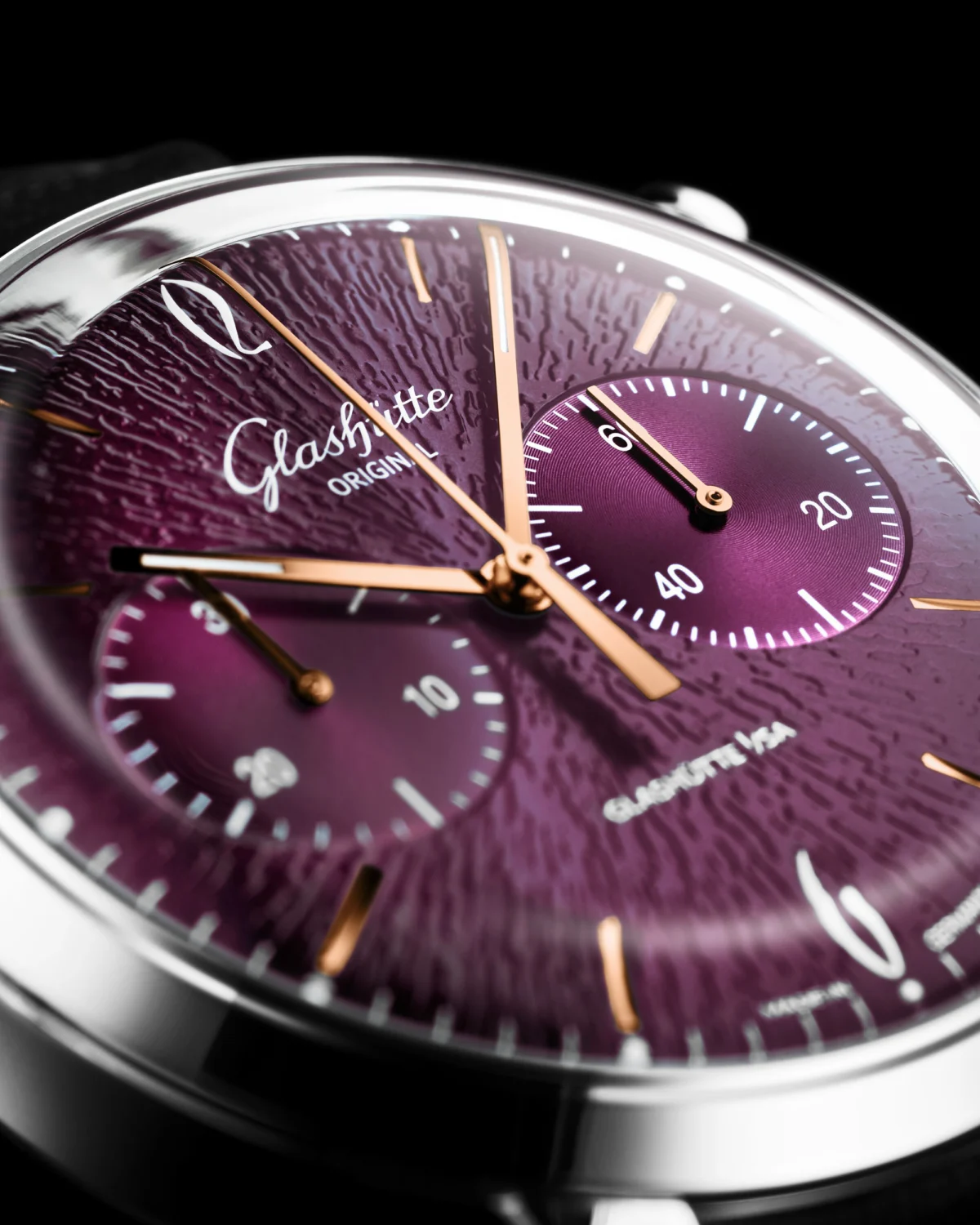
Glashütte Original has once again reaffirmed its commitment to the art of watchmaking with the introduction of the Sixties Chronograph Annual Edition, specifically the striking reference 1-39-34-08-22-04, featuring a captivating purple dial. This annual release strategy, a concept championed by the brand, offers a refreshing alternative to the fleeting nature of limited editions. It provides consumers with a sustained opportunity to acquire a distinctive timepiece while simultaneously placing the onus on Glashütte Original to innovate and deliver fresh aesthetic interpretations year after year. The Sixties Chronograph Annual Edition embodies this philosophy, showcasing meticulous German craftsmanship and a vibrant, contemporary design.

The Strategic Advantage of Annual Editions
The concept of annual editions in the luxury watch industry serves a dual purpose. For collectors and enthusiasts, it mitigates the pressure associated with ultra-limited runs, allowing for a more considered purchase decision and ensuring broader accessibility to special models. For the manufacturer, it fosters a consistent cycle of creativity and production, demanding ongoing dedication to design and technical execution. Glashütte Original, a brand deeply rooted in horological tradition and innovation, has embraced this model, extending its appeal across various collections. The Sixties Chronograph, a model already celebrated for its blend of vintage inspiration and modern mechanics, is a fitting canvas for these annual color narratives. The latest iteration, in a rich purple hue, underscores the brand’s willingness to explore bold chromatic expressions within its established design language.
A Legacy of Precision: The Glashütte Original Dial Manufactory
The exquisite dial of the Sixties Chronograph Annual Edition is a testament to Glashütte Original’s vertical integration and in-house capabilities. The brand’s dial manufactory, recently relocated from Pforzheim to Glashütte, is a hub of artisanal skill and technological prowess. This move, bringing the dial production closer to the movement assembly, signifies a further consolidation of the brand’s commitment to the "Made in Germany" ethos. The historical significance of Pforzheim as a center for jewelry and watchmaking adds another layer to the narrative, while the new facility in Glashütte reinforces the town’s enduring legacy as the cradle of German watchmaking. The author’s previous visits to the Pforzheim facility and the main Glashütte manufactory suggest an unwavering dedication to precision, creativity, and the meticulous execution of every component. This proximity of the dial manufacture to the movement manufacture ensures a cohesive vision and an unparalleled level of control over the final product.

The Art of the Dial: A Symphony of Techniques
The Sixties Chronograph’s dial design is a masterclass in balancing technical sophistication with aesthetic allure. A standout feature is the unique application of hour markers. Instead of being applied or printed, they are precisely etched into the dial plate, creating a subtle, reverse curvature that is deepest at the center and gently tapers towards the edges. This intricate process, requiring individual cutting, is a far cry from simple stamping, demonstrating a level of craftsmanship that is both technically demanding and visually striking.
The dial’s signature ripple effect is achieved through a multi-stage process. Initially, a powerful 60-ton press is employed to create the foundational texture. This is followed by a milling process that imprints fine, parallel grooves onto the subdials, artfully evoking the aesthetic of a vinyl record. The dial then undergoes another pressing to impart a distinctive, visually appealing domed profile. This domed execution is characterized by a pronounced edge that delineates the hour markers, adding depth and dimension. The base material, after these intricate steps, is then treated to a galvanic gold coating.

A Touch of Royalty: The Purple Lacquer
The vibrant purple hue, the hallmark of this annual edition, is achieved through a meticulous application of translucent lacquer. This process is not merely a superficial coating; it is an art form honed by the dial manufacture. The lacquer is applied by hand, followed by firing in a kiln, a delicate procedure where precise control over color, thickness, and temperature is paramount. Glashütte Original’s proprietary dial manufactory has invested considerable time and expertise in developing these techniques, ensuring that each dial exhibits a unique depth and richness of color. The pursuit of such playful yet sophisticated finishes is often challenging when relying on external suppliers, highlighting the distinct advantage of in-house production.
Following the lacquering and firing, the hour markers are again manually incised. This crucial step brings the underlying gold material back into view, creating a striking contrast against the vibrant purple and highlighting the dial’s architectural depth. The entire dial is then finished with a protective clear lacquer, ensuring its longevity and brilliance. The final aesthetic touches involve the precise imprinting of numerals, texts, and the Glashütte Original logo, each layer carefully applied and kiln-fired to perfection. The luminous dots on the indices are then meticulously placed by skilled hands, ensuring legibility in low-light conditions.

Upholding the "Made in Germany" Standard
The author’s emphasis on the provenance of each component, particularly the dial, underscores a critical aspect of modern luxury watchmaking. The integrity of the "Made in Germany" or "Swiss Made" designation is paramount. Glashütte Original’s commitment to producing its dials in-house, within Germany, and in close proximity to its movement manufacturing facilities, reinforces the authenticity and quality associated with its timepieces. This level of transparency and dedication to local production is a significant differentiator in an industry where global supply chains can sometimes blur origins. The boxed sapphire crystal, featuring anti-reflective coating on both sides, further enhances the visual clarity and overall refined appearance of the watch.
Case Design and Proportions
The 42mm stainless steel case of the Sixties Chronograph Annual Edition is also manufactured in Germany, though not within Glashütte Original’s owned facilities. Its design is characterized by a polished finish, a narrow bezel that maximizes the dial’s presence, and short, elegantly sculpted lugs. While the 42mm diameter might suggest a substantial presence, the proportions of the case, particularly the relatively short lug-to-lug distance of 48.5mm, contribute to a comfortable and balanced wearability. The watch’s thickness of 12.4mm strikes a pleasing balance, allowing it to sit discreetly under a shirt cuff while retaining a noticeable presence on the wrist. These dimensions ensure that the watch, despite its visually expansive dial, remains well-proportioned and comfortable for extended wear.

The Caliber 39-34: A Blend of Tradition and Modularity
The exhibition case back offers a glimpse into the intricate workings of the Glashütte Original Caliber 39-34. This self-winding movement is built upon the robust 39 platform and integrates a Dubois-Depraz module for its chronograph functions. The rotor, crafted with a periphery of 21k gold, not only aids in winding the movement efficiently but also serves as a canvas for elaborate finishing. The movement showcases a high degree of hand-applied decoration, including traditional Glashütte striping, a swan-neck fine adjuster meticulously polished by hand for unparalleled precision, and a distinctive double-G logo on the rotor, hand-masked to achieve a two-tone effect. The movement holder ring, visible through the generously sized sapphire crystal, adds a unique architectural element to the case back’s visual presentation.
While Glashütte Original also produces more complex and fully integrated chronograph movements, the Caliber 39-34 represents an accessible entry point into the brand’s chronograph offerings. It demonstrates that even at this level, the commitment to quality finishing and meticulous craftsmanship remains a cornerstone of the Glashütte Original philosophy. The movement’s design and execution reflect a deep respect for traditional watchmaking techniques, adapted for modern production standards.

Market Positioning and Value Proposition
Priced at $10,000 USD, the Glashütte Original Sixties Chronograph Annual Edition (reference 1-39-34-08-22-04) firmly positions itself within the luxury chronograph segment. This price point reflects the extensive in-house manufacturing capabilities, the meticulous hand-finishing, the innovative dial creation process, and the overall quality associated with a high-end German watchmaking brand. The annual edition strategy, coupled with the unique purple dial, offers a compelling value proposition for collectors seeking a distinctive and technically sophisticated timepiece that stands apart from more common offerings. The watch is not merely a timekeeping instrument but a piece of wearable art, embodying the rich heritage and forward-looking vision of Glashütte Original.
Historical Context and the Evolution of the Sixties Collection
The Sixties collection by Glashütte Original draws inspiration from the aesthetic sensibilities of the 1960s, a decade marked by burgeoning design innovation and a shift towards more dynamic and expressive styles. This era saw a departure from the more rigid designs of previous decades, embracing bolder colors, organic shapes, and a spirit of optimism. The Sixties Chronograph, in particular, captures this essence with its distinctive dial treatments and elegantly proportioned cases.

The introduction of annual editions within this collection began several years ago, marking a strategic decision by Glashütte Original to engage with its clientele through evolving aesthetics. Each year, a new color or dial variation is introduced, often drawing from the vibrant palette popular during the mid-20th century. Previous annual editions have featured colors such as deep blue, elegant grey, and sophisticated green, each met with considerable enthusiasm from the watch community. The purple iteration for the current year represents a bold yet refined choice, tapping into a color that has seen a resurgence in popularity across various design fields, including fashion and automotive.
The choice of a chronograph complication within the Sixties collection further enhances its appeal. Chronographs, with their functional complexity and sporty character, have always been highly sought after by watch enthusiasts. By integrating this complication into a design inspired by a period of significant stylistic change, Glashütte Original has created a timepiece that is both historically resonant and contemporary in its execution. The reference number itself, 1-39-34-08-22-04, while perhaps appearing complex, is a testament to the brand’s systematic approach to cataloging its creations, reflecting the detailed internal architecture of its movements and the precise specifications of each model.

The Broader Implications for German Watchmaking
The success of models like the Sixties Chronograph Annual Edition has significant implications for the broader landscape of German watchmaking. Glashütte Original, alongside other prominent Saxon manufacturers, has played a pivotal role in elevating Germany’s status as a global leader in horology. The brand’s commitment to in-house production, particularly in areas like dial making, reinforces the value of artisanal skills and technical expertise that are crucial for maintaining the integrity of a nation’s watchmaking heritage.
The "Made in Germany" label, much like its Swiss counterpart, carries with it an expectation of exceptional quality, precision, and enduring value. By consistently producing timepieces that meet and exceed these expectations, Glashütte Original not only strengthens its own brand but also contributes to the collective reputation of German watchmaking. The Sixties Chronograph Annual Edition, with its artistic dial, robust movement, and thoughtful design, serves as a prime example of this commitment, demonstrating that German watchmaking is not solely defined by technical prowess but also by a sophisticated and creative design language.

The ongoing development and introduction of annual editions like the purple Sixties Chronograph suggest a dynamic and responsive brand that is attuned to evolving market trends and consumer preferences. It indicates a willingness to experiment with color and texture while remaining firmly anchored in the brand’s core values of precision, craftsmanship, and timeless design. This forward-thinking approach ensures that Glashütte Original continues to captivate collectors and enthusiasts worldwide, solidifying its position as a significant player in the ultra-luxury watch market.