










The concept of a computerized, interactive closet that coordinates outfits automatically has captivated popular culture for nearly three decades, largely popularized by the 1995 teen comedy Clueless, in which the protagonist, Cher Horowitz, used early digital styling software to curate her wardrobe. For years, this capability remained firmly in the realm of cinematic fiction. Today, however, that futuristic vision has materialized into a commercial reality driven by artificial intelligence, digital avatars, and advanced cloud infrastructure.
At the center of this transformation is Alta, a fashion-technology company founded by Jenny Wang. Following an $11 million funding round secured last year, Alta has evolved from a consumer-facing novelty into a sophisticated digital infrastructure business. The company is redefining how consumers interact with their wardrobes and how apparel brands sell their collections, bridging the gap between digital imagination and physical commerce during a period of profound evolution in the retail sector.
Chronology of Growth: From Launch to New York Fashion Week
Alta’s trajectory reflects the rapid acceleration typical of successful generative AI startups. Following its public launch in 2023, the platform quickly gained traction among digital-native consumers and tech enthusiasts alike. By allowing users to digitize their personal wardrobes and generate customized virtual avatars capable of trying on clothing combinations, the application struck a chord with a demographic eager for digital self-expression and practical utility.
Last year marked a critical inflection point for the startup. Alta closed an $11 million funding round led by Menlo Ventures, drawing participation from high-profile figures across fashion, technology, and venture capital. Notable investors included supermodels Jasmine Tookes and Karlie Kloss, Anthropic’s venture arm Anthology Fund, and Rent the Runway co-founder Jenny Fleiss. This infusion of capital provided the resources necessary to scale engineering efforts, expand brand partnerships, and refine the underlying AI models.
By late 2023 and throughout the following year, industry recognition followed. Major publications such as Time and Vogue designated Alta as one of the top innovations of the year. According to company metrics, users have generated more than 100 million unique outfits on the platform since its inception.
The momentum continued into New York Fashion Week, where Wang provided updates on the company’s expansion. Most notably, Alta transitioned from a closed, standalone application ecosystem into an embeddable enterprise service. The company unveiled its inaugural integration collaboration with Public School New York, marking a significant milestone in B2B fashion technology and signaling a new phase of omnichannel retail integration.
Strategic Partnerships and the Public School New York Collaboration
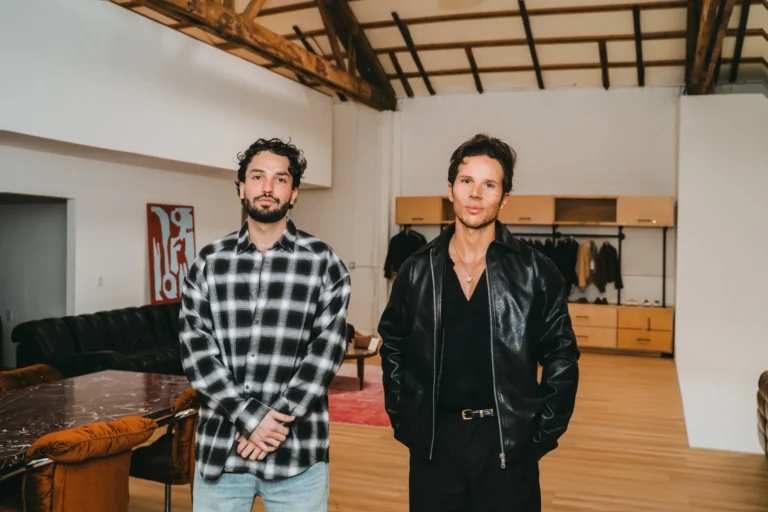
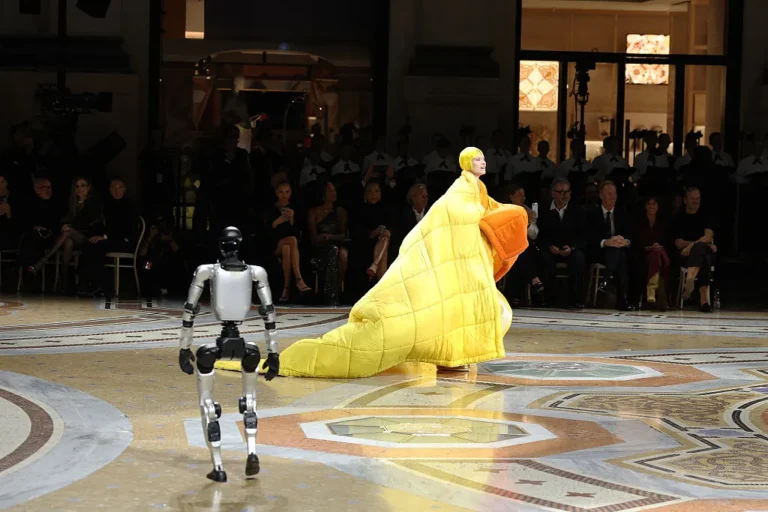
Alta’s recent partnership with Public School New York illustrates the commercial viability of virtual try-on technology for independent and established designers alike. Public School, the storied New York City brand founded by designers Dao-Yi Chow and Maxwell Osborne, returned to the runway this season after a multi-year hiatus. The brand’s grand re-debut at New York Fashion Week represented not only a creative reclamation for its founders but also a deliberate embrace of modern digital tools.
The collaboration was initiated through mutual connections within the retail and investment communities, specifically via the founder of Poshmark, who serves as an angel investor in both Alta and Public School. Chow, an active user of the Alta app prior to the partnership, recognized the potential for virtual avatars to extend the brand’s storytelling beyond physical runway shows and brick-and-mortar storefronts.

Under this integration, shoppers browsing the Public School New York website encounter an interactive prompt labeled "Style with Alta" near the product details. By clicking the icon, customers are seamlessly transitioned to their personalized Alta avatar, where they can style items from the new collection and evaluate fit, drape, and aesthetic synergy prior to purchase. This frictionless bridge between e-commerce product pages and personalized virtual fitting rooms represents a departure from traditional online shopping, where consumers must mentally visualize how garments will look on their specific body types.
Broader Industry Context and Technological Advantages
The intersection of fashion and artificial intelligence has attracted significant investment from major global retailers in recent years. Legacy luxury houses and mass-market giants alike—including Balmain and Zara—have experimented with digital supermodels, virtual try-ons, and augmented reality fittings. However, early iterations of these technologies frequently suffered from technical limitations, including high latency and restricted rendering capabilities.
According to Wang, Alta’s proprietary technology distinguishes itself from competitors through speed and rendering capacity. While existing retail implementations, such as those deployed by Zara, typically permit avatars to model a maximum of four items simultaneously, with rendering times averaging approximately two minutes, Alta’s system allows avatars to layer and test at least eight distinct items within seconds. This technical efficiency is critical for consumer retention; in the fast-paced digital marketplace, delays of minutes can lead directly to cart abandonment.
Furthermore, Alta operates on a dual-pronged business model. The consumer-facing application functions as the digital closet, enabling everyday users to inventory their physical clothing, plan outfits, and discover thousands of retail brands available for direct purchase within the app. Simultaneously, the enterprise division offers software development kits and website integration tools that empower clothing brands to embed Alta’s personalized avatar and styling technology directly into their native e-commerce environments.
The Future of Agentic Commerce and Digital Identity
Looking ahead, Alta’s leadership envisions the company evolving far beyond a simple digital styling assistant. Wang articulates a long-term strategy in which Alta serves as the fundamental "personal identity layer" for the future of consumer artificial intelligence and online retail.
As artificial intelligence moves toward autonomous shopping agents—systems capable of purchasing goods and services on behalf of users based on learned preferences—the availability of structured, accurate consumer data becomes paramount. Wang notes that for agentic commerce to function effectively, the ecosystem requires a secure data layer capable of processing a shopper’s unique style preferences, historical purchases, physical dimensions, and visual likeness. By anchoring this identity layer in a persistent digital avatar and digitized closet, Alta aims to position itself as an indispensable utility for both consumers and merchants.
The implications of this technology extend across the broader retail supply chain. Virtual try-on solutions and accurate digital avatars hold the potential to reduce product return rates—a persistent financial and environmental challenge for online apparel retailers—by ensuring better sizing accuracy and consumer confidence before purchase. Additionally, by extending brand engagement through interactive digital tools, designers can maintain relationships with global audiences who cannot attend physical fashion presentations.
As Alta continues to scale its enterprise integrations following its New York Fashion Week debut, the company stands at the vanguard of a structural shift in retail. By transforming cinematic fantasy into scalable enterprise software, Alta is helping to define how the next generation of consumers will interact with, purchase, and experience fashion in an increasingly digital world.