









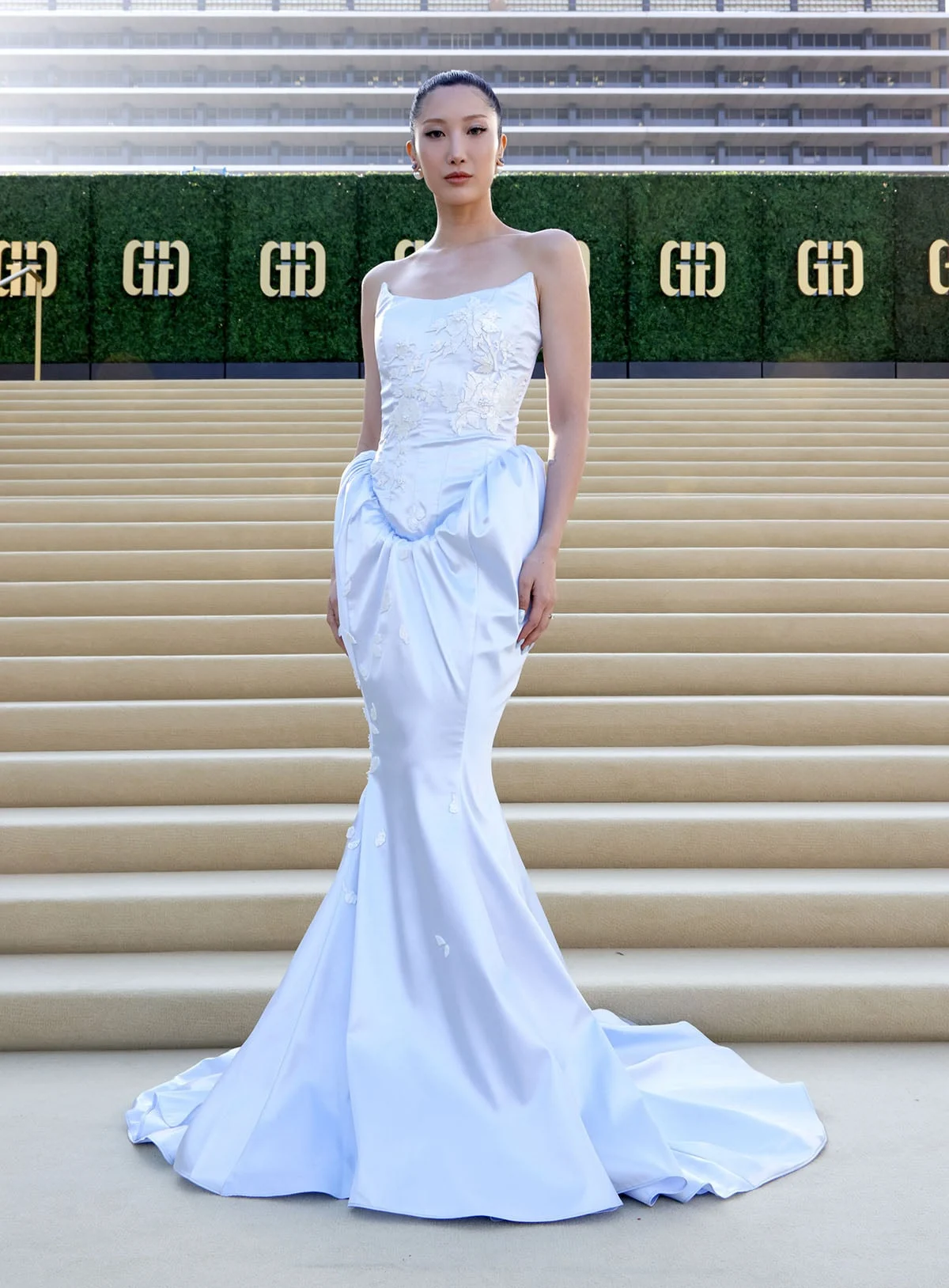
The fifth annual Gold Gala convened this past weekend in Los Angeles, serving as a premier platform for celebrating the most impactful Asian Pacific and multicultural leaders across various industries. Organized by Gold House, the leading non-profit collective of Asian and Pacific Islander (API) cultural leaders, the event has evolved into a significant fixture on the global awards calendar. This year’s ceremony, which hosted a high-profile guest list including Priyanka Chopra and other luminaries, showcased a sophisticated intersection of couture fantasy, sculptural glamour, and theatrical dressing. Beyond the aesthetic displays, the event underscored a strategic commitment to championing Asian designers, providing a global stage for both established and emerging talent within the fashion industry.
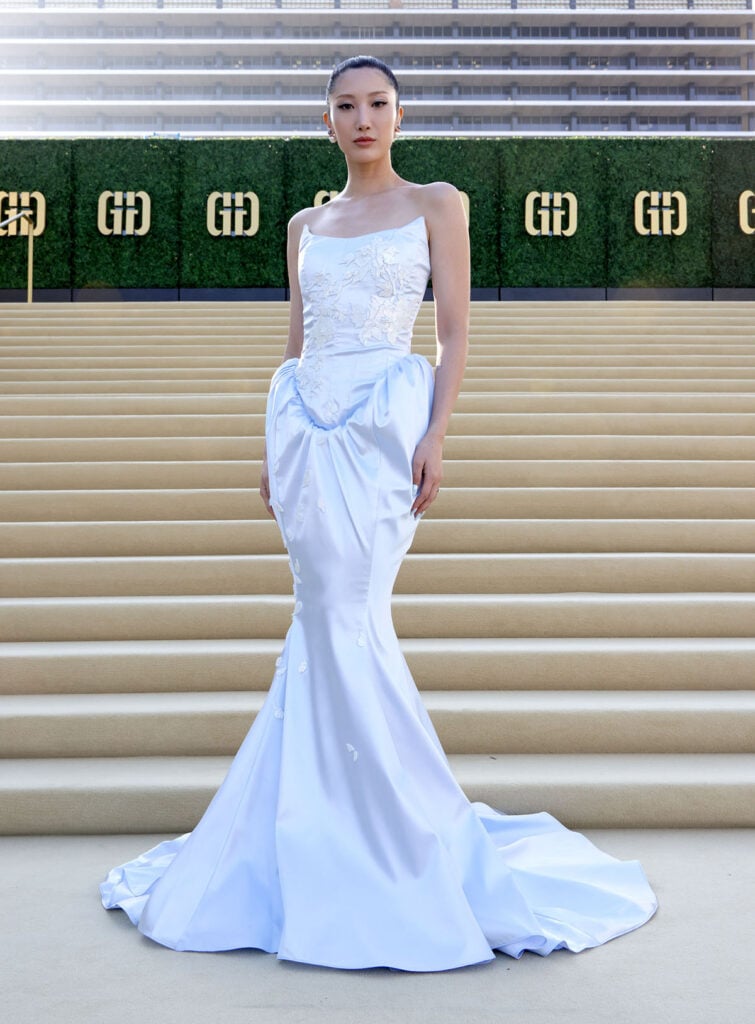
The Strategic Evolution of Gold House and the Gold Gala
Since its inception, Gold House has focused on three primary pillars: unity, representation, and success. The Gold Gala specifically serves to celebrate the "A100," a list of the 100 most influential Asian Pacific leaders who have significantly impacted American culture over the past year. The fifth anniversary of the gala represents a milestone in the organization’s trajectory, moving from a mission of visibility to one of institutional power.
The event’s red carpet has become an essential medium for this message. By prioritizing Asian designers, the attendees engage in a form of "sartorial diplomacy," highlighting the craftsmanship and heritage of couturiers from India, Vietnam, China, and the Philippines, as well as the Asian diaspora in the West. This year’s lineup of designers included names such as Rahul Mishra, Phan Huy, Laurence Xu, and Anita Dongre, reflecting a diverse range of regional aesthetics and technical expertise.
Sculptural Innovation and High-Shine Embellishments
The red carpet was characterized by a move toward architectural silhouettes and intricate hand-finished details. A notable trend among attendees was the use of metallic textures and mirrored mosaics, which signaled a theme of "Gilded Drama" and "Futuristic Armour."
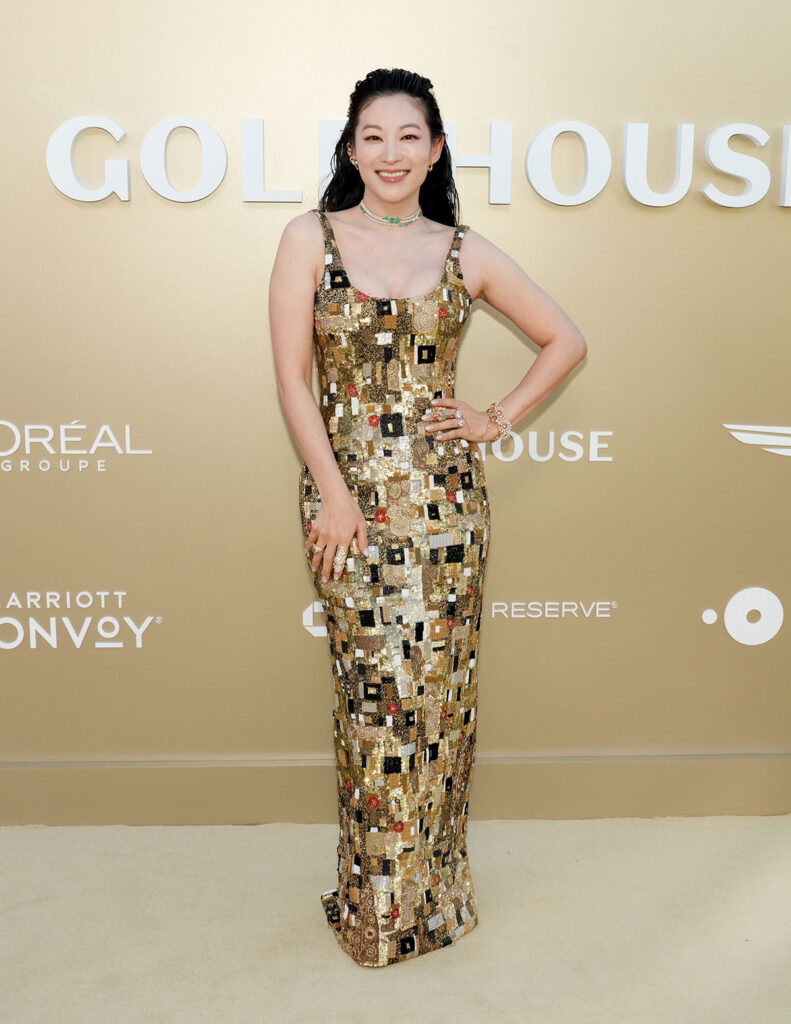
Arden Cho appeared in a Fall 2025 Couture gown by Indian designer Rahul Mishra. The garment featured a complex mosaic of mirrored embellishments, drawing comparisons to the aesthetic principles of Gustav Klimt. This specific collection by Mishra continues his exploration of nature and structural geometry, utilizing artisanal embroidery techniques that are a hallmark of Indian couture. Similarly, Poorna Jagannathan and Ryan Michelle Bathe utilized metallic tones to convey a sense of "Golden Precision." Bathe’s Pamella Roland Pre-Fall 2026 ensemble featured a sculpted metallic corset bodice paired with a sleek black skirt, a look that balanced modern industrial aesthetics with traditional black-tie elegance.
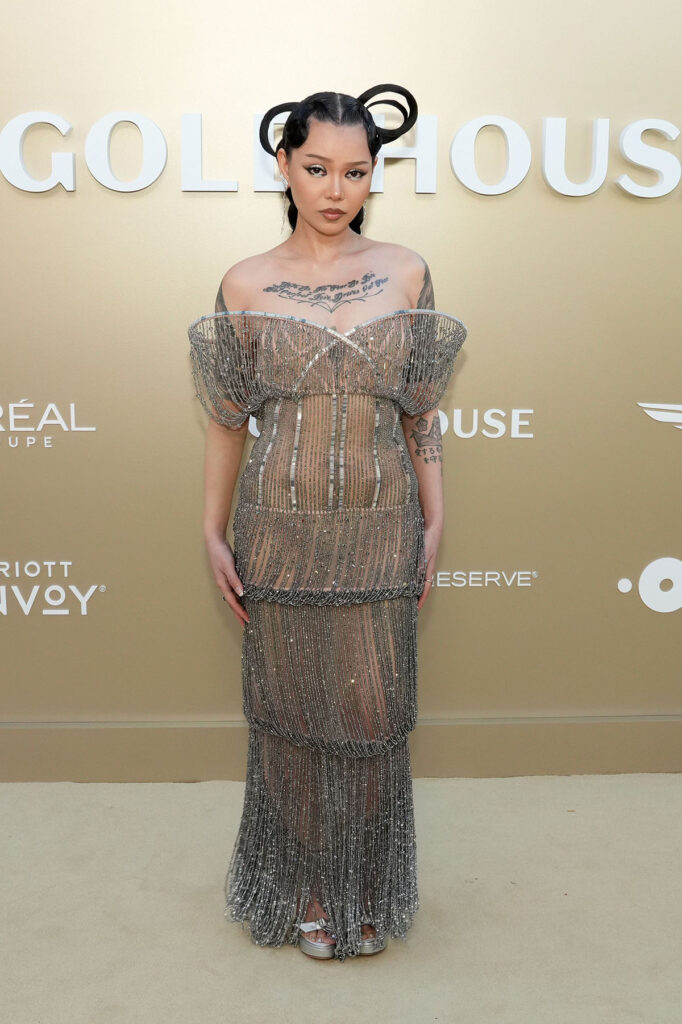
In the realm of futuristic glamour, Bella Poarch wore a Fall 2025 Couture piece by Phan Huy. The silver gown was defined by an exaggerated curved neckline and layered beading, creating a sculptural effect that mimicked a protective shell or armor. This trend of "Futuristic Armour" suggests a broader shift in gala fashion toward garments that function as wearable art.
The Rise of Vietnamese Couture on the Global Stage
One of the most significant developments at this year’s Gold Gala was the prominent presence of Vietnamese designers, specifically Phan Huy and Le Thanh Hoa. Phan Huy, in particular, was the designer of choice for a high volume of attendees, including H.E.R., Elizabeth Yu, Ji-young Yoo, Leah Lewis, and Liza Soberano.
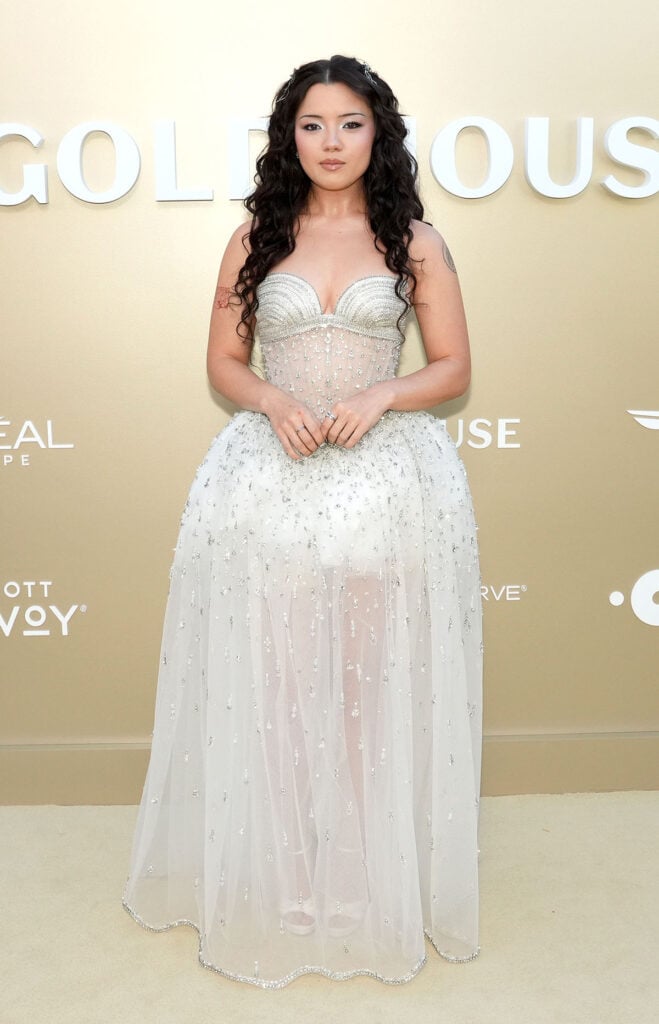
Elizabeth Yu’s Spring 2026 Couture gown by Phan Huy featured a white layered tulle skirt designed to create a "cloud-like" effect. Vertical crystal beading integrated into the sheer layers provided a visual representation of falling rain, demonstrating the designer’s ability to blend ethereal themes with structural corsetry. H.E.R. departed from her signature eyewear-centric look to debut a red appliqué gown by the same designer, characterized by cascading heart-shaped layers.

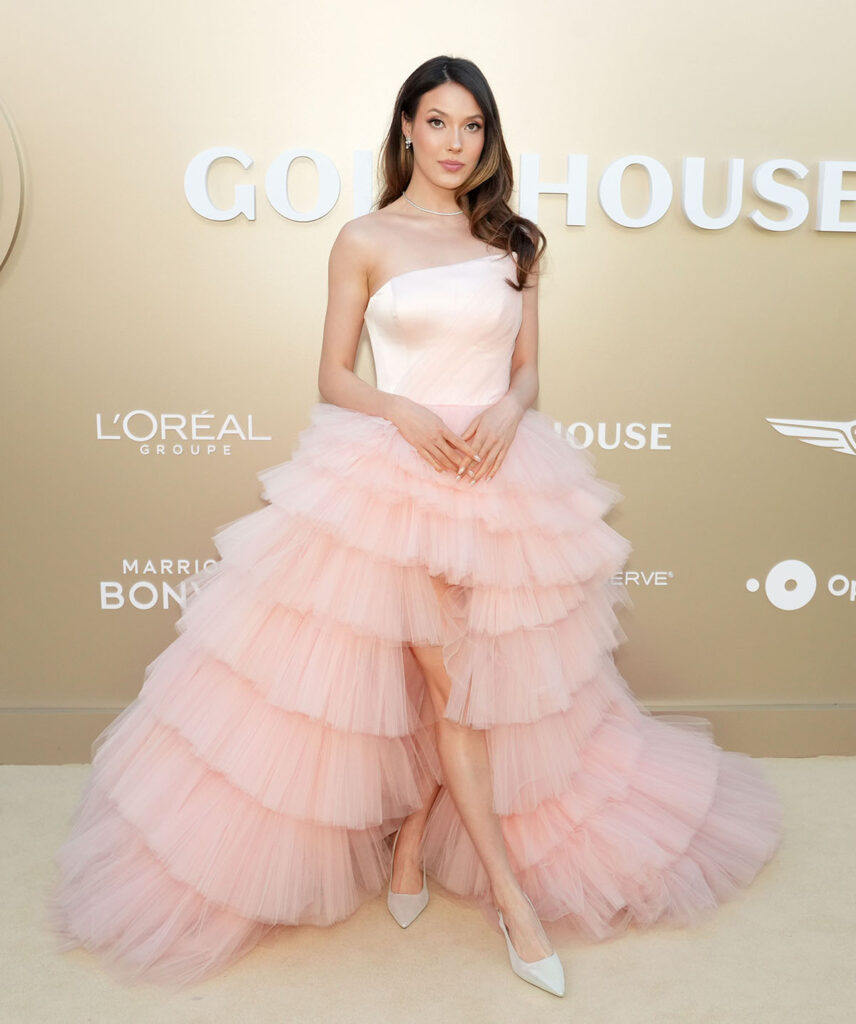
Liza Soberano’s appearance in Phan Huy Fall 2025 Couture was noted for its "Fan-Fare" design. The gown utilized fan-like appliqués to frame the bodice and hips, creating a silhouette that blurred the lines between fashion illustration and three-dimensional sculpture. The architectural shaping of these garments highlights the growing influence of Southeast Asian couture in Western high-fashion spaces.
Cultural Heritage and Textile Artistry
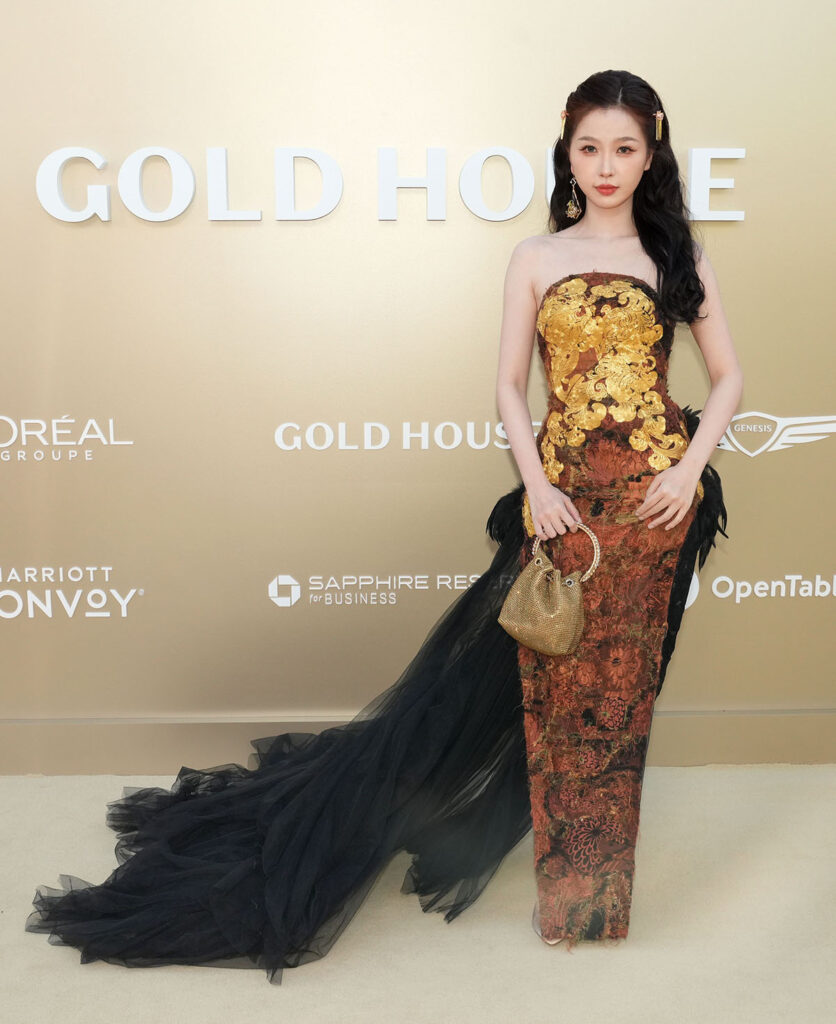
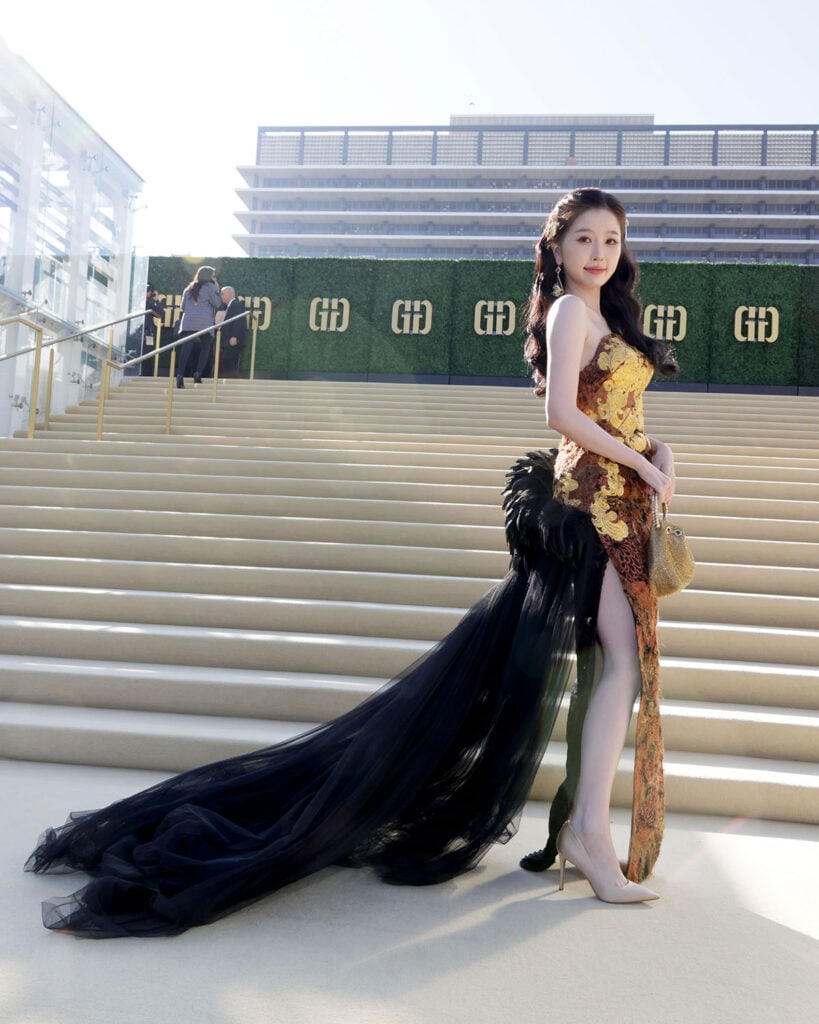
The gala also provided a venue for deep explorations of traditional textiles and historical references. Esther Yu wore a Spring 2014 Couture gown by Laurence Xu, a designer known for integrating traditional Chinese craftsmanship with Western silhouettes. The gown featured rich gold embroidery on the bodice and a deep rust-toned textile that evoked the appearance of an antique tapestry. The addition of a black tulle and feathered train introduced a contemporary contrast to the historical weight of the primary fabric.
Mindy Kaling continued this theme of "Pattern Play" in an Anita Dongre Spring 2026 Couture beaded column gown. Dongre is a central figure in the movement to preserve Indian craft traditions, and the gown’s ornate motif in shades of teal, blue, and green served as a testament to the sustainability and longevity of hand-beaded textiles.
Chronology of the Event and Organizational Milestones
The fifth annual Gold Gala followed a structured timeline that emphasized both community building and individual achievement:
- The Gold Bridge Initiative: Prior to the gala, Gold House continued its "Gold Bridge" efforts, which facilitate cross-cultural collaborations between Asian leaders and global institutions.
- Red Carpet Arrivals: Beginning in the late afternoon, the arrivals featured a curated display of Asian-led fashion, intentionally timed to coincide with Asian American and Pacific Islander (AAPI) Heritage Month.
- The A100 Induction: The ceremony officially inducted the new class of A100 honorees, spanning categories from Entertainment and Media to Business and Technology.
- Keynote Addresses: Leaders including Priyanka Chopra and other industry veterans provided remarks on the necessity of moving beyond "tokenism" toward meaningful equity in leadership roles.
Supporting Data: The Economic and Social Impact of API Leadership
The Gold Gala is more than a social gathering; it is a reflection of the increasing economic power of the API community. According to data from the Selig Center for Economic Growth, Asian American buying power has grown substantially, reaching an estimated $1.3 trillion in recent years. This economic clout has translated into increased demand for representation in media and luxury goods.

Furthermore, a study by the Geena Davis Institute on Gender in Media indicated that while API representation on screen has improved, there remains a gap in "behind-the-camera" leadership and executive roles. Gold House’s A100 list and the Gold Gala are designed to address this disparity by providing a network for API executives to consolidate their influence and mentor the next generation of leaders.
Analysis of Fashion Trends: From Peplums to Sheer Textures
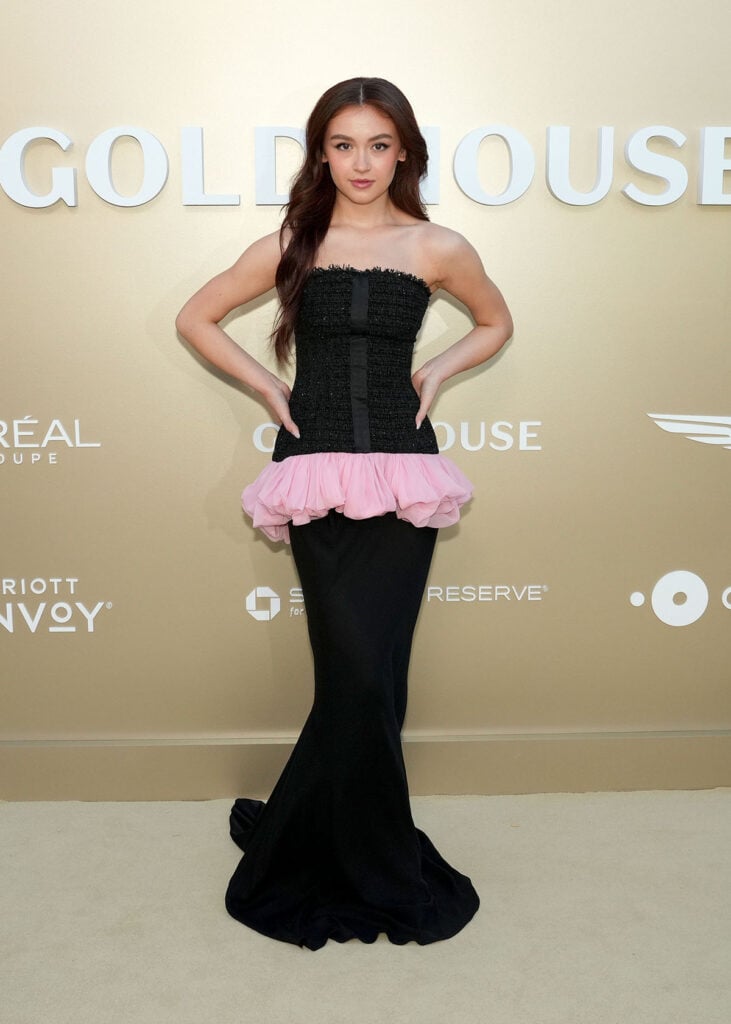
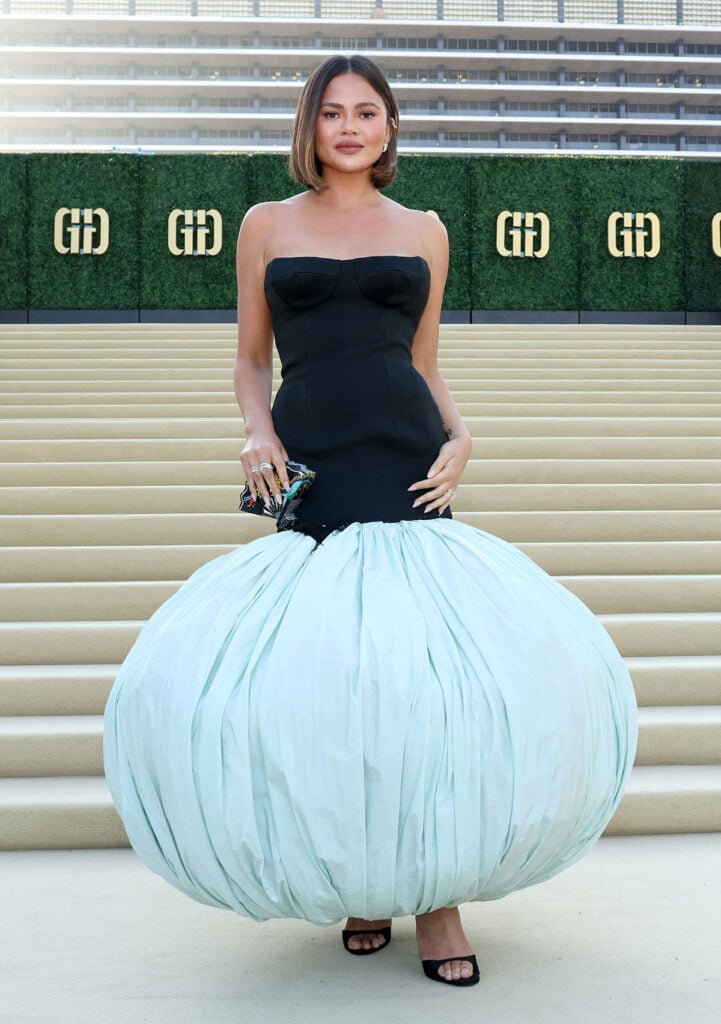
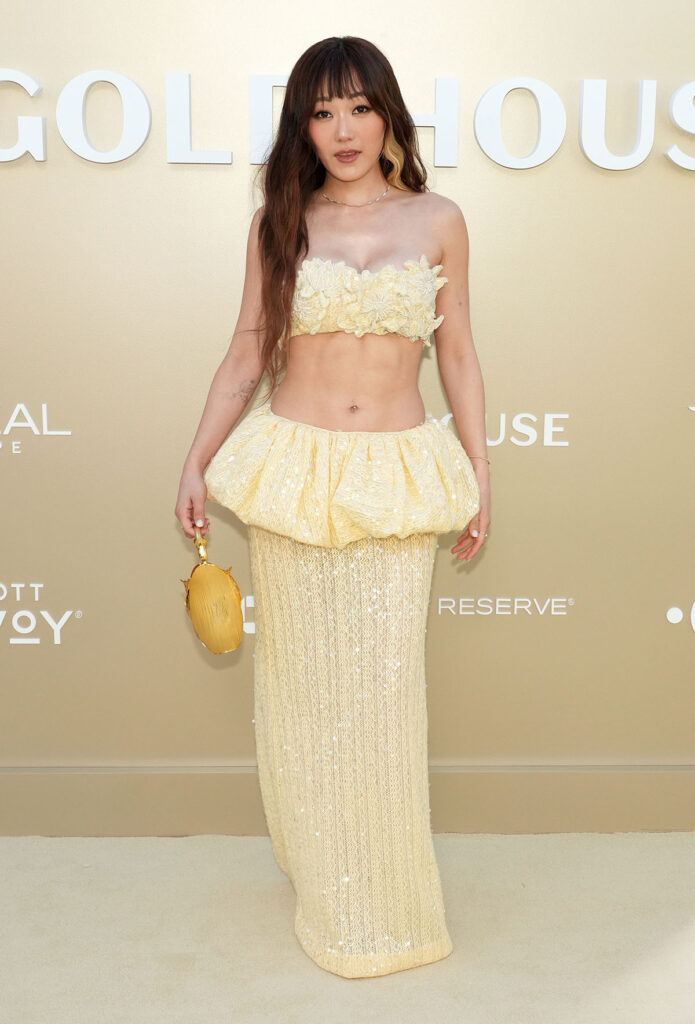
The 2026 red carpet also showcased specific technical trends that are expected to dominate the upcoming season. The "Bubble Peplum" emerged as a recurring motif, seen on Anna Cathcart (in Bach Mai), Chrissy Teigen (in Aistė Hong), and Karen Fukuhara (in PatBo). Fukuhara’s ensemble also embraced the season’s "butter yellow" color palette, combining a floral appliqué bandeau with a sequinned column skirt.
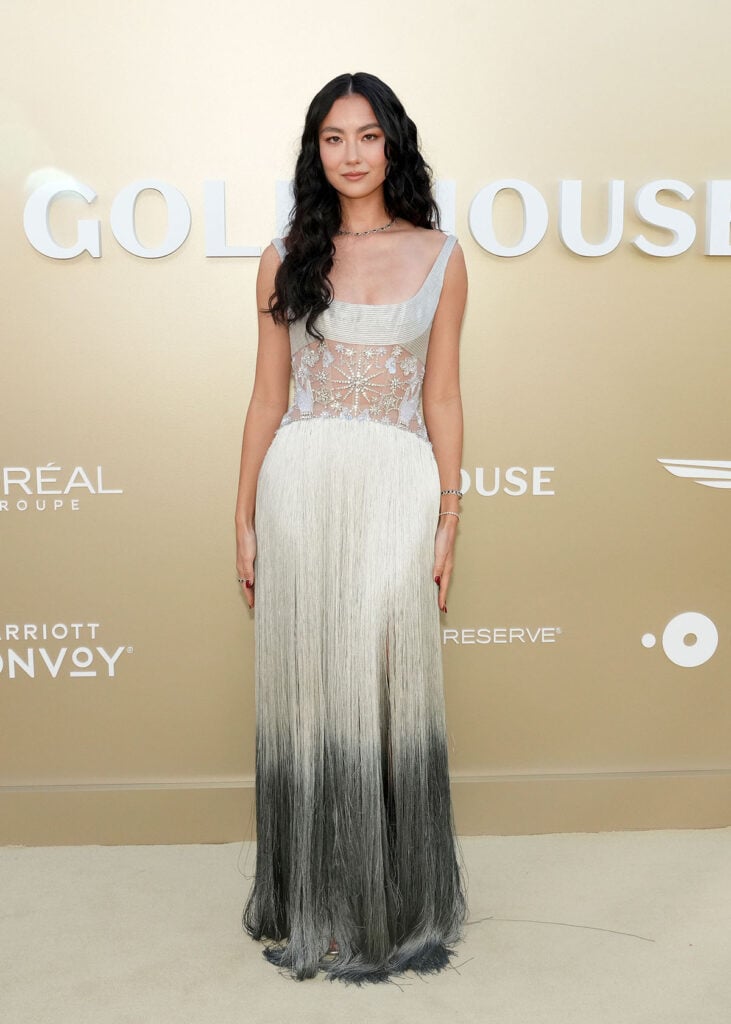
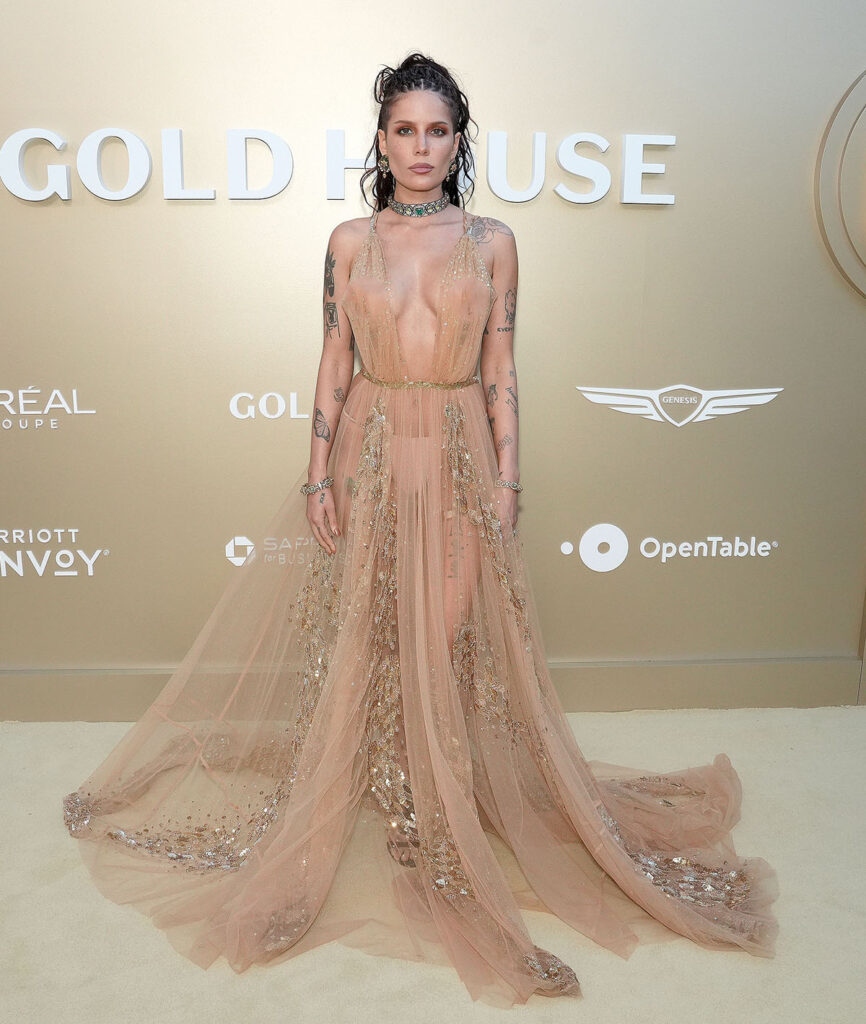
However, the trend of extreme transparency remained a point of discussion. Halsey’s Rahul Mishra Spring 2024 Couture gown pushed the boundaries of the "sheer" trend, raising questions about the balance between avant-garde expression and the traditional decorum of a gala setting. In contrast, Adeline Rudolph’s Paolo Sebastian Spring 2025 Couture gown utilized sheer fabrics with more delicacy, featuring a fringed skirt that faded from silver to charcoal at the hem.
Broader Implications and Future Outlook
The success of the fifth annual Gold Gala underscores a permanent shift in the cultural landscape. The event demonstrates that the API community is no longer seeking a "seat at the table" but is actively building its own tables and institutions. The heavy reliance on Asian designers for the gala’s red carpet sends a powerful signal to the global fashion industry regarding the viability and desirability of Asian luxury brands.
As Gold House moves toward its next five years, the organization is expected to expand its "Gold Open" movement—which supports API-led films—into other sectors, including venture capital and digital infrastructure. The Gold Gala will likely remain the flagship event for this expansion, serving as both a celebration of past achievements and a strategic planning session for future influence.

The event concluded with a sense of "Soft Romance" and "Dark Romance," represented by Supriya Ganesh in Naeem Khan and Havana Rose Liu in Oude Waag, respectively. These final looks summarized the night’s aesthetic breadth: a community that is diverse, multifaceted, and unapologetically bold in its pursuit of excellence. Through the combination of high fashion, rigorous data-driven advocacy, and unified leadership, the Gold Gala has solidified its position as a critical engine for multicultural progress in the 21st century.