






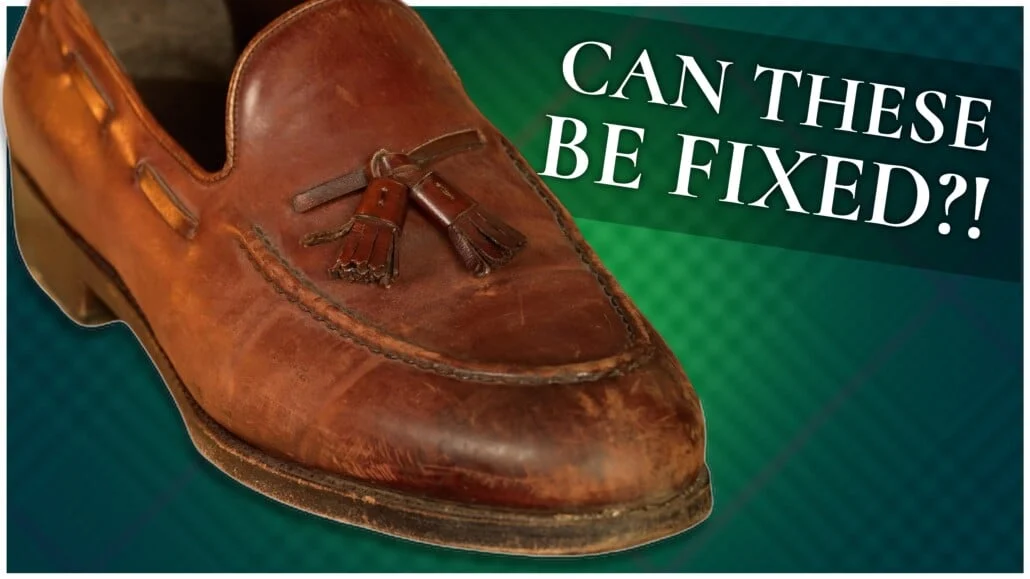
Shell Cordovan, widely celebrated as the "King of Leathers," commands its regal title through a combination of unparalleled durability and a distinctive, deep luster that is unique among hide materials. However, even the most esteemed materials are susceptible to the ravages of time and neglect. A recent collaboration between Gentleman’s Gazette and Preston Soto of The Elegant Oxford has cast a spotlight on this reality, documenting the ambitious restoration of a pair of heavily worn Meermin loafers crafted from this prestigious material. The initiative not only showcases the transformative power of expert care but also serves as a crucial educational resource for owners and prospective owners of Shell Cordovan footwear, emphasizing the nuanced approach required for its maintenance.
The Enduring Legacy of Shell Cordovan: A Material Unlike Any Other
The appellation "King of Leathers" is not mere hyperbole when describing Shell Cordovan. Its extraordinary qualities stem from its origin: a dense, fibrous membrane meticulously harvested from the hindquarters of a horse, specifically the sub-dermal flat muscle known as the ‘shell.’ This anatomical distinction sets it apart fundamentally from calfskin, which is a full-grain hide with a complex pore structure. The unique composition of Cordovan means it lacks the typical grain layer found in bovine leathers, resulting in a remarkably smooth, non-porous surface that resists creasing in favor of distinctive ‘rolls’ and possesses an inherent water resistance.
The production of Shell Cordovan is an arduous, time-intensive process, with tanneries like the venerable Horween Leather Company in Chicago leading the charge for over a century. Horween’s legendary tanning process for Cordovan is a closely guarded secret, spanning an astonishing six months. It involves a meticulous regimen of vegetable tanning, hot stuffing with a unique blend of natural oils and waxes, and extensive hand-finishing, including multiple stages of hand-glazing to bring out its signature luster. This protracted process, combined with the limited availability of suitable equine hides, contributes significantly to Cordovan’s rarity and premium market value, making each piece an investment rather than a mere purchase.
The Restoration Challenge: Bringing Meermin Loafers Back to Life
The subject of the recent restoration project—a pair of Meermin loafers—presented a compelling challenge. Meermin, a brand known for making quality footwear accessible, utilizes Shell Cordovan in some of its premium offerings, placing these specific loafers firmly in the category of luxury items deserving of meticulous care. When they arrived at The Elegant Oxford, they exhibited the classic signs of prolonged use without appropriate maintenance: a dull, faded luster, potential surface irregularities from moisture exposure, and a general lack of the vibrant sheen that defines Cordovan.
Preston Soto, the artisan behind The Elegant Oxford, specializes in high-end shoe restoration and care. His involvement underscores a growing trend in the luxury goods market: a renewed emphasis on longevity, repair, and sustainable consumption over disposability. For items as valuable and unique as Shell Cordovan footwear, specialized expertise is not just beneficial; it is essential. Soto’s approach is rooted in a deep understanding of leather chemistry and material science, enabling him to tailor his restoration techniques to the specific needs of each material. His work with the Meermin loafers served as a practical demonstration of how even severely neglected Cordovan can be resurrected, a testament to the material’s inherent resilience when paired with the right care regimen.
The Scientific Art of Shell Cordovan Care: A Detailed Overview
Understanding the fundamental differences between Shell Cordovan and conventional calfskin is the cornerstone of effective care. Unlike calfskin, which features a porous grain layer that readily absorbs conditioning products, Cordovan’s dense, non-porous structure is already highly saturated with oils from its extensive tanning process. This dictates a drastically different approach: less product application and significantly more ‘friction’ – through vigorous brushing and buffing – to redistribute its natural oils and reactivate its deep shine.
Addressing Common Cordovan Issues:
-
Blooming: This phenomenon, where a white, waxy residue appears on the surface, is a frequent concern for Cordovan owners. It is, however, a natural and entirely normal occurrence, particularly in leathers from tanneries like Horween. Blooming occurs when the natural fats and oils, generously infused into the leather during its extensive tanning, migrate to the surface and solidify, especially in cooler temperatures. Far from being a defect, it is an indicator of the leather’s rich oil content. Remediation is simple: a gentle wipe with a soft cloth or a thorough brush with a horsehair brush will redistribute these oils back into the leather, restoring its appearance.
-
Product Selection: The Peril of Standard Polishes: A critical mistake often made by new Cordovan owners is the use of standard shoe polishes. Many conventional polishes contain high concentrations of solvents designed to penetrate and clean calfskin’s porous surface. For Cordovan, these solvents can be highly detrimental, stripping away the unique oils that give the material its distinct character and flexibility. Experts universally recommend dedicated cordovan creams. These specialized formulations boast a lower solvent content and are specifically engineered to nourish Cordovan without clogging its dense fibers or removing its essential oils.
-
Conquering "Bumps" and "Welts" from Moisture: Shell Cordovan, while highly water-resistant, is not impervious to moisture. When exposed to water, it can develop tiny bumps or ‘welts’ as its fibers momentarily ‘raise their grain.’ This is a temporary condition that, while not damaging, detracts from the smooth finish. The solution involves a specialized technique: applying a minimal amount of cordovan cream to the affected area, then using a deer bone or another smooth, hard object to physically compress and smooth the fibers back down. The slight dampness from the cream aids in this process, allowing the fibers to realign and the surface to regain its pristine smoothness once dry.
-
Understanding "Rolls" vs. Creases: A hallmark of authentic Shell Cordovan is its unique way of aging in areas of movement, such as the vamp. Unlike calfskin, which develops sharp, fine creases as its grain layer breaks, Cordovan’s membrane-like structure leads to soft, undulating ‘rolls.’ This characteristic rolling is a natural and desirable feature, distinguishing it from lesser leathers. Crucially, owners should never apply hard wax polish to these rolls. The inflexible wax will crack and flake in these dynamic areas, creating an unsightly appearance. Light conditioning with a specialized cream is sufficient and appropriate for these regions.
-
Optimal Polishing Frequency: Less is More: Over-polishing is arguably the most common mistake in Cordovan care. Due to its inherent oil content and dense structure, Shell Cordovan rarely requires extensive product application. For most routine maintenance, a vigorous brushing with a horsehair brush for two to three minutes is all that is needed to bring back its natural luster. New cream or wax should only be applied sparingly, typically every 10 to 15 wears, or when the leather visibly appears dull or dry. This minimalist approach preserves the leather’s integrity and prevents product buildup.
-
Water Resistance, Not Waterproofing: While Shell Cordovan’s density and high oil content render it remarkably water-resistant—making it an excellent choice for inclement weather—it is important to distinguish this from being fully waterproof. As noted, excessive moisture can still cause temporary ‘spotting’ or ‘welting’ on the surface. While this will not ruin the leather, it necessitates a restorative process involving brushing and potentially bone-compressing once the leather is dry to restore its smooth, unblemished finish. This intrinsic resilience, coupled with its ability to be fully restored, adds to its appeal as a practical luxury item.
The Restoration Process at The Elegant Oxford: A Chronology of Renewal
While the original article points to a video for visual evidence, a typical professional restoration of heavily worn Shell Cordovan loafers by an expert like Preston Soto would follow a well-defined sequence:
- Initial Assessment and Documentation: Upon receipt, Soto would conduct a thorough examination of the Meermin loafers, meticulously documenting the extent of wear, any specific damages (e.g., deep scratches, significant welts, excessive dullness, condition of the sole and heel), and the overall state of the leather. This assessment informs the entire restoration plan.
- Deep Cleaning and Preparation: The first physical step involves carefully removing any accumulated dirt, grime, and old product residues from the leather surface. This is often done with specialized leather cleaners that are gentle yet effective, ensuring the canvas is clean for subsequent treatments.
- Reconditioning and Nourishment: Dedicated cordovan creams are then applied sparingly. These creams are worked into the leather to replenish oils, restore suppleness, and prepare the surface for polishing. This step is crucial for revitalizing dry or faded areas.
- Targeted Damage Repair: This stage addresses specific issues:
- De-welting: For any bumps or welts caused by moisture, the deer bone technique is employed. With a light application of cream, the bone is used to carefully compress and smooth the raised fibers.
- Addressing Rolls: While rolls are a natural feature, proper conditioning ensures they remain supple and do not crack. Light applications of cream are worked into these areas.
- Scratch Mitigation: Minor surface scratches are carefully buffed out or blended using specialized techniques and products.
- Polishing and Buffing: Once the leather is properly conditioned and treated, the focus shifts to restoring its signature luster. This involves extensive and vigorous brushing with horsehair brushes, followed by buffing with soft cloths. The friction generated helps to bring the natural oils to the surface, creating the deep, glass-like shine characteristic of Cordovan.
- Sole and Heel Refinishing (if applicable): For heavily worn shoes, the restoration extends beyond the upper. This can include cleaning, conditioning, and re-dyeing the edges of the soles and heels, and potentially re-soling or re-heeling if the structural integrity is compromised.
- Final Inspection and Protection: A final inspection ensures all aspects of the restoration meet the highest standards. A protective layer, such as a very light, specialized wax or spray, might be applied to offer an additional shield against dust and moisture, completing the transformation.
Broader Implications: Sustainability, Investment, and Craft Preservation
The comprehensive restoration of luxury items like Shell Cordovan footwear carries significant implications that extend beyond mere aesthetics.
Sustainability: In an era increasingly conscious of environmental impact and resource depletion, the ability to restore high-quality goods offers a compelling alternative to the ‘fast fashion’ cycle of disposable consumption. Investing in durable items like Shell Cordovan shoes, which can last for decades with proper care and occasional restoration, significantly reduces waste and the demand for new production, promoting a more sustainable approach to luxury. The longevity of a single pair of Cordovan shoes, contrasted with the ephemeral lifespan of cheaper alternatives, represents a substantial environmental saving over time.
Investment in Quality: Shell Cordovan footwear, with its premium price point, represents a significant upfront investment. However, its exceptional durability and the possibility of repeated restoration transform this initial cost into a long-term value proposition. A pair of well-maintained Cordovan shoes can easily outlast multiple pairs of less expensive, lower-quality footwear, ultimately offering superior cost-per-wear and a more satisfying ownership experience. This project underscores that proper care is not just about aesthetics but about protecting a valuable asset.
Preservation of Craftsmanship: The specialized skills required for Shell Cordovan care and restoration, exemplified by artisans like Preston Soto, play a vital role in preserving traditional craftsmanship. In an increasingly automated world, these hands-on, nuanced techniques ensure that valuable knowledge and artistic skill continue to thrive. The demand for such services also supports a niche industry of skilled artisans, contributing to the economic viability of traditional crafts.
Consumer Education and Empowerment: Initiatives like the collaboration between Gentleman’s Gazette and The Elegant Oxford are crucial for consumer education. By demystifying the care requirements of complex materials like Shell Cordovan, they empower owners to make informed decisions, protecting their investments and deriving maximum enjoyment from their luxury items. This knowledge fosters a deeper appreciation for the materials and the craftsmanship involved in their creation.
Expert Perspectives and Industry Outlook:
Preston Soto’s work with The Elegant Oxford exemplifies a growing trend where consumers are seeking out specialized knowledge for their prized possessions. While not directly quoted, his philosophy can be inferred: "Our mission extends beyond mere repair; it’s about re-educating owners on the unique needs of these exceptional materials, ensuring their longevity and continued enjoyment."
From the perspective of tanneries like Horween, the meticulous care shown for their product reinforces the value of their time-honored processes. A representative, if asked, might state: "The unique character of Shell Cordovan is a direct result of our intensive, multi-month tanning process, which imbues it with its distinct properties. Understanding these properties is key to its proper care, allowing it to age gracefully and develop an unparalleled patina."
The luxury footwear market continues to see robust demand for Shell Cordovan, with its unique qualities appealing to discerning consumers who value heritage, durability, and distinctive aesthetics. Market data indicates a consistent appreciation for artisanal, long-lasting products, particularly those with a story and unique material characteristics. The ability to restore and maintain these items further enhances their appeal, solidifying their position as enduring staples in high-end wardrobes.
In conclusion, the successful restoration of the Meermin Shell Cordovan loafers by Preston Soto stands as a powerful testament to the inherent resilience of this "King of Leathers" and the transformative impact of expert care. It reinforces that with a nuanced understanding of its unique composition and adherence to specialized care protocols, Shell Cordovan footwear can not only withstand the test of time but can be revitalized to its former glory, serving as a shining example of sustainable luxury and the enduring value of exceptional craftsmanship. For owners and enthusiasts, the message is clear: the regal beauty of Shell Cordovan is an investment worth preserving, demanding respect, knowledge, and the occasional touch of an artisan’s skilled hand.