






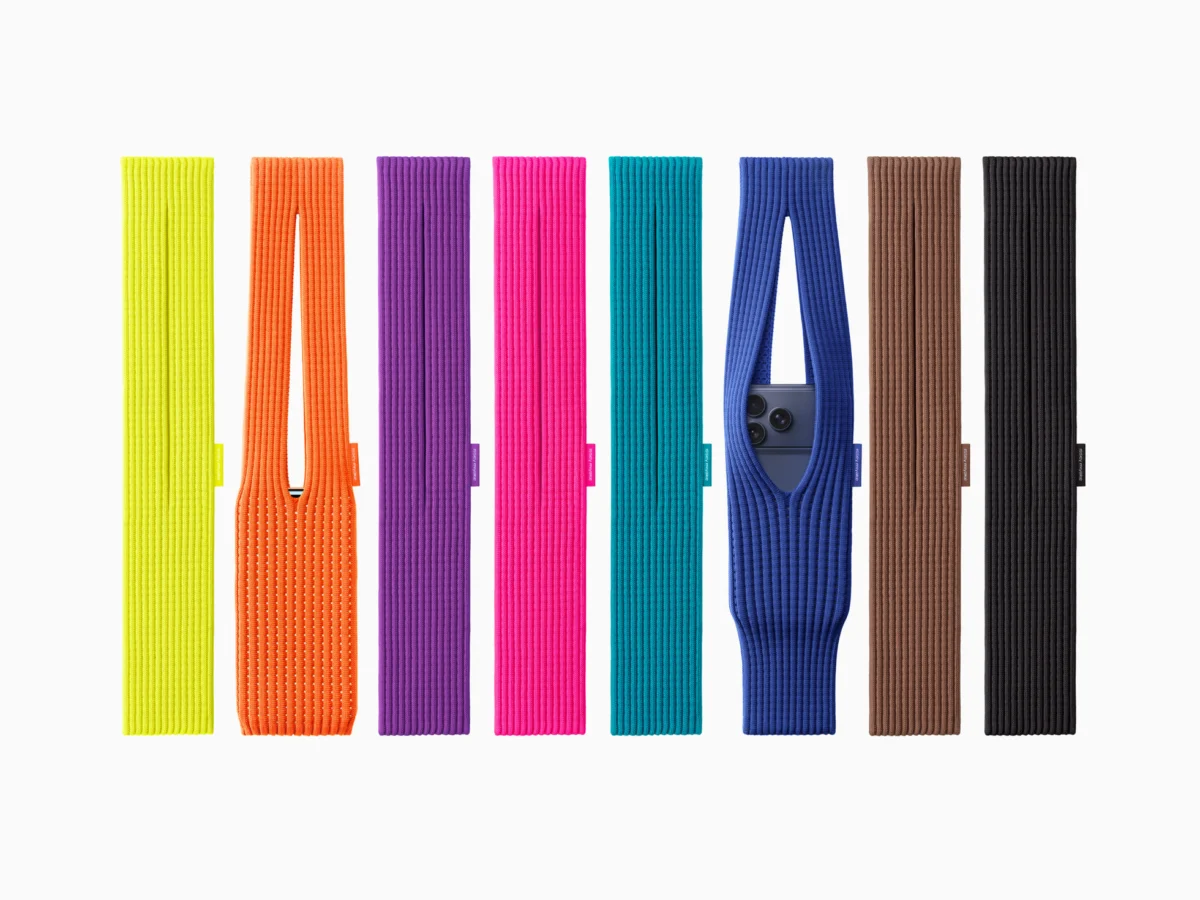
Apple has officially expanded its portfolio of high-end accessories with the introduction of the iPhone Pocket, a limited-edition textile carrier designed in collaboration with the renowned Japanese fashion house Issey Miyake. The product, which is currently retailing on the Apple Store, is available in two distinct configurations: a "short" hand-carry version priced at $149.95 and a "long" crossbody version priced at $229.95. This release marks a significant moment in the intersection of consumer technology and haute couture, drawing upon a decades-old relationship between Apple’s co-founder Steve Jobs and the late designer Issey Miyake.
The iPhone Pocket is constructed using a specialized ribbed mesh fabric that utilizes Issey Miyake’s signature pleating techniques. According to the product description, the accessory is inspired by the "A Piece of Cloth" (APOC) concept, a revolutionary design philosophy introduced by Miyake in the late 1990s. The design features a single, continuous piece of fabric that forms the entire structure of the pocket. When the material is stretched, the open-weave textile becomes semi-transparent, allowing users to view their iPhone display without removing the device from the carrier.
Historical Context: The Jobs-Miyake Connection
The collaboration between Apple and the Issey Miyake label is rooted in a historical partnership that shaped the visual identity of Silicon Valley. In the early 1980s, during a visit to Sony’s headquarters in Japan, Steve Jobs observed that all employees wore a standardized uniform designed by Issey Miyake. Jobs, impressed by the sense of corporate unity and the utilitarian aesthetic, commissioned Miyake to design a uniform for Apple employees.
Although the proposal for a company-wide uniform was ultimately rejected by Apple’s workforce, the professional bond between Jobs and Miyake endured. Jobs requested that Miyake create a personal uniform for him, resulting in the production of hundreds of black mock-neck turtlenecks. This garment became the centerpiece of Jobs’ iconic daily attire, symbolizing a minimalist approach to decision-making and a focus on essentialism. While Issey Miyake passed away in 2022, his design house continues to operate under his established principles, and the iPhone Pocket represents the first formal commercial product collaboration between the two entities.
Technical Specifications and Design Philosophy
The iPhone Pocket is more than a simple protective sleeve; it is an application of high-concept textile engineering. The APOC system, which serves as the foundation for this product, was first unveiled in 1997. It utilizes a computer-controlled knitting process that creates garments from a single thread, significantly reducing fabric waste compared to traditional cut-and-sew methods.

The version released for the iPhone features:
- Material Structure: A high-elasticity ribbed mesh that provides both impact cushioning and breathability.
- Visual Integration: The "Lemon" colorway and other vibrant palettes are designed to complement the existing color ranges of the iPhone 15 and 16 series.
- Sizing Options: The "short" model is designed to be attached to larger bags or carried by hand, while the "long" version includes an integrated strap for crossbody wear, catering to the growing "phone-as-a-purse" trend.
Apple’s marketing materials emphasize the "quiet genius" of the design, noting that the textile’s ability to reveal the screen upon stretching solves the common problem of accessibility in deep-pocketed bags.
Market Trends: The Rise of the Luxury Tech Accessory
The introduction of a $230 cloth carrier follows a broader industry trend where technology companies leverage luxury partnerships to increase brand prestige and average selling prices. This is not Apple’s first foray into high-priced accessories; the company has previously collaborated with Hermès on Apple Watch bands and AirTag charms, some of which retail for more than the electronic devices they accompany.
The "iPhone Pocket" enters a market currently dominated by "accessories for accessories." Industry analysts point to several factors driving the demand for these products:
- The Minimalist Carry Movement: With the proliferation of digital wallets (NFC) and smart locks, consumers are increasingly leaving their homes with only a smartphone. This has created a niche for specialized phone bags that replace traditional handbags.
- The "Labubu" and Bag Charm Phenomenon: Recent retail data shows a surge in the popularity of high-end bag charms and "blind box" collectibles like Pop Mart’s Labubu. These items, which can range from $30 to several thousand dollars on the secondary market, demonstrate a consumer willingness to spend significant amounts on non-functional or semi-functional enhancements for their primary accessories.
- Veblen Goods in Tech: Products like the $19 Apple Polishing Cloth or the $700 Mac Pro wheels serve as "Veblen goods"—items for which demand increases as the price increases, largely due to their status as symbols of exclusivity.
Chronology of Apple’s Premium Accessory Strategy
The release of the iPhone Pocket is part of a calculated timeline of high-margin accessory launches:
- 2015: Apple launches the Apple Watch Hermès collection, signaling its intent to compete in the luxury fashion space.
- 2021: The release of the $19 Polishing Cloth generates significant social media engagement and high sales volumes despite skepticism regarding its price point.
- Early 2024: Apple introduces its own $59 crossbody strap, testing the waters for wearable phone accessories.
- Late 2024: The limited-edition Issey Miyake iPhone Pocket is released, positioning the smartphone as a piece of wearable art rather than just a communication tool.
Industry and Consumer Reactions
The announcement has garnered mixed reactions from technology analysts and fashion critics. Financial analysts suggest that the iPhone Pocket is a low-risk, high-reward product for Apple. By utilizing Issey Miyake’s brand equity, Apple can capture a segment of the "Hypebeast" and luxury fashion demographics that might otherwise view tech accessories as utilitarian or uninspired.

Conversely, some consumer advocacy groups have pointed to the pricing as an example of "luxury creep" in the tech sector. Critics argue that $150 for a textile sleeve is difficult to justify based on material costs alone. However, fashion industry insiders argue that the price reflects the complexity of the APOC knitting process and the historical significance of the Miyake-Jobs legacy.
From a sustainability standpoint, the use of the APOC method is seen as a positive step. By creating products that are knitted to shape rather than cut from larger bolts of fabric, the collaboration minimizes industrial textile waste—a core pillar of Apple’s stated environmental goals for 2030.
Broader Implications for the Future of Wearable Tech
The iPhone Pocket suggests a future where the line between "hardware" and "apparel" continues to blur. As smartphones become the central hub for identity, payment, and security, the way they are carried becomes a matter of personal expression.
This product also reinforces Apple’s strategy of diversifying its revenue streams. As smartphone upgrade cycles lengthen, high-margin accessories allow the company to maintain growth in its "Wearables, Home, and Accessories" segment, which has become a multibillion-dollar business in its own right.
Whether the iPhone Pocket becomes a mainstay in Apple’s accessory lineup or remains a niche collector’s item, its launch underscores a fundamental shift in the consumer electronics landscape. The device is no longer just a tool to be kept in a pocket; for a certain segment of the market, the device is the pocket. As the holiday shopping season approaches, retail experts expect the "short" version of the pocket to perform well as a "status gift," further cementing Apple’s position as a lifestyle brand rather than a mere hardware manufacturer.
In conclusion, the iPhone Pocket by Issey Miyake represents a synthesis of historical reverence and modern market strategy. It honors a legendary friendship while tapping into current consumer desires for minimalism, luxury, and brand-driven identity. While the price point may remain a barrier for the average consumer, the product’s existence serves as a testament to the enduring influence of Issey Miyake’s "Piece of Cloth" on the world of modern design.