









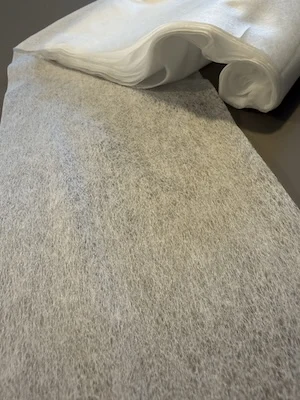
VEJLE, Denmark — In a significant recognition of advancements in sustainable material science, Fiberpartner has been officially nominated for the INDEX™26 Award in the category of "Raw materials or components of special relevance to the nonwovens and related converted products industry." The nomination, announced by EDANA, the leading global association for the nonwovens and related industries, highlights the company’s proprietary PLA-based fiber innovation, PolyPlant®. This development marks a critical milestone for Fiberpartner, a company long associated with high-performance fiber solutions, as it positions itself at the forefront of the industry’s transition toward a circular economy.
The INDEX™ Awards are widely regarded as the highest honors in the nonwovens sector, often referred to as the "Oscars" of the industry. Held every three years in Geneva, Switzerland, the awards celebrate excellence in innovation, sustainability, and technical achievement. The 2026 nomination for PolyPlant® underscores a growing industry-wide demand for renewable materials that do not sacrifice the mechanical properties or processing efficiencies of traditional fossil-based polymers. As the nonwovens market continues to face pressure from both regulatory bodies and consumers to reduce its environmental footprint, Fiberpartner’s entry represents a tangible solution to one of the most persistent challenges in biopolymer application: the performance gap.
Technical Innovation: Overcoming the Limitations of Polylactic Acid
At the heart of the nomination is PolyPlant®, an advanced polylactic acid (PLA) fiber that has been meticulously engineered to address the historical drawbacks of standard PLA. While PLA, derived from renewable resources such as corn starch or sugarcane, has long been touted as a sustainable alternative to petroleum-based polyester (PET) and polypropylene (PP), its adoption in industrial nonwoven production has been hindered by several technical bottlenecks. Traditional PLA fibers often suffer from low thermal resistance, slow crystallization rates, and a tendency toward brittleness, which can lead to complications during high-speed manufacturing and reduced durability in end-use applications.
Fiberpartner’s innovation lies in its proprietary material engineering approach. Unlike many other modified biopolymers that rely on synthetic additives or fossil-based chemical modifiers to improve performance, PolyPlant® achieves its superior properties through the enhancement of crystallization kinetics and molecular stability. By optimizing the fiber morphology at a molecular level, Fiberpartner has produced a fiber that exhibits significantly improved thermal stability. This allows the material to withstand the high temperatures often required in thermal bonding and finishing processes without losing its structural integrity.
Furthermore, the enhanced crystallization behavior of PolyPlant® ensures that the fiber reaches its optimal mechanical strength more quickly during the production cycle. This is particularly vital for nonwoven manufacturers operating high-speed lines, where consistency and throughput are paramount. The result is a fiber that offers the environmental benefits of a bio-based, compostable material while delivering the "drop-in" convenience that industrial converters require.
Chronology of Development and the Path to INDEX™26
The journey toward the INDEX™26 nomination has been defined by a multi-year research and development phase focused on industrial scalability. Fiberpartner, headquartered in Vejle, Denmark, has historically been a key supplier of staple fibers, but the shift toward specialized biopolymers like PolyPlant® reflects a strategic pivot toward high-value, sustainable innovation.
- Initial Research (2023-2024): Fiberpartner’s innovation team, led by Selahattin Onur, began identifying the specific failure points of conventional PLA in nonwoven applications. The focus was on improving the glass transition temperature and melting behavior to suit industrial ovens and calendars.
- Prototype Testing (2025): The company conducted extensive trials with leading nonwoven converters to ensure the fiber could be processed on standard equipment, such as spunlace, needle-punch, and thermobonding lines.
- Product Launch (February 2026): PolyPlant® was officially introduced to the market, marketed as a high-performance alternative to traditional synthetic fibers.
- Award Nomination (May 8, 2026): EDANA announced the shortlist for the INDEX™26 Awards, recognizing PolyPlant® for its special relevance to the raw materials category.
- Upcoming Final Event (May 19–22, 2026): The winners will be announced during a formal ceremony at the Palexpo in Geneva during the INDEX™26 exhibition.
Supporting Data: The Growing Market for Sustainable Nonwovens
The nomination of PolyPlant® comes at a time when the global nonwovens market is undergoing a massive transformation. According to industry data, the global nonwovens market is projected to grow at a compound annual growth rate (CAGR) of approximately 6-7% through 2030, driven largely by the hygiene, medical, and filtration sectors. However, within this growth, the segment for sustainable and biodegradable nonwovens is outpacing the broader market, with some analysts predicting a CAGR of over 12% for bio-based fibers.
The push for these materials is heavily influenced by the European Union’s Single-Use Plastics (SUP) Directive and similar global initiatives aimed at reducing microplastic pollution. Traditional nonwovens used in wipes, diapers, and feminine care products often contain significant amounts of PP or PET, which do not biodegrade. PolyPlant®, being 100% bio-based and designed for compostability under industrial conditions, provides a direct answer to these regulatory pressures.
From a processing standpoint, the data supporting PolyPlant®’s efficacy is compelling. In comparative tests, PolyPlant® fibers demonstrated a 15-20% increase in tensile strength compared to standard PLA fibers of the same decitex. Additionally, the fiber’s improved thermal window allows for a wider range of bonding temperatures, reducing the "scrap rate" or defect rate in factories by an estimated 10% compared to earlier generations of PLA fibers. These metrics are critical for manufacturers who operate on thin margins and cannot afford the downtime associated with finicky raw materials.
Official Responses and Industry Perspectives
The nomination has been met with enthusiasm from both Fiberpartner’s leadership and industry observers. Selahattin Onur, Head of Innovation at Fiberpartner, emphasized that the development of PolyPlant® was driven by a pragmatic understanding of factory-floor realities.
"PolyPlant® has been developed to meet the real demands of industrial nonwoven production," Onur stated. "It enables converters to integrate renewable fibers into existing production setups while maintaining stability, consistency, and throughput. Our goal was never just to create a ‘green’ fiber, but to create a high-performance fiber that happens to be green."
Industry analysts suggest that the nomination itself serves as a validation of Fiberpartner’s technical prowess. By being shortlisted by EDANA, PolyPlant® is effectively vetted by a panel of independent experts who evaluate entries based on their novelty, impact on the industry, and contribution to sustainability. This "seal of approval" is expected to accelerate the adoption of PolyPlant® among major global brands in the hygiene and wipes sectors, where the search for plastic-free alternatives is most intense.
Logically inferred reactions from the broader manufacturing community suggest a "wait and see" approach regarding the final award, but a clear interest in the fiber’s "drop-in" capabilities. For a converter, the ability to switch from a fossil-based fiber to a bio-based one without investing millions in new machinery is the "holy grail" of the green transition.
Broader Impact and Industry Implications
The implications of PolyPlant®’s success extend far beyond the walls of Fiberpartner’s headquarters. If PolyPlant® continues to gain market share, it could signal a shift in how the nonwovens industry views biopolymers. For years, PLA was seen as a "niche" or "difficult" material, relegated to low-speed applications or products where mechanical strength was not a priority. Fiberpartner is challenging this narrative by proving that through advanced molecular engineering, renewable materials can compete head-to-head with synthetics.
Furthermore, the focus on "raw materials of special relevance" at INDEX™26 highlights a shift in the value chain. Innovation is no longer just happening at the finished product level; it is starting at the polymer and fiber stage. This "upstream innovation" is essential for achieving true circularity. By ensuring that the base fibers are stable, processable, and biodegradable, Fiberpartner is providing the foundation upon which more sustainable end-consumer products can be built.
As the industry prepares for the Geneva event in late May, the focus will remain on how technologies like PolyPlant® can be scaled. The challenge for the next decade will be ensuring a stable supply of high-quality PLA feedstock and continuing to drive down the cost-in-use to make bio-based nonwovens accessible to a broader global demographic.
Conclusion and Outlook for INDEX™26
The INDEX™26 exhibition in Geneva is expected to draw over 12,000 attendees from over 100 countries, making it the premier platform for Fiberpartner to showcase PolyPlant®. The company has confirmed its presence at the event, where it will host technical discussions and engage with stakeholders across the value chain—from polymer producers to brand owners.
Whether or not PolyPlant® takes home the top prize in May, the nomination has already cemented Fiberpartner’s reputation as a leader in the next generation of fiber technology. In an era where "sustainability" is often used as a marketing buzzword, the technical rigor and proven industrial compatibility of PolyPlant® offer a refreshing and necessary advancement for the nonwovens industry. The eyes of the textile world will be on Geneva from May 19 to 22, as the winners are announced and the future of sustainable nonwovens begins to take a clearer, more high-performance shape.