










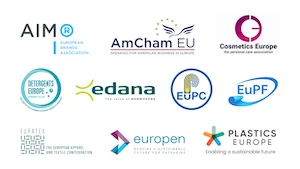
BRUSSELS, Belgium — In a significant move aimed at safeguarding the stability of the European internal market, a coalition of prominent industrial associations, led by EDANA, has issued a formal appeal to European Union institutions to maintain the current legal framework of the Single-Use Plastic Directive (SUPD). The joint statement, released on July 1, 2026, underscores a growing concern among economic operators regarding the potential reopening of the Directive, which was originally adopted in 2019. The signatories, representing a broad spectrum of the European industrial landscape, argue that a premature revision would trigger a wave of legal uncertainty, undermine the competitiveness of European businesses, and impose disproportionate administrative burdens on companies already struggling to comply with a fragmented regulatory environment.
The core of the industry’s argument rests on the premise that the SUPD, while noble in its environmental objectives, has not yet been given sufficient time to yield measurable results. The associations emphasize that the focus of EU policymakers should remain on the effective implementation of existing rules rather than the introduction of new, potentially conflicting legislation. This appeal comes at a critical juncture for the European Union, as leaders increasingly prioritize regulatory simplification and the integration of the Single Market to bolster the continent’s economic resilience against global competitors.
The Evolution of the Single-Use Plastic Directive: A Chronological Overview
To understand the current friction between industry and policymakers, it is essential to trace the trajectory of the SUPD. The Directive (EU) 2019/904 was conceived during a period of heightened public awareness regarding marine litter and the environmental impact of plastic pollution.
- May 2018: The European Commission first proposed the Directive, targeting the 10 plastic items most commonly found on European beaches, as well as abandoned fishing gear.
- June 2019: The Directive was formally adopted by the European Parliament and the Council. It introduced a range of measures, including market bans on certain products (like plastic straws and cutlery), consumption reduction targets, and extended producer responsibility (EPR) schemes.
- July 2021: This marked the primary deadline for Member States to transpose the Directive into national law. However, the process was marred by delays and variations in how different countries interpreted the technical specifications for product marking and material definitions.
- 2022–2024: Industry operators began implementing the mandatory "Plastic in Product" labels and transitioning to alternative materials. During this period, several Member States introduced national measures that went beyond the scope of the Directive, creating the "divergent transpositions" cited in the recent industry statement.
- 2025: The entry into force of Regulation (EU) 2025/40 (often referred to in the context of the Packaging and Packaging Waste Regulation) created a complex overlapping legal landscape, necessitating a clear distinction between general packaging rules and the specific requirements of the SUPD.
- July 2026: Industry associations formally voice their opposition to a 2027 revision, citing a lack of empirical data on the 2019 Directive’s long-term effectiveness.
Addressing the Burden of Legal Uncertainty and National Divergence
One of the primary grievances highlighted by EDANA and its partners is the lack of harmony across the EU’s 27 Member States. While the SUPD was intended to harmonize rules across the Single Market, the reality has been a patchwork of national interpretations. For example, some nations have implemented stricter definitions of what constitutes a "plastic" polymer, leading to situations where a product might be compliant in one country but prohibited or subject to different labeling requirements in another.
The signatories argue that reopening the Directive now would only exacerbate these discrepancies. Economic operators have already invested billions of euros in research, development, and supply chain adjustments to meet the 2019 requirements. A revision would essentially "move the goalposts" before the initial investments have reached their full lifecycle. This is particularly impactful for the nonwovens sector—represented by EDANA—where products such as wet wipes and sanitary items are subject to specific marking requirements. The cost of re-tooling manufacturing lines to accommodate new labeling or material restrictions is substantial, especially for Small and Medium-sized Enterprises (SMEs).
The Interplay Between SUPD and Regulation (EU) 2025/40
A technical but crucial point raised in the industry’s communication is the relationship between the SUPD and the more recent Regulation (EU) 2025/40. Under EU law, the SUPD functions as lex specialis—a specific law that takes precedence over a general law (lex generalis) within its specific scope.
The industry associations warn that reopening the SUPD could lead to regulatory overlaps or direct contradictions with the Packaging and Packaging Waste Regulation (PPWR). This "regulatory thicket" makes it difficult for businesses to plan long-term investments. If the specific rules for single-use plastics are altered, they may clash with the broader circular economy targets set out in the 2025 Regulation, leading to a climate of "permanent transition" that stifles innovation.
Data-Driven Insights into the Nonwovens and Plastics Sector
The call for maintaining the status quo is backed by economic realities. The European nonwovens industry, which is heavily impacted by the SUPD, contributes significantly to the EU economy. According to market data from 2024-2025, the European nonwovens production volume exceeded 3 million tonnes annually, with a significant portion dedicated to hygiene and medical applications.
Transitioning these products to 100% plastic-free alternatives is a complex engineering challenge. While bio-based polymers and natural fibers like viscose and lyocell are increasingly used, they often require different processing technologies and have different performance profiles. Industry data suggests that a forced, accelerated shift away from current SUPD-compliant materials could result in a 15-25% increase in production costs, which would inevitably be passed on to consumers.
Furthermore, the environmental benefit of such a shift is not always clear-cut. Life Cycle Assessments (LCAs) often show that certain plastic-free alternatives may have higher carbon footprints or water usage during production than the plastic-containing products they replace. The industry associations argue that without "sufficient evidence on the effectiveness" of the current rules, any further restrictions would be based on political optics rather than scientific reality.
Challenges in Measuring Environmental Efficacy
The signatories of the July 1st statement point out that it is currently impossible to accurately judge the success of the 2019 Directive. Environmental monitoring, particularly regarding marine litter, is a slow process. It can take several years for changes in consumption patterns and waste management to manifest in reduced pollution levels on European coastlines.
Initial reports from 2025 suggested a decline in the presence of certain banned items, such as plastic cotton bud sticks and straws. However, the impact on "category 2" items—those subject to marking and awareness-raising, such as wipes and tobacco filters—is much harder to quantify. The industry contends that the EU should prioritize the collection of robust, harmonized data across all Member States before even considering a legislative overhaul.
The Broader Economic Context: Prioritizing European Competitiveness
The timing of this appeal is not accidental. It aligns with the broader "competitiveness agenda" championed by EU leaders in early 2026. Following high-profile reports on the state of the Single Market, there has been a shift in Brussels toward "better regulation" principles. This involves reducing the reporting burden on companies and ensuring that new laws do not disadvantage European firms against global competitors who may face less stringent environmental mandates.
By urging policymakers to avoid reopening the SUPD, the associations are essentially asking for a "regulatory breathing space." They argue that for Europe to lead in the green transition, its industries must have a stable and predictable legal environment. Constant legislative flux discourages the very investment needed to develop the circular economy technologies of the future.
Official Responses and Stakeholder Reactions
While the European Commission has not yet issued a formal rebuttal to the July 1st statement, sources within the Directorate-General for Environment (DG ENV) suggest that the executive branch remains committed to the goals of the Circular Economy Action Plan. Environmental NGOs, on the other hand, have expressed concern that delaying a revision could slow down the momentum in the fight against plastic pollution. They argue that the 2019 Directive was only a "first step" and that more aggressive targets are needed to meet the EU’s 2030 climate goals.
However, the industry coalition—which includes groups beyond EDANA, representing sectors from food packaging to personal care—remains firm. Their position is that environmental protection and economic stability are not mutually exclusive, but they require a foundation of clear, consistent, and evidence-based law.
Conclusion: A Call for Evidence-Based Policymaking
The joint statement from Brussels serves as a reminder of the complexities involved in legislating for a sustainable future. As the European Union moves forward, the tension between rapid environmental action and the need for industrial stability will likely remain a central theme of political discourse.
For now, the message from the European industrial sectors is clear: the Single-Use Plastic Directive must be allowed to run its course. Only after its impact has been fully and scientifically assessed can the EU make informed decisions about its future. In the words of the signatories, focusing on "legislative efforts where they are most needed" and ensuring a "fully integrated Single Market" are the best ways to ensure both a cleaner environment and a competitive European economy. As the July 4th posting of the statement begins to circulate through the halls of the European Parliament and the Council, the ball is now in the policymakers’ court to decide whether to heed this call for stability or press ahead with further reform.