










Harrods has renewed its urgent call for independent court-appointed oversight of the estate belonging to its former long-time owner, Mohamed Al Fayed, citing escalating concerns over its opaque administration, inadequate engagement with alleged abuse victims, and potential challenges in its capacity to meet significant compensation claims. This formal request, lodged on June 2, 2026, marks a pivotal development in the complex aftermath of Al Fayed’s passing in August 2023, bringing the scrutiny of his vast and intricate legacy into the public and legal spotlight. The luxury department store, now under the ownership of the Qatar Investment Authority (QIA), maintains that its intervention is driven by an ethical imperative to protect its brand integrity and ensure justice for those who have come forward with serious allegations stemming from Al Fayed’s decades-long tenure at the helm.
The Renewed Call for Intervention
The latest petition from Harrods to the High Court of England and Wales underscores a deepening rift between the iconic retailer and the executors of the Al Fayed estate. Sources close to the proceedings indicate that this renewed call follows months of what Harrods describes as unsatisfactory dialogue and a perceived lack of transparency regarding the estate’s financial health and its strategy for addressing a growing number of historical abuse claims. The store’s management argues that without independent oversight, there is a substantial risk that the administration of the estate could fail to adequately address its liabilities, particularly those related to the alleged victims.
Specifically, Harrods’ concerns are multifaceted. Firstly, the lack of clarity surrounding the estate’s global assets and liabilities, spanning various jurisdictions and investment vehicles, has raised questions about its overall financial resilience. Secondly, the manner in which the estate has reportedly engaged with individuals alleging various forms of abuse – ranging from workplace misconduct to more severe historical allegations – has been criticized as insensitive and uncooperative, prompting further legal action from victim groups. Lastly, the cumulative value of potential compensation claims, which legal analysts estimate could run into tens or even hundreds of millions of pounds, presents a significant financial challenge that Harrods believes necessitates an impartial third party to manage.
Mohamed Al Fayed: A Legacy of Grandeur and Controversy
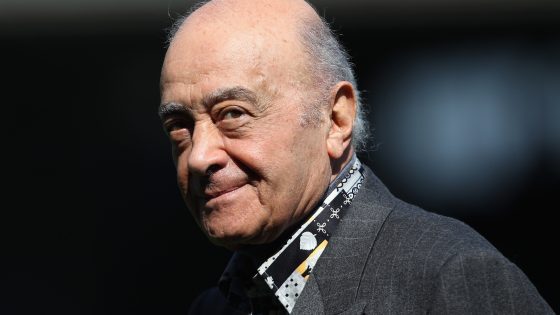
Mohamed Al Fayed, born in Egypt in 1929, was a figure synonymous with flamboyant entrepreneurship and unapologetic ambition. His journey from humble beginnings to becoming the owner of some of Britain’s most iconic institutions is a tale woven into the fabric of late 20th-century British business. He arrived in the UK in the 1960s, quickly making his mark in shipping, property, and finance.
His most notable acquisition came in 1985 when he, alongside his brother Ali, bought Harrods from House of Fraser for £615 million. This takeover was met with considerable controversy, including a protracted investigation by the Department of Trade and Industry (DTI) into the acquisition process, which ultimately led to a critical report alleging Al Fayed had misled investigators. Despite these challenges, Al Fayed transformed Harrods into a global beacon of luxury, investing heavily in its infrastructure and marketing, cementing its status as a must-visit destination for tourists and royalty alike.
Beyond Harrods, Al Fayed’s empire included the Ritz Hotel in Paris and Fulham Football Club, both of which he steered with his characteristic hands-on approach. His personal life was also frequently in the public eye, particularly after the tragic death of his son Dodi Fayed and Diana, Princess of Wales, in 1997. Al Fayed spent years campaigning for an inquiry into their deaths, famously alleging foul play.
In 2010, Al Fayed sold Harrods to the Qatar Investment Authority for a reported £1.5 billion, stating his intention to spend more time with his grandchildren. He largely withdrew from the public spotlight in his later years, residing primarily at his mansion in Surrey until his death in August 2023 at the age of 94. His passing marked the end of an era, but it also opened the door to a complex period for his vast estate, estimated to be worth billions.
The Emergence of Abuse Allegations Post-Mortem
While whispers and anecdotal accounts of misconduct during Al Fayed’s ownership of Harrods had circulated for years, a more organized and public wave of allegations began to emerge shortly after his death. The absence of Al Fayed, combined with a broader societal reckoning with historical abuses in various institutions, emboldened former employees and associates to come forward.
These allegations reportedly span several decades, primarily focusing on the period when Al Fayed was at the helm of Harrods and other businesses. The claims vary in nature and severity, including accusations of bullying, harassment, and, in some instances, more serious allegations of sexual misconduct. A significant number of claimants have reportedly organized into a collective legal action, seeking both acknowledgment and financial compensation for the alleged harm suffered.
Legal counsel representing these victims has highlighted the emotional and psychological toll these experiences have had. They argue that the current administration of the Al Fayed estate has been slow to acknowledge the gravity of the claims, often resorting to legal stonewalling rather than proactive engagement or offers of resolution. This perceived recalcitrance is a primary driver behind Harrods’ insistence on external oversight, as the store believes a fair and equitable resolution for victims is paramount.
The Legal Framework for Court-Appointed Oversight
A court-appointed oversight, in the context of UK law, typically involves the High Court appointing an independent administrator, receiver, or special master to oversee the management and distribution of an estate’s assets. This drastic measure is usually invoked when there are serious concerns about the proper administration of an estate, particularly when there are allegations of mismanagement, lack of transparency, or a failure to meet significant liabilities.
The powers granted to such an appointee can be extensive, including:
- Full Access to Financial Records: The administrator would gain complete insight into the estate’s assets, liabilities, and expenditures across all global holdings.
- Control over Assets: Depending on the court order, the appointee could temporarily take control of the estate’s assets to ensure they are managed prudently and are available to meet claims.
- Investigation and Reporting: The administrator would be tasked with conducting a thorough investigation into the estate’s financial health and its past administrative practices, reporting findings directly to the court.
- Mediation and Dispute Resolution: Crucially, an independent oversight body would be expected to facilitate fair and transparent processes for assessing and resolving compensation claims, acting as an impartial arbiter between the estate and the claimants.
Such an appointment is not made lightly and requires substantial evidence presented to the court demonstrating a clear necessity. Harrods’ legal team would need to convince the court that the existing estate administration is either unwilling or unable to fulfill its fiduciary duties effectively, especially concerning the alleged victims.
Statements and Reactions
In response to Harrods’ renewed petition, a spokesperson for the luxury retailer released a statement emphasizing its commitment to ethical corporate responsibility. "Harrods has a deep and abiding connection to its history and its people," the statement read. "While ownership has changed, our dedication to upholding the highest standards of integrity remains. Our call for independent oversight is a necessary step to ensure that the Al Fayed estate addresses all outstanding matters, particularly the serious allegations made by former colleagues, with the transparency and justice they deserve. We believe this is vital for the integrity of all parties involved and for the wider public interest."
Sources close to the Al Fayed estate, speaking on condition of anonymity due to the sensitivity of ongoing legal matters, indicated a strong resistance to the proposed oversight. "The estate is being managed diligently and in accordance with all legal requirements," one source stated. "Suggestions of mismanagement or an inability to meet obligations are unfounded. This is a complex estate, and we are working through legitimate processes. External interference would only complicate matters further and could be perceived as an undue intrusion into private affairs." The estate is expected to vigorously oppose Harrods’ application in court, arguing that it possesses the competence and resources to manage its affairs without external intervention.
Representatives for the alleged abuse victims have largely welcomed Harrods’ initiative. "This is a significant step towards accountability," commented Sarah Jenkins, a solicitor representing a collective of claimants. "For too long, the victims have felt marginalized and ignored. The involvement of an independent, court-appointed body could finally bring the transparency and justice that is long overdue. We urge the High Court to grant this petition and ensure that the victims’ claims are handled with the seriousness and fairness they deserve."
Legal experts have weighed in on the complexity of the situation. "This is a fascinating and potentially precedent-setting case," noted Professor Alistair Finch, a specialist in estate law at King’s College London. "The courts will have to balance the rights of the beneficiaries of the estate against the public interest in ensuring justice for alleged victims and the proper administration of a substantial and globally dispersed estate. Harrods, as a former entity linked to the estate, has a unique standing to bring such a petition, arguing reputational harm and ethical responsibility. The legal battle ahead is likely to be protracted and highly intricate."
Broader Implications and Future Outlook
The outcome of Harrods’ petition for court-appointed oversight of the Al Fayed estate carries significant implications across several domains.
Reputational Impact: For the Al Fayed family, a forced oversight would undoubtedly cast a shadow over Mohamed Al Fayed’s legacy, potentially reinforcing negative perceptions linked to past controversies. For Harrods, even though it no longer owns the store, its proactive stance could enhance its reputation as a socially responsible corporate entity, keen on rectifying historical wrongs that occurred under its former ownership.
Financial Implications: The appointment of an independent administrator could lead to a thorough audit of the estate’s assets, potentially uncovering previously unacknowledged liabilities or revealing a more accurate picture of its financial capacity. This could directly impact the speed and scale of compensation for victims, as well as the eventual distribution of assets to beneficiaries. The legal costs associated with such a high-profile case are also expected to be substantial, further drawing down estate resources.
Precedent for Estate Management: This case could set an important precedent in UK law regarding the administration of large, complex estates, particularly those linked to public figures and historical allegations of misconduct. It could encourage greater transparency from estate executors and provide a clearer pathway for external intervention when concerns about ethical or financial governance arise.
Corporate Governance and Responsibility: Harrods’ move highlights a growing trend where companies, even after changes in ownership, feel a moral or strategic imperative to address historical issues that occurred under previous regimes, especially when those issues continue to impact stakeholders or the brand’s public image.
The legal proceedings are expected to unfold over the coming months, likely involving detailed submissions from all parties, expert testimonies, and potentially a lengthy hearing. Regardless of the court’s final decision on oversight, this renewed call from Harrods ensures that the intricate legacy of Mohamed Al Fayed will continue to be meticulously examined, and the pursuit of justice for alleged victims will remain a central, defining narrative. The resolution of this complex legal and ethical challenge will undoubtedly shape future discussions around corporate accountability and estate management in the United Kingdom.