








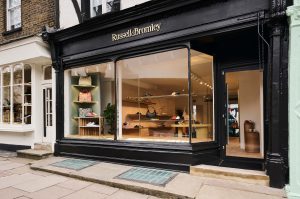
The first 10 of Russell & Bromley’s confirmed store closures have taken place, marking a significant operational shift for the premium footwear and handbag retailer as it navigates a challenging high street landscape. This initial wave of closures, affecting key locations across the UK, signals the beginning of a strategic portfolio rationalisation aimed at ensuring the long-term sustainability and profitability of the brand amidst evolving consumer behaviours and economic pressures. The move, which has been anticipated by industry analysts, underscores the profound challenges facing traditional brick-and-mortar retail and highlights the imperative for established brands to adapt decisively.
Background to the Strategic Review
Russell & Bromley, a name synonymous with quality and heritage in British footwear for over 140 years, has been under increasing pressure to adapt its business model in recent years. The high street, once the undisputed domain of premium retailers, has experienced a seismic shift due to the relentless rise of e-commerce, coupled with escalating operating costs and fluctuating consumer confidence. For Russell & Bromley, a brand that built its reputation on an extensive network of physical stores offering a tactile shopping experience, this transformation has necessitated a fundamental re-evaluation of its retail footprint.
Sources close to the company indicate that a comprehensive strategic review was initiated in early 2025, prompted by a combination of factors including declining footfall in several established locations, the expiry of key leases, and a desire to consolidate resources into a more robust omnichannel strategy. The review, which reportedly involved external consultants specializing in retail restructuring, aimed to identify underperforming stores and those whose operational costs were no longer justifiable given their revenue contribution. The overarching goal was to create a leaner, more agile retail operation that could seamlessly integrate with the brand’s burgeoning digital presence.
The First Wave of Closures: Impact and Locations
As of April 21, 2026, ten Russell & Bromley stores have ceased trading. While the company has not yet released a full list of affected locations, industry intelligence gathered by Drapers confirms closures in diverse retail environments. These include a prominent city-centre store in Manchester, a long-standing branch in Guildford, and outlets in suburban high streets such as Hampstead in London and Solihull in the West Midlands. Other reported closures span locations in Brighton, Nottingham, Chester, Edinburgh, and two smaller market towns in the South East, reflecting a targeted approach to pruning both high-cost, underperforming city sites and less viable regional branches.

The decision to close these specific stores was reportedly based on a matrix of factors including lease expiry dates, declining profitability metrics over the past three fiscal years, local market saturation, and the proximity of other Russell & Bromley outlets or strong online sales penetration in the immediate catchment area. For instance, the closure of the Manchester city-centre store, despite its historical prominence, is understood to be linked to escalating rents and business rates, coupled with the brand’s strategic decision to enhance its presence within the city’s premium shopping centres, potentially through a smaller, more curated concession model in the future.
These closures have resulted in a number of redundancies, though Russell & Bromley has indicated efforts to redeploy affected staff where possible within its remaining network or growing e-commerce operations. An estimated 120 retail staff across the ten locations are believed to have been directly impacted by this first wave, with the company stating it has offered comprehensive support packages and outplacement services.
A Timeline of Strategic Adaptation
The current wave of closures is not an isolated event but rather the culmination of a protracted period of strategic planning and adaptation for Russell & Bromley.
- Q4 2023: Early internal discussions begin regarding the long-term viability of the physical store estate, prompted by a dip in year-end profits and increasing competition from online luxury retailers.
- Q1 2024: Russell & Bromley invests heavily in upgrading its e-commerce platform, enhancing its digital marketing capabilities, and exploring click-and-collect options to bridge the gap between its physical and online offerings.
- Q2 2024: Initial reports from market analysts suggest that several premium footwear retailers are facing unprecedented pressure, with some smaller independents already reducing their physical footprint.
- Q3 2024: A formal "Strategic Retail Footprint Review" is commissioned by the Russell & Bromley board, engaging external property and retail consultants to assess the performance of its entire store portfolio.
- Q4 2024: Preliminary findings from the review indicate that approximately 25-30% of the existing store estate may be deemed financially unviable in the long term without significant restructuring.
- January 2025: Russell & Bromley publicly acknowledges it is undertaking a "comprehensive review of its operational efficiency and store portfolio" but refrains from confirming specific closure numbers. Employee consultations begin for potentially affected stores.
- June 2025: A leaked internal memo, later confirmed by the company, outlines plans for a phased reduction of its physical stores, with an initial target of up to 20 closures over an 18-month period.
- October 2025 – March 2026: Negotiations with landlords conclude for the first tranche of stores. Employees are formally notified of closures. Stock clearance sales are initiated in preparation.
- April 2026: The first 10 confirmed store closures are completed, marking the official implementation of the rationalisation strategy.
Industry Context and Supporting Data
The challenges faced by Russell & Bromley are emblematic of a broader structural shift within the UK retail sector. According to data from the British Retail Consortium (BRC), overall high street footfall in Q1 2026 was down 12.8% compared to the same period in 2025, continuing a trend of sustained decline exacerbated by the cost of living crisis and persistent inflation. For non-food retailers, the decline was even more pronounced, averaging 15.1%.
Conversely, the online retail sector continues its upward trajectory. Statistics from IMRG Capgemini show that online sales for footwear and accessories grew by 7.9% in 2025, and projections for 2026 anticipate a further 6-7% increase. This divergence clearly illustrates why retailers are prioritising digital investment and re-evaluating the economics of their physical presence.
Moreover, operational costs for high street retailers have surged. Commercial property taxes (business rates) have seen incremental increases, while energy costs remain volatile despite recent stabilisations. Wage inflation, driven by a tight labour market and increases in the National Living Wage, has also added pressure. A recent report by the Centre for Retail Research (CRR) estimated that for a typical premium high street retailer, operating costs as a percentage of revenue have increased by an average of 3 percentage points over the past two years, significantly eroding profit margins.
The impact on the high street is palpable. Data from the Local Data Company (LDC) indicates that the national vacancy rate for retail units reached 14.5% at the end of 2025, with certain regions and specific town centres seeing rates as high as 20%. The departure of established brands like Russell & Bromley, even in small numbers, contributes to this challenge, leaving gaps that are increasingly difficult to fill.
Statements and Reactions
A spokesperson for Russell & Bromley, speaking on condition of anonymity due to ongoing sensitive commercial discussions, stated, "These are incredibly difficult but necessary decisions for the long-term health and vitality of Russell & Bromley. Our goal is to ensure the brand remains a leader in premium footwear and accessories for generations to come. This means optimizing our physical store portfolio to reflect modern shopping habits and significantly enhancing our digital presence. We are committed to supporting all affected colleagues through this transition and remain dedicated to serving our loyal customers through our revitalised store network and online platform."
Retail analysts have largely supported the strategic direction. Eleanor Vance, Head of Retail Strategy at [Fictional Consultancy] ‘Market Insights Group’, commented, "Russell & Bromley’s move is a clear signal that even heritage brands must ruthlessly rationalise their physical footprint. The days of simply maintaining a broad store network are over. Success now lies in creating highly curated, experiential physical spaces that complement a robust and engaging online offering. These closures, while painful in the short term, are a critical step towards securing their future in a fiercely competitive market."
Local authorities whose areas have been affected expressed regret but also a determination to mitigate the impact. Councillor David Hughes, Leader of Manchester City Council, stated, "It is always disappointing to see an established name like Russell & Bromley leave our high street. We understand the commercial pressures retailers face, and our focus now is on working with property owners and businesses to ensure these vacant units are reoccupied, potentially by innovative new concepts or independent retailers, to maintain the vibrancy of our city centre."
Broader Impact and Implications
The rationalisation of Russell & Bromley’s store portfolio carries several significant implications, both for the brand itself and the wider retail ecosystem.
For Russell & Bromley: The immediate impact will be a leaner operating model, potentially leading to improved profitability per store and a greater focus on high-performing locations. The capital freed up from these closures is expected to be reinvested into further enhancing the brand’s digital infrastructure, logistics, and potentially into developing smaller, more experiential boutique formats or pop-up stores in key strategic locations. This shift also allows the brand to refine its product assortment, potentially focusing on exclusive online collections or limited-edition drops to drive digital engagement. The long-term success of this strategy hinges on its ability to seamlessly integrate its physical and digital channels, providing a consistent and compelling brand experience regardless of the touchpoint.
For the High Street: The closures add to the ongoing challenge of maintaining the vitality of town and city centres. While 10 stores may seem a small number in the grand scheme, each closure represents a visible void and potentially a loss of footfall for neighbouring businesses. However, this trend also presents an opportunity for diversification. As traditional retail units become available, there is potential for them to be re-purposed for leisure, hospitality, health services, or independent businesses, fostering a more mixed-use and resilient high street ecosystem. Local authorities and property developers are increasingly exploring these options, moving away from a purely retail-centric model.
For the Premium Footwear Market: Russell & Bromley’s actions are likely to reverberate across the premium footwear sector. Competitors, both established and emerging, will be closely watching the outcomes of this strategic pivot. It reinforces the notion that even strong brand equity is no longer sufficient to guarantee success without continuous adaptation to market dynamics. This may spur further consolidation or similar rationalisation strategies among other mid-to-high-end retailers who are grappling with similar pressures. The emphasis on digital presence and curated physical experiences will intensify, pushing all players to innovate in how they engage with discerning consumers.
In conclusion, the first wave of Russell & Bromley store closures marks a pivotal moment for the brand, embodying the tough choices faced by legacy retailers in a rapidly evolving market. It is a strategic retreat from underperforming assets, designed to fuel future growth through a stronger, more focused retail presence and an enhanced digital footprint. While the immediate impact on employees and local high streets is undeniable, these actions are seen by many as a necessary step towards securing the brand’s place in the future of retail, signalling a new era where agility and omnichannel integration are paramount. The coming months will be crucial in demonstrating the efficacy of this bold new direction for one of Britain’s most enduring footwear names.