











The global fashion industry, valued at an estimated $3 trillion, stands in 2026 at the precipice of its most profound transformation in decades, driven by the dual forces of advanced artificial intelligence (AI) integration and increasingly stringent global sustainability mandates. This confluence of technological innovation and ethical imperative is fundamentally reshaping every facet of the industry, from conceptual design and material sourcing to manufacturing, supply chain logistics, retail experiences, and consumer engagement. The scale and speed of these changes demand an unprecedented level of real-time intelligence, historical context, and forward-looking analysis for brands, manufacturers, retailers, and investors alike to navigate an increasingly complex and competitive landscape.
The current environment is characterized by rapid shifts that necessitate agility and informed decision-making. Companies are grappling with the implications of generative AI for accelerating design cycles and hyper-personalizing customer interactions, while simultaneously facing immense pressure to meet ambitious environmental, social, and governance (ESG) targets. Regulatory bodies across continents are enacting landmark legislation aimed at curbing textile waste, promoting circularity, and enforcing supply chain transparency, compelling businesses to overhaul traditional linear models. This era of accelerated change underscores the critical need for comprehensive industry intelligence, deep-dive research, and expert analysis to ensure not just survival, but thriving innovation within this new paradigm.
The Genesis of a New Era: A Decade of Disruption and Innovation
The seeds of this current transformation were sown in the early 2020s, a period marked by unprecedented global challenges and a concurrent acceleration of digital adoption. The COVID-19 pandemic, while initially disruptive, acted as a catalyst, forcing fashion businesses to embrace e-commerce, digital showrooms, and remote collaboration at an expedited pace. This period also highlighted critical vulnerabilities in globalized supply chains, prompting a strategic re-evaluation towards resilience, localization, and enhanced traceability.
Concurrently, a growing awareness of climate change and social equity issues began to exert significant pressure on the fashion industry, historically criticized for its environmental footprint and labor practices. Consumers, particularly younger demographics, increasingly demanded transparency and ethical production, while activist groups and non-governmental organizations amplified calls for systemic change. This societal shift laid the groundwork for the regulatory push that would follow.
Technologically, the early 2020s witnessed significant advancements in machine learning and data analytics, setting the stage for the more sophisticated AI applications prevalent today. Initial applications focused on trend forecasting, inventory optimization, and personalized marketing. However, the true inflection point arrived with the widespread adoption of generative AI models around 2024, enabling AI to create original designs, visualize collections, and even simulate garment performance with remarkable accuracy. Alongside AI, advancements in sustainable material science — including bio-engineered fabrics, mycelium-based leathers, and advanced recycling techniques for textile waste — began to move from niche innovations to commercially viable solutions. Blockchain technology also gained traction as a powerful tool for ensuring end-to-end supply chain transparency, tracking materials from origin to final product.
A Chronology of Transformation: Key Milestones (2020-2026)
The journey to the industry’s current state in 2026 has been a dynamic one, marked by several pivotal developments:
- 2020-2021: The Digital Pivot and Supply Chain Rethink: The immediate aftermath of the pandemic saw an accelerated shift to digital-first strategies. Brands invested heavily in e-commerce infrastructure, virtual reality (VR) showrooms, and direct-to-consumer (DTC) models. Discussions intensified around diversifying manufacturing bases and building more resilient, regional supply chains to mitigate future disruptions. Early investments in predictive analytics for demand forecasting began to surface.
- 2022-2023: Emerging Technologies and Circularity Concepts: AI’s role expanded beyond basic analytics to more complex tasks like automated quality control and customer service chatbots. The concept of the circular economy gained significant policy traction, with initial legislative proposals in the European Union (EU) targeting textile waste and advocating for Extended Producer Responsibility (EPR) schemes. Investment in resale and rental platforms surged, indicating a shift in consumer mindset.
- 2024: Generative AI Takes Center Stage and Green Legislation Intensifies: This year marked a breakthrough for generative AI in creative applications. Major design houses and fast fashion giants alike began experimenting with AI-generated patterns, silhouettes, and even virtual models. Concurrently, the EU Green Deal’s impact on textiles became concrete, with the announcement of the EU Strategy for Sustainable and Circular Textiles, setting ambitious targets and mandating digital product passports for garments. The UK also began consultations on its own comprehensive sustainable fashion policy framework.
- 2025: Hyper-Personalization and Real-time Supply Chains: AI-powered hyper-personalization moved from a niche offering to a mainstream expectation, with brands using data to offer bespoke recommendations, custom-fit options, and unique digital experiences. Supply chains became increasingly intelligent, leveraging IoT sensors and real-time data to dynamically reroute shipments, optimize inventory across distributed warehouses, and respond instantly to disruptions. Several leading brands announced achieving 50% or more of their production from recycled or sustainably certified materials.
- 2026: The New Normal – Integration and Adaptation: The fashion industry now operates within a new normal where AI is embedded across most operational layers, and sustainability is a non-negotiable business imperative. Companies are actively recruiting for specialized roles such as AI ethicists, data scientists with fashion expertise, and chief sustainability officers. The pressure on traditional linear business models is immense, forcing rapid adaptation and the exploration of new revenue streams centered on service, experience, and circularity. Traceability across complex global supply chains, often powered by blockchain, is becoming a standard expectation for both regulators and consumers.
Supporting Data: Quantifying the Transformation
The dramatic shifts within the fashion industry are supported by compelling data:
- AI Market Growth: The global market for Artificial Intelligence in the fashion industry, estimated at $450 million in 2023, is projected to surge to over $2.5 billion by 2028, representing a compound annual growth rate (CAGR) exceeding 35%. This growth is primarily fueled by applications in design, personalized marketing, and supply chain optimization.
- Sustainable Material Adoption: A 2025 industry report indicated that 72% of major global fashion brands have publicly committed to specific ESG targets, with over 60% reporting significant investments in sustainable materials and production processes. The use of recycled polyester, organic cotton, and innovative bio-based fabrics has more than doubled since 2022.
- Circular Economy Expansion: The resale and rental market for fashion is projected to reach $100 billion globally by 2027, up from $40 billion in 2023, reflecting a fundamental shift in consumer behavior away from disposable fashion towards more sustainable consumption models.
- Reduced Lead Times: Brands leveraging AI for design and supply chain management have reported a 20-30% reduction in product development lead times and a 15-20% decrease in excess inventory, leading to significant cost savings and reduced waste.
- Investment in FashTech: Venture capital funding for ‘FashTech’ startups, particularly those focused on AI, sustainability, and supply chain innovation, surpassed $5 billion in 2025, demonstrating strong investor confidence in the sector’s transformative potential.
- Consumer Sentiment: Surveys consistently show that over 80% of Gen Z and Millennial consumers consider sustainability and ethical practices important factors in their purchasing decisions, with a significant percentage willing to pay a premium for transparent and responsibly produced goods.
Industry Voices: Navigating the New Landscape
The implications of these changes are widely discussed among industry leaders and experts.
"The pace of change is exhilarating and, at times, daunting," stated Anya Sharma, CEO of Aurora Lux Group, a multinational luxury conglomerate. "AI has become an indispensable co-creator in our design studios, allowing our teams to explore hundreds of iterations in hours rather than weeks. But the true game-changer is how it integrates with our sustainability goals, optimizing material use and tracking our environmental footprint with precision. Navigating this requires constant learning and access to the most current, reliable information."
Dr. Liam Chen, lead AI architect at Synapse Innovations, a leading FashTech startup, emphasized the technological imperative. "Generative AI is not just a tool for efficiency; it’s a creative partner. We’re seeing fashion designers use our platforms to push boundaries previously unimaginable, from adaptive garments to personalized digital fashion. The ethical deployment of AI, however, remains paramount, demanding robust frameworks and ongoing industry dialogue."
From a policy perspective, Dr. Eleanor Vance, head of sustainable fashion advocacy at the Global Textile Alliance, highlighted the regulatory drive. "The legislative landscape is undeniably complex, but it’s essential. Policies like the EU’s Digital Product Passports and stringent EPR schemes are not just about compliance; they are about fundamentally shifting the industry towards a regenerative model. Brands that proactively embrace these changes, rather than merely reacting, will be the ones that thrive."
Industry analysts concur on the necessity of comprehensive data and insights. "In an environment this dynamic, informed decision-making is not a luxury; it’s a fundamental requirement," commented Sarah Jenkins, a senior analyst at Global Fashion Insights. "Companies need access to everything from granular market trends and competitor analysis to historical data that contextualizes current shifts. The ability to cross-reference new technologies with past successes and failures, and to understand emerging regulatory nuances, is what separates leaders from laggards."
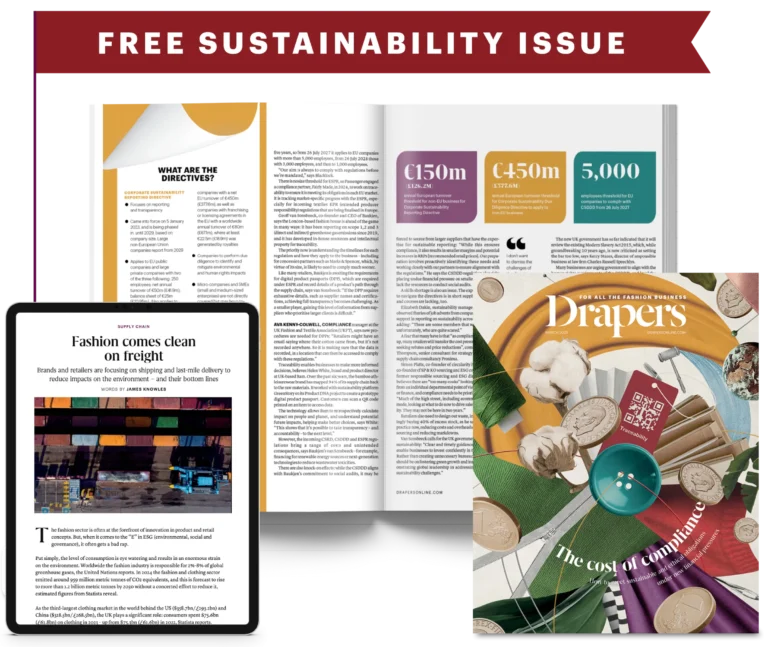
In this rapidly evolving ecosystem, publications that offer deep-seated industry knowledge and forward-looking analysis play a crucial role. For over a century, Drapers, published by EMAP Publishing Limited, has been a cornerstone of fashion industry intelligence. In 2026, its role is more critical than ever, providing a vital information hub for professionals seeking to understand, adapt, and innovate. With an archive of more than 55,000 articles, Drapers offers unparalleled historical context to today’s transformations, allowing industry players to trace the evolution of trends, technologies, and business strategies over decades. Furthermore, its bespoke in-depth research, daily and weekly newsletters, and priority access to Drapers events provide real-time updates and exclusive insights into the latest market developments, technological breakthroughs, and policy changes. These resources are essential for professionals to stay ahead of the curve, make strategic decisions, and connect with key stakeholders in a period of unprecedented change.
Broader Impact and Future Implications
The ripple effects of AI and sustainability mandates extend far beyond individual companies, reshaping the entire ecosystem of the fashion industry:
- Economic Landscape: The rise of new business models, such as "fashion-as-a-service" (rentals, subscriptions), hyper-personalized direct-to-consumer offerings, and material innovation startups, is disrupting traditional retail and manufacturing giants. This is leading to both job displacement in conventional roles and the creation of new high-skill positions in data science, AI ethics, circular economy management, and sustainable materials engineering. Investment flows are increasingly directed towards companies demonstrating strong ESG credentials and technological prowess.
- Social Fabric: Consumer expectations have irrevocably shifted towards transparency, ethical sourcing, and environmental responsibility. Brands that fail to meet these expectations risk losing market share and brand loyalty. This also places a greater emphasis on worker welfare across the global supply chain, with AI and blockchain tools being used to ensure fair labor practices and safe working conditions.
- Environmental Footprint: The push for sustainability is leading to significant reductions in waste, water consumption, and carbon emissions across the industry. The adoption of circular design principles, advanced recycling technologies, and localized production is fostering a more regenerative model, moving away from the "take-make-dispose" mentality.
- Competitive Dynamics: The competitive landscape is becoming increasingly polarized. Agile, digitally native brands with strong sustainability commitments are challenging established heritage houses. Consolidation within the industry is also anticipated, as larger groups acquire technology-driven startups and sustainable material innovators to enhance their capabilities and market position.
- The Indispensable Role of Information: In this environment of constant flux, access to timely, accurate, and comprehensive information is no longer merely advantageous but absolutely essential for strategic decision-making. The ability to analyze past trends, understand current shifts, and anticipate future challenges through expert-curated content, bespoke research, and industry events is critical for navigating the complexities of the digital and sustainable future.
The fashion industry of 2026 is a testament to resilience, innovation, and a growing commitment to responsible practices. The ongoing integration of AI and the unwavering pursuit of sustainability are not merely trends but foundational shifts that are redefining success. As the industry continues its dynamic evolution, staying informed and equipped with the deepest possible intelligence will remain the ultimate differentiator for all stakeholders.