









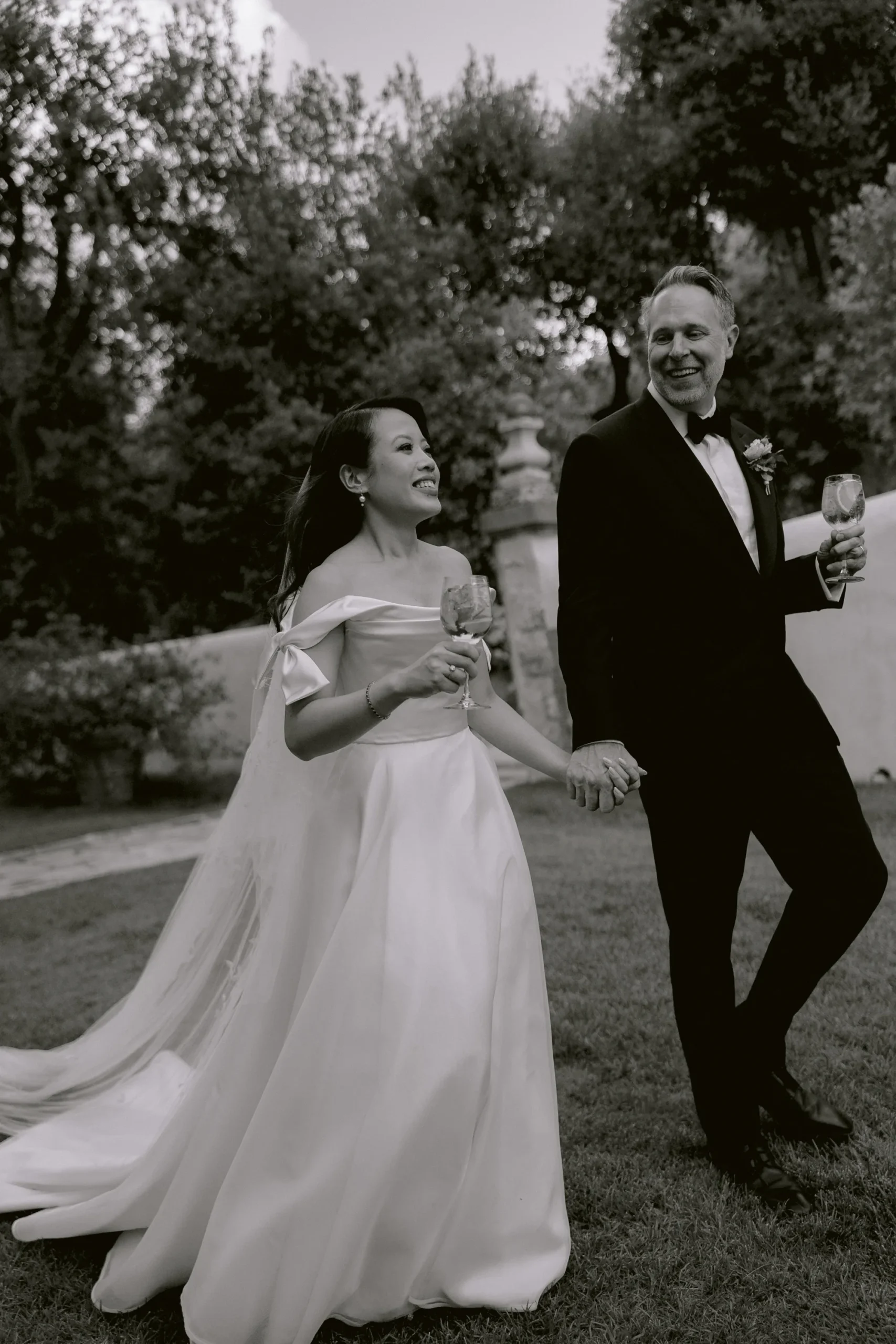
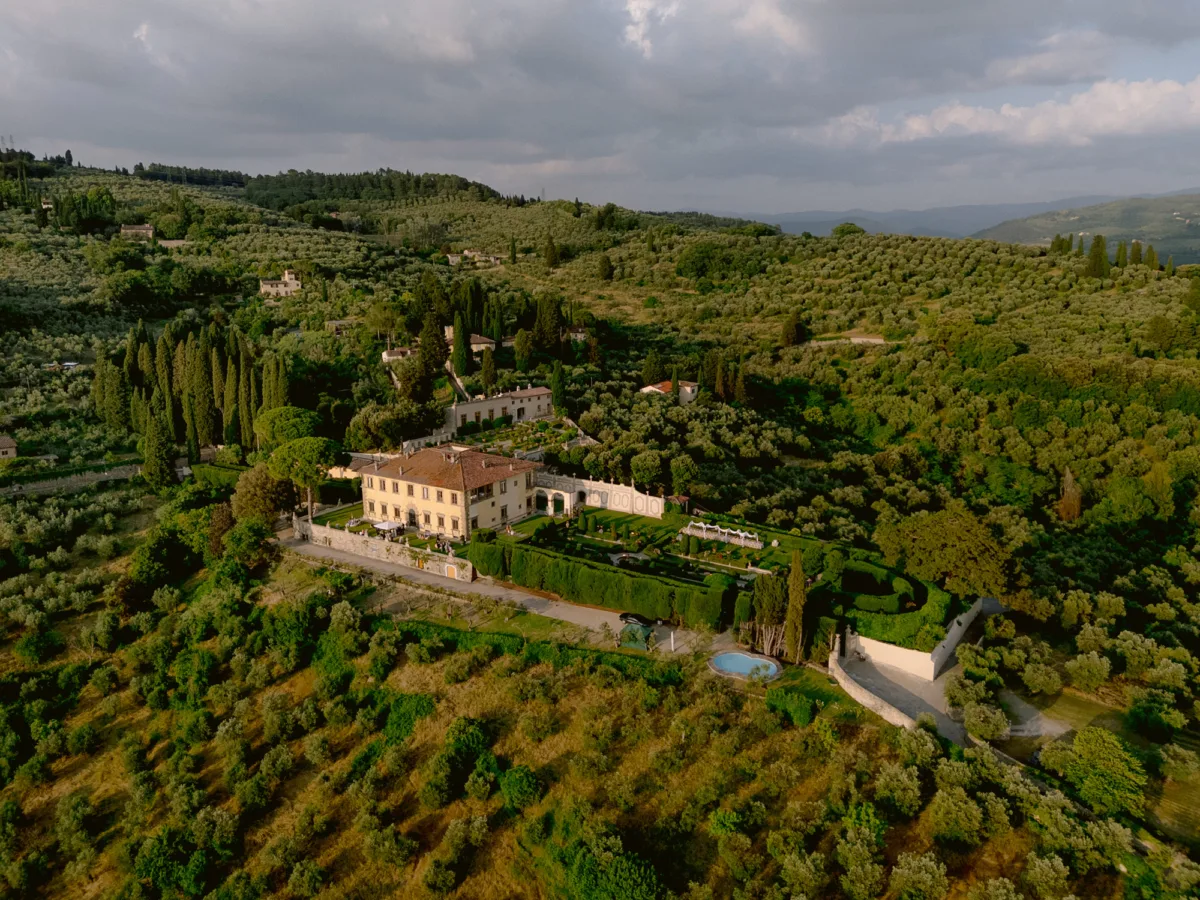
The sixteenth-century Villa Gamberaia, an architectural landmark situated on the hills of Settignano overlooking Florence, served as the backdrop for the wedding of Katy and Jamie this past June. Known globally for its terraced gardens and iconic water parterre, the estate is frequently cited as one of the most significant examples of Italian landscape design. The event, which brought together guests from the United States, the United Kingdom, and Vietnam, represented a sophisticated integration of cross-continental logistics, bespoke craftsmanship, and multicultural traditions.
Historical and Architectural Context of the Venue
Villa Gamberaia, the primary setting for the nuptials, holds a prominent place in Italian heritage. Originally a farmhouse in the 14th century, it was transformed into a noble villa by the Lapi family in the 16th century and later refined by the Rossi and Capponi families. The estate is particularly renowned for its "gamberaia" or "shrimp pond" (from which it derives its name) and its unique garden rooms. For the couple, the choice of venue was predicated on its historical resonance and its capacity to house the majority of their wedding party on-site for the duration of the weekend, a trend increasingly favored in the high-end destination wedding market.
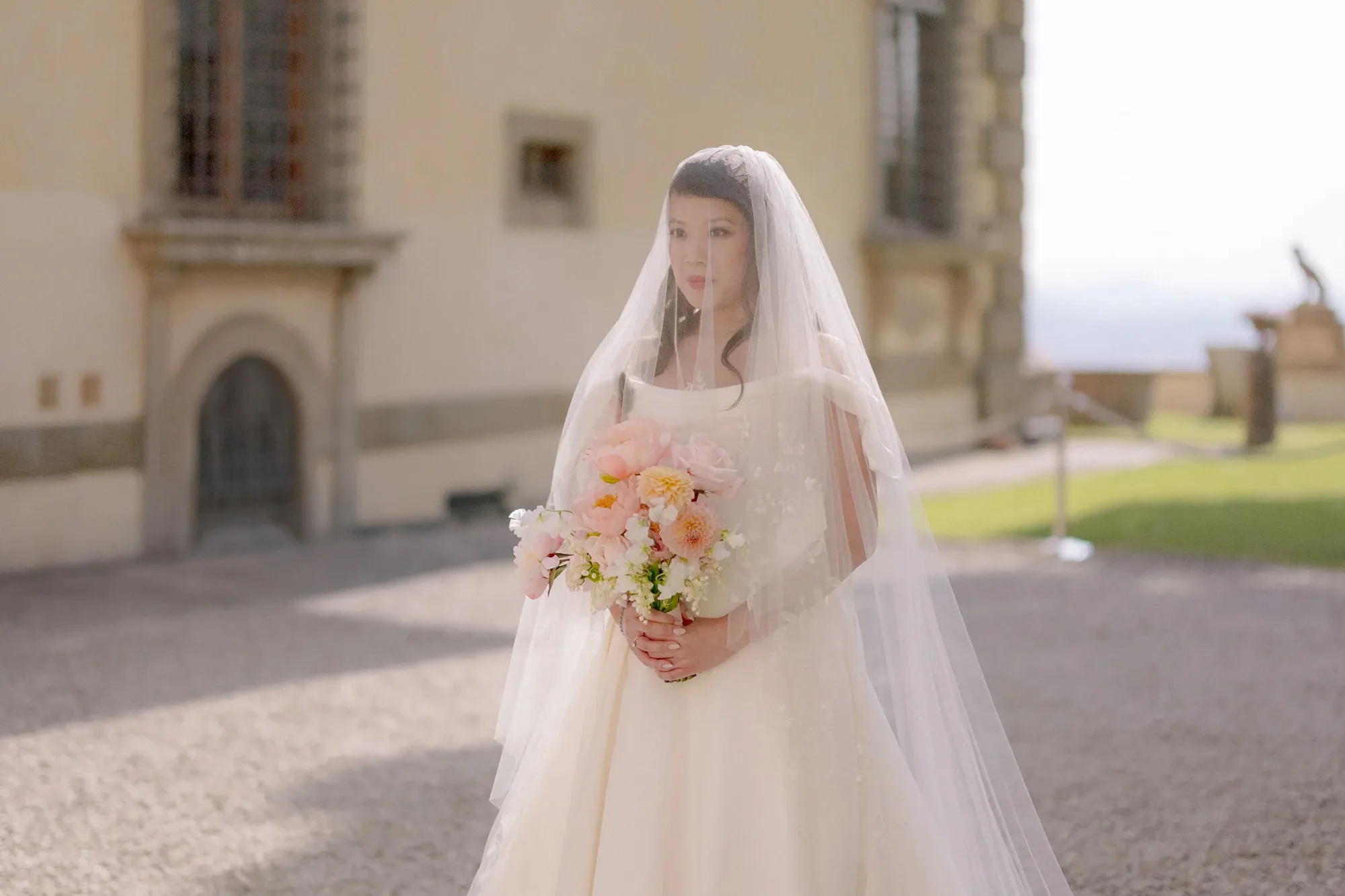
The architectural layout of the villa allowed for a multi-sensory experience, utilizing the natural light and the "genius loci" (spirit of the place) that has attracted artists and historians for centuries. The energy and historical depth of the space were cited by the couple as primary factors in their selection process, aligning with a broader movement toward "legacy venues" in international wedding planning.
Chronology of the Relationship and Planning
The union of Katy and Jamie began in St. Louis, Missouri, following an initial meeting through a digital platform. Their shared interests in art, literature, and culinary pursuits formed the foundation of their relationship. The engagement occurred eighteen months prior to the wedding in New York City. Jamie chose the Shakespeare Garden in Central Park as the location for the proposal, a deliberate selection intended to honor Katy’s British background.
The eighteen-month engagement period was utilized to navigate the complex logistics of a destination wedding. This timeframe is consistent with industry standards for international events, particularly those involving bespoke elements sourced from multiple countries. The couple expressed a long-term desire for a summer ceremony in Tuscany, a region that continues to lead the global destination wedding industry due to its infrastructure and aesthetic appeal.
Sartorial Logistics and Bespoke Procurement
The wedding was characterized by an extraordinary commitment to traditional craftsmanship, involving significant international travel for fittings and consultations.
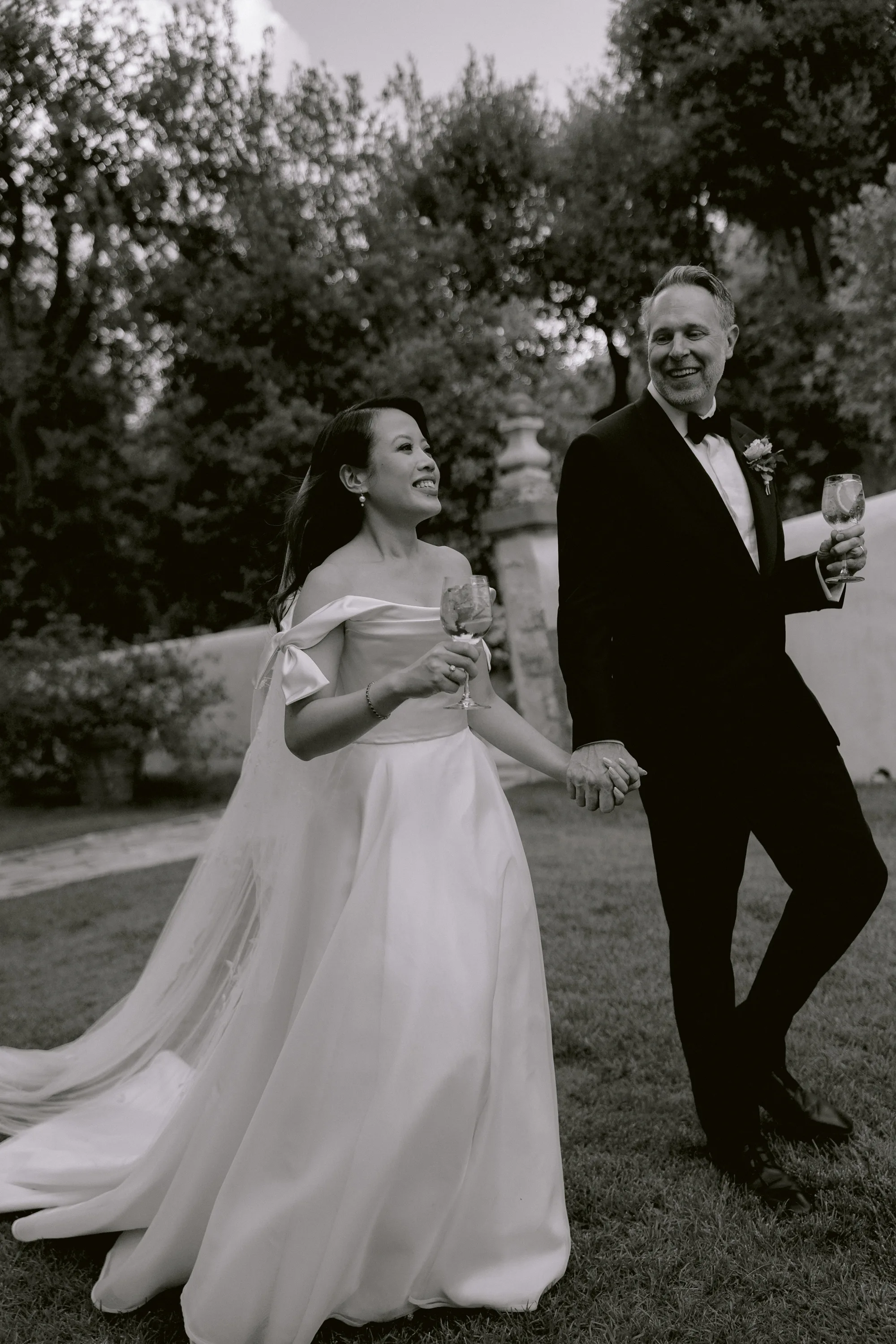
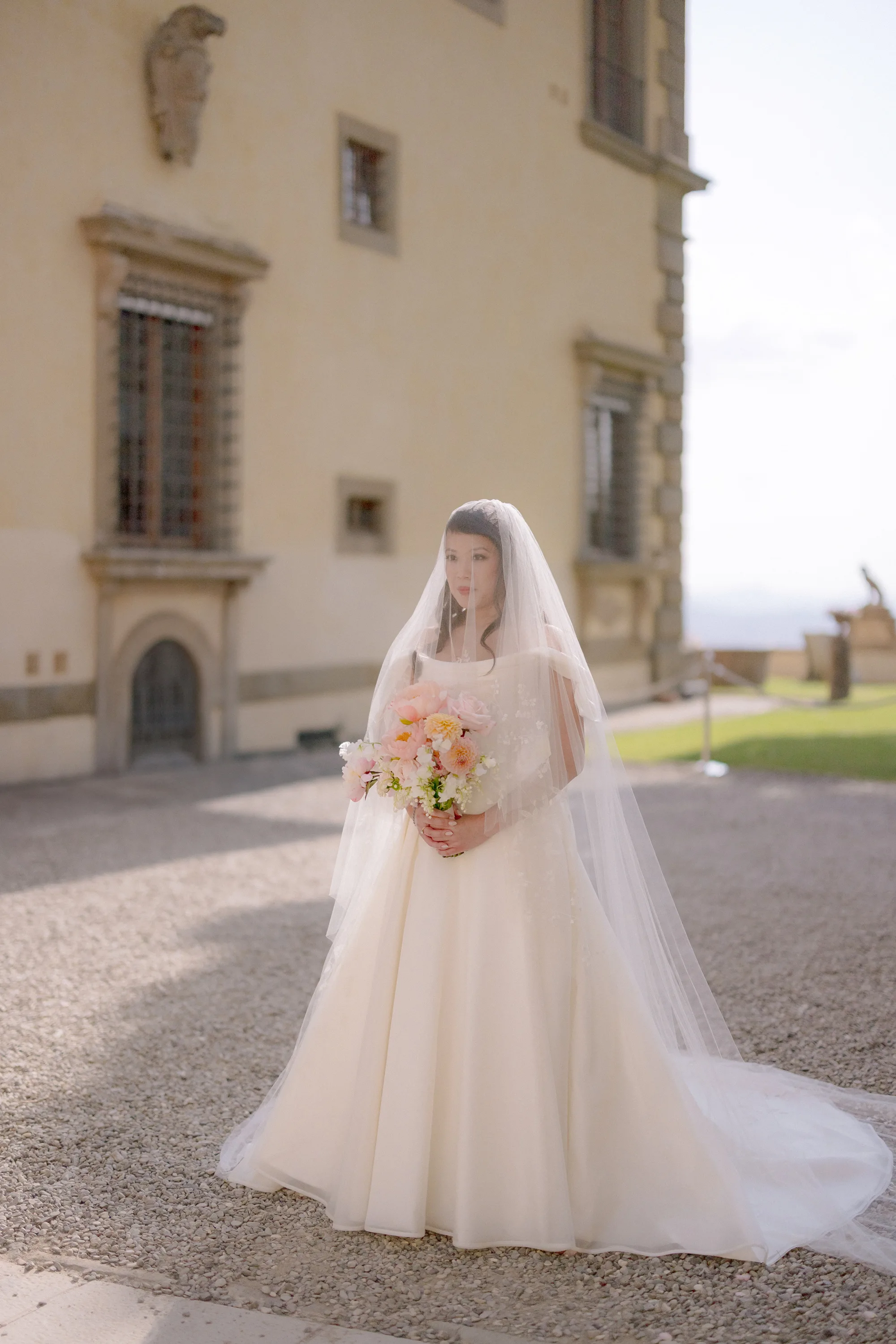
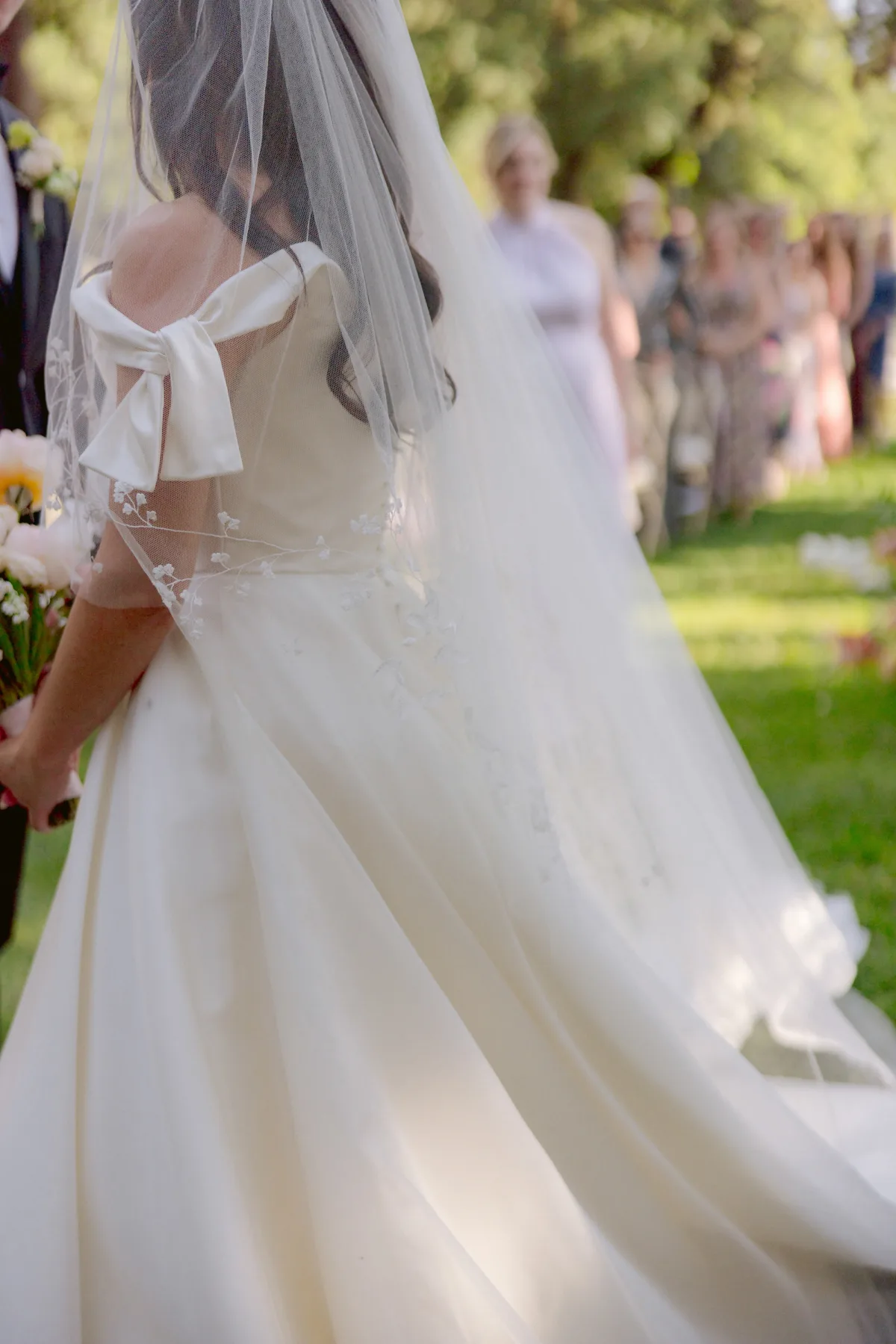
Katy wore a couture gown and silk tulle veil by London-based designer Phillipa Lepley. The procurement of the gown required the bride to travel from the United States to London on eight separate occasions for fittings. This level of dedication to the "couture process" ensures a precision of fit and detail that standard bridal wear cannot replicate. The veil featured hand-embroidered initials of the couple, adding a layer of personalization to the artisanal work.
Jamie’s attire was similarly sourced through traditional bespoke channels. He wore a tuxedo from Cad and the Dandy, a firm known for its modern approach to Savile Row tailoring. The construction of the suit involved five separate trips to New York to ensure the tailoring met Savile Row’s exacting standards. This emphasis on bespoke menswear reflects a growing trend where the groom’s attire is given equal weight and investment to that of the bride.
The Ceremony: A Synthesis of Culture and Philosophy
The wedding ceremony was held within the villa’s gardens and was officiated by the groom’s best friend, Scott, a pastor. Despite the officiant’s religious background, the service was non-religious, focusing instead on the cultural and philosophical heritages of the two families.
A central element of the ceremony was the inclusion of Vietnamese traditions, honoring the bride’s heritage. Katy’s mother delivered a reading in Vietnamese, which was then translated into English by the bride’s brother. The text was an excerpt from Thich Nhat Hanh’s introduction to Love’s Garden: A Guide to Mindful Relationships, a choice that emphasized mindfulness and the internal work required for a successful partnership.
Further reflecting the couple’s values, a second reading was performed by nine-year-old bridesmaid Emmeline. She read from Robert Fulghum’s All I Really Need to Know I Learned in Kindergarten, a piece chosen to highlight the importance of simplicity, joy, and daily kindness over grand gestures. Jamie’s two sons, Parker and Grady, accompanied the bride down the aisle to the strains of Pachelbel’s Canon in D, a selection that adhered to classical matrimonial traditions.
Artisanal Jewelry and Symbolic Design
The rings utilized in the ceremony were designed by British jeweler Jessica McCormack, whose work is noted for blending Georgian-era techniques with contemporary aesthetics. The engagement ring was a surprise commission by Jamie, who initiated the design process following a visit to the jeweler’s London showroom with Katy.
The wedding bands were equally symbolic. While Jamie opted for a traditional gold band, Katy’s band was a gold bamboo design. In Vietnamese culture, bamboo is a symbol of both strength and flexibility—qualities the couple identified as essential for a resilient marriage. This choice exemplifies the "quiet luxury" trend, where personal meaning and cultural symbolism take precedence over overt displays of wealth.
Design, Gastronomy, and Event Execution
The visual identity of the wedding was established early in the planning process through a watercolor painting of Villa Gamberaia created by the groom. This artwork served as the primary motif for all stationery, providing a cohesive aesthetic link from the invitations to the day-of materials.
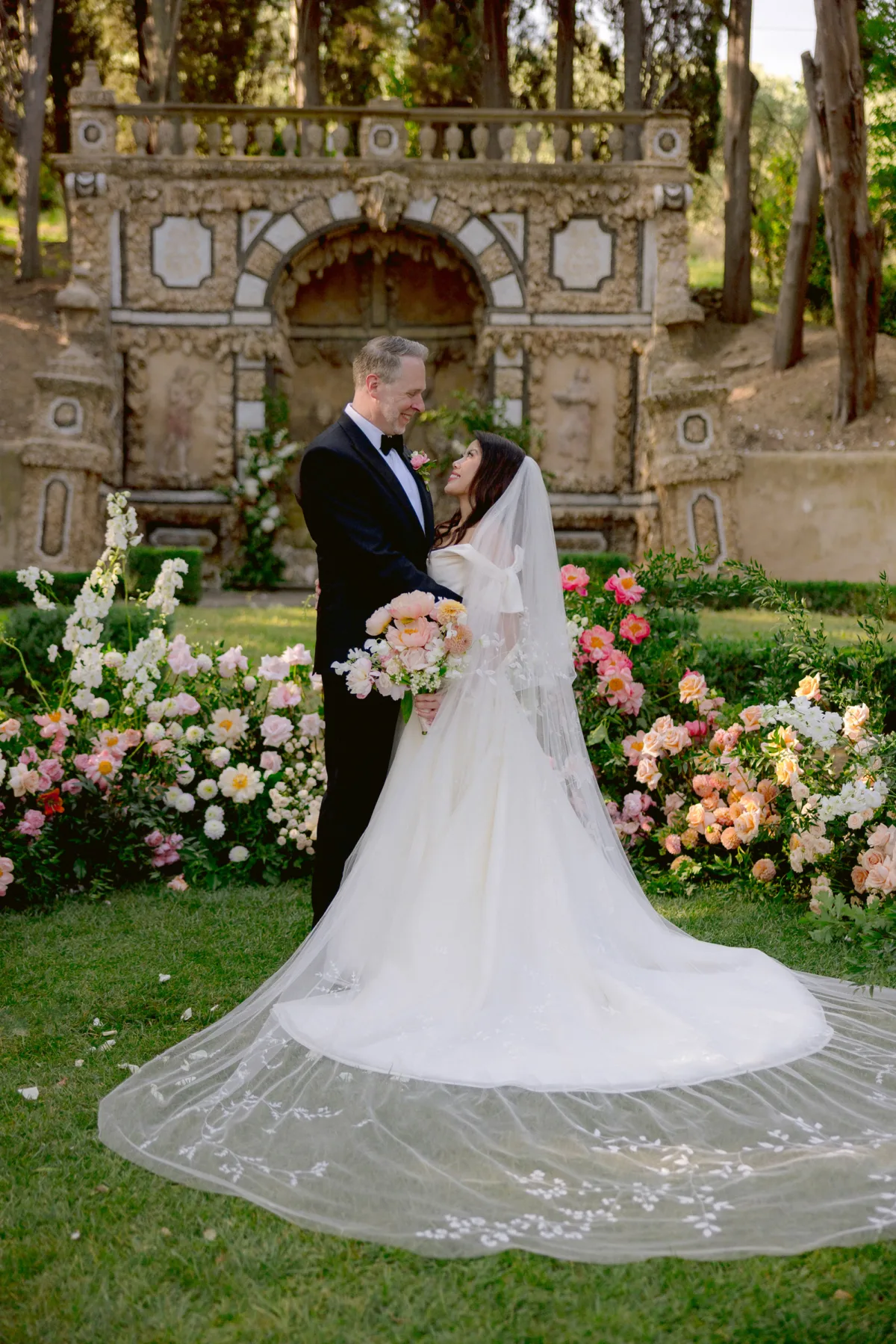
The planning and execution were managed by VB Events, a firm specializing in Italian destination weddings. Their design philosophy for the event centered on a "timeless and romantic" aesthetic that did not compete with the villa’s natural beauty. This involved:
- Palette: A muted, neutral base layered with warm tones.
- Florals: Designed by Marta Petrioli of Flowers Living, the arrangements were intentionally "loose and natural," treating the flora as an immersive element rather than a mere accessory.
- Personalization: The bride hand-created ceremony ribbons, and individually written notes were provided for each guest, emphasizing a high-touch, intimate experience despite the grand setting.
The culinary experience, provided by Galateo Ricevimenti, culminated in a traditional Italian Millefoglie. In a display of culinary showmanship, the cake was constructed "live" in front of the guests, with chefs layering pastry, cream, and fruit in a choreographed performance. The first dance followed, set to a live performance of "Hallelujah," specifically chosen because a Bon Jovi concert (where the song was famously covered) was the first live musical event the couple attended together.
Economic and Industrial Implications
The wedding of Katy and Jamie serves as a case study for the current state of the luxury destination wedding market. The couple noted that their final expenditure was double their original budget, a common occurrence in the post-pandemic event landscape where costs for logistics, high-end materials, and specialized labor have seen significant inflation.
According to industry data, the Italian wedding market contributes over €500 million annually to the national economy, with Tuscany accounting for a substantial portion of that revenue. Weddings of this scale require the coordination of dozens of local vendors—from caterers and florists to lighting technicians and photographers—supporting the regional economy through high-value tourism.
The choice of Facibeni for photography and Rellini Art Studio for cinematography highlights the importance of "editorial style" documentation in modern weddings. These professionals are tasked with capturing the "energy and emotion" of the day in a way that feels organic rather than staged, a requirement that has become standard for high-profile nuptials.
Broader Impact and Concluding Observations
The event at Villa Gamberaia underscores several evolving trends in the international matrimonial sector: the blending of diverse cultural heritages, the prioritization of bespoke and artisanal craftsmanship over mass-produced luxury, and the transformation of the wedding day into a multi-day "experience" for guests.
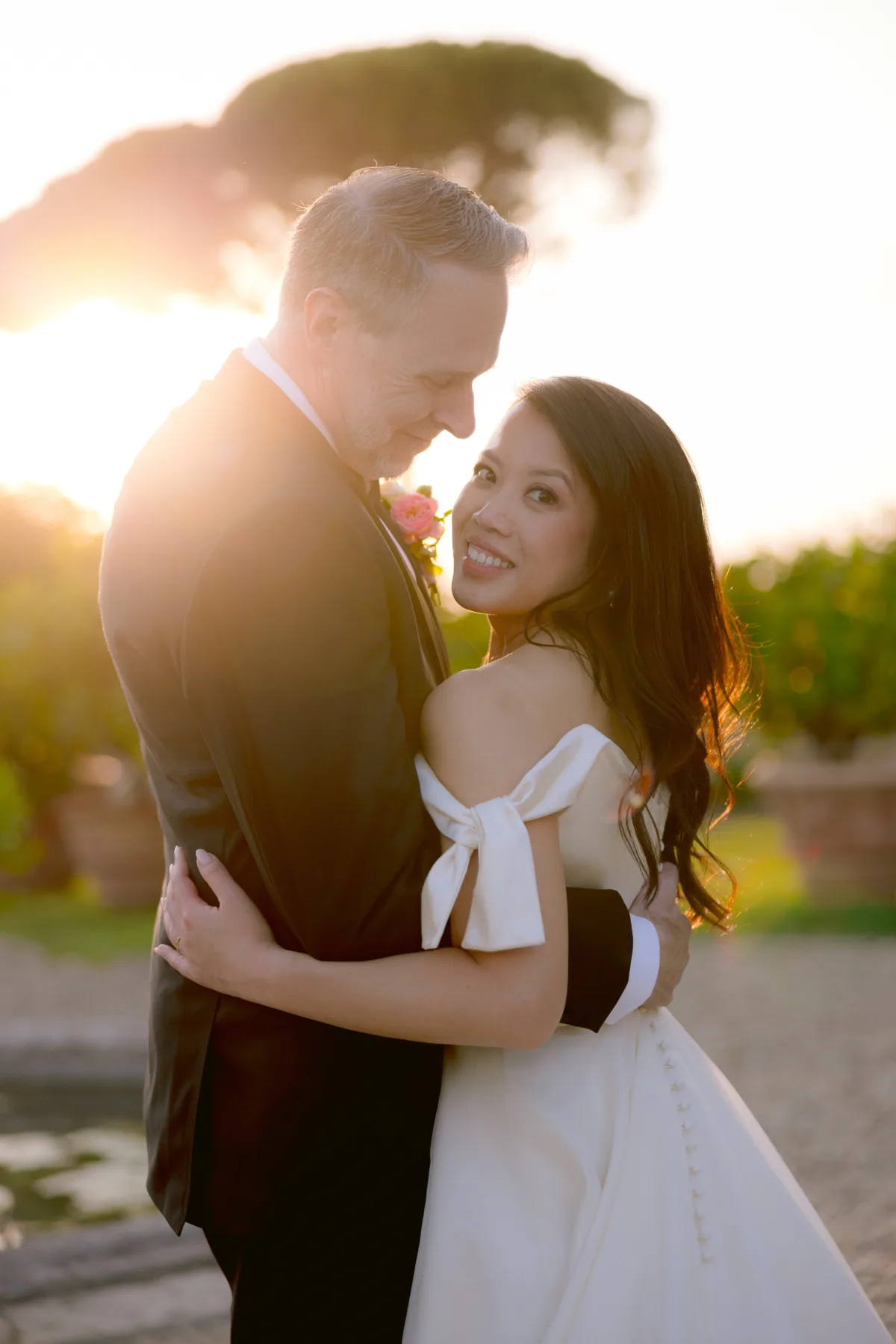
Katy and Jamie’s wedding was not merely a social union but a complex logistical operation that bridged the United States, England, Italy, and Vietnam. It demonstrated how modern couples are increasingly using their weddings as a platform to honor their personal histories while contributing to the historical narrative of the venues they choose. As the destination wedding market continues to grow, events like this set a benchmark for how cultural synthesis and professional planning can result in a celebration that is both grand in scope and deeply personal in detail.