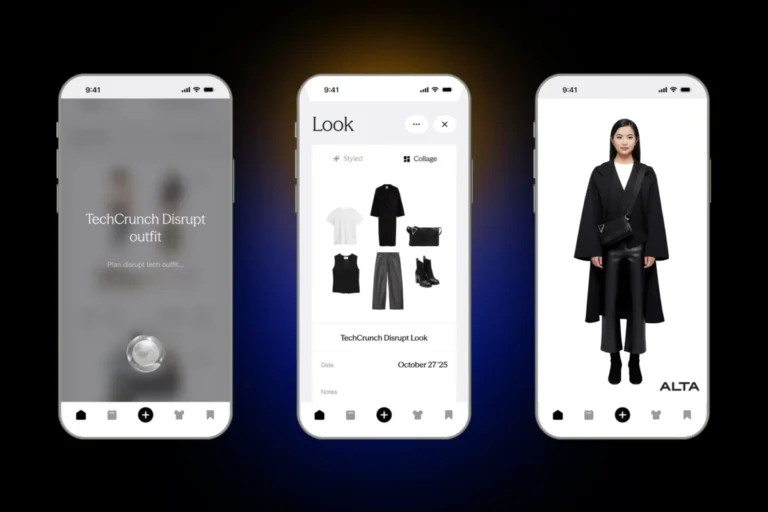








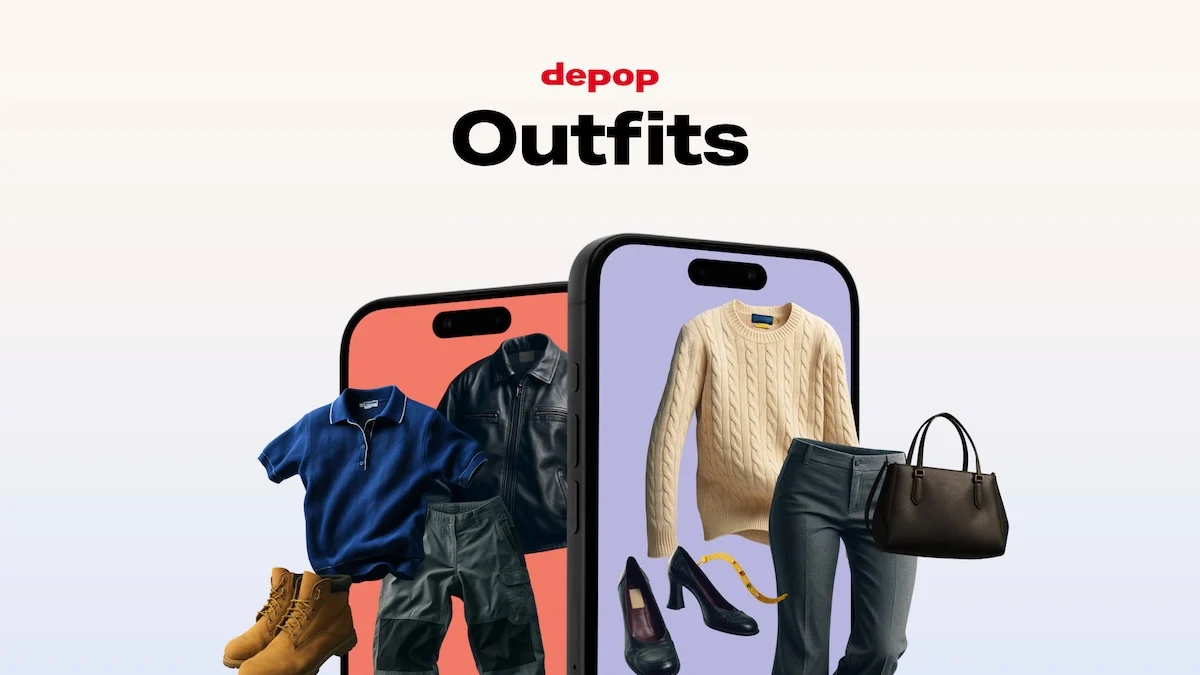
The fashion resale marketplace Depop has officially announced the launch of "Outfits," a sophisticated styling and collaging tool designed to bridge the gap between creative self-expression and digital commerce. This new feature, integrated directly into the Depop mobile application, provides users with a dedicated interface to curate visual mood boards, allowing for the arrangement of various garments and accessories into cohesive looks. By moving beyond the traditional grid-based product listing, Depop is positioning itself as a central hub for fashion discovery and social inspiration, catering specifically to a demographic that prioritizes aesthetic curation alongside sustainable consumption.
The "Outfits" tool introduces a "scissors" icon on the user interface, which serves as the primary gateway to the customization suite. When a user selects a specific item, they can utilize this tool to isolate the product image, adjust its scale, and manipulate its placement within a digital canvas. The feature further empowers creators by offering customizable backgrounds and pre-designed templates that act as layout guides. This functionality mirrors the popular "cut-out" and "sticker" trends prevalent on platforms like Instagram and TikTok, effectively bringing professional-grade styling tools to the average consumer.
Technical Functionality and Shoppable Integration
A critical component of the "Outfits" rollout is its deep integration with Depop’s underlying e-commerce engine. Unlike external collage apps where users must hunt for featured items across multiple sites, every product included in a Depop collage is immediately shoppable. This seamless transition from inspiration to transaction is designed to reduce friction in the buyer’s journey.
To address the unique challenges of the secondary market—where items are often one-of-a-kind and can sell out instantly—Depop has implemented a proprietary recommendation algorithm. If a specific item within a curated collage becomes unavailable, the app automatically generates suggestions for similar alternatives based on visual characteristics, brand, and category. This ensures that the "Outfit" remains a functional shopping guide even after individual components have been purchased by other users.
Strategic Alignment with Gen Z Consumer Behavior
The introduction of "Outfits" is a calculated response to the evolving digital habits of Generation Z, who represent the core of Depop’s user base. Market research indicates that younger consumers view fashion not just as a commodity, but as a form of digital identity. The rise of "aesthetic" culture—ranging from "Coquette" to "Gorpcore"—has driven a demand for tools that allow users to visualize these styles before committing to a purchase.
By enabling the cross-platform sharing of these collages to Pinterest and Instagram, Depop is leveraging its community to act as organic brand ambassadors. This strategy echoes the success of Pinterest’s "Shuffles" app, which launched in 2022 to massive acclaim among young creators. While Shuffles focused on the creative act of collaging, Depop’s "Outfits" adds a layer of transactional utility, turning every digital mood board into a potential storefront. This shift reflects a broader trend in the tech industry where social media platforms are becoming more like marketplaces, and marketplaces are becoming more like social media platforms.
Financial Performance and Market Context
The launch of the "Outfits" feature comes at a pivotal moment for Depop and its parent company, Etsy. According to the recently released Q2 2025 earnings report, Depop has demonstrated significant financial momentum. The platform’s Gross Merchandise Sales (GMS) increased by 34.7% year-over-year on a currency-neutral basis. This robust growth trajectory has placed Depop on track for a $1 billion GMS run rate, a milestone that underscores its dominance in the competitive resale sector.
In contrast, other players in the peer-to-peer resale market have faced varying degrees of volatility. Mercari, a primary competitor, reported a Gross Merchandise Value (GMV) of approximately $728 million for the fourth quarter of 2024. While Mercari maintains a strong presence, Depop’s recent surge suggests that its focus on community-led features and a highly curated "vibe" is resonating more effectively with the current market.

Industry analysts suggest that Depop’s ability to maintain high engagement levels through features like "Outfits" is essential for sustaining its valuation. Since Etsy acquired Depop in 2021 for $1.62 billion, the platform has been tasked with proving that it can scale its niche community into a global powerhouse. The 34.7% growth figure suggests that the integration into the Etsy ecosystem has provided the necessary infrastructure for Depop to expand its technological capabilities while retaining its distinct brand identity.
Chronology of the Digital Resale Evolution
To understand the significance of the "Outfits" launch, one must look at the broader timeline of social commerce and the resale economy.
- 2011–2015: Depop is founded in Italy as a social network for readers of PIG magazine to buy items featured in the publication. It quickly pivots to a general fashion marketplace, gaining traction in the UK and US.
- 2018–2020: The rise of "resale culture" accelerates during the global pandemic. Platforms like Depop, Poshmark, and Vinted see record-breaking user growth as home-bound consumers turn to decluttering and sustainable shopping.
- June 2021: Etsy acquires Depop for $1.62 billion, marking one of the largest acquisitions in the resale space. The move signals a shift toward a more consolidated market.
- August 2022: Pinterest launches "Shuffles," a standalone app for creating fashion and interior design collages. The app goes viral on TikTok, proving the massive demand for digital curation tools.
- 2023–2024: Major social platforms like TikTok and Instagram experiment with integrated shopping features, creating a high-stakes environment for traditional e-commerce apps.
- September 2025: Depop officially launches "Outfits," integrating the social-creative elements of Pinterest with the transactional power of its own marketplace.
Broader Impact on the Circular Economy
The "Outfits" feature is more than just a creative tool; it is a strategic attempt to solve one of the primary hurdles in the second-hand market: the "one-off" problem. Unlike fast-fashion giants like Zara or Shein, which can produce thousands of identical units to fulfill a trend, resale platforms rely on a fragmented inventory of unique items. This makes it difficult for consumers to recreate specific looks they see on influencers.
By providing a tool that suggests "similar alternatives," Depop is using technology to standardize the experience of shopping for unique goods. This could have a profound impact on the circular economy. If consumers find it easier to source "looks" through resale rather than buying new, the barrier to sustainable shopping is significantly lowered. Furthermore, by encouraging sellers to create collages, Depop is essentially crowdsourcing professional-level marketing. A seller who styles a vintage leather jacket with a specific pair of boots and a handbag is more likely to sell the entire "look," thereby increasing the average order value (AOV) on the platform.
Industry Reactions and Competitive Landscape
While Depop has not released official statements from external partners, the industry reaction has been one of cautious optimism. Analysts from major financial firms have noted that Depop’s focus on "stickiness"—the ability to keep users in the app for reasons other than immediate buying—is a key differentiator.
"The resale market is becoming increasingly commoditized," says one retail tech analyst. "To survive, platforms must offer more than just a transaction. They must offer an experience. Depop’s Outfits feature is a direct play for the ‘attention economy.’ By keeping users engaged in the creative process of styling, Depop ensures they remain within its ecosystem rather than wandering off to Pinterest or Instagram for inspiration."
The competitive landscape remains fierce. Vinted has seen massive success in Europe by focusing on low fees and high volume, while Poshmark continues to lean into its "live shopping" features. However, Depop’s unique blend of social media aesthetics and curated vintage finds gives it a specific edge among the "Zalpha" (Gen Z and Gen Alpha) demographic.
Conclusion: The Future of Experiential E-Commerce
As Depop moves toward its $1 billion GMS milestone, the launch of "Outfits" serves as a blueprint for the future of experiential e-commerce. The platform is betting that the future of shopping is not just about a search bar and a checkout button, but about community, creativity, and visual storytelling.
By empowering its users to become stylists, Depop is effectively decentralizing the role of the fashion editor. In this new paradigm, every user is a creator, every collage is a storefront, and every purchase is part of a larger social narrative. As the tool rolls out to its global user base, the success of "Outfits" will likely be measured not just by the number of collages created, but by its ability to sustain the triple-digit growth that has made Depop a crown jewel in Etsy’s portfolio. For now, the message to the fashion world is clear: the next great outfit won’t be found on a runway, but on a digital mood board, curated by the community, and powered by the circular economy.