







AIKEN, S.C. and SAERBECK, Germany — In a strategic move aimed at redefining the performance benchmarks of the global composites industry, AGY, a leading global supplier of specialty glass fiber reinforcements, and SAERTEX, a premier manufacturer of multiaxial non-crimp fabrics (NCF), have announced a joint development partnership. This collaboration is specifically focused on the integration of AGY’s proprietary high-strength S-2 Glass® fiber into SAERTEX’s engineered non-crimp fabric architectures. The partnership represents a convergence of high-purity materials science and precision textile engineering, designed to meet the escalating demands of the aerospace, defense, industrial, and advanced mobility sectors.
By combining AGY’s next-generation S-2 Glass reinforcement with SAERTEX’s tailored multiaxial NCF technology, the two companies aim to deliver lightweight, high-strength composite solutions that bridge the gap between traditional E-glass reinforcements and high-cost carbon fiber alternatives. The initiative arrives at a critical time as industries worldwide seek materials that offer superior mechanical efficiency, reduced manufacturing costs, and enhanced durability under extreme conditions.
The Technical Synergy: S-2 Glass and Non-Crimp Fabric Technology
The core of this collaboration lies in the unique properties of S-2 Glass® fiber. Unlike standard E-glass, which is the most common reinforcement in the composites industry, S-2 Glass is a high-performance silica-alumina-magnesia glass. It offers approximately 85% more tensile strength than standard glass fiber and significantly higher levels of stiffness and temperature resistance. Its high-purity composition makes it an ideal candidate for applications requiring high energy absorption, such as ballistic protection, and high fatigue resistance, such as aerospace structural components.
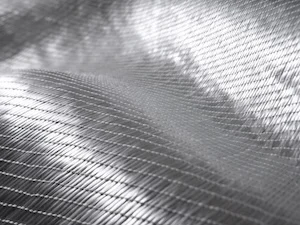
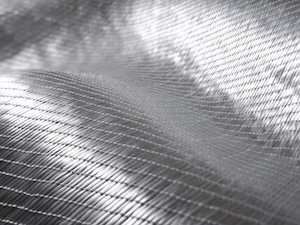
SAERTEX complements this material advantage with its multiaxial non-crimp fabric (NCF) technology. In traditional woven fabrics, the interlacing of fibers creates "crimps" or bends. These crimps can lead to stress concentrations and reduced mechanical performance because the fibers are not perfectly straight when a load is applied. SAERTEX NCFs, however, consist of multiple layers of parallel fibers laid in various orientations (0°, 90°, +/- 45°) and stitched together with a fine thermoplastic or polyester yarn. This architecture ensures that the fibers remain straight, or "non-crimped," allowing for maximum load transfer and structural efficiency.
By integrating S-2 Glass into these NCF architectures, the joint development aims to produce a material that maximizes the intrinsic strength of the glass fiber while providing the processing advantages of a fabric that can be easily infused with resin. This results in components with higher fiber volume fractions, reduced weight, and superior resistance to fatigue and impact compared to conventional glass fiber composites.
Chronology of the Development and Market Rollout
The announcement on April 8, 2026, marks the public phase of a collaborative effort that has been in development for several months. The timeline of this partnership reflects a systematic approach to material qualification and market entry:
- Initial Research and Development (2025): AGY and SAERTEX began preliminary testing to determine the compatibility of S-2 Glass yarns with SAERTEX’s high-speed multiaxial knitting machines. This phase focused on optimizing the sizing of the glass fibers to ensure seamless integration during the fabric-forming process.
- Prototype Construction (Late 2025 – Early 2026): Engineers from both companies worked to develop the first iterations of unidirectional, biaxial, and quadriaxial formats. These prototypes were subjected to rigorous mechanical testing to verify tensile, compressive, and interlaminar shear properties.
- Formal Partnership Announcement (April 8, 2026): The companies officially publicized their joint development, signaling to the market that the technology is moving toward commercial availability.
- Qualification Phase (Current – Ongoing): The companies are currently qualifying multiple multiaxial constructions. This involves working with Tier 1 suppliers and Original Equipment Manufacturers (OEMs) in the aerospace and defense sectors to meet specific load-case requirements and manufacturing standards, such as AS9100.
- Full-Scale Commercial Availability (Expected Late 2026): Following the successful qualification of specific fabric weights and orientations, the materials are expected to be available for broad industrial use.
Supporting Data: Performance Benchmarks and Economic Impact
The move toward S-2 Glass NCF is supported by compelling data regarding material performance. While carbon fiber is often the go-to for high-performance applications, it comes with a high price tag and susceptibility to brittle failure. S-2 Glass provides a middle ground that is increasingly attractive to engineers.
Data indicates that S-2 Glass composites can offer up to 20% higher modulus and significantly higher impact resistance than E-glass. When these fibers are laid in a non-crimp format, the resulting composite can see an additional 10% to 15% improvement in mechanical properties over woven equivalents. Furthermore, the use of NCF technology reduces the number of layers required to reach a specific thickness, which can lower labor costs in the layup process by as much as 30%.
In terms of economic impact, the global glass fiber market is projected to continue its growth as industries shift away from heavy metallic structures. The aerospace composites market, in particular, is looking for materials that provide high electromagnetic transparency and impact durability—areas where S-2 Glass outperforms carbon fiber. By offering a high-performance glass solution, AGY and SAERTEX are positioning themselves to capture a significant share of the market that requires more performance than E-glass but cannot justify the cost of carbon fiber.
Official Responses from Leadership
The leadership teams of both organizations have expressed high confidence in the potential of this joint development to disrupt current material paradigms.
Patrick Hunter, Chief Commercial Officer & President of AGY, highlighted the strategic importance of the collaboration. “This development represents a significant step forward in expanding the performance envelope of glass-fiber-based composites,” Hunter stated. “Combining S-2 Glass with SAERTEX’s advanced multiaxial fabric design enables lightweight solutions that can compete in applications traditionally reserved for higher-cost materials. We are not just providing a material; we are providing a high-efficiency system for structural engineering.”
Christian Beckmann, CEO of SAERTEX, emphasized the benefits for the end-user. “SAERTEX is committed to delivering tailor-made reinforcement systems that maximize structural efficiency and manufacturability,” said Beckmann. “The integration of AGY’s S-2 Glass fiber allows us to offer customers enhanced mechanical performance while maintaining the processing advantages of non-crimp fabrics. This partnership aligns perfectly with our goal of providing innovative solutions for the most demanding technical challenges.”
Industry observers suggest that these statements reflect a broader trend in the technical textiles industry: a shift toward "hybridization" and "functionalization," where the focus is on the specific architecture of the reinforcement as much as the chemical composition of the fiber itself.
Strategic Applications: Aerospace, Defense, and Advanced Mobility
The targeted applications for the new S-2 Glass NCF materials are diverse, reflecting the versatile nature of the reinforcement.
Aerospace and Defense
In the aerospace sector, weight reduction is directly tied to fuel efficiency and payload capacity. S-2 Glass NCF is being targeted for secondary structures, floor panels, and interior components where high strength-to-weight ratios are essential. In the defense sector, the material’s high energy absorption makes it ideal for spall liners and hard armor systems for tactical vehicles. Its non-conductive nature also makes it suitable for radomes and other structures requiring electromagnetic transparency.
Advanced Mobility
The rise of electric vehicles (EVs) and electric vertical takeoff and landing (eVTOL) aircraft has created a new demand for lightweight materials. S-2 Glass NCF provides the necessary durability for battery enclosures and structural frames, offering a balance of impact protection and weight savings that is critical for extending battery range.
Industrial and Energy
In the industrial sector, the focus is on high-pressure vessels and wind energy components. The fatigue resistance of S-2 Glass is particularly beneficial for large-scale wind turbine blades, which must withstand millions of load cycles over their operational lifespan. Additionally, for hydrogen storage tanks, the high tensile strength of S-2 Glass NCF allows for the design of thinner, lighter walls that can still safely contain high-pressure gases.
Broader Impact and Industry Implications
The collaboration between AGY and SAERTEX is more than a simple product launch; it is an indicator of the maturing composite materials market. As manufacturing processes like resin transfer molding (RTM) and vacuum-assisted resin infusion (VARI) become more automated, the demand for fabrics that support these processes—like NCF—will only increase.
Furthermore, this partnership addresses the growing need for supply chain resilience. By producing these advanced fabrics in both the United States and Europe, AGY and SAERTEX provide global OEMs with localized access to high-performance materials, reducing lead times and logistical complexities.
From a sustainability perspective, the ability to create lighter structures contributes to the global effort to reduce carbon emissions in transportation. While the production of glass fiber is energy-intensive, the lifecycle benefits of lightweighting—particularly in aerospace and mobility—often result in a net reduction in environmental impact.
As the qualification process continues throughout 2026, the industry will be watching closely to see how these S-2 Glass NCF materials perform in real-world structural tests. If successful, this partnership could set a new standard for high-performance reinforcements, proving that glass fiber remains a formidable and cost-effective contender in the high-stakes world of advanced materials engineering.