










The global fashion industry, by 2026, finds itself at an unprecedented crossroads, defined by a confluence of rapid technological advancements, evolving consumer ethics, and a volatile geopolitical landscape. What was once a sector primarily driven by aesthetics and seasonal trends has transformed into a complex ecosystem where data-driven insights, sustainable practices, and agile supply chain management are not merely competitive advantages but fundamental prerequisites for survival and growth. This profound shift underscores the critical and indispensable role of comprehensive, timely, and bespoke industry intelligence for businesses striving to remain relevant and profitable in this dynamic environment.
The Triple Imperatives of 2026: Sustainability, Digitisation, and Resilience
By the middle of the decade, three overarching imperatives have come to dominate strategic discussions across the fashion sector: aggressive sustainability targets, pervasive digital transformation, and robust supply chain resilience. Each of these pillars presents unique challenges and opportunities, demanding a level of foresight and adaptability previously unseen.
Sustainability as a Business Mandate:
The clamour for sustainability, once a niche concern, has matured into a non-negotiable business mandate. Regulatory bodies worldwide have enacted stringent environmental, social, and governance (ESG) reporting requirements, with the European Union’s Corporate Sustainability Reporting Directive (CSRD) and similar initiatives setting global benchmarks. Consumers, particularly Gen Z and millennials, increasingly align their purchasing decisions with brand values, scrutinizing supply chain transparency, material sourcing, and end-of-life solutions. A 2025 report by McKinsey & Company projected that the global market for sustainable fashion would exceed €500 billion by 2028, representing an annual growth rate of over 15% since 2022. This surge is fuelled by innovations in bio-based materials, regenerative agriculture for textiles, and widespread adoption of circular economy models, including resale, rental, and repair services. For instance, the global apparel resale market alone reached an estimated $100 billion in 2025, a dramatic increase from just $24 billion in 2020, demonstrating a fundamental shift in consumer perception of ownership and value. However, the industry grapples with the persistent challenge of "greenwashing," making credible and verifiable sustainability claims paramount, requiring sophisticated tracking and reporting mechanisms. Brands that fail to genuinely integrate sustainability risk not only regulatory penalties but also severe reputational damage and erosion of consumer trust.
Digital Transformation Beyond E-commerce:
While e-commerce was the initial frontier of digital adoption, 2026 sees digital transformation permeating every facet of the fashion value chain, from design to retail experience. Artificial intelligence (AI) has moved beyond predictive analytics for inventory management, now playing a pivotal role in trend forecasting, personalized marketing, and even generative design, allowing designers to iterate on concepts with unprecedented speed. Virtual reality (VR) and augmented reality (AR) are no longer novelty features but integrated tools for immersive shopping experiences, virtual try-ons, and digital fashion shows. A 2024 study by Deloitte indicated that over 40% of luxury brands had integrated some form of AR/VR into their customer journey, with adoption rates in mass-market fashion rapidly catching up. The metaverse, while still in nascent stages for mass adoption, has opened new revenue streams through digital wearables and virtual storefronts, attracting a digitally native consumer base. Furthermore, blockchain technology is being leveraged to enhance supply chain transparency, providing immutable records of a garment’s journey from raw material to retail, crucial for both ethical sourcing and combating counterfeiting. This digital revolution demands significant investment in infrastructure, talent, and data security, posing a steep learning curve for many traditional fashion houses.
Resilience in a Fractured Global Supply Chain:
The disruptions of the early 2020s exposed the fragility of globalized, just-in-time supply chains. By 2026, geopolitical tensions, climate change impacts (such as extreme weather events affecting raw material production), and persistent inflationary pressures have compelled brands to prioritize resilience. Strategies like near-shoring and re-shoring have gained traction, aiming to reduce lead times and reliance on distant manufacturing hubs. Diversification of sourcing countries and suppliers has become standard practice, mitigating risks associated with single points of failure. Investments in advanced demand forecasting technologies, leveraging AI and real-time sales data, enable more accurate production planning, minimizing overstock and waste. According to a 2025 survey by the American Apparel & Footwear Association (AAFA), over 60% of their member companies reported increasing their supply chain diversification efforts by more than 20% compared to pre-2020 levels. The emphasis has shifted from cost-cutting at all costs to building robust, adaptable networks capable of absorbing shocks and maintaining continuity, even at potentially higher initial expenditures.
A Timeline of Transformation (2020-2026):
- 2020-2021: The Great Disruption and Acceleration. The COVID-19 pandemic forces unprecedented digital acceleration, with e-commerce becoming the primary sales channel. Supply chains experience severe bottlenecks, highlighting vulnerabilities. Initial commitments to sustainability gain momentum amidst global awareness campaigns.
- 2022-2023: Regulatory Awakening and Tech Experimentation. Governments begin formulating stricter environmental legislation for textiles and waste. Brands start experimenting more seriously with AI in design and marketing, and the metaverse concept enters mainstream discussion, albeit with cautious investment. Circular business models begin to scale.
- 2024-2025: Consolidation and Strategic Realignment. Industry leaders articulate comprehensive ESG strategies. Investment in green technologies and sustainable materials grows significantly. Digital tools like AR/VR for retail become more sophisticated and widely adopted. Supply chain resilience emerges as a top-tier executive priority, leading to strategic re-evaluation of sourcing maps.
- 2026: The New Normal of Complexity. The confluence of these trends reaches a critical mass. Compliance with sustainability regulations becomes mandatory for market access. Digital fluency is expected across all operational levels. Supply chain agility is deeply embedded in operational planning. The imperative for accurate, real-time intelligence to navigate this complexity becomes paramount.
The Information Gap: Risks of Operating Blind
Operating within this intricate and fast-evolving landscape without comprehensive, up-to-date intelligence is akin to navigating a storm without a compass. The consequences of an information gap are severe: missed market shifts can lead to irrelevant collections, failure to comply with evolving regulations can result in hefty fines and trade barriers, and an inefficient supply chain can cripple profitability and customer satisfaction.
"The sheer volume of data available today can be overwhelming," states Dr. Evelyn Reed, a leading fashion industry analyst at the London School of Fashion Economics. "What businesses desperately need isn’t just more data, but actionable intelligence – curated, contextualized insights that illuminate trends, predict disruptions, and inform strategic decisions. The challenge is sifting through the noise to find that signal."
Similarly, Maria Kovač, CEO of the sustainable textile consortium ‘Green Thread,’ emphasizes the need for specialized knowledge: "The pace of innovation in sustainable materials and circular practices is astounding. Without dedicated research and analysis, brands risk falling behind, making outdated choices, or worse, making claims they can’t substantiate. Credibility is everything."
The fragmented nature of global information, combined with the proprietary nature of much industry data, makes it exceptionally difficult for individual businesses, especially small to medium-sized enterprises (SMEs), to gather the breadth and depth of intelligence required. This creates a significant competitive disadvantage for those without access to robust analytical resources.
Drapers: Your Compass in the Complexity
In this era of unprecedented complexity and rapid transformation, the need for a trusted, authoritative source of fashion industry news and intelligence has never been more critical. Businesses require a partner that can cut through the noise, provide clarity amidst the chaos, and offer the foresight necessary to make informed, strategic decisions.
This is precisely the indispensable role Drapers has cultivated over decades and continues to refine in 2026. Recognising the heightened demand for deep insights, Drapers has invested heavily in expanding its intelligence capabilities, offering a comprehensive suite of resources designed to empower industry professionals.
Get full access to all the fashion industry news and intelligence you need.
Subscribe today.
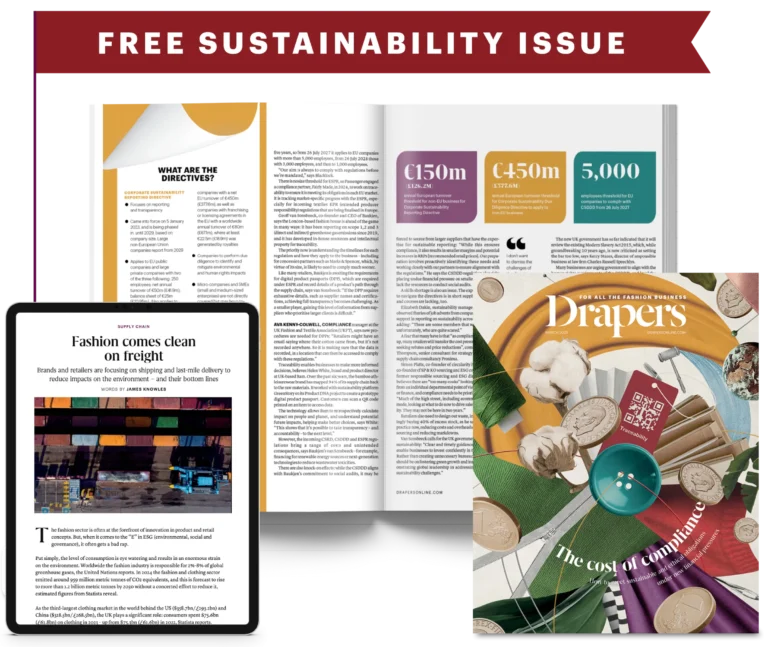
Browse the archive of more than 55,000 articles, access bespoke in-depth research, read the daily and weekly newsletters in full, receive the print magazine (optional), and gain priority access to Drapers events.
The vast archive of over 55,000 articles serves as an invaluable historical record, providing context for current trends and demonstrating the evolution of the industry’s challenges and triumphs. This historical perspective is crucial for understanding long-term shifts, from the rise of fast fashion to the current emphasis on slow, sustainable alternatives. Beyond historical data, Drapers’ bespoke in-depth research provides tailored analyses of emerging markets, technological impacts, consumer behaviour shifts, and regulatory landscapes – critical intelligence for strategic planning and risk mitigation. The daily and weekly newsletters deliver timely updates on breaking news, market movements, and policy changes, ensuring subscribers are always abreast of the fast-moving currents of the industry. For those who value a curated, tactile experience or executive summaries for their leadership teams, the optional print magazine continues to offer a premium, analytical perspective. Finally, priority access to Drapers events provides unparalleled networking opportunities and direct engagement with industry leaders, innovators, and policymakers, offering first-hand insights and fostering collaborative solutions.
Conclusion: The Future Belongs to the Informed
The fashion industry of 2026 is one of immense opportunity but also significant peril. Success will hinge not merely on creative vision or marketing prowess, but on the ability to navigate the intricate interplay of sustainability mandates, digital innovation, and supply chain vulnerabilities. In this challenging yet exhilarating landscape, comprehensive industry intelligence is no longer a luxury but an absolute necessity. Businesses that invest in understanding the forces shaping their future, leveraging trusted sources like Drapers, will be best positioned not just to survive, but to thrive and lead the fashion world into its next exciting chapter.
COPYRIGHT © 2026 EMAP PUBLISHING LIMITED