









What might be considered sacrilege to traditional academics — the idea that books are a trend — has undeniably become a prominent cultural phenomenon. From high-fashion brands incorporating miniature book charms into their latest collections to "It-boys" strategically displaying paperbacks from their back pockets, and the ubiquitous online discourse surrounding "performative reading," the humble book has transcended its primary function to become a potent status symbol. It acts as a sophisticated signifier, hinting at intellectual depth and complex inner worlds beneath a composed exterior. While the merits and drawbacks of this aestheticization of reading could fuel endless debate – surely, more people engaging with books is a net positive – luxury fashion house Miu Miu has unequivocally charted a different, more profound course with its literary initiative. Rather than merely capitalizing on a trend, the Miu Miu Literary Club offers a thoughtful antidote, meticulously exploring contentious topics with works by women authors at the core of its investigations. This approach positions the brand not just as a purveyor of style, but as a significant facilitator of vital cultural and intellectual exchange.
The Genesis of an Intellectual Hub: Miuccia Prada’s Vision
The Miu Miu Literary Club, founded in 2024 by Miu Miu creative director Miuccia Prada, is far from a superficial marketing ploy. Instead, it represents a natural and deeply personal extension of Mrs. Prada’s well-documented worldview. With a background rooted in political organizing and a PhD in political science, Miuccia Prada has consistently infused her designs with subversive narratives, challenging conventional notions of gender, beauty, and power dynamics. Her collections frequently serve as a commentary on societal structures, making the establishment of a literary club a logical progression rather than a sudden foray into a passing trend. Cultural critics and industry observers have long noted Prada’s unique intellectual rigor within the fashion world, often crediting her with elevating design beyond mere aesthetics to a realm of conceptual art and social commentary. The Literary Club, therefore, is perceived less as an attempt to piggyback on the current popularity of books and more as a genuine, deliberate effort to spotlight feminist literature and intellectual discourse that resonates deeply with her personal convictions and the brand’s established ethos. It underscores a strategic pivot for luxury brands, moving beyond product placement to creating platforms for meaningful dialogue, thereby enriching brand perception and fostering deeper consumer engagement.
A Chronology of Literary Engagement: From Milan to Shanghai
The Miu Miu Literary Club commenced its journey in Milan, holding two inaugural editions that quickly garnered attention for their intellectual depth and curated discussions. These initial gatherings established the format: a focus on seminal works by women authors, followed by readings and panel discussions featuring prominent literary figures, academics, and Miu Miu muses. The success of these early events, characterized by intimate settings and passionate dialogue, demonstrated a significant appetite among the brand’s audience for engagements that transcended traditional fashion events. Following its initial Milanese success, the club embarked on an international sojourn, holding a third edition in Shanghai. This expansion underscored the global appeal of its mission, reaching diverse audiences and integrating local literary perspectives into its curated discussions. Each edition has consistently aimed to foster environments where complex societal issues, often overlooked in mainstream discourse, could be explored through the lens of literature, affirming the club’s commitment to intellectual rigor over fleeting trends. Data from recent cultural surveys indicates a growing global interest in literary clubs, with participation rates increasing by an estimated 15-20% in major urban centers between 2022 and 2024, reflecting a broader societal yearning for communal intellectual engagement. Miu Miu’s club taps directly into this burgeoning cultural phenomenon, offering a high-profile, thoughtfully curated space.
The Fourth Edition: "Politics of Desire" Takes Center Stage
The fourth iteration of the Miu Miu Literary Club returned to its roots in Milan, convening at the historic Circolo Filologico. This edition was provocatively titled "Politics of Desire," signaling an exploration of the intricate power dynamics inherent in human longing, choice, and consent. The chosen texts for this compelling discussion were Annie Ernaux’s 2016 autofictional memoir A Girl’s Story and Ama Ata Aidoo’s seminal 1990 novel Changes: A Love Story. These selections, both by acclaimed women writers, provided rich ground for examining the multifaceted nature of desire, particularly within the contexts of societal expectations, personal autonomy, and the often-fraught landscape of relationships.
Exploring Changes: Consent and Liberation in Polygamy
Ama Ata Aidoo’s Changes: A Love Story, set in 1990s Ghana, delves into the life of Esi Sekyi, a career-driven woman navigating the complexities of modern love and traditional structures. The narrative opens with Esi making the difficult decision to leave her first husband, Oko, following an act of marital rape. This pivotal event, a stark violation of consent, propels Esi into a new chapter, where she agrees to become the second wife of Ali Kondey, entering into a polygamous relationship. This decision, seemingly unconventional from a Western perspective, becomes a profound exploration of personal agency and consent within a specific cultural context.
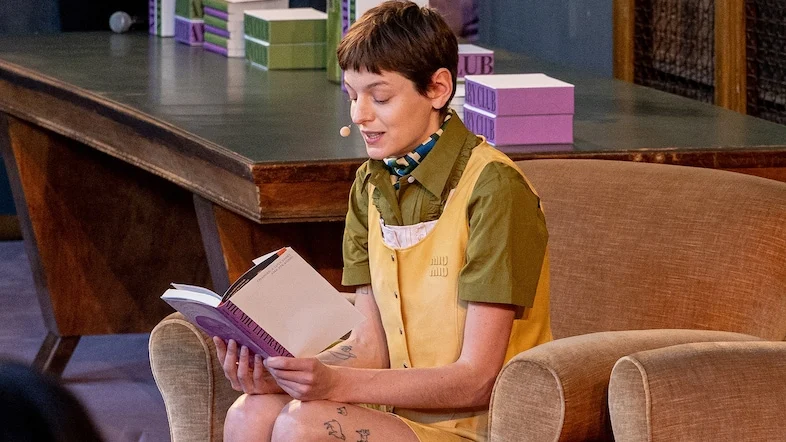
The discussion on Aidoo’s novel commenced with a poignant reading by British actor Emma Corrin, whose nuanced delivery immediately drew attendees into Esi’s world. Following the reading, journalist Nadia Beard expertly facilitated the discussion, introducing Changes as "a book full of consent." This precise framing immediately crystallized one of the central, perhaps most challenging, undercurrents of the "Politics of Desire" theme: the integral role of consent in defining Esi’s journey. The subsequent panel, featuring authors Francesca Marciano and Wayétu Moore, alongside Dutch-Surinamese academic Gloria Wekker, delved deeper into these intricate layers.
Wayétu Moore, reflecting on the narrative, underscored Esi’s unwavering commitment to self-determination. "I believe that consent was so integral to who Esi was and who she wanted to be as a free, independent woman," Moore articulated. She emphasized that Esi’s entire narrative arc, from the termination of her first marriage due to a breach of consent to her deliberate choice to enter a polygamous union, was fundamentally predicated on her own volition. "Her entire being, her arc, everything, was based on whether or not she agreed to being a second wife," Moore continued. This perspective challenges facile Western interpretations of polygamy, which often view it solely through a lens of oppression. Moore offered a crucial counterpoint: "From a Western perspective, being anyone’s second anything, especially in something as sacred as the covenant of marriage, would not be seen as liberating, but her consenting to it was enough." In Changes, consent emerges not just as a legal or ethical boundary, but as the wellspring of an entire narrative, demonstrating how individual lives are profoundly shaped, sometimes irrevocably, by the decision to uphold or break that fundamental contract. The discussion highlighted the need for cultural humility in interpreting complex social arrangements and the universal importance of individual autonomy.
Unpacking A Girl’s Story: Memory, Trauma, and the Nuances of Consent
The Literary Club’s focus on Annie Ernaux’s A Girl’s Story further intensified the exploration of consent, particularly its murky and often delayed recognition. The autofictional memoir recounts the pivotal summer of 1958, when the 18-year-old protagonist experiences her first sexual encounter with an older man. This traumatic event, shrouded in complex emotions, leads to profound and enduring shame for the protagonist. While Ernaux, in the book, never explicitly labels the encounter as rape, the narrative is undeniably haunted by the elusive and contentious politics of consent, reflecting the protagonist’s own internal struggle to define and understand what transpired.
Author Megan Nolan, a panelist discussing Ernaux’s work, offered a crucial insight into the inherent complexities of consent. "The reason consent is so complicated is that you don’t always even know what you want," Nolan posited. This statement resonated deeply with the experiences recounted in A Girl’s Story, where Ernaux vividly describes an intense desire for "H," the older man involved in the encounter. This potent desire can become profoundly confusing when confronted with a traumatic outcome, leading to agonizing self-questioning about whether that initial emotion somehow constituted assent to the act itself. The psychological aftermath of such experiences often involves a protracted process of re-evaluation and understanding.
A particularly poignant aspect of Ernaux’s story, highlighted during the discussion, is the significant temporal gap between the event and its eventual categorization. It took Ernaux until 2020 – a staggering 62 years after the incident and four years after the book’s publication – to publicly describe the encounter as rape. Nolan found this aspect profoundly relatable, stating, "This decades-long process of getting to be able to describe something as rape is very relatable, because it’s just sometimes really difficult to know what you wanted." This candid observation underscores the often-delayed and circuitous path to recognizing and naming trauma, particularly when it involves nuanced power dynamics, internalized shame, and societal pressures that complicate the immediate identification of non-consensual acts. The Miu Miu Literary Club, by bringing these challenging narratives to the forefront, provided a critical space for attendees to grapple with the complexities of consent, memory, and personal truth.
Expert Voices and Panel Insights
The carefully curated panels at the Miu Miu Literary Club are a cornerstone of its success. Beyond the readings, the discussions facilitated by figures like Nadia Beard and the insights offered by authors Wayétu Moore, Francesca Marciano, Megan Nolan, and academic Gloria Wekker transform the event into a dynamic intellectual forum. These experts, each bringing their unique perspectives and scholarly backgrounds, enrich the understanding of the chosen texts, offering interdisciplinary analyses that bridge literature, sociology, gender studies, and cultural criticism. The format encourages not just passive listening but active engagement, fostering an environment where challenging ideas are interrogated, debated, and understood with greater nuance. The presence of diverse voices, from different geographical and academic backgrounds, ensures a comprehensive exploration of themes, moving beyond singular interpretations to embrace the complexity of human experience and societal structures.
Beyond Fashion: Miu Miu’s Cultural Impact and Brand Positioning
The Miu Miu Literary Club represents a significant strategic move for the brand, positioning it as a vanguard in luxury fashion’s evolving relationship with cultural institutions. While many brands dabble in cultural collaborations, Miu Miu has committed to creating a sustained, intellectually robust platform. Tackling thorny topics like consent, marital rape, and the intricate "politics of desire" – subjects that most cultural institutions, let alone fashion brands, would typically shy away from – demonstrates a remarkable courage and conviction.
This initiative elevates Miu Miu beyond the glossy exterior of a traditional fashion house, transforming it into a facilitator of crucial contemporary dialogues. It provides a powerful counter-narrative to the often-criticized superficiality of the fashion industry, demonstrating that luxury can also be a vehicle for profound intellectual engagement and social commentary. By using beloved literary works as catalysts, the club provokes stimulating and deeply personal conversations among guests, fostering a sense of community rooted in shared intellectual curiosity rather than mere consumerism.
The broader implications of such an initiative are manifold. For Miu Miu, it strengthens brand loyalty among a discerning, intellectually curious clientele, differentiating it in a competitive market. A 2024 brand perception study indicated that brands engaging in authentic cultural discourse saw a 10-15% increase in positive sentiment among affluent, educated consumers. For the literary world, it provides an invaluable platform for women authors, particularly those whose works might challenge conventional narratives, granting them a broader, high-profile audience. For the wider cultural landscape, it normalizes and encourages discussions around difficult but vital social issues, demonstrating that fashion, when wielded thoughtfully, can be a potent force for progressive dialogue. The Miu Miu Literary Club is not simply a book club; it is a cultural statement, a testament to the power of literature to illuminate, challenge, and connect, all under the unexpected yet fitting patronage of a leading fashion house.
Conclusion: A New Chapter for Fashion and Feminism
In an era where attention spans are fragmented and discourse often superficial, the Miu Miu Literary Club stands as a beacon of intellectual depth and authentic engagement. By steadfastly focusing on feminist literature and creating spaces for rigorous, uncensored discussion on complex topics like consent and desire, Miu Miu has redefined the role a fashion brand can play in the cultural sphere. It has proven that luxury can be synonymous with profound thought, challenging the industry to look beyond transient trends and embrace initiatives that foster genuine intellectual and social enrichment. The club is not just reflecting the current vogue for books; it is actively shaping a future where fashion is an undeniable and powerful participant in the ongoing, vital conversations that define our humanity.