







The global art world turns its gaze towards Venice as Icelandic artist Ásta Fanney Sigurðardóttir prepares to unveil her highly anticipated project, "Pocket Universe," representing Iceland at the 61st International Art Exhibition – La Biennale di Venezia in 2026. Sigurðardóttir, renowned for her boundary-pushing, multi-disciplinary practice, is set to transform a historic Venetian shipyard into an immersive realm of cosmic myths, esoteric artifacts, and spontaneous performance, challenging conventional perceptions of art and reality. Her participation marks a significant moment for Icelandic contemporary art on one of the world’s most prestigious stages.
A Glimpse into the Artist’s World: The Reykjavik Overture
To understand the essence of Ásta Fanney Sigurðardóttir’s upcoming Venetian presentation, one might first look to the intimate, yet wildly unpredictable, performances that characterize her work in her native Reykjavik. Picture a winter’s night in the Icelandic capital, snow softly falling outside Mengi, a revered hub for experimental music and art. Inside, an audience queues not for conventional sustenance, but to become soup, gathering on stage to be symbolically stirred by an enormous, invisible spoon. This surreal, communal act served as the closing crescendo of a recent performance by Sigurðardóttir, a night brimming with collaborative energy.
These Reykjavik evenings are a testament to Sigurðardóttir’s fluid, inclusive artistic vision. Her performances frequently feature an eclectic mix of friends and collaborators, including acclaimed musician Jófríður Ákadóttir (JFDR) and artist Lindy Lin, often joined by impromptu participants – like a mysterious figure in a trilby and sunglasses, arriving in a cloud of vape-smoke. The raw, unrehearsed nature of these events, where participants are sometimes recruited mere hours before the show, fosters an atmosphere of collective improvisation. The line between humor and seriousness often blurs, a dynamic perfectly encapsulated when Sigurðardóttir herself, mid-autotuned duet with the "unknown man," dissolves into laughter, inviting the audience into her playful subversion of artistic formality.

Defying Categorization: Ásta Fanney’s Philosophical Canvas
Born and based in Reykjavik, Ásta Fanney Sigurðardóttir is an artist who consciously resists easy definition, much like the ephemeral nature of her own creations. Her practice spans an impressive array of mediums, from visual art and performance to music, poetry, and filmmaking, embodying what some describe as "spiritual fluxus." This term aptly captures her work’s embrace of fluidity, chance, and interdisciplinary dialogue, reminiscent of the Fluxus movement’s radical challenge to artistic norms, but infused with a distinct, often mystical, spiritual dimension.
In conversation, Sigurðardóttir articulates a profound detachment from conventional categorization. "I have a hard time putting myself into context," she admits when asked about her artistic lineage. This difficulty is further compounded by her unconventional perception of time. "Time doesn’t exist," she states matter-of-factly. "The past is also now, and the future is also now, and it also doesn’t exist. And possibly there’s multiple versions of time, like timelines that are endless and go in a loop. Or time is like a sphere, or like a ball, which contains all possibilities." This non-linear perspective makes tracing a traditional "family tree" of influences challenging, though she expresses deep admiration for pioneering artists like Meredith Monk and Laurie Anderson, whose brilliance, she notes, is such "that you have to whisper it." This philosophical foundation underscores her ability to move seamlessly across artistic boundaries, creating work that feels both ancient and utterly contemporary.
The Icelandic Crucible: A "Lovely Soup" of Creativity
While Sigurðardóttir may resist historical categorization, she readily acknowledges the profound influence of her hometown’s vibrant artistic ecosystem. Reykjavik, despite its small size, boasts a remarkably active and supportive creative community. She highlights local institutions and artist-run spaces as crucial incubators for this collaborative spirit, including the experimental venue Mengi, the artist-run bookstore Bókumbók, the Reykjavik Association of Sculptors’ workshop, and the charming back garden-gallery Glerhúsið, also managed by artists and poets. These spaces serve as vital meeting points where artists converge, collaborate, and disseminate their work, forming a tight-knit network that fosters experimentation and mutual support. "It’s really a privileged precision to be in," she reflects on this environment, aptly describing it as "a lovely soup."
This bottom-up ethos is deeply ingrained in Iceland’s cultural history. Unnar Örn, co-curator of the Icelandic Pavilion at the 2026 Venice Biennale alongside Margrét Áskelsdóttir, explains, "The art world here is quite young. You go 50 years back, and there was always this need within the art community to try and grasp what was going on." This historical context meant that many of the nation’s cultural institutions were not imposed from above but organically developed by artists themselves. "Nobody was validating you from above," Örn notes, adding, "This spirit is still around, in some ways." This self-reliance and collective validation have cultivated a unique environment where artists like Sigurðardóttir can thrive, unburdened by rigid institutional hierarchies and encouraged by a culture of improvisation and shared endeavor.
"Pocket Universe": A Cosmic Journey to Venice 2026
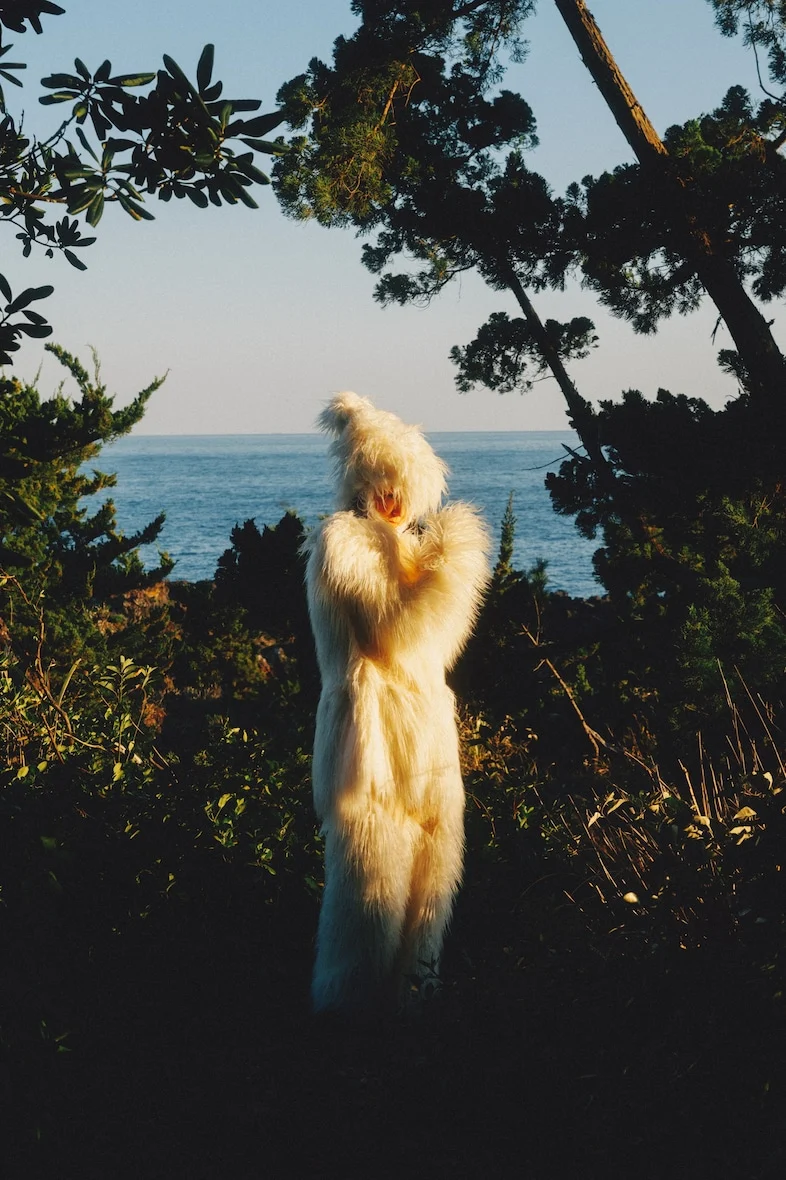
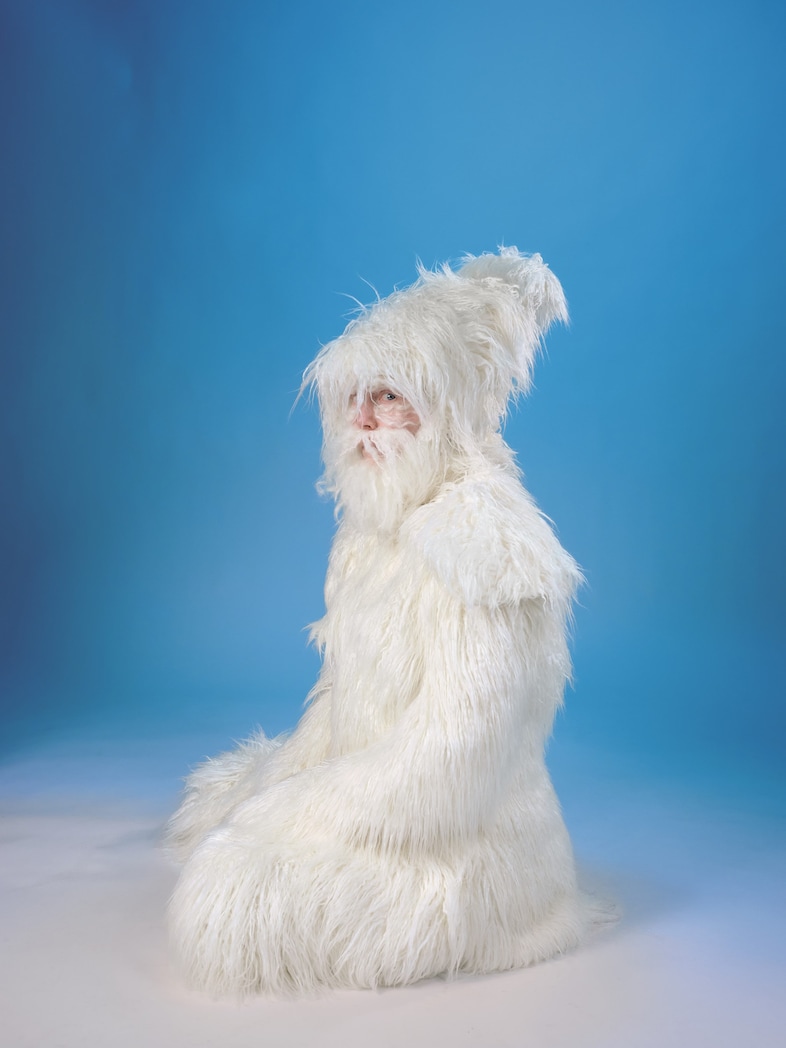
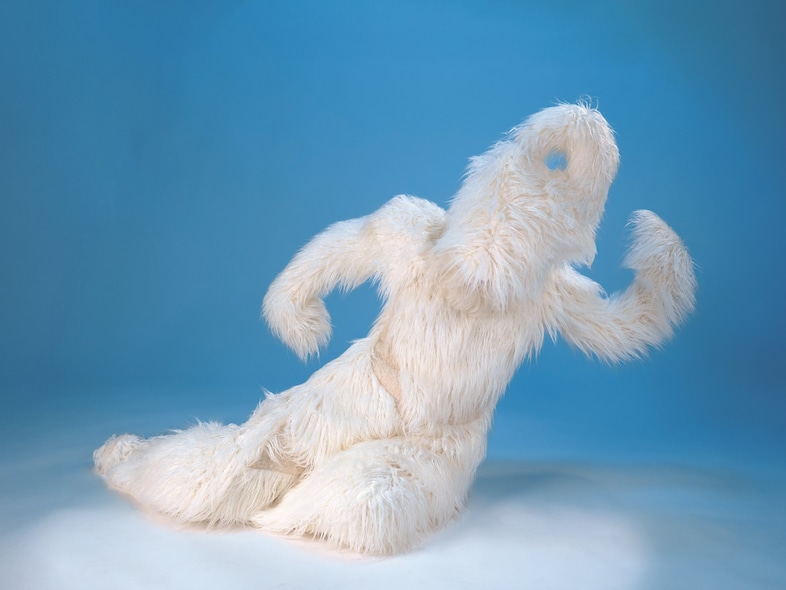
For her highly anticipated presentation at the 2026 Venice Biennale, Ásta Fanney Sigurðardóttir will transport this distinct Icelandic spirit some 3,000 kilometers south, transforming a former shipyard into the expansive narrative of "Pocket Universe." The exhibition is designed to be a holistic encapsulation of her multi-faceted creative practice, weaving together cosmic myths from diverse cultures with encounters involving esoteric artifacts and talismans. At its core, "Pocket Universe" explores the primordial quest for origin and meaning, centered around a compelling character named Creature Zero.
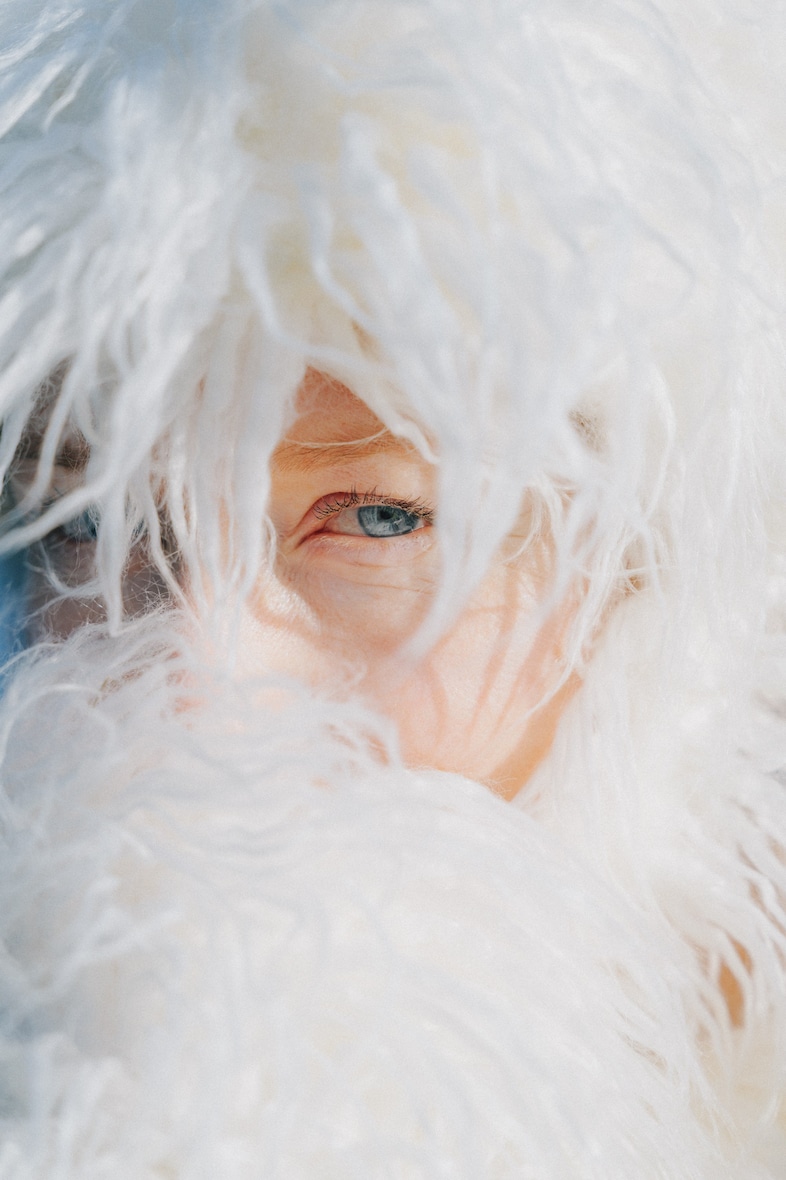
Creature Zero, whose distinctive costume is designed by Sól Hansdóttir, embodies a journey from the icy, rugged landscapes of Iceland’s far north to the very genesis of Earth. The narrative follows Creature Zero’s pilgrimage to locate the "original rock" believed to have initiated the planet’s creation. Sigurðardóttir recounts her own odyssey to research this central theme, describing a journey to Japan that felt like a "fairy tale." Traversing "700 buses and ferries" to a remote island shrouded by "300 black kites," she encountered a 91-year-old man on a bicycle who guided her to the fabled rock. The experience culminated in a serendipitous discovery: the island’s circling birds were themselves steeped in local myth, believed to signify the presence of deities – a "gateway for the gods." "No way, they came to greet us! Holy smokes," Sigurðardóttir exclaims, highlighting the profound interconnectedness of myth, nature, and personal experience that informs her work.
Navigating the Biennale: Playfulness on a Global Stage
Sigurðardóttir emphasizes that her artistic approach is not that of a historian or anthropologist. Her work is a personal interpretation of myths, constantly subject to revision and evolution. This spirit of fluidity and improvisation will be central to the Icelandic Pavilion in Venice. "Of course, you want to do your best," she states, "But it’s also about allowing yourself to exist as yourself. Playfulness, spontaneousness and improvisation." This philosophy, embracing the beauty in imperfections, can be particularly potent, or spectacularly challenging, when brought to a grand public stage like the Venice Biennale.
She draws parallels to a past performance at Reykjavik’s Harpa concert hall, home to the Icelandic Symphony Orchestra. Standing alone on that vast stage, she discovered how mistakes and imperfections, when amplified by the spotlight, can reveal a unique form of beauty. This willingness to expose vulnerability and embrace the unexpected is a hallmark of her artistic courage, a trait she intends to carry into the highly formalized environment of the Biennale.
The "Wiggly" Approach: Subverting Expectations in Venice
The term "wiggly" frequently surfaces in conversations with Ásta Fanney Sigurðardóttir, becoming a descriptor for her artistic philosophy and the creative processes she champions. The cross-pollination and spontaneous collaborations within Reykjavik’s art scene? "It’s wiggly." Her improvised performances? "Wiggly squiggly." This intuitive, iconoclastic approach, however, presents a unique challenge within the context of the Venice Biennale – the oldest and arguably most prestigious international art exhibition, steeped in centuries of tradition and rigorous protocols. One is not typically supposed to arrive in Venice with the intention of embracing mistakes or radical spontaneity.
The question then becomes: how does an artist so deeply committed to improvisation and personal authenticity navigate the immense pressures and institutional demands of such an event? The answer, according to Sigurðardóttir and her curatorial team, lies in even more "wiggling." Unnar Örn comments on this delicate balance: "There’s been a lot of maneuvering, within what the work can be, how it can be, what form it takes. It’s fascinating. I enjoy the stuff that makes us think or move in a different way." This strategic "wiggling" allows Sigurðardóttir to stay true to her artistic convictions while engaging with the formal structures of the Biennale, ensuring her vision retains its integrity and disruptive potential.
From Alchemy to Reweaving Destiny: The Broader Implications
The pervasive openness to artistic and existential possibilities defines the Reykjavik community that has nurtured "Pocket Universe." Playwright and artist Sigurður Ámundason, known for his large-scale pencil drawings, recalls dreaming of a creative life alongside Sigurðardóttir during their school days. His enduring admiration for the arts is encapsulated in a potent metaphor: "It’s like being an alchemist. We change shit into gold." This alchemical spirit, transforming the mundane and the intangible into something precious and profound, resonates deeply with Sigurðardóttir’s practice.
As Ásta Fanney Sigurðardóttir brings her "Pocket Universe" to the international stage in Venice, she resists the notion of "preaching." Instead, she offers a profound invitation to reconsider our relationship with meaning and reality. She returns to the concept of charged objects and places – ancient rocks, animals, even Iceland’s beloved "hidden people" or elves – as representations of deities. "These charged places and objects, talismans or amulets, even things you can have in your pocket, they have meaning or energy because you say so," she asserts. This belief underscores the power of narrative and intention in shaping our world.
Her concluding reflection offers a powerful analysis of her work’s broader implications: "The stories that we tell become a reality. So retelling a story, changing it from within, is like witches when they’re reweaving destiny. I think it’s a very good idea to reweave the world now. It’s time. It feels right." In a world increasingly defined by complex challenges and entrenched narratives, Sigurðardóttir’s "Pocket Universe" offers not just an art exhibition, but a philosophical proposition. It is an invitation to engage with the power of collective imagination, to embrace fluidity, and to actively participate in the reweaving of our shared reality, one "wiggly", spontaneous, and myth-infused moment at a time. Her presence at the 61st International Art Exhibition – La Biennale di Venezia from May 9 to November 22, 2026, promises to be a transformative experience, offering a potent vision for the future of art and human consciousness.