









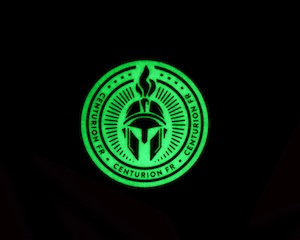
TREVOSE, PA — Penn Emblem Company, a global leader in the apparel decoration and identification industry, has been formally recognized for its technical ingenuity, receiving the prestigious 2026 Innovation Award from The Network Association of Uniform Manufacturers and Distributors (NAUMD). The accolade, presented during the association’s annual convention, highlights Penn Emblem’s "Centurion FR Silicone on Glow-in-the-Dark" technology, a product that merges high-definition brand aesthetics with critical safety functionality. This recognition underscores a significant shift in the uniform and promotional markets toward multi-functional components that offer both visual appeal and utility in high-risk or low-visibility environments.
The award-winning Centurion FR Silicone emblem represents a culmination of years of research and development aimed at overcoming the limitations of traditional embroidery and standard heat transfers. By utilizing advanced silicone molding techniques, Penn Emblem has succeeded in creating a decoration solution that maintains intricate micro-details and raised 3D dimensions while integrating photoluminescent properties. This dual-purpose design provides brands with a premium, modern look during daylight hours and essential visibility in low-light conditions, all while adhering to the rigorous safety standards required for Flame Resistant (FR) garments.
Technical Specifications and Manufacturing Excellence
The NAUMD Innovation Award specifically cited the emblem’s ability to push the "frontier of emblem design." The manufacturing process for the Centurion FR Silicone involves precision-engineered CNC molds that allow for liquid silicone to be injected with extreme accuracy. This results in sharp lettering and complex logos that traditional thread-based methods cannot replicate. The "FR" designation is particularly noteworthy; in the uniform industry, Flame Resistance is a non-negotiable requirement for sectors such as oil and gas, electrical utilities, and emergency services. Developing a silicone-based product that meets these safety ratings without compromising the integrity of the glow-in-the-dark pigment required a sophisticated balance of chemical engineering and material science.
According to technical briefs from Penn Emblem, the silicone used in these emblems is characterized by its exceptional durability. Unlike PVC or some plastic-based alternatives, silicone is highly resistant to extreme temperatures, UV exposure, and chemical degradation. This makes it an ideal substrate for industrial laundering, a process that involves high-heat drying and aggressive detergents that typically destroy lesser branding materials. The glow-in-the-dark functionality is integrated into the silicone backing itself, ensuring that the luminescent property does not peel or fade over time, providing a consistent safety feature for the life of the garment.
The Significance of the NAUMD Innovation Award
The Network Association of Uniform Manufacturers and Distributors is the primary global organization representing the $10 billion uniform and public safety apparel industry. Its annual Innovation Awards are widely considered the benchmark for excellence in the sector, judged by a panel of industry experts who evaluate entries based on their originality, problem-solving capabilities, and impact on the end-user.
In awarding Penn Emblem, the NAUMD committee emphasized that the Centurion FR Silicone on Glow-in-the-Dark was more than just a decorative patch; it was a "compelling identification solution that performs beautifully in all conditions, day or night." This recognition places Penn Emblem at the forefront of the "smart textile" movement, where apparel components are expected to provide value beyond mere identification. By solving the challenge of maintaining brand visibility in dark or hazardous environments, Penn Emblem has provided a tangible solution for safety managers and corporate branding officers alike.
A Strategic Shift: The Rise of Silicone in Apparel Decoration
The success of Penn Emblem’s latest innovation reflects a broader industry trend. For decades, the uniform market relied almost exclusively on embroidered patches and silk-screened transfers. However, the last five years have seen a massive migration toward silicone. Market data suggests that the global apparel decoration market is evolving toward "dimensional" branding—logos that have physical depth and texture.
Silicone has emerged as the preferred medium for this evolution for several reasons:
- Flexibility: Unlike rigid plastic emblems, silicone moves with the fabric, preventing the "cardboard" feel on lightweight performance wear.
- Waterproof Nature: Silicone does not absorb moisture, making it ideal for outerwear and rain gear.
- Detail Retention: The molding process allows for "micro-detailing" where letters as small as 1mm can remain legible.
- Sustainability: Silicone is increasingly viewed as a more environmentally friendly alternative to traditional plastics, as it is derived from silica (sand) and is more durable, leading to a longer product lifecycle.
Penn Emblem’s decision to integrate glow-in-the-dark technology into this already popular medium was a strategic move to capture the intersection of the "athleisure" trend and the industrial safety market.
Internal Collaboration and the Path to Market
Accepting the award on behalf of the company, Rich Hirsh emphasized that the development of the Centurion FR Silicone was not a siloed effort. "Innovation like this doesn’t happen alone," Hirsh stated. "It’s the result of collaboration across design, production, and everyone behind the scenes who helped push the idea forward and refine it every step of the way."
The timeline for the product’s development indicates a rigorous testing phase. From the initial concept in early 2024 to the final production-ready prototype in late 2025, the product underwent multiple rounds of industrial wash testing and fire-safety certifications. The design team worked closely with chemical engineers to ensure that the photoluminescent additives did not interfere with the silicone’s ability to bond with the FR-treated fabrics. This collaborative approach allowed the company to move from a niche concept to a mass-producible solution that met the high-volume needs of major uniform rental companies and global brands.
Broader Industry Implications and Future Outlook
The introduction of the Glow-in-the-Dark Silicone emblem is expected to have a ripple effect across several sectors. In the public safety realm, police and EMS uniforms can now feature high-visibility branding that doesn’t require the bulk of traditional reflective tape. In the corporate sector, brands looking for a "premium" or "tech-forward" aesthetic can utilize the 3D depth of silicone to differentiate themselves in a crowded marketplace.
Furthermore, industry analysts suggest that this innovation paves the way for further integration of technology into emblems. With the success of photoluminescent silicone, the next frontier likely involves the integration of RFID (Radio Frequency Identification) or NFC (Near Field Communication) chips directly into the silicone mold. Such advancements would allow for automated garment tracking in industrial laundries or "tap-to-verify" authentication for high-end branded apparel.
Penn Emblem’s leadership indicated that they are already exploring these future iterations. "We’re proud of what this represents for our company, and even more excited about where it can go from here as we continue to explore new ways to elevate decorated apparel," the team noted in a follow-up statement.
About Penn Emblem Company
Founded in 1947, Penn Emblem Company has evolved from a small, family-owned embroidery shop in Philadelphia into a multi-national powerhouse in the textile identification industry. Now headquartered in Trevose, Pennsylvania, the company serves a diverse array of markets, including healthcare, hospitality, industrial workwear, and professional sports leagues.
The company’s history is defined by a series of "firsts" in the industry, including the development of high-speed manufacturing for embroidered patches and the early adoption of digital printing for emblems. This latest NAUMD Innovation Award adds to a long list of accolades that cement Penn Emblem’s reputation as a pioneer. As the company looks toward its 80th anniversary, the focus remains on blending traditional craftsmanship with cutting-edge material science to meet the changing needs of the global workforce.
The 2026 NAUMD Innovation Award serves as a validation of Penn Emblem’s forward-thinking strategy. By identifying a gap in the market—the need for a high-detail, flame-resistant, and high-visibility branding solution—and filling it with the Centurion FR Silicone on Glow-in-the-Dark, the company has set a new standard for what a modern emblem can achieve. For the uniform industry, the message is clear: branding is no longer just about identification; it is about performance, safety, and innovation.