







UK fashion retailers reported a challenging and fragmented performance over the early May bank holiday weekend, spanning from May 2nd to May 4th, 2026. Initial assessments from industry analysts and retail bodies indicate that while some segments experienced modest upticks, the broader picture was one of cautious consumer spending, persistently weaker footfall across physical retail destinations, and a continued reliance on widespread discounting to entice hesitant shoppers. This mixed outcome underscores the enduring pressures on the high street and the evolving landscape of consumer behaviour in an economy still grappling with inflationary pressures and cost-of-living concerns.
Navigating a Challenging Economic Landscape
The lead-up to the May bank holiday weekend of 2026 was marked by a prevailing sense of economic uncertainty, which has become a defining characteristic of the UK retail environment over the past eighteen months. Consumers have been navigating a prolonged period of elevated inflation, albeit showing signs of easing, alongside high interest rates impacting mortgage repayments and borrowing costs. Energy prices, though off their peak, remained a significant strain on household budgets, contributing to a discernible shift in discretionary spending habits. This environment has fostered a culture of value-seeking and careful consideration of non-essential purchases, with fashion often falling into this category. Retailers had entered the bank holiday period with tempered expectations, acutely aware of the consumer’s increased price sensitivity and willingness to delay purchases in anticipation of promotional offers. The bank holiday, traditionally a crucial trading period, especially for spring/summer collections, was seen as a critical barometer for consumer confidence as the nation transitioned into warmer months.
The Bank Holiday Performance Breakdown
Reports emerging on May 5th, 2026, painted a nuanced picture of the three-day trading period. While some retailers, particularly those offering strong value propositions or unique experiential elements, managed to achieve their targets, many others struggled to convert browsing into meaningful sales. The "mixed" performance reflects significant variations not only between different retailers but also across geographical regions and retail formats. Large out-of-town retail parks, benefiting from easier parking and a broader range of amenities, generally fared slightly better than traditional high streets in city centres, which continued to battle declining visitor numbers. Online sales, as expected, maintained their resilience, albeit without the explosive growth seen during the pandemic, suggesting a stabilisation of the digital channel’s market share.
Footfall Fails to Ignite High Streets
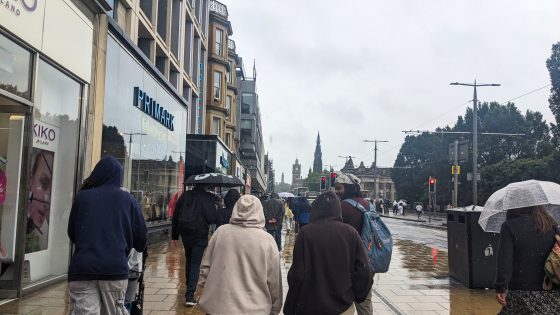
A consistent theme across preliminary reports was the disappointing level of footfall in physical stores, particularly on high streets. Data from leading retail analytics firms, such as Springboard and MRI Software, indicated a modest year-on-year increase in footfall across all UK retail destinations, often in the low single digits (e.g., 1.8% compared to the same bank holiday in 2025). However, this marginal improvement was frequently overshadowed by a significant drop when compared to pre-pandemic levels (e.g., still down 15-20% from May 2019). Furthermore, the conversion rate of footfall to actual sales appeared to be lower than desired, suggesting that many visitors were engaging in recreational browsing rather than purposeful purchasing. This trend was exacerbated by unfavourable weather conditions across many parts of the UK over the weekend, with intermittent rain and cooler temperatures deterring potential shoppers and impacting sales of lighter spring attire. For fashion retailers, this meant fewer opportunities for impulse buys and a greater reliance on destination shoppers.
The Online Counterpoint
In contrast to the struggles of brick-and-mortar stores, the online channel continued to serve as a vital lifeline for many fashion retailers. While the growth trajectory of e-commerce has naturally stabilised post-pandemic, the bank holiday weekend still saw robust online activity. Consumers, perhaps deterred by the weather or simply preferring the convenience, increasingly turned to digital platforms to browse and make purchases. Retailers with well-integrated omnichannel strategies, allowing for click-and-collect options or seamless returns, were best positioned to capture this demand. However, the online space remains intensely competitive, with a constant pressure on pricing and delivery speeds. This often means that while online sales volumes can be high, profit margins are frequently squeezed due to logistics costs and the expectation of free returns. Data from industry sources suggested that online fashion sales saw a more consistent, albeit moderate, growth compared to in-store, highlighting the ongoing channel shift and the importance of a strong digital presence.
Discounting: A Double-Edged Sword
One of the most prominent features of the bank holiday trading period was the pervasive nature of discounting. From "20% off everything" promotions to specific category sales and multi-buy offers, retailers heavily relied on price reductions to stimulate demand. This strategy, while often necessary to move inventory and attract value-conscious consumers, carries inherent risks. Persistent discounting can erode profit margins, devalue brand perception, and train consumers to only purchase during promotional periods, creating a challenging cycle for full-price sales. Several analysts noted that the depth and breadth of discounts observed over this bank holiday were indicative of ongoing inventory management challenges and the intense competition within the fashion sector. While some retailers successfully leveraged targeted promotions to clear stock and drive footfall, others found themselves in a race to the bottom, impacting their overall profitability.
Industry Voices Weigh In
Leading industry bodies were quick to react to the initial reports, echoing the sentiment of a challenging period. Helen Dickinson, Chief Executive of the British Retail Consortium (BRC), commented, "The early May bank holiday offered a mixed bag for fashion retailers. While the improving economic outlook should eventually translate into stronger consumer confidence, households remain cautious. The persistent pressure on discretionary spending means retailers are working harder than ever to attract customers, often through significant promotional activity. We need to see sustained government action to ease the cost burden on businesses, particularly through reform of the outdated business rates system, to help foster a more vibrant retail environment."
Similarly, a spokesperson from the UK Fashion & Textile Association (UKFT) highlighted the resilience of the sector despite the headwinds. "UK fashion continues to demonstrate its adaptability. However, these mixed results underscore the need for continued innovation and a deep understanding of evolving consumer preferences. Retailers are having to balance the immediate need for sales with the long-term imperative of brand building and sustainable growth."
Analyst Perspectives: Awaiting Further Data
Retail analysts offered a more granular perspective, pointing to specific trends and potential implications. Sarah Jenkins, a senior retail analyst at a prominent market research firm, observed, "The May bank holiday results are a microcosm of the broader retail challenges. Consumers are making very deliberate choices, prioritising essentials and seeking out genuine value in non-essentials. The impact of weather cannot be underestimated for seasonal fashion, and the cool, damp conditions certainly didn’t help. We’re also seeing a continued divergence: retailers with strong online capabilities and clear brand identities are navigating this better than those heavily reliant on traditional high street models without sufficient digital integration."
She added, "The level of discounting is a concern. While effective in the short term, it’s not a sustainable model. Retailers will need to focus on product innovation, customer experience, and operational efficiency to thrive in this new landscape, rather than simply relying on price cuts." Further detailed data, including like-for-like sales figures and category-specific performance, is expected from various sources in the coming weeks, which will provide a more comprehensive understanding of the weekend’s impact.
Broader Economic Context: Persistent Headwinds
The mixed performance of the fashion sector over the bank holiday weekend cannot be isolated from the broader macroeconomic context. While the Bank of England has signaled a potential plateauing of interest rates, and inflation has shown signs of receding from its peak, the cumulative effect of these pressures over the past two years continues to weigh heavily on consumer sentiment. Real wages, while showing some recovery, have not fully caught up with the erosion of purchasing power, leading to a lingering sense of financial precarity for many households. Geopolitical uncertainties also contribute to a cautious outlook, influencing investment decisions and overall economic confidence. For the fashion industry, this translates into a highly competitive market where brand loyalty is tested, and agile business models are paramount.
Strategic Responses and Future Outlook
In response to these persistent challenges, UK fashion retailers are implementing a range of strategic adjustments. Many are doubling down on their omnichannel strategies, investing in seamless integration between their online and physical storefronts, offering improved click-and-collect services, and leveraging data analytics to personalise customer experiences. There’s also a renewed focus on sustainability and ethical sourcing, as a growing segment of consumers demonstrates a preference for brands aligning with these values, even if it means a slightly higher price point.
Furthermore, retailers are exploring innovative ways to enhance the in-store experience, transforming physical spaces into destinations for discovery, community, and entertainment, rather than just transactional points. Pop-up shops, collaborations, and experiential marketing are becoming increasingly common tactics to drive footfall and create memorable interactions. For the remainder of 2026, the outlook for UK fashion retail remains cautiously optimistic but fraught with challenges. The industry will be closely monitoring consumer confidence indices, inflation trends, and the trajectory of the broader economy. Success will hinge on retailers’ ability to adapt quickly, understand the evolving demands of their customer base, and offer compelling value that transcends mere price. The May bank holiday trading period serves as a stark reminder that while the retail sector is resilient, it continues to operate in an environment demanding constant innovation and strategic foresight.
The Path Ahead for UK Fashion Retail
Looking forward, the UK fashion retail landscape is expected to continue its transformation, driven by technological advancements, shifting demographics, and evolving consumer values. The "mixed" performance during the early May bank holiday is not an anomaly but rather a reflection of a sector in transition. Retailers that can successfully integrate advanced data analytics to predict trends, personalise offerings, and optimise inventory will gain a significant competitive edge. Investment in supply chain resilience and speed-to-market will also be critical to respond to fast-changing consumer demands and mitigate the impact of external disruptions.
Moreover, the emphasis on conscious consumption is likely to grow, pushing more brands towards transparent sourcing, circular economy models, and durable product design. The bank holiday results underscore that while promotional activity can provide short-term boosts, long-term success will be predicated on building strong brand equity, fostering customer loyalty through exceptional experiences, and demonstrating genuine commitment to value, both in terms of price and purpose. The coming months will undoubtedly test the agility and strategic vision of UK fashion retailers as they navigate the complexities of a post-inflationary yet still cautious consumer market.