







Russell & Bromley has concluded its redundancy process, with a total of 332 positions eliminated across its central head office operations and its recently shuttered retail estate since the luxury footwear and accessories retailer collapsed into administration in January, Drapers understands. This final round of job losses brings a definitive close to a period of intense uncertainty for the brand’s workforce, marking a significant and somber chapter in the history of the venerable British high street institution. The extensive cuts underscore the severity of the financial challenges faced by the company, ultimately leading to its inability to sustain its previous operational footprint and staffing levels.
Background to Administration: A High Street Stalwart’s Decline
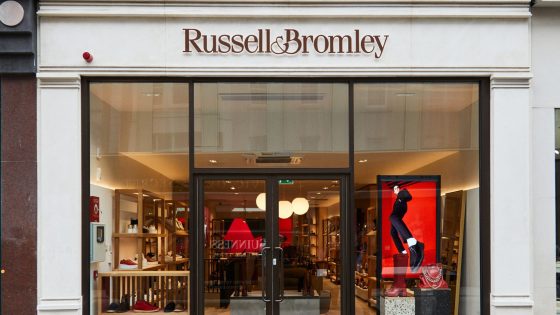
The news of Russell & Bromley entering administration in January 2026 sent shockwaves through the UK retail sector. For generations, Russell & Bromley had been synonymous with quality, craftsmanship, and a premium shopping experience, holding a distinguished position on high streets and in shopping centres across the country. Established in 1873, the brand cultivated a loyal customer base, known for its extensive range of men’s and women’s shoes, handbags, and accessories, often at a higher price point reflective of its perceived quality and design. Its stores, typically located in prime retail spots, exuded an air of classic elegance, reinforcing its luxury appeal.
However, the retail landscape has been particularly brutal in recent years, a trend exacerbated by a confluence of factors including inflationary pressures, a persistent cost-of-living crisis impacting discretionary consumer spending, soaring operational costs such as energy and business rates, and the relentless shift towards online shopping. Many traditional retailers, even those with strong brand recognition like Russell & Bromley, have struggled to adapt swiftly enough to these seismic shifts, often burdened by expensive long-term leases and a legacy physical infrastructure. Sources close to the administration proceedings indicated that Russell & Bromley had been grappling with declining footfall, increased competition from both online pure-plays and more agile multi-channel competitors, and a significant debt pile that became unsustainable in the challenging economic climate.
The Path to Insolvency: A Chronology of Crisis
The journey to administration was not an overnight event but rather the culmination of mounting financial pressures.
- Late 2024: Reports began to surface within industry circles of Russell & Bromley exploring various strategic options, including potential refinancing or a partial sale of assets, as liquidity tightened. These discussions, though never officially confirmed by the company, highlighted an underlying stress.
- December 2025: A crucial pre-Christmas trading period reportedly fell short of expectations, dealing a significant blow to the company’s already precarious financial position. Despite efforts to entice shoppers with seasonal promotions, consumer confidence remained subdued, impacting sales of premium items.
- Early January 2026: Following the disappointing festive season, the company’s board, facing an inability to meet immediate liabilities and secure further funding, initiated proceedings to appoint administrators. This decision was understood to have been made after exhausting all other avenues for rescue.
- January 15, 2026: Russell & Bromley officially announced its intention to appoint administrators, citing "unprecedented trading conditions" and a "challenging economic environment." This announcement triggered immediate uncertainty for its estimated 800 employees and its network of approximately 35 stores across the UK.
- Late January 2026: Appointed administrators, believed to be from a major restructuring firm, commenced an urgent assessment of the business, exploring options for a rescue deal, either through a pre-pack administration or by finding a buyer for parts or the entirety of the business. Initial rounds of redundancies were initiated, primarily impacting store staff in underperforming locations.
- February – March 2026: With no viable buyer emerging for the business as a going concern, the administrators began a phased closure of Russell & Bromley’s retail stores. This period saw the gradual winding down of operations in dozens of locations, leading to further significant job losses among retail staff. The focus shifted to managing the remaining inventory and assets.
- April 2026: As the physical store estate was largely dismantled, attention turned to the head office functions. Departments such as buying, merchandising, marketing, finance, and human resources faced significant restructuring as the prospects of a full-scale business resurrection diminished. This phase involved detailed consultations regarding further redundancies.
- May 1, 2026 (Reported Date): The final count of 332 redundancies was confirmed, marking the conclusion of the formal redundancy process following the administration. This figure encompasses both the extensive retail staff reductions and a substantial proportion of the head office workforce, leaving only a skeleton crew, if any, to manage the remaining administrative tasks of the insolvency.
Human Cost: The Redundancy Process and Its Impact
The figure of 332 redundancies represents a significant portion of Russell & Bromley’s workforce prior to administration. While precise departmental breakdowns were not publicly disclosed, it is understood that the cuts affected a broad spectrum of roles. The initial waves primarily impacted retail sales assistants, store managers, and visual merchandisers as shops were shuttered. The later, final phase would have predominantly affected head office personnel, including professionals in product development, supply chain management, e-commerce, customer service, and corporate administration.
For many of these individuals, particularly those with long tenures, the news came as a devastating blow. Russell & Bromley was not just an employer but a part of their professional identity, a brand they were proud to represent. The loss of employment, especially in a tight job market, brings considerable financial and emotional stress. While administrators are legally bound to ensure statutory redundancy payments and support, the sudden disruption to livelihoods is profound. Trade unions and employment charities often highlight the long-term impact of such large-scale job losses on local economies and individual well-being, emphasizing the need for robust outplacement support and career transition services, which are often limited in insolvency scenarios.
Industry Reactions and Broader Implications
The collapse of Russell & Bromley and the subsequent job losses serve as a stark reminder of the ongoing fragility of the UK retail sector. Industry analysts have frequently pointed to a "retail apocalypse" affecting traditional high street names.
"The case of Russell & Bromley is unfortunately not an isolated incident but a microcosm of the challenges facing legacy retailers," commented Eleanor Vance, a retail sector analyst at Global Insights Group. "Even brands with a strong heritage and perceived quality can no longer rely solely on brand loyalty. The consumer landscape has fundamentally shifted, demanding agility, a seamless multi-channel experience, and compelling value propositions that transcend just product quality. Businesses need to be digital-first, customer-centric, and highly efficient to survive."
The event also highlights the wider economic implications of such closures. Each job lost contributes to a broader weakening of consumer spending power and confidence. Furthermore, the emptying of prime retail units on high streets across the country creates a domino effect, impacting landlords, local councils, and other neighbouring businesses. The visual impact of boarded-up stores can further deter footfall, creating a vicious cycle for struggling town centres.
The Future of the Brand: A Lingering Question
With the formal redundancy process concluded, the future of the Russell & Bromley brand itself remains uncertain. While the operating company has ceased significant trading, the intellectual property (brand name, logos, designs) still holds value. Several scenarios are possible:
- Brand Acquisition: A larger retail group or a private equity firm specialising in brand revitalisation could acquire the Russell & Bromley intellectual property. This might lead to a re-launch, potentially as an online-only entity, a concession model within department stores, or a significantly scaled-down physical presence.
- Asset Sales: The administrators may proceed with the sale of remaining assets, including inventory, fixtures, and fittings, to recoup funds for creditors. The brand name might be sold separately to the highest bidder.
- Dormancy: If no suitable buyer emerges for the brand, it could enter a period of dormancy, with its rich history preserved in archives but its commercial operations ceasing entirely. This has been the fate of several other beloved British brands in recent decades.
Any potential resurrection would undoubtedly involve a drastically different business model, likely focusing on e-commerce, a leaner operational structure, and a re-evaluated value proposition to appeal to contemporary consumers. The challenge would be to retain the essence of the Russell & Bromley heritage while embracing modern retail dynamics.
Wider Retail Sector Context and Economic Outlook
Russell & Bromley’s collapse is part of a broader narrative unfolding across the UK retail sector. In the past 18 months, numerous well-known names, from fashion to homeware, have either entered administration or undertaken significant restructuring efforts. These include brands like Joules, Paperchase, and The Body Shop, all struggling with similar headwinds. The structural shift towards online shopping, accelerated by the pandemic, has fundamentally altered consumer behaviour, making physical retail a more challenging and capital-intensive proposition.
Moreover, the persistent inflationary environment, with the Bank of England’s interest rate hikes aimed at curbing it, has squeezed household budgets. Discretionary spending, particularly on non-essential items like premium footwear, has been among the first categories to be impacted as consumers prioritise essentials. The UK’s economic growth forecasts remain subdued, suggesting that the pressure on retailers is unlikely to abate significantly in the short to medium term.
The finalisation of redundancies at Russell & Bromley serves as a poignant reminder of the relentless evolution of the retail industry. It underscores the critical need for businesses to be agile, innovative, and deeply attuned to changing consumer demands and economic realities. While the brand’s immediate future hangs in the balance, its story will undoubtedly be studied as another case study in the ongoing transformation of the British high street. The 332 individuals affected by these final job losses now face the arduous task of navigating a challenging employment market, a testament to the profound human impact of corporate insolvencies in an unforgiving economic climate.