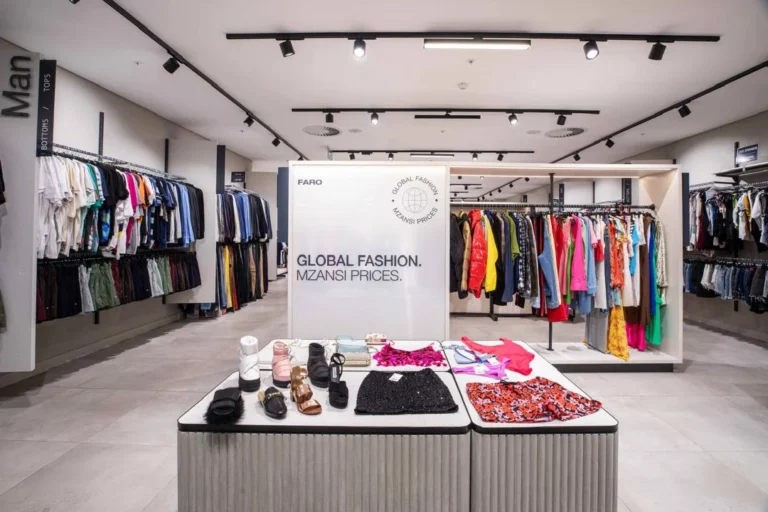










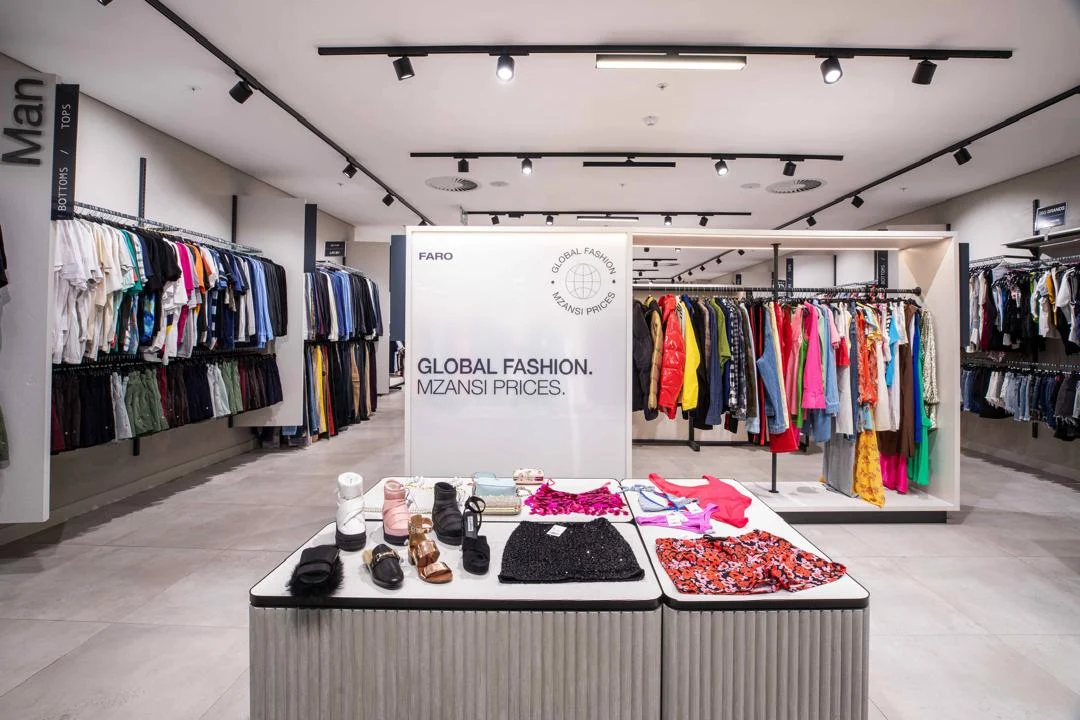
FARO, a South African-based recommerce startup, has successfully secured $6 million in a new funding round to expand its operations across the African continent and beyond. The investment, led by Bloomberg President JP Zammitt, signals a growing confidence in the "recommerce" sector—a market focused on the resale of refurbished or overstock goods—which is projected to reach a global valuation of $350 billion by 2027. FARO’s primary mission is to bridge the gap between the billions of dollars in unsold inventory held by major fashion conglomerates and the high demand for authentic, affordable branded apparel in emerging markets. By sourcing overstock and consumer returns from global giants such as Zara, Levi’s, and Tommy Hilfiger, FARO aims to provide a sustainable alternative to the low-quality secondhand clothing imports that currently dominate many African retail landscapes.
The global fashion industry is currently grappling with an inventory crisis of unprecedented proportions. Recent reports indicate that leading brands, including ASOS and H&M, have struggled with billions of dollars’ worth of unsold stock, often exacerbated by the rising cost of living and shifting consumer habits in the United Kingdom and the United States. To protect their brand equity and prevent "market cannibalization"—where discounted goods undercut full-price sales in primary markets—these companies frequently avoid reselling excess stock within Western borders. Historically, this has led to the incineration of clothing or its disposal in landfills. Simultaneously, emerging markets, particularly in Africa, have become a destination for secondhand clothing exports. However, environmental groups have noted a disturbing trend: approximately 30% to 40% of these imports arrive in a state of decay or damage, rendering them unusable. These discarded textiles often end up in massive informal dumpsites, contributing to severe environmental degradation and water pollution in countries like Ghana and Kenya.
The FARO Business Model: Reconditioning and Value Addition
FARO, founded in 2023, operates on the principle of turning this ecological and logistical problem into a profitable arbitrage opportunity. The startup targets two specific categories of inventory: brand-new overstock and consumer returns that possess minor defects. In the traditional retail model, the cost of labor required to inspect, clean, and repair a returned item in Europe or North America often exceeds the item’s residual value. Consequently, these items are frequently discarded despite being fundamentally high-quality products.
To address this, FARO has established specialized processing facilities in South Africa. These hubs are equipped with industrial-grade laundries and steam tunnels designed to recondition clothing to a "like-new" state. By leveraging South Africa’s more competitive labor costs, FARO can perform value-adding processes that would be economically unfeasible in Western markets. Co-founder and co-CEO David Torr explains that the company is often able to acquire inventory at ultra-low price points—sometimes as low as £1 per garment—before refurbishing and selling the items at a 45% fixed-margin target. This allows the startup to offer premium brands like G-Star and Jack & Jones at discounts of up to 70% off their original retail prices, making them accessible to a demographic that values brand status but lacks the disposable income for full-price retail.
A Chronology of Growth and Market Entry
The trajectory of FARO has been marked by rapid scaling and a departure from traditional e-commerce expectations. The company’s journey began in early 2023 with a single experimental pop-up store in a South African urban hub. The initial goal was to test whether the local appetite for authentic brands would translate into high-volume sales for refurbished goods.
- January 2023: FARO launches its first pop-up store. Within the first 30 days, the outlet generated $100,000 in revenue, far exceeding internal projections.
- Mid-2023: Based on standard retail benchmarks, the founding team—comprised of veterans from Amazon, Jumia, and Takealot—estimated that seven physical stores would be required to reach an annual revenue run rate of $2 million.
- Late 2023: FARO surpassed the $2.3 million revenue milestone with only four operational stores. This efficiency represented a 20-fold growth in revenue over a 12-month period.
- November 2024: The company announces its $6 million funding round to fuel a ten-year expansion plan, aiming for 1,000 locations globally.
This growth has been facilitated by South Africa’s unique retail infrastructure. Unlike many other African nations where retail is fragmented and informal, South Africa possesses over 2,000 formal shopping centers. FARO has strategically placed its stores in mid-market centers and formal retail spaces, capturing foot traffic from aspirational buyers who prefer the tactile experience of physical shopping, particularly when dealing with "single-item" inventory where every piece may have unique characteristics.
Technological Integration and the Role of AI
A significant portion of the newly raised capital is earmarked for the development of FARO’s proprietary technology stack. Despite operating in the physical retail space, the company views itself as a tech-enabled logistics firm. One of the primary challenges in the off-price retail sector is the management of "manifests"—massive spreadsheets detailing thousands of unique items with varying sizes, styles, and conditions.
In legacy retail corporations, this data is often managed manually by thousands of employees using basic spreadsheet software, a process that is both labor-intensive and prone to error. David Torr highlights that FARO is currently deploying AI-powered agents to automate these complex buyer workflows. These agents are designed to analyze inventory manifests, predict regional demand, and optimize pricing in a matter of seconds. By breaking down the procurement process into manageable micro-tasks, FARO intends to maintain a lean head-office structure even as its physical footprint expands. Furthermore, the company plans to introduce personalized shopping tools, using AI to notify loyal customers when specific brands or sizes that match their preferences arrive at their local store.
Competitive Landscape and Market Pressures
FARO enters the market at a time of significant disruption in African retail. While traditional e-commerce platforms like Jumia and Takealot have struggled with the high costs of last-mile delivery and low population density in certain regions, new "ultra-fast fashion" players like Temu and Shein have made aggressive inroads. These Chinese-linked platforms offer extremely low prices that appeal to price-sensitive consumers, posing a direct threat to both established local retailers and the emerging recommerce sector.
However, FARO’s leadership believes their model offers a distinct competitive advantage: the allure of "prestige" brands. While Shein and Temu provide unbranded or white-label trendy apparel, FARO provides established global brands that carry significant social capital in African markets. Additionally, by operating physical stores, FARO avoids the logistical hurdles and delivery fees that often deter African consumers from online shopping. The company’s focus on "customer centricity" and high-touch physical environments is a calculated move to build brand loyalty in a way that purely digital platforms cannot.
Broad Impact and Environmental Implications
The success of FARO could have profound implications for the global fashion supply chain. If the model proves scalable, it provides a blueprint for how international brands can ethically offload excess inventory without damaging their primary markets. This "circular economy" approach reduces the volume of clothing that is either incinerated or dumped in the Global South, directly addressing the environmental crisis caused by textile waste.
From an economic perspective, the investment in FARO highlights the growing importance of South Africa as a hub for retail innovation. The involvement of high-profile investors like JP Zammitt, Presight Capital, and Gharage Ventures suggests that the "recommerce" trend is not merely a niche sustainability project but a viable, high-growth asset class. As FARO eyes expansion into South America, Asia, and the Middle East, its ability to localize price profiles and adapt to varying consumer behaviors will be the ultimate test of its 1,000-store vision.
Official Responses and Investment Details
The $6 million seed round saw participation from a diverse group of venture capital firms and angel investors. JP Zammitt, who led the round, noted the potential for FARO to redefine how inventory is managed globally. Other participants included:
- VC Firms: Presight Capital, Gharage Ventures, and E4E Africa.
- Individual Investors: Mato Perić (MPGI), Leonard Stiegeler (Pulse), Oliver Merkel (Flink), Vikram Chopra (Cars24), Tushar Ahluwalia (Razor Group), Sudeep Ramnani (885 Capital), and Kresten Buch (88mph).
The founding team—David Torr, Will McCarren, Chris Makhanya, and Amber Penney-Young—brings a combined decades of experience in African e-commerce and logistics. Their collective background is expected to be a critical factor in navigating the complexities of cross-border trade and regional expansion. As the fashion industry continues to face scrutiny over its environmental footprint, FARO stands as a prominent example of how market-driven solutions can align profitability with ecological responsibility.