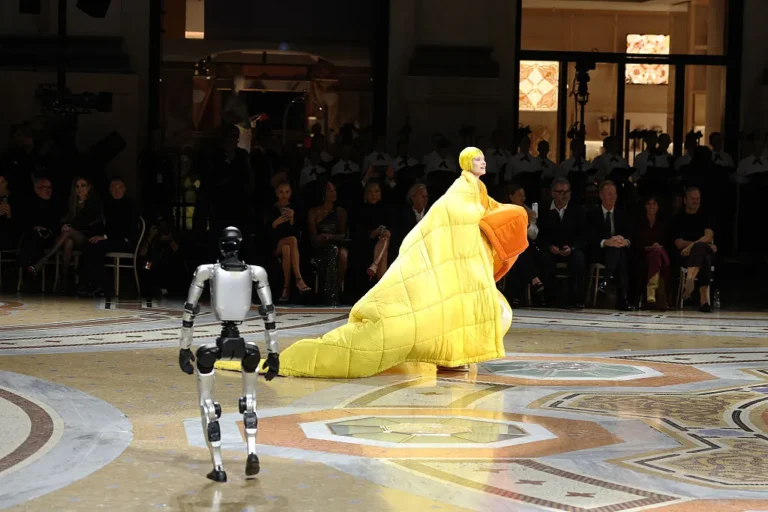










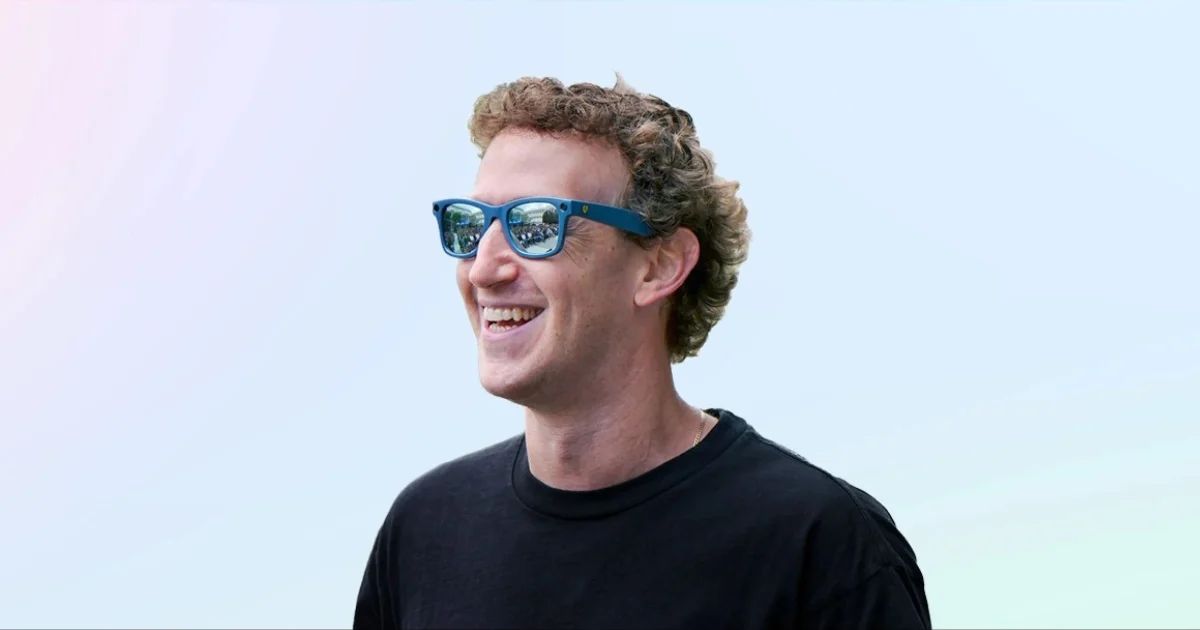
The intersection of Silicon Valley technology and Milanese high fashion reached a new focal point on Thursday as Meta CEO Mark Zuckerberg and his wife, Priscilla Chan, took prominent front-row seats at Prada’s Fall/Winter 2026 Fashion Week show. The presence of the social media executive at one of the world’s most exclusive sartorial events has intensified long-standing industry speculation that Meta is preparing to expand its wearable technology portfolio into the ultra-luxury segment. Zuckerberg was observed in deep conversation with Lorenzo Bertelli, Prada’s Chief Merchandising Officer and the son of the house’s lead designer, Miuccia Prada, suggesting a relationship that extends beyond mere attendance.
While Zuckerberg has undergone a public-facing aesthetic transformation over the past two years—trading his signature gray t-shirts for custom designer threads and a more curated personal style—analysts suggest his appearance in Milan is fundamentally a business maneuver. The visit aligns with previous reports indicating that Meta is deepening its integration with EssilorLuxottica, the parent company of Ray-Ban and Oakley, to bring high-end fashion houses into the smart-wearable ecosystem. A Prada-branded version of Meta’s AI-powered glasses would represent a significant shift in the company’s hardware strategy, moving from mass-market utility to a symbol of luxury status.
The Evolution of the Meta and EssilorLuxottica Partnership
The foundation for a potential Prada collaboration was laid several years ago through Meta’s strategic partnership with EssilorLuxottica, the French-Italian eyewear conglomerate that dominates the global market. The collaboration began in earnest with the 2021 launch of Ray-Ban Stories, a first-generation attempt at camera-equipped eyewear that met with modest success. However, the partnership found its stride with the subsequent release of the Ray-Ban Meta AI glasses, which integrated advanced audio and a multimodal artificial intelligence assistant.
In early 2026, EssilorLuxottica confirmed the staggering growth of this product line, announcing that it had sold over 7 million AI-enabled glasses in 2025. This figure represents a nearly fourfold increase from the 2 million units sold in 2024. The sales volume includes both the classic Ray-Ban Meta frames and the more recently introduced Oakley Meta line, which targets the performance athletics and outdoor enthusiast demographics.
The move toward Prada is a logical progression in this tiered market strategy. While Ray-Ban captures the "cool and classic" demographic and Oakley secures the "active and rugged" segment, Prada provides Meta with entry into the "luxury and avant-garde" market. The existing licensing agreement between the Prada Group and EssilorLuxottica, which was recently extended through December 2030 with options for further renewal through 2035, provides the legal and logistical framework necessary for such a high-tech integration.
Market Context and the High-Fashion Pivot
Meta’s interest in high fashion comes at a time when the consumer electronics industry is struggling to make "head-worn" technology socially acceptable. Google Glass famously failed in the mid-2010s, largely due to its "tech-first" aesthetic that alienated the general public. By contrast, Meta’s strategy has been to hide the technology inside frames that people already want to wear.
A Prada collaboration would serve two primary purposes for Meta:
- Brand Elevation: Associating Meta’s AI with a heritage brand like Prada helps decouple the technology from its "Silicon Valley" roots, positioning it instead as a premium lifestyle accessory.
- Increased Margins: Luxury eyewear frequently commands price points three to five times higher than standard frames. A Prada Meta AI edition could allow Meta to test higher price elasticity in the wearable market, potentially reaching the $600 to $1,000 range, compared to the $299 starting price for Ray-Bans.
The timing of the Milan appearance is also significant within the context of the 2026 fashion cycle. The Fall/Winter 2026 show serves as the primary platform for setting global trends for the coming year. If a product launch is planned for late 2026 or early 2027, the groundwork for consumer awareness must be laid within the high-fashion community now.
Data Analysis: The Surge in Smart Eyewear Adoption
The 2025 sales data provided by EssilorLuxottica highlights a pivotal shift in consumer behavior regarding wearable AI. The jump from 2 million to 7 million units suggests that smart glasses have moved past the "early adopter" phase and into early mainstream acceptance.
Several factors contributed to this 250% year-over-year growth:
- Multimodal AI Updates: The introduction of features that allow the glasses to "see" what the user sees and provide real-time translations or descriptions.
- Form Factor Refinement: The 2025 models achieved a weight and balance nearly indistinguishable from traditional eyewear.
- Battery Life Improvements: Optimization of the Qualcomm Snapdragon AR1 Gen 1 platform allowed for more consistent daily use.
For Meta, these numbers are a validation of their hardware-lite approach compared to the heavy, immersive headsets like the Quest 3 or the Apple Vision Pro. By focusing on "ambient" computing—technology that assists the user without removing them from their physical environment—Meta has found a more scalable consumer product.
Privacy Backlash and the Surveillance Controversy
Despite the commercial success of the Meta AI glasses, the potential Prada expansion comes amid a period of heightened public anxiety regarding surveillance. Throughout 2025 and into early 2026, there has been a documented increase in consumer backlash against always-on recording devices.
In the United States, incidents of "tech-vandalism" have risen, with reports of individuals dismantling Ring doorbells and disabling Flock surveillance cameras in residential neighborhoods. This societal friction creates a precarious environment for smart glasses, which are essentially mobile, face-mounted cameras.
The controversy was further ignited by a February 2026 report from The New York Times, which claimed that Meta is exploring the addition of facial-recognition features to its smart glasses. While Meta has framed such features as a way to help users remember names at networking events or assist the visually impaired, privacy advocates have responded with fierce criticism. The backlash has even spurred the development of counter-technology, including a recently released mobile application that uses Bluetooth signals to warn users if someone wearing active smart glasses is in their immediate vicinity.
If Meta proceeds with a Prada collaboration, it will have to navigate the "creepiness factor" associated with luxury surveillance. A Prada customer, typically sensitive to image and exclusivity, may be hesitant to adopt a device that is viewed by the public as a tool for intrusive data collection.
Technical Prospects for a Prada AI Edition
While official specifications remain under wraps, industry insiders suggest that a Prada version of the Meta glasses would likely feature several hardware upgrades to justify its luxury positioning. Speculation includes:
- Premium Materials: The use of acetate and metal alloys exclusive to the Prada and Miu Miu lines.
- Enhanced Optics: Potential integration of high-end Essilor transition lenses or specialized coatings as standard features.
- Bespoke AI Personalities: Rumors have circulated that Meta may offer "limited edition" AI voice profiles or concierge services tailored for the luxury consumer.
However, the core technology is expected to remain consistent with the Meta AI ecosystem, utilizing the same cloud-based processing and "Hey Meta" interface that powers the current Ray-Ban and Oakley models. This ensures that Meta can maintain a unified software platform across all its hardware partners.
Competitive Landscape: The Battle for the Face
Meta’s aggressive push into the luxury eyewear market is also a defensive move against its primary rivals. Apple remains a looming threat; while the Vision Pro is a high-end spatial computer, it is widely believed that Apple’s long-term goal is "Apple Glass"—a lightweight AR wearable. By securing partnerships with the world’s most prestigious eyewear brands through EssilorLuxottica, Meta is effectively building a "fashion moat" that Apple or Google may find difficult to penetrate.
Snap Inc. also continues to iterate on its Spectacles, though they remain focused on a younger, more niche AR-developer audience. Meta’s strategy of prioritizing style and AI utility over complex augmented reality displays has, thus far, proven more effective at capturing market share.
Conclusion and Future Outlook
Mark Zuckerberg’s presence in Milan marks a significant chapter in Meta’s transition from a social media company to a diversified hardware and AI powerhouse. By engaging directly with the leadership of the Prada Group, Zuckerberg is signaling that the future of technology is not just functional, but fashionable.
The potential launch of Prada Meta AI glasses would represent the ultimate test of whether high-tech wearables can truly become a permanent fixture of the global luxury market. As Meta prepares for its upcoming TechCrunch event in San Francisco this October, the industry will be watching closely for an official announcement. If the 7 million units sold in 2025 are any indication, the appetite for smart eyewear is growing, but the challenge of balancing innovation with privacy and social etiquette remains the primary hurdle for the "Zuck-Prada" era.