







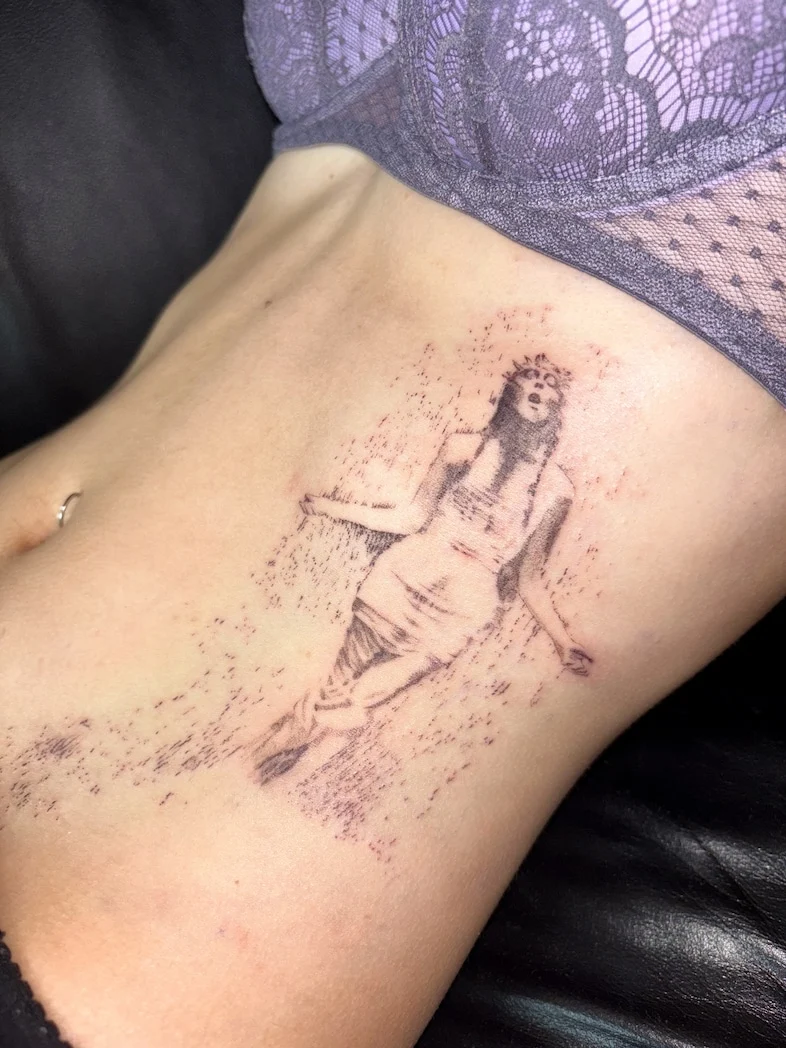
Laura ter Veer, the 27-year-old Dutch designer and tattoo artist widely known by her social media moniker, Star Bunni, has rapidly emerged as a formidable force at the intersection of haute couture and body modification, transforming coveted high-fashion archival pieces into indelible skin art. Her meteoric rise follows a pivotal year marked by significant career transitions, including graduating from the esteemed Amsterdam Fashion Institute (AMFI), a brief but formative tenure at Maison Margiela in Paris, and a decisive pivot to full-time tattooing, a venture that has seen her schedule booked for the foreseeable future. Ter Veer’s unique proposition—offering permanent renditions of rare designs from the likes of Margiela, Alexander McQueen, and John Galliano—has resonated deeply with a clientele eager to possess a tangible, personal fragment of fashion history, circumventing the prohibitive costs and exclusivity typically associated with vintage luxury.
The Genesis of a Unique Vision: From AMFI to Atelier
Born and raised in The Hague, Laura ter Veer’s journey into the world of fashion and body art began not in a traditional apprenticeship, but with a serendipitous 24th birthday gift from her mother: a set of tattoo supplies. This unexpected present sparked a new avenue of creative exploration for ter Veer, who was then immersed in her six-year comprehensive study of fashion and textiles at AMFI. The Amsterdam Fashion Institute, renowned for its multidisciplinary approach and emphasis on practical skills combined with conceptual thinking, provided a fertile ground for ter Veer to develop her distinctive artistic voice. During her studies, she meticulously practiced her nascent tattooing skills, famously executing her first intricate freehand design on her own foot, a testament to her dedication and cautious approach to mastering the craft.
This experimental phase culminated in her graduate collection, a daring and innovative project that placed tattoos at its conceptual core. Ter Veer eschewed conventional fashion presentation by permanently tattooing four of her six models, designing the accompanying garments specifically to complement and showcase these unique body artworks. This groundbreaking approach signaled her intent to challenge the traditional boundaries between fashion, art, and the human form, demonstrating a profound understanding of how clothing and skin art could synergistically interact to create a holistic aesthetic statement. Her academic rigor at AMFI, coupled with her burgeoning tattooing talent, laid the foundation for her post-graduation endeavors.
Upon completing her studies in January, ter Veer swiftly relocated to Paris, the global epicenter of haute couture, securing a coveted position as a textile assistant at Maison Margiela. Margiela, a house celebrated for its deconstructivist aesthetic, avant-garde designs, and often anonymous creative direction under its founder, Martin Margiela, and later under luminaries like John Galliano and Glenn Martens, offered an unparalleled immersion into the highest echelons of fashion design. As a textile assistant, ter Veer would have been privy to the intricate processes of fabric manipulation, material research, and the conceptual development of collections, working directly with the very materials and techniques that define the Margiela ethos. This direct exposure to the sacred archives and guarded creative processes of such an influential house undeniably deepened her appreciation for their artistry, while also fueling her critique of the industry’s inherent exclusivity.
Challenging Fashion’s Gatekeepers: A Critique of Inaccessibility
Ter Veer’s experience at Margiela, while invaluable, also solidified her resolve to forge an alternative path. She articulated a profound disillusionment with the "system" of high fashion—its secrecy, gatekeeping, and the notion that access is contingent upon knowing the "right people." This sentiment resonates with broader critiques of the fashion industry, which has long been perceived as an opaque, hierarchical, and often exclusionary realm. Fashion archives, in particular, represent the zenith of this exclusivity, often housed in climate-controlled vaults, accessible only to a select few curators, designers, and researchers. The rarity and immense value of pieces from designers like Margiela, McQueen, and Galliano mean they are largely untouchable, existing as historical artifacts rather than accessible objects of personal expression.
"The archive becomes sacred, untouchable, reserved for a very small circle," ter Veer noted, articulating the frustration that many feel regarding the inaccessibility of such cultural treasures. Her response to this perceived barrier was revolutionary: to imagine a different kind of access, one that democratizes these iconic designs by rendering them permanent on the human body. This approach not only makes a fragment of high fashion history personally obtainable but also imbues it with a unique intimacy and permanence that a physical garment, however precious, cannot replicate. It transforms a transient trend or a museum piece into an enduring personal narrative, carried directly on the skin.
Archival Art: Margiela, McQueen, and Galliano Etched in Skin
The concept of translating runway looks into tattoo designs first materialized in ter Veer’s early "couture flash-books," where she experimented with transforming pieces from Margiela and McQueen into potential body art. Her subsequent "McQueen-only series" further cemented her dedication to these specific designers, whom she considered her favorites. The allure, she explained, lay in the idea that an individual could carry "a fragment of their world on their body." This vision struck a chord, and the response to her archival tattoos has been overwhelmingly positive.
Her clientele’s preferences often reveal interesting insights into the appeal of these designers. While Martin Margiela himself was not primarily known for his extensive use of lace, ter Veer observed that lace-inspired designs have become particularly popular among those seeking Margiela tattoos. This suggests a broader appreciation for the delicate, intricate aesthetic qualities that can be extracted from various Margiela collections, rather than a strict adherence to specific historical fabrications. Ter Veer’s personal favorite from her flash collection draws from a 1994 Margiela collection, indicating her deep dive into the brand’s extensive history. Furthermore, her willingness to engage with contemporary interpretations is evident in a recent commission inspired by the final look of Glenn Martens’s most recent collection for Margiela, which led to her first color tattoo—a testament to her evolving artistry and collaborative spirit with clients.
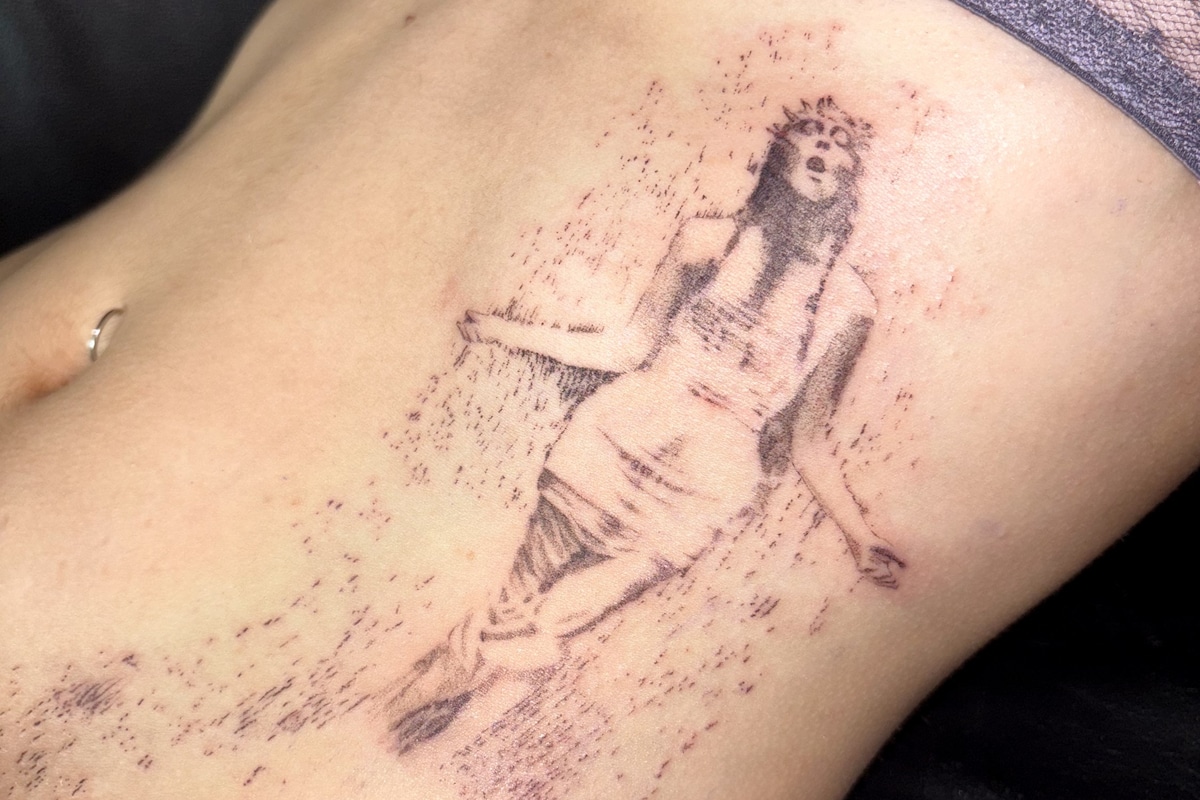
Beyond Margiela, ter Veer’s inspirations are rooted in the dramatic and emotionally charged narratives woven by John Galliano and Alexander McQueen. She vividly describes Galliano’s work as embodying "the seventh heartbreak of the month, cheeks still flushed from the sprint you took to your next romantic escapade," while McQueen’s aesthetic is portrayed as "sitting on your bedroom floor, having conversations with your demons over a glass of red wine while wearing a trashed evening dress." These evocative descriptions highlight the profound emotional resonance and storytelling inherent in their designs, qualities that translate powerfully into permanent body art. Her deep personal connection to these designers, evident in her own collection of private McQueen sketches tattooed on herself, further underscores the authenticity and passion driving her unique craft.
The Phenomenon of Star Bunni: Demand and Implications
The demand for Star Bunni’s unique tattoo art has exploded, transforming her from an aspiring textile assistant into a highly sought-after artist with a formidable waiting list. "I’m almost scared to answer that because I don’t fully know myself," she admitted regarding the length of her queue, estimating that if she were to tattoo continuously, five days a week without holidays, she would likely be occupied until sometime next year. This overwhelming response underscores a significant cultural shift: a growing appetite for personalized, meaningful body art that transcends fleeting trends and connects individuals to broader cultural narratives, particularly within the venerated world of fashion.
This phenomenon has several broader implications. Firstly, it highlights the increasing democratization of luxury and archival fashion. While owning a physical Margiela gown from the 90s might be financially prohibitive or logistically impossible for most, a tattoo inspired by such a piece offers a form of "accessible luxury." It allows individuals to carry the aesthetic and conceptual essence of these designs, transforming a high-fashion artifact into a personal statement without the barriers of cost, exclusivity, or even the physical garment itself.
Secondly, Star Bunni’s success is a testament to the power of social media in contemporary art and commerce. Platforms like Instagram have enabled artists to bypass traditional gatekeepers, directly showcase their work to a global audience, and cultivate a dedicated following. Her moniker, "Star Bunni," itself a social media handle, speaks to this digital-native approach. Her carefully curated feeds, featuring intricate designs and client testimonials, have undoubtedly been instrumental in building her brand and managing the extraordinary demand for her services. The ability to visually communicate the beauty and meaning behind her archival tattoos has been key to their viral appeal and her rapid booking rate.
The Philosophy of Tattoo Couture: Sustainability and Integration
Beyond merely replicating designs, ter Veer envisions a deeper integration of tattoos and fashion, coining the term "tattoo couture." This concept goes beyond simply adorning the body with art; it proposes a symbiotic relationship where garments are specifically designed to frame, complement, and enhance the tattoos. Her vision challenges the conventional separation of these two disciplines, advocating for a future where fashion and body art are conceived simultaneously, with tattoos serving as an extension of the body that influences clothing design.
This philosophy also carries significant implications for sustainability in fashion. In an industry grappling with issues of overproduction and waste, ter Veer’s idea of "custom-made jacket that perfectly frames their favorite tattoo" presents a compelling model for longevity and intrinsic value. Such a garment, deeply personalized and intrinsically linked to permanent body art, would be cherished and maintained, thereby counteracting the disposable nature of fast fashion. It champions a return to bespoke craftsmanship and thoughtful consumption, where clothing becomes an heirloom rather than a seasonal discard. This integrated approach elevates both the tattoo and the garment, endowing them with heightened personal and artistic significance.
Ter Veer argues that fashion and tattoos are inherently intertwined, both working with and on the body. She emphasizes her individual approach to each client, meticulously studying "the curves, the corners, the moles, the muscles" to create designs that flow harmoniously with the body’s natural anatomy. This echoes the principles of haute couture, where garments are sculpted to the wearer’s form. Just as a garment can frame, change, or protect the body, a tattoo can perform similar functions, but with the added dimension of permanence. The space where these two disciplines converge is precisely where Star Bunni aims to continue her exploration, blurring the lines and redefining what it means to dress and adorn the human form.
Future Trajectories: A New Era for Fashion and Identity
Laura ter Veer’s journey exemplifies a burgeoning movement that redefines fashion ownership and personal expression. By transforming fleeting runway moments and inaccessible archival pieces into permanent, deeply personal body art, she is not only democratizing high fashion but also forging a new dialogue between clothing, skin, and identity. Her dedication to exploring the synergistic potential of tattoos and fashion, culminating in her "tattoo couture" concept, positions her as a visionary in an evolving creative landscape.
Her success underscores a broader cultural shift towards individual narrative and customized experiences. In an age of digital replication and mass production, the desire for unique, meaningful, and enduring forms of self-expression has never been stronger. Star Bunni’s work taps into this yearning, offering clients not just a tattoo, but a piece of history, a statement of identity, and a permanent connection to the artistry of fashion’s greatest minds. As she continues to navigate her booked schedule and expand her artistic repertoire, Laura ter Veer, AKA Star Bunni, is undeniably shaping the future of how we perceive, interact with, and ultimately wear fashion—not just on our bodies, but as an integral part of them, forever.