











The global fashion industry, long criticized for its significant environmental footprint, is facing a pivotal moment of transformation as technology-driven circularity moves from a niche trend to a core business requirement. Leading this shift is Archive, a San Francisco-based technology company that has successfully closed a $30 million Series B funding round. Led by Energize Capital, the investment round saw participation from prominent venture capital firms including Lightspeed Venture Partners, G9 Ventures, and Bain Capital Ventures. This latest injection of capital brings Archive’s total funding to $54 million, signaling a robust investor appetite for scalable solutions that address the fashion sector’s waste crisis.
The funding arrives at a time when the fashion industry is under intense scrutiny. Current estimates indicate the sector is responsible for approximately 10% of global carbon dioxide emissions and more than 20% of global water waste. Despite these alarming statistics, consumer demand for new apparel remains high, driven by the rapid cycles of "fast fashion." However, a growing segment of the market—particularly younger demographics—is increasingly seeking sustainable alternatives. Archive’s platform addresses this demand by providing the infrastructure necessary for brands to launch and manage their own resale marketplaces, effectively recapturing a share of the burgeoning secondhand market.
The Technological Architecture of Branded Resale
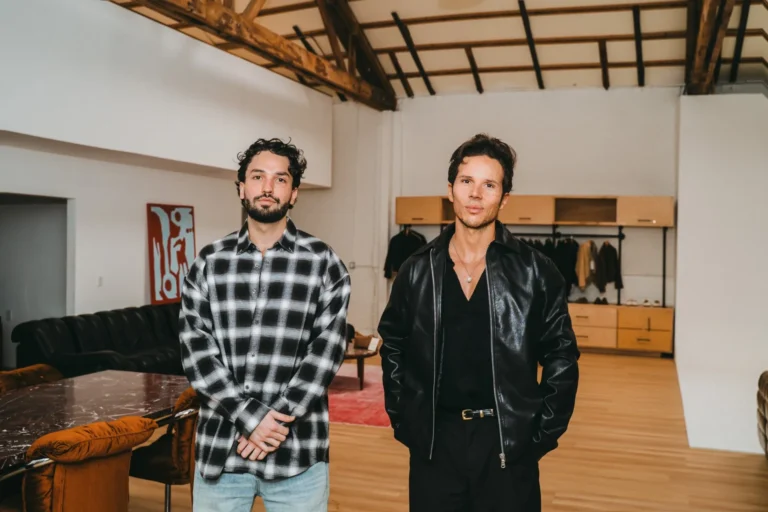
Archive was founded in 2021 by Emily Gittins and Ryan Rowe with the specific goal of providing fashion brands and merchants with the software tools required to build tailored resale platforms. Unlike general third-party marketplaces where brands have little control over the presentation or authentication of their goods, Archive offers a white-label solution. This allows brands like New Balance, The North Face, and Oscar de la Renta to integrate resale directly into their existing digital ecosystems, maintaining brand consistency while facilitating the exchange of pre-owned items.
The company’s software suite is comprehensive, designed to handle the complex logistics inherent in the secondhand trade. Key features include smart pricing algorithms that suggest optimal price points based on item condition and historical data, as well as integrated product feeds that allow for seamless listing. Beyond the digital interface, Archive provides warehouse management systems that oversee the physical intake of items, quality processing, repairs, and fulfillment. For brands focused on the bottom line, the platform includes advanced analytical tools to track profits, customer acquisition costs, and data sharing across various internal business units.
While competitors such as Trove and Treet offer similar services, Archive distinguishes itself through its focus on global scalability. The platform is engineered to support large-scale brands across multiple continents, navigating the disparate regulatory and logistical challenges found in different international markets. This global capability is essential for the multinational corporations that currently dominate the apparel industry and are looking to implement uniform sustainability practices across their global footprints.
A Chronology of Growth and Market Evolution
The journey of Archive reflects the broader maturation of the resale sector. When Gittins and Rowe launched the company in 2021, the concept of "branded resale" was still in its infancy. Many luxury and mass-market brands viewed the secondhand market with skepticism, fearing that the availability of cheaper, used items would "cannibalize" sales of full-price, new inventory. However, Archive’s data-driven approach has largely debunked this concern. By analyzing consumer behavior, the company has demonstrated that resale platforms often serve as an entry point for new customers who eventually graduate to full-price purchases, or as a loyalty tool for existing customers who use the proceeds from their sales to buy new items from the same brand.
Since its inception, Archive has rapidly expanded its portfolio. Starting with a handful of pilot programs, the company now works with more than 50 major brands. The timeline of this expansion coincides with a massive surge in the general secondhand market. According to a 2024 report by the resale retailer ThredUp, the U.S. secondhand apparel market is projected to reach $73 billion by 2028. Globally, secondhand clothing is on track to constitute 10% of all fashion sales in the near future. This shift is not merely a reaction to economic pressures but a fundamental change in consumer psychology, where "pre-loved" items are increasingly seen as both eco-conscious and stylish.
The Regulatory Catalyst: From Voluntary to Mandatory Circularity
A significant driver behind the recent investment in Archive is the changing legal landscape. For years, sustainability in fashion was largely a matter of voluntary corporate social responsibility (CSR). This is changing as governments in both the United States and Europe introduce legislation that mandates textile recovery and reduces landfill waste.
In California, the recently passed Responsible Textile Recovery Act (SB 707) represents a landmark shift in policy. The law requires apparel producers to implement and fund a program for the collection, repair, and recycling of their products. This "Extended Producer Responsibility" (EPR) model forces brands to take ownership of the entire lifecycle of their garments. Similar legislative frameworks are being developed across the European Union as part of the EU Strategy for Sustainable and Circular Textiles. These regulations aim to make textile products more durable, repairable, and recyclable by 2030.
For brands operating in these jurisdictions, Archive’s software is no longer just a marketing tool; it is a compliance necessity. By providing a structured way to facilitate resale and repair, Archive helps brands meet these new legal requirements while simultaneously generating revenue from a circular business model. This regulatory tailwind has provided venture capitalists with the confidence that the market for resale software is not just a trend but a permanent fixture of the future economy.
Industry Implications and the Myth of Cannibalization
The entry of high-end brands like Oscar de la Renta into the resale space via Archive’s platform signifies a major shift in the luxury sector’s perception of value. Traditionally, luxury brands protected their exclusivity by destroying unsold inventory or strictly controlling the secondary market. By embracing Archive’s technology, these brands are acknowledging that their products have enduring value that can be captured multiple times.
"We’ve debunked the concern that resale cannibalizes full-price sales," Emily Gittins noted in a statement regarding the funding. The data suggests that branded resale platforms actually increase brand affinity. When a customer knows an item has a high resale value, they are often more willing to invest in a high-quality, full-price item initially. Furthermore, the ability to trade in used items for brand credit creates a closed-loop ecosystem that keeps the consumer within the brand’s economy.
The $30 million Series B funding will be used to accelerate product innovation, specifically focusing on automation in the processing of used goods. One of the primary hurdles in resale is the high cost of labor required to inspect, photograph, and list individual unique items. Archive plans to utilize AI and machine learning to further automate these processes, making it more cost-effective for brands to scale their secondhand operations.
Future Outlook: Scaling the Circular Economy
As Archive enters its next phase of growth, the focus will be on the 2025 launch of several new major brand partnerships. The company’s trajectory suggests that the "circular economy" is moving toward a state of industrialization. No longer restricted to small-scale vintage shops or peer-to-peer apps, the infrastructure for mass-market resale is being built by tech companies like Archive.
The broader implications for the global economy are substantial. If the fashion industry can successfully decouple revenue growth from the consumption of raw materials, it could provide a blueprint for other sectors—such as consumer electronics and home goods—to follow. The success of Archive’s Series B indicates that the financial community believes the future of retail is circular. With $54 million in total funding and a growing list of blue-chip partners, Archive is positioned to be the primary engine behind this transition, turning the fashion industry’s greatest liability—its waste—into its next great market opportunity.