









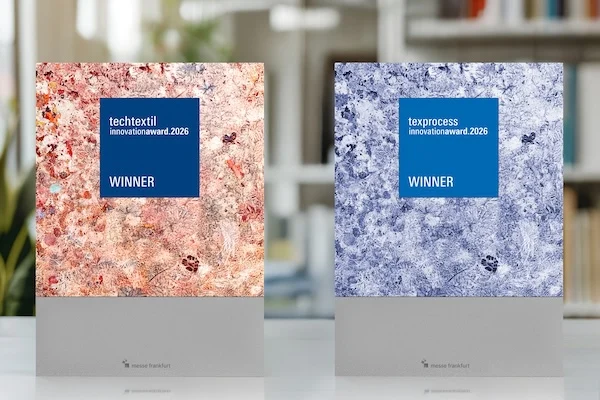
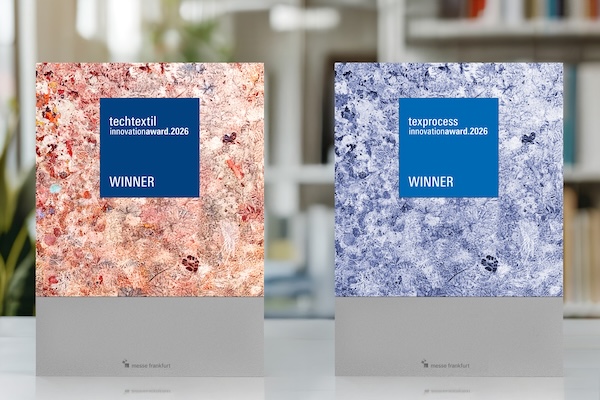
The winners of the Techtextil and Texprocess Innovation Awards 2026 have been officially announced in Frankfurt am Main, Germany, marking a pivotal moment for the global textile and processing industries. A total of 17 international winners across ten distinct categories were selected for their contributions to pioneering research, sustainable material development, and transformative digital technologies. These awards, presented on April 14, 2026, ahead of the biennial trade fairs scheduled for late April, highlight a paradigm shift in how textiles are manufactured, utilized, and recycled. The innovations recognized this year extend their reach far beyond traditional apparel, offering critical solutions for the automotive, aerospace, medical, architectural, and robotics sectors.
Event Chronology and Strategic Context
The announcement serves as the prelude to the 18th edition of the Innovation Awards, a cornerstone of the Techtextil and Texprocess trade fairs. The formal awards ceremony is scheduled to take place on April 21, 2026, in Hall 9.1 of the Messe Frankfurt exhibition grounds. Following the ceremony, from April 21 to April 24, the winning projects will be featured in a dedicated winners’ exhibition in Hall 11.1, complemented by guided tours led by jury members.
Historically, these awards have served as a reliable early indicator of industrial trends. In 2026, the context is one of unprecedented regulatory and environmental pressure. The industry is currently grappling with the impending global bans on per- and polyfluoroalkyl substances (PFAS), a shortage of skilled labor in garment manufacturing, and the urgent need to transition from a linear "take-make-waste" model to a circular economy. The selection of the 17 winners, chosen by two independent juries of international experts, reflects a strategic response to these challenges.
Advancements in Sustainable Chemistry and PFAS Alternatives
One of the most significant themes of the 2026 awards is the elimination of "forever chemicals." With the European Union and national governments like France moving to ban PFAS in apparel by 2026, the industry has accelerated its search for high-performance alternatives.
The Swiss manufacturer Bäumlin & Ernst, in collaboration with the Swiss Federal Laboratories for Materials Science and Technology (Empa), received the Techtextil Innovation Award in the "New Concept" category for "EC0Tex." This process utilizes dry plasma—a reactive gas physically similar to the aurora borealis—to coat individual yarn filaments with a nanometer-thin organosilicon layer. This provides permanent water repellency without the use of PFAS or fresh water. Crucially, the coating breaks down into sand at the end of the product’s life cycle.
Similarly, the French start-up H&B Materials was recognized in the "New Chemicals & Dyes" category for a molecular grafting process. Founded in 2025 as a spin-off from Nantes University, the company uses fatty acids derived from agricultural waste to anchor water-repellent groups directly to cellulose fibers. This "mild chemistry" approach achieves a perfect 5-out-of-5 score in industry-standard spray tests, offering a plug-and-play solution for existing finishing plants.
In the realm of textile printing, the Portuguese technological center CITEVE has addressed the reliance on petroleum-based pastes. Their new bio-based printing pastes, which are 94% sustainable, utilize binders made from food-industry by-products like collagen and pigments derived from vine prunings and pine bark. This innovation proves that high-quality aesthetic finishes can be achieved through the "micronization" of industrial waste.
Engineering the Materials of Tomorrow: Wood, Carbon, and Biopolyesters
The "New Material" and "New Product" categories for 2026 showcase a move toward hybridizing natural polymers with high-tech applications. A standout winner is the "FormLig – Knitted Wood" project, a collaboration between spek Design, the German Institutes of Textile and Fiber Research Denkendorf (DITF), Tecnaro, and Buck. By coating cellulose yarns with lignin—a natural glue that is a by-product of the paper industry—the team created a compostable material that can be knitted and then heat-shaped into rigid forms for furniture or automotive interiors.
In the automotive sector, the company NUO has successfully replaced fossil-based adhesives in wood-textile composites. Their "NUO FlexHolz" uses a lignin-based film to bond sustainable wood veneers to hemp fabrics. A laser microsegmentation process gives the wood the flexibility of a textile, making it suitable for complex car interior geometries, such as door panels and consoles.
For high-performance applications, the South Korean firm aweXome Ray has bridged the gap between nanotechnology and textiles with "axrial." While carbon nanotubes (CNTs) have long been available as powders, aweXome Ray’s direct spinning process transforms them into continuous filaments and non-woven membranes. These fibers are 100 times stronger than steel and electrically conductive, opening new doors for EMI shielding in humanoid robots and thermal management in electric vehicles.
The biopolymer sector also saw a breakthrough with Senbis Polymer Innovations’ "Mariva." This bio-based high-performance polyester offers the durability of traditional PET and polyamide but remains chemically recyclable and biodegradable without producing microplastics. Developed as a drop-in solution, it can be processed on existing melt-spinning lines, facilitating rapid industrial scaling.
Revolutionizing Production through AI and Robotics
The Texprocess Innovation Awards focused heavily on the "Economic Quality" of production, specifically targeting the automation of tasks that were previously considered impossible for robots.
The German company Robotextile was honored for its flow gripper, which solves the "ultimate challenge" of automated singulation. Because textiles are flexible and air-permeable, picking a single layer from a stack is notoriously difficult. Robotextile’s system uses controlled air flows to separate fabric layers for jeans, airbags, and medical textiles. Similarly, the Technical University of Applied Sciences Wildau introduced "CryoTec," a gripper that uses the adhesive properties of ice. By spraying a minute amount of water and flash-freezing it, the gripper can lift delicate textiles without mechanical damage, with an AI system adjusting the freezing parameters in real time.
Automation is also reaching the assembly stage. CITEVE’s robot-controlled T-shirt production cell utilizes AI-powered "computer vision" to identify optimal grip points on flexible fabric pieces. Currently achieving a cycle time of 35 seconds per shirt, this technology addresses the critical labor shortage in the sewing industry and supports the trend of "nearshoring" production back to Europe and North America.
Quality control has also been digitized. The Laboratory for Artificial Intelligence in Design (AiDLab) in Hong Kong received an award for "WiseEye," an AI inspection system that detects material defects at speeds of 35 meters per minute with 90% accuracy. This significantly outperforms manual inspection, which typically averages 50-70% accuracy at much lower speeds.
Circularity and the Clean Production of High-Performance Fibers
As fiber production reached a record 132 million tonnes in 2024, the need for textile-to-textile recycling has become a global priority. The Australian biotech company Samsara Eco was recognized for "EosEco," an enzyme-based technology that uses AI-engineered "plastic-eating" enzymes to break down polyester and nylon. Unlike mechanical recycling, this process produces virgin-quality fibers that can be recycled infinitely. Major brands like Lululemon have already integrated this technology into their supply chains.
Addressing the chemical waste of recycling, the German start-up re.solution introduced an electrochemically assisted hydrolysis process. Traditional chemical recycling often generates a ton of waste salt for every ton of polyester recovered; re.solution replaces acid-based steps with electricity, reducing chemical use by 94% and water use by 74%.
Finally, the British firm Fibre Extrusion Technology (FET) has solved an environmental bottleneck in the production of ultra-high-molecular-weight polyethylene (UHMWPE). Used for surgical sutures and body armor, these fibers previously required massive amounts of toxic solvents like hexane. FET’s "FET-500" plant uses supercritical CO2 instead, enabling clean, small-scale production of high-strength medical and protective fibers.
Official Responses and Industrial Implications
Sabine Scharrer, Director Brand Management Technical Textiles & Textile Processing at Messe Frankfurt, emphasized the international diversity of the winners. "The winners are more international than ever, which confirms the global relevance of our leading trade fairs," she stated. "These ideas demonstrate that textile innovations are driving forces across numerous industries."
The jury’s selection reflects a clear trend: sustainability is no longer a niche requirement but a fundamental driver of technological growth. Industry experts suggest that the integration of AI and bio-based chemistry highlighted by these awards will be necessary for companies to remain competitive under the new EU Strategy for Sustainable and Circular Textiles.
By recognizing innovations like "FlectoLine"—an AI-controlled building facade that reduces indoor temperatures by up to 8°C through flexible fiber modules—the awards also signal the textile industry’s growing role in climate protection within the construction sector, which currently accounts for 34% of global CO2 emissions.
Broader Impact and Future Outlook
The 17 winners of the 2026 Innovation Awards represent a blueprint for a more resilient and sustainable textile value chain. From the digitization of fabric sampling via Vizoo’s "CAST" app, which reduces the need for global shipping of physical samples, to the development of "AeoniQ Fil" by Amann—the world’s first biodegradable cellulose sewing thread—the awards cover every link of the production chain.
As the industry prepares to gather in Frankfurt on April 21, the focus will remain on how these pilot projects and start-up innovations can be scaled to meet global demand. The Techtextil and Texprocess Innovation Awards continue to serve not just as a celebration of excellence, but as a strategic roadmap for an industry in the midst of a historic transformation. The technologies showcased here suggest that the future of textiles lies at the intersection of biology, artificial intelligence, and advanced mechanical engineering.