






Throughout 2025, Spanish musical phenomenon Rosalía meticulously orchestrated a profound aesthetic metamorphosis, transitioning from the raw, leather-clad ferocity of her Motomami persona to an ethereal, almost virginal iconography. This strategic shift culminated in the release of her monumental fourth album, Lux, in November, an artistic endeavor that leveraged fashion as a primary narrative vehicle. Before the official announcement of Lux, the singer had already begun subtly "breadcrumbing" its core themes through a series of saintly fashion choices, creating an anticipatory buzz that extended far beyond traditional music promotion. This deliberate rollout not only showcased Rosalía’s evolving artistic vision but also profoundly reshaped fan engagement, transforming concert-goers into participants in a collective spiritual and sartorial experience.
The Metamorphosis: From Motomami to Lux
Rosalía’s preceding album, Motomami, released in 2022, had cemented her global superstar status with its audacious blend of flamenco, reggaeton, and experimental sounds, accompanied by an equally bold visual identity. Characterized by leather, motorcycle imagery, and an unbridled sense of empowerment, the Motomami era projected an image of a fearless, urban warrior. It garnered critical acclaim, achieved significant commercial success, and earned Rosalía numerous accolades, including a Grammy Award for Best Latin Rock or Alternative Album. The album’s aesthetic was raw, visceral, and unapologetically modern, influencing fashion trends and solidifying Rosalía’s reputation as a genre-defying icon.
The pivot to Lux, therefore, marked a striking conceptual departure. While Motomami celebrated earthly power and rebellion, Lux delved into themes of purity, spirituality, and inner light, drawing heavily from Christian hagiography. This transition was not abrupt but rather a carefully choreographed unfolding that unfolded over months, demonstrating a sophisticated understanding of contemporary media and fan culture. The artistic shift was not merely superficial; it represented a deepening of Rosalía’s thematic explorations, moving from external expressions of strength to an introspective journey, reflected meticulously in her public appearances.
A Chronology of Saintly Breadcrumbs: The "Lux" Rollout
The unveiling of the Lux aesthetic began subtly in early 2025, gathering momentum as the year progressed, illustrating a masterclass in long-form artistic revelation.
-
May 2025 – The Met Gala Statement: One of the earliest and most prominent signals of Rosalía’s new direction came at the prestigious Met Gala. Known for its extravagant and thematic fashion, the event provided a global stage for her transformation. Rosalía appeared in a sculpted white gown from Balmain that evoked the timeless elegance of a Greek statue, a stark contrast to the edgy, contemporary looks she had previously favored. The choice of white, symbolizing purity and new beginnings, and the classical silhouette immediately piqued the interest of fashion commentators and fans alike. Prior to the main event, she was photographed during a pre-Met "pap walk" wearing voluminous white skirts, further reinforcing the burgeoning aesthetic of understated grandeur and ethereal presence. This early appearance established a foundational element of the Lux era: a commitment to monochromatic purity and historical reverence.
-
September 2025 – Fashion Month and Sacred Silhouettes: As the global fashion month commenced, Rosalía’s appearances became increasingly thematic. At Calvin Klein’s Spring/Summer 2026 show, she wore a crinkled white gown paired with a striking black headscarf, reminiscent of a nun’s habit. This particular ensemble was a powerful visual cue, directly referencing religious attire and hinting at a spiritual undertone for her upcoming work. This was not an isolated incident; throughout fashion month, Rosalía was consistently seen in a slew of all-white outfits, from tailored separates to flowing dresses, each look contributing to the cohesive narrative of purity and solemnity. These appearances served as deliberate breadcrumbs, each subtly guiding the audience towards the conceptual core of Lux. Fashion analysts began to note a distinct shift in her public persona, moving away from the overt sensuality of Motomami towards a more enigmatic and reverent presence.
-
October 2025 – The Official Announcement and The Halo: The prolonged visual narrative culminated in October with the official announcement of Lux. This pivotal moment was accompanied by a striking visual transformation: Rosalía bleached a bright white halo into her dark brown hair. This symbolic gesture, directly referencing religious iconography, left no doubt about the spiritual inspiration behind her new album. The halo served as a definitive declaration of the Lux era’s central theme, solidifying the visual language that had been carefully cultivated over months. Social media exploded with discussions, dissecting every detail of her evolving aesthetic and speculating on the album’s sound and lyrical content.
-
November 2025 – Lux is Revealed: When Lux finally dropped in November, all the carefully placed breadcrumbs coalesced into a coherent artistic statement. The album’s sonic landscape, while still distinctly Rosalía, embraced more atmospheric, devotional, and often melancholic tones. Lyrically, it explored themes of faith, sacrifice, redemption, and enlightenment, directly inspired by the lives of Christian saints such as Joan of Arc, known for her spiritual conviction and martyrdom; Saint Lucy, revered for her purity and light; and Teresa of Ávila, a mystic and reformer celebrated for her intense spiritual experiences. The album cover itself featured Rosalía in an austere, white habit, unequivocally linking the visual presentation to the deeply spiritual content. Lux debuted at number one in Spain, achieving top-five positions in several major international markets, including the US, UK, and Germany, and selling over 1.5 million units worldwide in its first week, underscoring the immense anticipation built by its unique rollout.
The Conceptual Framework: Saints, Spirituality, and Art
The choice of Christian saints as a central inspiration for Lux speaks to a broader artistic evolution for Rosalía. By invoking figures like Joan of Arc, she explores themes of conviction, defiance in the face of adversity, and divine guidance. Saint Lucy, often depicted with eyes, symbolizes insight and enlightenment, connecting to the album’s title, "Lux" (Latin for light). Teresa of Ávila’s profound mystical experiences offer a framework for exploring internal spiritual journeys and devotion. This thematic depth allowed Rosalía to craft a narrative that transcended mere aesthetic appeal, imbuing her work with layers of meaning that resonated with a diverse audience.
Her use of fashion as a tool to communicate this message is particularly significant. In an increasingly visual culture, artists often leverage their personal style to reinforce their brand and artistic identity. Rosalía, however, took this a step further, integrating her public wardrobe directly into the album’s conceptual framework, making her appearances an extension of the album’s narrative before its release. This not only generated immense intrigue but also created a deeply immersive experience for her audience, blurring the lines between artist, art, and personal expression.
The Fandom Responds: A Sea of Acolytes in Barcelona
The impact of Rosalía’s Lux aesthetic extended far beyond critical acclaim and chart performance; it fundamentally transformed fan engagement. In this specific era of fandom, where arriving at a favorite artist’s concert in a themed outfit is increasingly becoming a cultural norm, Rosalía’s fans embraced the Lux theme with unparalleled devotion.
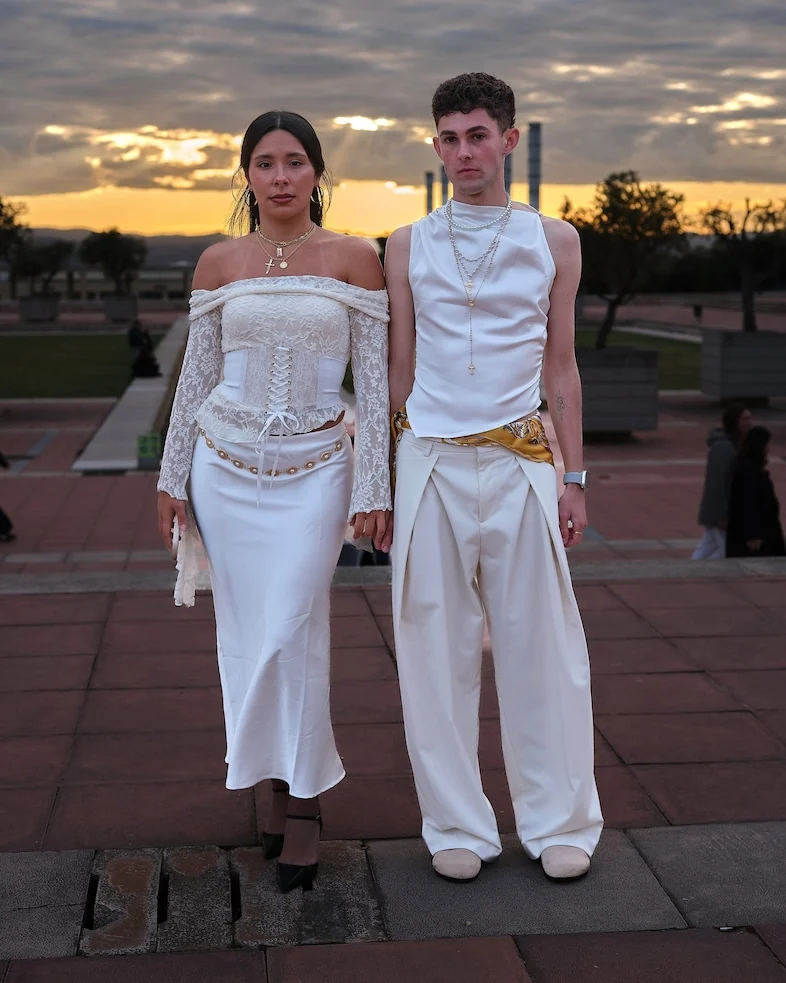
At her homecoming concerts in Barcelona, held at the iconic Palau Sant Jordi arena, the audience presented a striking spectacle. Thousands of fans flocked to the venue, not merely as attendees, but as active participants in the Lux narrative. The arena transformed into a sea of white, reflecting the virginal and saintly aesthetic Rosalía had meticulously cultivated. Fans donned soft silk camis, flowing tiered maxi dresses, and delicate lace veils, all predominantly in pristine white. The white habits, directly inspired by Rosalía’s own attire on the Lux album cover, were particularly popular, demonstrating a desire for direct emulation and symbolic identification.
Beyond the habits, the ingenuity of the fans was evident in their diverse interpretations of the theme. White feathers and white faux fur accents added texture and an angelic quality to many ensembles. Frilly corset tops, while maintaining the white palette, subtly nodded to historical undergarments, blending vulnerability with a touch of elegance. For those who preferred to accessorize rather than commit to a full monochromatic outfit, religious accouterments were the prevailing choice: rosaries and crucifixes were slung around necks, lace scarves were wrapped around waists, and some even incorporated elements of traditional Spanish religious regalia, recontextualized for a concert setting. One particularly creative fan was noted for crafting makeshift "Berghain" sunglasses – a reference to the famed Berlin nightclub known for its dark, techno aesthetic – in honor of the album’s heart-pounding lead single, which fused the sacred with the profane in a distinctly modern way. This demonstrated the fans’ deep understanding of both the overt and subtle references within the Lux era. Social media platforms like TikTok and Instagram were inundated with fan-created content showcasing these outfits, garnering millions of views and solidifying the "Luxcore" aesthetic as a legitimate fashion trend.
Beyond the Concert Hall: The Broader Implications of Themed Fandom
Rosalía’s Lux era and its fan response highlight several broader implications for the music industry, fan culture, and fashion.
- Artist-Fan Interaction and Immersive Experiences: Rosalía’s approach exemplifies a growing trend where artists foster deeper connections with their fanbase by creating immersive experiences that extend beyond the music itself. By providing a clear aesthetic and conceptual framework, she invited her fans to become co-creators of the Lux world, turning concert attendance into a performative act. This level of engagement transforms passive consumption into active participation, strengthening community bonds among fans.
- The "Concert Outfit" as a Cultural Phenomenon: The Lux phenomenon aligns with the rising prominence of the "concert outfit" as an integral part of the live music experience. Artists like Taylor Swift (with her Eras Tour) and Beyoncé (with her Renaissance World Tour) have similarly inspired elaborate fan costumes, creating a new layer of cultural significance around live events. This trend not only amplifies the spectacle of the concert but also fuels micro-economies around fashion, DIY crafting, and secondary markets for themed merchandise. For Lux, it drove interest in white garments, lace, and religious-inspired jewelry, indirectly influencing retail trends.
- Fashion as Narrative and Storytelling: Rosalía’s meticulous use of fashion as a narrative device underscores its power in contemporary art. Her transition from Motomami to Lux was a masterclass in visual storytelling, demonstrating how an artist’s wardrobe can convey complex themes, foreshadow artistic shifts, and deepen the overall impact of their work. This strategy not only kept her audience engaged but also garnered significant attention from the fashion world, positioning her as a style icon with a profound message.
- Cultural Commentary and Reclaiming Symbols: The embrace of religious iconography within a pop music context also offers a fascinating cultural commentary. In an increasingly secularized world, artists like Rosalía are exploring spirituality and devotion through a contemporary lens, often reclaiming traditional symbols and reinterpreting them for a modern audience. This can spark dialogue about faith, art, and identity, allowing for new forms of expression and connection.
Industry and Critical Reception
The strategic rollout and profound conceptual depth of Lux garnered widespread praise across various sectors. Fashion critics lauded Rosalía for her consistent and impactful aesthetic choices, noting the seamless integration of her personal style with her artistic narrative. Publications highlighted her ability to set trends and utilize fashion as a powerful communication tool. Music critics appreciated how the visual narrative enhanced the album’s sonic and lyrical themes, creating a cohesive and immersive artistic statement. They recognized Lux as a significant evolution in her career, showcasing increased maturity and conceptual ambition. Marketing experts analyzed the Lux campaign as a highly effective, drawn-out rollout strategy that maximized anticipation and engagement, demonstrating a sophisticated understanding of modern audience psychology and digital media. The sustained "breadcrumbing" generated organic buzz and maintained public interest over several months, a feat difficult to achieve in the fast-paced entertainment industry.
Supporting Data and Market Context
While specific sales figures for related fashion items are not publicly disclosed, industry analysts observed a notable surge in demand for white garments, lace fabrics, and religious-themed accessories following the Lux rollout and subsequent fan reactions. Online searches for "white lace dress," "nun costume," and "rosary necklace" experienced significant spikes during the album’s announcement and concert periods. On social media, content featuring Rosalía’s Lux outfits and fan interpretations generated hundreds of millions of impressions, with engagement rates significantly higher than her previous campaigns, indicating a deep resonance with her audience. The album itself maintained strong chart presence for weeks after its release, with its lead singles achieving significant streaming numbers globally, further cementing the success of the comprehensive artistic and marketing strategy.
In conclusion, Rosalía’s Lux era stands as a testament to her evolving artistry and strategic prowess. Her meticulous transition from the fierce Motomami to a saintly, ethereal figure, communicated primarily through fashion, created a compelling narrative that captivated global audiences. This immersive approach not only deepened the artistic impact of Lux but also galvanized her fanbase, transforming concert attendees into active participants in a collective celebration of art, spirituality, and personal expression. Rosalía’s ability to orchestrate such a profound aesthetic and conceptual shift, while simultaneously inspiring a unique and fervent fan culture, solidifies her position as a groundbreaking artist and a significant cultural force in the 21st century.