









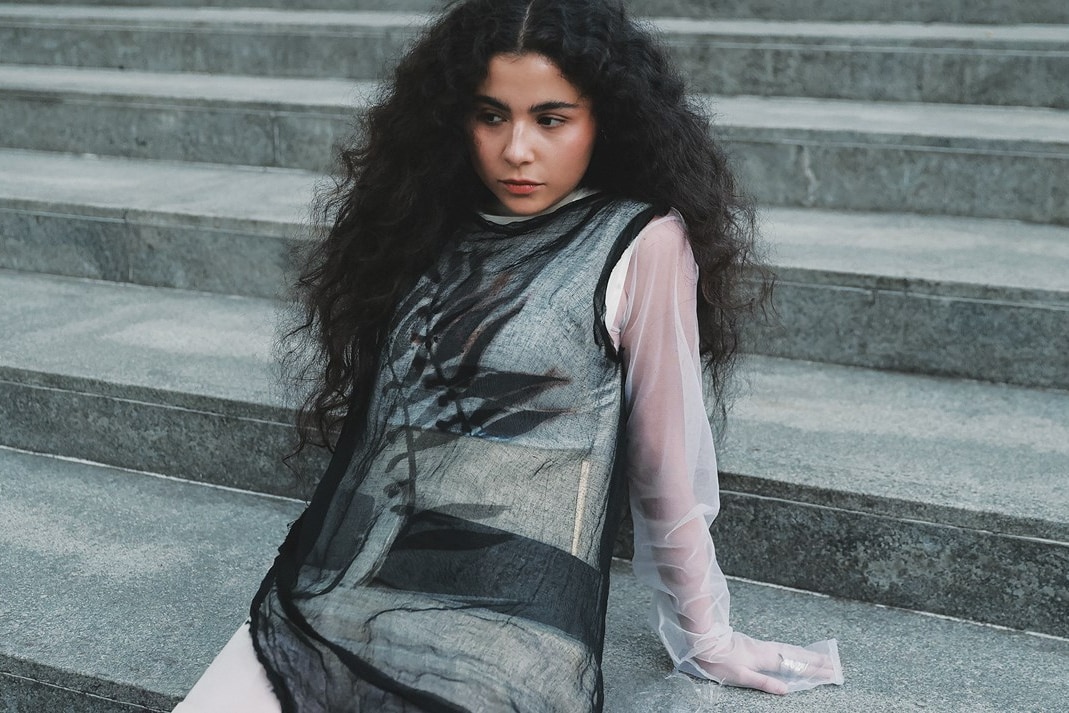
The austere, volcanic landscapes of Reykjavík, Iceland, might seem an improbable stage for the soul-stirring melodies of a Mexican folk artist, yet it was precisely this unexpected confluence that underscored the universal resonance of Silvana Estrada’s music. At the annual Iceland Airwaves festival, held within the hallowed halls of the city’s art museum, the 29-year-old Veracruz native delivered a performance that transcended geographical and linguistic divides. Known for their spirited, often boisterous crowds, Icelandic audiences are typically quick to embrace the mosh pit, but on this particular evening, Estrada’s intimate gig held them in stunned, almost reverent silence. Discreete sniffles punctuated the air, a testament to the profound emotional impact of her delivery, captivating listeners who, for the most part, did not share her native Spanish tongue.
Estrada’s artistry is deeply rooted in a sound often described as Laurel Canyon-inspired folk, a style that evokes the introspective, lyrical depth of 1970s singer-songwriters. However, she imbues this genre with a distinctly Latin American sensibility, singing almost entirely in Spanish. Her lyrics are a tender exploration of universal human experiences: grief, heartbreak, and the arduous journey of healing. This profound thematic content, coupled with her captivating vocal delivery, has led many to hail her as the nascent "young, Latin American answer to Joni Mitchell," a comparison that speaks volumes about her lyrical sophistication and musical dexterity. The ability of her music to move audiences regardless of language barrier is a powerful affirmation of music’s inherent capacity to communicate beyond words, tapping into a shared human emotional lexicon.
Roots and Rhythms: The Veracruz Influence
Silvana Estrada’s musical journey began far from the Nordic chill, in the vibrant, culturally rich region of Veracruz, Mexico. Born and raised in this coastal state, her formative years were steeped in a dynamic blend of indigenous, African, and Spanish influences that characterize Veracruz’s unique musical traditions, such as Son Jarocho. Her parents, both skilled artisans, were instrumental in shaping her early relationship with music. They dedicated their lives to crafting traditional string instruments, surrounding young Silvana with the sounds and tactile experience of music-making from her earliest memories. This hands-on, artisanal immersion undoubtedly instilled in her a deep respect for craftsmanship and the organic connection between instrument and melody.
This rich domestic environment fostered an eclectic musical palate. While Spanish was her native tongue and the language of her upbringing, Estrada’s exposure to music was remarkably diverse. She recounts being deeply moved by Bulgarian choir music, a genre far removed from her cultural context, played by her mother in the car. Later, the melancholic beauty of Billie Holiday’s voice would "break her heart every time," even without full comprehension of the English lyrics. These early experiences cemented her understanding that emotional resonance in music transcends linguistic barriers, a principle that would later define her own performances. The profound influence of Joni Mitchell, particularly her seminal album Blue, further solidified Estrada’s artistic direction. She describes Mitchell’s music as a mirror, transforming personal sadness into something beautiful, allowing listeners to reconnect with the world and themselves. Mitchell’s ability to create a sense of enduring companionship through her songs deeply resonates with Estrada’s own aspirations for her music.
From Debut Acclaim to Self-Produced Sophomore Statement
Estrada’s formal entry into the global music scene came with the release of her debut solo album, Marchita (Withered), in 2022. The album quickly garnered critical acclaim, resonating with listeners for its raw emotional honesty and delicate instrumental arrangements. Its success was underscored by two nominations at the Latin Grammy Awards that year, culminating in Estrada taking home the coveted trophy for Best New Artist. This award, a significant recognition within the Latin music industry, not only cemented her status as a rising star but also set a high benchmark for her subsequent work. The Latin Grammys, established in 2000, have played a crucial role in elevating Latin music onto the global stage, providing a platform for artists across diverse genres and languages to gain international recognition. Winning such an accolade early in her career placed considerable expectations on Estrada for her follow-up.
The challenge of meeting these expectations was palpable as she embarked on her sophomore record, Vendrán Suaves Lluvias (Soft Rains Will Come), which landed in October of the preceding year (2025, given the article’s 2026 publication context). Unlike Marchita, this album marked a pivotal shift in Estrada’s artistic control: it was entirely self-produced. This decision came after a period of intense deliberation, involving trials with four different producers before she ultimately chose to take the reins herself. This move, while empowering, was fraught with internal conflict. Estrada openly admits to feeling a sense of self-consciousness, even "embarrassment," at the prospect of producing her own work. However, she ultimately realized it was an essential step for her artistic integrity.
The biggest challenge, she reflects, was "reconnecting with myself." The success of Marchita had filled her creative space with "noise" – external pressures, internal comparisons, and the looming shadow of competition with her own debut. Vendrán Suaves Lluvias is a deeply personal album, a sonic tapestry woven from years of grieving and processing profound pain. Estrada viewed herself as the "mother" of this album, asserting that she needed to maintain absolute control to "protect the magic and the message of each song." This analogy speaks volumes about the intimate, almost sacred connection she feels to her creative output, highlighting a fierce dedication to preserving its authentic emotional core.
Challenging the Production Paradigm: A Feminist Stand
Estrada’s decision to self-produce Vendrán Suaves Lluvias carries significant weight, especially within a music industry historically dominated by men in technical and production roles. Her hesitation stemmed from deeply ingrained societal perceptions: "In this industry, the image that we immediately have in our heads of a producer, an arranger, an engineer, is always a man." She candidly notes that the mental image conjured by the term "producer" is rarely that of a 29-year-old woman, leading to an automatic assumption of her own inadequacy in that role. This observation is not merely personal but reflects a systemic issue within the global music industry.
Data consistently reveals a stark gender imbalance in music production. Reports from institutions like the USC Annenberg Inclusion Initiative have repeatedly highlighted the severe underrepresentation of women in behind-the-scenes roles. For instance, studies have shown that women account for a minuscule percentage of producers across popular music charts, often hovering in the low single digits. This disparity not only limits opportunities for female talent but also perpetuates a narrow creative lens within the industry. By stepping into the role of producer, Estrada is not just making a personal artistic choice; she is actively dismantling these preconceived notions and serving as a powerful role model for other aspiring female artists and engineers. Her act of self-production becomes a feminist statement, asserting that creative control and technical mastery are not exclusive to any gender. It underscores the importance of diverse voices not just in front of the microphone, but also behind the mixing board, shaping the very soundscapes of contemporary music.
The Enduring Power of Spanish: A Linguistic Affirmation
In an era where the global music market often pressures non-English speaking artists to adopt English for broader appeal, Silvana Estrada remains steadfast in her commitment to Spanish. She acknowledges the pervasive pressure: "There’s this thing of like: ‘Silvana, if you really want to breakthrough you’re going to have to sing in English.’" Yet, she consciously chooses not to internalize this external demand. Her love for Spanish, her native language, is not merely sentimental; it is a source of profound pride and identity. For Estrada, Spanish is not just a medium for communication but a beautiful, encompassing language that unites Mexico with the vast, diverse continent of Latin America.
This commitment is particularly poignant given the universal connection her music forges with non-Spanish speaking audiences. The phenomenon witnessed in Iceland, where tears flowed despite linguistic barriers, is a testament to music’s inherent ability to transcend words. Estrada explains, "There’s something magical about performing for non-Spanish speakers, because it’s proof that we’re all rooted in the same culture. People might not understand what I’m saying, but they still feel the connection. It moves me to tears. That’s the power of music." This perspective aligns with broader academic and artistic understandings of music as a pre-linguistic form of communication, capable of conveying emotions and narratives through melody, rhythm, and vocal timbre alone. Her refusal to compromise on her linguistic heritage, while still achieving global resonance, challenges the long-held industry assumption that English is the sole key to international success.
Latin Music’s Global Ascendancy and the Call for Diversity
Estrada’s artistic journey unfolds against the backdrop of a seismic shift in the global music landscape, characterized by the unprecedented "infiltration" of Spanish and Latin American music into mainstream pop culture. This surge in popularity has been significantly propelled by the global dominance of genres like reggaeton, exemplified by artists such as Bad Bunny, who has shattered streaming records and topped global charts consistently. Similarly, Rosalía, with her innovative blend of flamenco and contemporary pop, has demonstrated the genre-bending potential of Spanish-language music. Estrada acknowledges and respects the foundational role reggaeton has played: "Reggaeton, as a rhythm, took over the world. And then came the language." This rhythmic and linguistic takeover has opened doors for other Latin genres and styles to gain recognition.
Global music reports consistently show the exponential growth of Latin music. For instance, the IFPI’s Global Music Report has highlighted Latin America as one of the fastest-growing regions for recorded music revenues, with significant increases in streaming consumption. This growth is not confined to the region but is profoundly impacting markets in North America, Europe, and Asia. Estrada views this trend with immense pride, linking it to the historical migratory nature of Latino populations, who "bring so much joy to other countries." She sees the universalization of Latino music as a powerful cultural exchange. While she reveres figures like Bad Bunny as a "hero" for paving the way, her vision extends beyond reggaeton. She passionately advocates for a broader recognition of the immense diversity within Latin American music. "I wanna see folk music, I wanna see mariachi – Latin America is a continent!" This statement is a powerful call to action, urging the global industry and audiences to explore the rich tapestry of genres that exist across the vast and varied cultural landscapes of Central and South America. Her own success in folk music is a testament to the potential for these other genres to find their global footing.
The Artist as an Unapologetic Activist
Beyond her musical prowess and innovative production choices, Silvana Estrada distinguishes herself as an artist with an unwavering commitment to her beliefs, consistently using her platform to speak out. This outspoken nature is not incidental to her artistry but deeply intertwined with her philosophical understanding of music’s role in society. For Estrada, artists are not "floating into nothing"; they are creators situated within a specific "geographic space at a certain time." Consequently, she posits that "Art and music are always a mirror to our society."
This conviction leads her to the conclusion that it would be "impossible for me to create beauty but then not fight for beauty." The notion of creating aesthetically pleasing works while remaining disengaged from the struggles and injustices of the world strikes her as "insane" and "deeply disrespectful." Her philosophy aligns with a long tradition of artists as social commentators and agents of change, from protest singers to avant-garde activists. She believes that the unique position and voice afforded to artists are "precious" and should never be taken for granted. In her view, to be an artist is to be a "citizen of the world," obligated to fight for what one believes in, because "if not, what’s the point?" This unwavering stance underscores a profound sense of responsibility, positioning her not just as a musician but as a cultural advocate, using her melodies and lyrics to reflect, challenge, and inspire.
Anticipating London and Future Trajectories
As Silvana Estrada prepares to bring her sold-out tour to London, gracing the historic stage of Islington’s Union Chapel, her journey continues to unfold as a compelling narrative of artistic integrity, cultural pride, and quiet revolution. Union Chapel, known for its stunning Victorian architecture and exceptional acoustics, is a fitting venue for an artist whose performances thrive on intimacy and emotional depth. This engagement in a major global music capital signifies her growing international appeal and the increasing demand for her unique blend of Latin American folk.
Estrada’s trajectory suggests a significant and lasting impact on the global music scene. Her ability to transcend language barriers with emotionally resonant music, her trailblazing self-production in a male-dominated industry, and her fervent advocacy for the diverse sounds of Latin America position her as a pivotal figure. She represents a new generation of artists who are not only pushing creative boundaries but also actively shaping the industry’s future, advocating for inclusivity, authenticity, and the power of art to reflect and inspire societal change. As her "soft rains" continue to fall, Silvana Estrada is undeniably cultivating a fertile ground for a more diverse, emotionally rich, and globally connected musical landscape.