







REINBEK, Germany — iNTERSPARE Textilmaschinen GmbH, a global leader in the textile machinery sector, has officially announced its participation in the upcoming Techtextil 2026 exhibition in Frankfurt, where it will present a comprehensive suite of solutions tailored for the technical textile finishing industry. Occupying a prominent position within the VDMA (Verband Deutscher Maschinen- und Anlagenbau) joint stand in Hall 12, Stand C55A, the company aims to highlight the evolution of its flagship product lines, including Krantz, Artos, and Babcock (BTM). The 2026 showcase will place a significant emphasis on the Krantz K30 stenter and the strategic reintroduction of the Artos Vari-Flex foulard, alongside a robust portfolio of modular solutions designed for the expansion, modernization, and upgrading (EMU) of existing industrial installations.
The presentation comes at a pivotal moment for the European and global textile industries, which are currently navigating a complex landscape defined by rising energy costs, stringent environmental regulations, and the rapid acceleration of digital transformation. By focusing on both new machinery and the optimization of legacy systems, iNTERSPARE is positioning itself as a dual-track partner for manufacturers seeking to balance capital expenditure with high-performance output.
The Evolution of Technical Textile Finishing: Context and Market Trends
The technical textiles sector has undergone a paradigm shift over the last decade. Once a niche segment of the broader textile industry, it has grown into a primary driver of innovation, encompassing materials used in aerospace, automotive engineering, medical technology, and high-performance workwear. According to industry analysts, the global technical textiles market is projected to reach a valuation exceeding $270 billion by 2030, fueled by a Compound Annual Growth Rate (CAGR) of approximately 4.5%.
A significant portion of this growth is attributed to the rising demand for functional finishes. Modern technical textiles are no longer judged solely by their structural integrity but by their specialized properties, such as UV protection, thermal insulation, flame retardancy, and insect repellent capabilities. These functionalities require highly precise chemical treatments and drying processes. Furthermore, there is a resurgent interest in natural fibers within the technical sector, as brands look for sustainable alternatives to synthetic polymers. These materials often react differently to heat and tension, necessitating the type of sophisticated control systems that iNTERSPARE will exhibit in Frankfurt.
The Krantz K30 Stenter: Engineering for Precision and Efficiency
At the heart of the iNTERSPARE exhibit is the Krantz K30 stenter, a machine that has become synonymous with high-quality finishing for knitted and woven fabrics. The K30 is engineered to address the specific challenges of technical textiles, where process stability is paramount to ensuring that functional coatings remain effective after repeated use.
The K30 features the patented Econ-Air airflow system, a legacy of the Babcock design philosophy. This system, when integrated with Star-Jet or Convey-Air nozzles, allows for an exceptionally uniform distribution of air and temperature across the entire width of the fabric. In technical finishing, temperature fluctuations of even a few degrees can result in inconsistent chemical bonding or uneven drying, which compromises the final product’s performance. The Econ-Air system mitigates these risks by recycling heated air efficiently, which simultaneously reduces energy consumption—a critical factor for European manufacturers facing volatile utility prices.
Moreover, the K30 utilizes the proven Krantz chain system. Constructed with a robust cast design, the chain ensures low-tension fabric transport even at high production speeds. This reduces mechanical wear on both the machine and the textile, extending the operational lifespan of the equipment and maintaining the delicate "handle" or texture of the finished material.
Reintroducing the Artos Vari-Flex: Versatility in Dyeing and Finishing
Responding to sustained market demand for versatile dyeing solutions, iNTERSPARE is using Techtextil 2026 to reintroduce the Artos Vari-Flex foulard. The Vari-Flex is a specialized dyeing and finishing machine designed for the application of liquid media to woven and knitted fabrics.
The machine’s standout feature is its precisely engineered pneumatic system, which allows operators to adjust liquor application with extreme accuracy. This flexibility is essential for compensating for variations in upstream processes, ensuring that the final color or functional coating is perfectly uniform. Built with high-grade stainless steel, the Vari-Flex is designed for longevity and ease of maintenance. Its compact footprint allows it to be integrated seamlessly into existing stenter lines, providing a cost-effective way for manufacturers to expand their finishing capabilities without a complete facility overhaul.
EMU: A Strategic Approach to Machinery Modernization
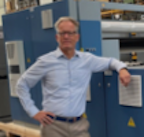
A central theme of the iNTERSPARE presentation is the "EMU" concept—Expansion, Modernization, and Upgrading. Managing Director Dirk Polchow has identified the modernization of existing machinery as a critical survival strategy for textile firms in the current economic climate.
"The modernization of existing machinery is one of our central topics at Techtextil 2026," Polchow stated. "Increasing digitalization is creating new requirements, for example through the EU’s Cyber Resilience Act. Techtextil provides an ideal platform to discuss these topics together with our customers."
The EMU approach is particularly relevant for companies operating machines that are mechanically sound but technologically obsolete. iNTERSPARE’s modular solutions focus on several key areas:
- Control Systems: Replacing aging Siemens S5 systems with modern VIPA controllers. These new units remain programmable via Step 7 and are fully compatible with existing Siemens tools, ensuring a smooth transition for technical staff.
- Drive Technology: Substituting "Masterdrive" frequency converters with durable Lenze modules, which offer better energy efficiency and more precise motor control.
- User Interface: Replacing industrial PCs with robust Siemens Comfort Panels that utilize SD card technology for easy data backup and recovery.
- Heating Conversions: Adapting heating systems to switch between thermal oil and gas, allowing manufacturers to pivot based on the most cost-effective or available energy source.
Digitalization and Regulatory Compliance: The Cyber Resilience Act
As industrial machinery becomes increasingly connected to the Internet of Things (IoT) and corporate networks, it falls under the scope of new digital regulations. The European Union’s Cyber Resilience Act (CRA) introduces mandatory cybersecurity requirements for hardware and software products with digital elements.
For textile manufacturers, this means that finishing lines must now be protected against cyber threats to prevent production downtime or data breaches. iNTERSPARE’s latest upgrades are designed with these regulations in mind, incorporating secure communication protocols and modern software architectures that meet the CRA’s stringent standards. This focus on "future-proofing" machinery is a significant value proposition for exhibitors at Techtextil, as it addresses long-term operational risks that go beyond traditional mechanical maintenance.
Global Market Traction and Recent Successes
The announcement of the Techtextil showcase follows a period of significant international growth for iNTERSPARE. The company recently secured a major contract in India involving the delivery of four 8-field Krantz K30 stenters and three Krantz Syncro shrink dryers. This order, followed by additional contracts in Southeast Asia, underscores the global demand for German-engineered finishing technology.
The Indian market, in particular, has shown a strong appetite for Krantz technology as it seeks to move up the value chain from basic garment production to high-end technical textile manufacturing. The ability of iNTERSPARE to provide both new high-performance machines and the components necessary to maintain older Krantz and Artos installations has made them a preferred partner in the region.
Chronology of iNTERSPARE’s Brand Integration
The current strength of iNTERSPARE is the result of a deliberate multi-decade strategy of brand acquisition and integration. To understand the company’s position in 2026, it is necessary to look at the timeline of its development:
- 1994: iNTERSPARE is founded in Reinbek, initially focusing on the global distribution of spare parts for textile machinery.
- 2007: The company makes a major move by acquiring the rights, patents, and technical documentation for the Krantz and Artos brands from the Moenus Technologies Group.
- 2011: iNTERSPARE expands its portfolio further by acquiring the Babcock (BTM) product line, including the famous Famatex brand.
- 2015-2020: The company transitions from being a parts and service provider to a full-scale machine manufacturer, launching updated versions of the Krantz K30 and Artos machines.
- 2021-2025: Focus shifts toward "Smart Finishing" and energy-efficient systems in response to the European Green Deal and global energy volatility.
Analysis of Implications for the Textile Industry
The strategies being showcased by iNTERSPARE at Techtextil 2026 reflect broader shifts in the industrial world. The emphasis on EMU measures suggests that the "throwaway" culture of industrial equipment is coming to an end. Driven by both sustainability goals and economic necessity, the "circularity" of machinery—extending the life of a 20-year-old stenter through modern electronics—is becoming a standard practice.
Furthermore, the focus on technical textiles indicates a geographic shift in production. While commodity apparel manufacturing continues to chase low labor costs, technical textile finishing remains anchored in regions with high technical expertise and advanced machinery infrastructure. Germany, and the VDMA member companies like iNTERSPARE, continue to lead this sector by providing the precision tools necessary for "intelligent" fabrics.
From a financial perspective, the ROI on EMU measures is becoming increasingly attractive. With energy savings of up to 20-30% possible through modern airflow controls and burner optimizations, the payback period for a comprehensive machine upgrade has, in many cases, dropped to under 24 months. This makes modernization a viable alternative to the much higher capital expenditure required for entirely new production lines.
Conclusion
As Techtextil 2026 approaches, iNTERSPARE Textilmaschinen GmbH is set to demonstrate that the future of textile finishing lies in the synergy between proven mechanical engineering and cutting-edge digital control. By offering solutions that cater to the entire lifecycle of a machine—from the installation of a new Krantz K30 to the digital retrofitting of a decades-old Babcock line—the company addresses the most pressing needs of the modern textile manufacturer: efficiency, stability, and compliance.
Visitors to the Frankfurt exhibition will have the opportunity to engage with iNTERSPARE’s engineering team and explore how these modular solutions can be tailored to specific production environments. In an era defined by rapid change, the company’s commitment to "Quality Made in Germany" remains a stabilizing force in the global textile value chain.