









The intersection of high fashion and cutting-edge technology reached a significant milestone during the most recent New York Fashion Week as Alta, the fashion-tech startup founded by Jenny Wang, unveiled its first major brand integration. By bridging the gap between cinematic imagination and functional retail, Alta has successfully brought the "digital closet" concept—famously depicted in the 1995 cult classic film Clueless—into the hands of modern consumers. The company, which recently secured an $11 million funding round led by Menlo Ventures, is now moving beyond its standalone application to become a foundational layer for the future of e-commerce. Through a strategic collaboration with the storied New York label Public School, Alta is demonstrating how personalized AI avatars can transform the way consumers interact with designer collections, moving the industry toward a more immersive, "agentic" shopping experience.
The Genesis of Alta and the Pursuit of Cinematic Tech
For decades, the scene in Clueless where protagonist Cher Horowitz scrolls through a computer-generated wardrobe to select a matching outfit remained a benchmark for futuristic fashion dreams. While various startups have attempted to replicate this experience over the years, many were hindered by the limitations of early-stage computer vision and the high computational cost of rendering realistic garment draping. Jenny Wang founded Alta with the objective of solving these technical bottlenecks using the latest innovations in generative artificial intelligence.
The company’s trajectory accelerated significantly following its $11 million capital raise. The round attracted a sophisticated roster of investors, including Menlo Ventures and the Anthology Fund, which serves as the venture capital arm of the AI research giant Anthropic. Beyond institutional backing, Alta secured the support of industry icons such as models Karlie Kloss and Jasmine Tookes, as well as Jenny Fleiss, the co-founder of Rent the Runway. This blend of technical and aesthetic expertise has allowed Alta to position itself not merely as a novelty app, but as a robust enterprise solution for a fashion industry currently grappling with high return rates and the need for deeper digital engagement.
The Public School Collaboration: A New Era for NYFW
The recent New York Fashion Week (NYFW) served as the backdrop for Alta’s most significant deployment to date: a direct integration with Public School New York. This partnership is particularly noteworthy given the history of the brand. Public School, led by designers Dao-Yi Chow and Maxwell Osborne, had been on a multi-year hiatus. The label, known for its fusion of streetwear and high-fashion tailoring, used this season’s NYFW to mark its grand re-debut.
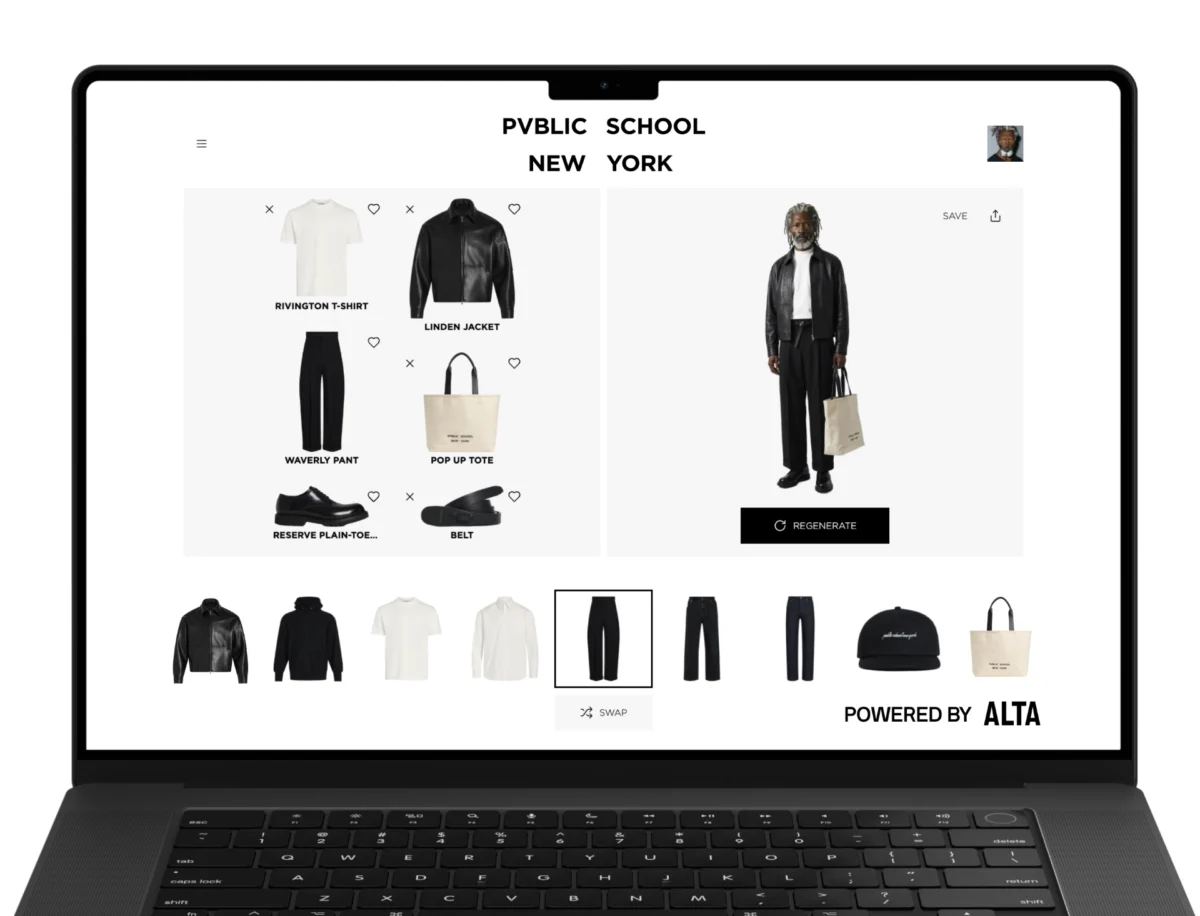
The collaboration was born out of a shared network; Wang met Chow and Osborne through the founder of Poshmark, who serves as an angel investor in both Alta and Public School. For the designers, the decision to integrate Alta’s technology was a strategic move to modernize their storytelling. Chow noted that in the current retail climate, technology must be viewed as a core business partner rather than an optional add-on. By embedding the "Style with Alta" feature directly onto their product pages, Public School allows potential customers to see how a specific item—such as the Linden Jacket—would look on their personalized Alta avatar.
This integration represents one of the first instances of a high-end designer embedding personal avatar and styling technology directly into a proprietary e-commerce site. When a user clicks the Alta icon on the Public School website, they are directed to a specialized interface where they can mix and match the new collection with other pieces, effectively testing the versatility of a garment before committing to a purchase.
Technical Performance and Market Differentiation
In a market where major retailers like Zara and luxury houses like Balmain have previously experimented with digital avatars, Alta distinguishes itself through speed and complexity. One of the primary criticisms of earlier virtual try-on solutions was the latency involved in rendering garments. According to Wang, Alta’s proprietary AI models can process and display up to eight different clothing items on a single avatar within seconds. In contrast, existing solutions used by legacy brands often limit users to four items and can take upwards of two minutes to render a complete look.
This technical efficiency is critical for maintaining consumer engagement in an era of shortening attention spans. Alta’s ability to handle multi-layered outfits—including accessories, outerwear, and footwear—mimics the reality of how people actually dress. Since its initial launch in 2023, the platform has seen more than 100 million outfits generated, a statistic that underscores the massive consumer appetite for digital styling tools.

The company’s growth is further supported by high-profile endorsements. Both Time and Vogue recognized Alta as one of the most significant innovations of the past year. Beyond individual consumers, Alta has established partnerships with the Council of Fashion Designers of America (CFDA) and Poshmark, positioning itself as a bridge between the primary retail market and the booming secondary resale market.
The Shift Toward Agentic Commerce
While the "Clueless closet" provides a relatable entry point for consumers, Wang’s long-term vision for Alta is far more ambitious. She describes the platform as a "personal identity layer for the future of consumer AI and shopping." This concept aligns with the emerging trend of "agentic commerce," where AI agents perform tasks on behalf of users.
For AI-driven shopping to be truly effective, the underlying technology must possess a deep understanding of the individual shopper. This includes not just their physical measurements and likeness, but also their existing wardrobe, past purchase history, and aesthetic preferences. By building a comprehensive digital closet, Alta creates a data layer that can inform AI agents. In the future, a user’s AI assistant might suggest a purchase not just because it is on sale, but because it perfectly complements five other items already stored in the user’s Alta digital closet.
This data-driven approach has the potential to solve one of the most expensive problems in e-commerce: returns. Currently, the fashion industry faces a multi-billion dollar crisis due to sizing inaccuracies and "bracket shopping," where consumers buy multiple sizes of the same item with the intention of returning most of them. By providing a highly accurate virtual try-on experience that accounts for body shape and garment drape, Alta aims to increase consumer confidence and significantly reduce the environmental and financial impact of returns.
A Chronology of Innovation
To understand the impact of Alta, it is helpful to look at the timeline of its development and the broader context of fashion technology:
- 1995: Clueless debuts, introducing the concept of the digital wardrobe to the public consciousness.
- 2010s: Various startups attempt "virtual fitting rooms" using basic overlay technology, but fail to gain mass adoption due to poor realism.
- 2023: Alta launches its standalone app, allowing users to create avatars and digitize their own clothing. The app quickly gains traction, leading to 100 million outfit generations.
- June 2024: Alta announces its $11 million funding round, signaling strong investor confidence in AI-driven retail.
- February 2025: During NYFW, Alta unveils its first website integration with Public School New York, moving the technology from a standalone app to an enterprise-grade retail tool.
Industry Implications and Future Outlook
The success of the Alta and Public School partnership is likely to trigger a wave of similar integrations across the fashion industry. As brands seek new ways to engage with Gen Z and Millennial consumers—demographics that are increasingly comfortable with digital identities and "metaverse" concepts—the demand for high-fidelity virtual avatars will only grow.
However, the implications extend beyond mere marketing. The integration of Alta’s technology suggests a move toward a more circular fashion economy. Because the Alta app allows users to digitize their entire existing closet, it encourages them to see how new purchases fit into their current rotation, potentially curbing impulsive, "fast fashion" buying habits in favor of more thoughtful, curated wardrobes.
Furthermore, the "Style with Alta" feature provides designers with invaluable data. By seeing how users style their pieces in the virtual world, brands can gain insights into consumer trends in real-time, allowing for more accurate production forecasting and reducing overstock.
As Alta continues to announce new partnerships, the company is moving closer to Wang’s goal of becoming the "identity layer" for retail. By combining the nostalgia of 90s cinema with the power of modern AI, Alta is not just changing how we shop—it is changing how we perceive our digital selves. The transition from a static grid of product photos to a dynamic, personalized avatar represents the most significant shift in e-commerce since the invention of the mobile shopping cart. For brands like Public School, this technology is the key to remaining relevant in an increasingly digital world. For consumers, it is finally the realization of a tech-forward dream that has been thirty years in the making.