










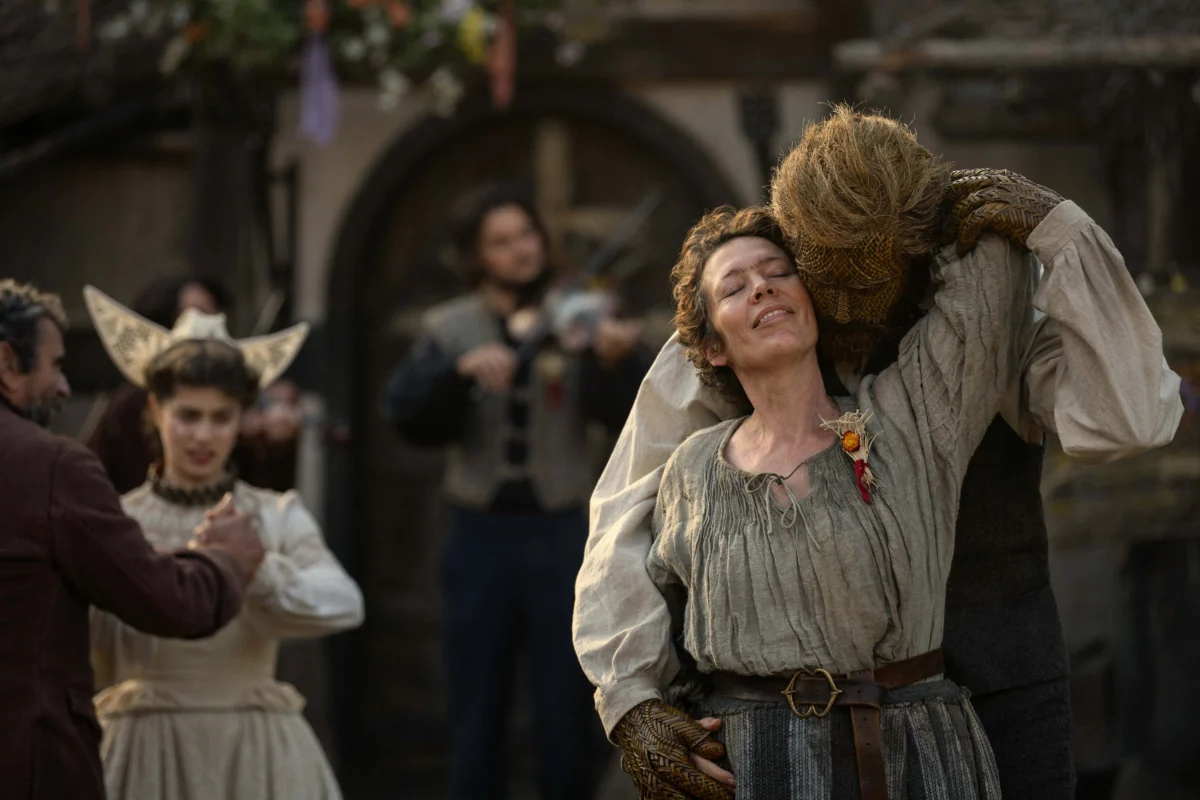
The recent promotional circuit for the film Wicker has sparked an unexpected dialogue regarding the depiction of intimacy and aging in modern cinema. The film, which features Alexander Skarsgård as a sentient, woven-rattan protagonist brought to life by a local artisan, has moved beyond traditional film critique to dominate social media discourse. The narrative centers on a marginalized fisherwoman, portrayed by Olivia Colman, who commissions the creation of a companion to escape the rigid, misogynistic social structures of her medieval village. While the film has been lauded for its aesthetic choices and the casting of a lead actress who represents an authentic, unadorned vision of middle age, the production has also invited scrutiny regarding its fantastical plot mechanics and the potential for audience alienation through its unconventional romantic premise.
A Chronology of the Production and Public Reception
The journey of Wicker from concept to screen has been marked by a deliberate effort to subvert genre expectations. The project was greenlit following a period of increased interest in films that challenge traditional age-related tropes in Hollywood.
- Early Development: Pre-production focused on the material authenticity of the titular character. The design team collaborated with traditional basket-weaving experts to ensure the structural integrity of the suit worn by Skarsgård, which utilized high-density rattan to allow for the character’s specific range of motion.
- Production Phase: Principal photography took place over a four-month period in rural landscapes designed to evoke a timeless, folklore-inspired aesthetic. Olivia Colman’s involvement was noted for her insistence on portraying her character with minimal cosmetic intervention, a choice that has since been highlighted as a pivotal moment for on-screen representation of women over 50.
- Promotional Campaign: The marketing strategy intentionally blurred the lines between the film’s narrative and real-world celebrity culture. The recent appearance of Skarsgård on The Graham Norton Show, during which he presented the host with prosthetic wicker elements from the set, served as a catalyst for widespread internet speculation and viral engagement.
Cinematic Representation of the Aging Female Protagonist
The central tension of Wicker lies in its juxtaposition of a realistic, middle-aged protagonist with a fantastical, inanimate love interest. Data regarding the representation of women over 50 in lead roles suggests a persistent "aesthetic gap" in the industry. According to industry reports from the Geena Davis Institute on Gender in Media, women over the age of 50 remain significantly underrepresented in leading roles, and when they do appear, they are frequently subjected to digital enhancement or "de-aging" processes that prioritize a youthful appearance over character development.
In Wicker, the refusal to alter Colman’s appearance serves as a narrative anchor. Her character’s evolution—from an ostracized member of the community to a woman embracing her own autonomy and sexual vitality—is presented as a challenge to the standard tropes that define middle-aged women solely through the lens of family or decay. However, analysts note that while the film succeeds in its casting, it falters in the mechanics of the character’s agency. By tethering her emotional liberation to a "wicker husband," the script inadvertently pivots back to a traditional savior narrative, where the protagonist’s happiness is dependent upon an external, albeit supernatural, source.
Technical Realism and Audience Suspension of Disbelief
The discourse surrounding the film has been heavily influenced by the logistical questions raised by audiences regarding the film’s central conceit. The "wicker phallus" has become a focal point of digital analysis, with various social media platforms hosting debates on the physical implications of such a union. From a purely technical perspective, the film requires a profound suspension of disbelief, which has divided viewers.

Critics have pointed out that while the film functions as a satire, the internal logic of the relationship presents significant hurdles for the viewer. The disparity between the film’s grounded approach to the protagonist’s aging process and its high-fantasy approach to her romantic life creates a tonal dissonance. This has been discussed in various media outlets, where experts in narrative theory have questioned whether the use of such a provocative device ultimately undermines the film’s message about the dignity of the aging female experience.
Sociological Implications and Cultural Comparisons
Wicker is being compared to recent projects such as Babygirl, which also explored the sexual agency of middle-aged women. However, where Babygirl focused on the power dynamics of a human-centric, albeit unconventional, relationship, Wicker moves into the realm of the absurd. The broader impact of these films is a shifting landscape for how "lust" is permitted to be portrayed in post-menopausal characters.
The character arc of the fisherwoman, particularly her temporary descent into hysteria following a manufactured deception involving a false pregnancy, has been a point of contention. Some analysts argue that this plot point is a regressive element that undercuts the character’s previously established independence. The "gentle rebuke" delivered by the male artisan to the female lead reinforces a power imbalance, effectively placing the man—even the man of straw—in the role of the knowledgeable guide, while the woman is depicted as prone to emotional irrationality.
The Future of "Genre-Defying" Romances
The commercial success or failure of Wicker will likely serve as a barometer for future projects attempting to merge social commentary with high-concept absurdity. Industry observers note that while audiences are clearly hungry for stories featuring mature protagonists who do not conform to traditional beauty standards, there is a limit to how much "metaphorical baggage" an audience is willing to accept.
The reliance on a "wicker man" to validate the protagonist’s desire suggests a continued struggle in Hollywood to write stories where women find sexual and emotional fulfillment independently. If the film’s goal was to present a "rollicking sex life" for a woman of a certain age, it succeeded in opening the door to the conversation. However, the reliance on a literal object of furniture as the catalyst for this liberation raises the question: Why does cinema continue to find it difficult to portray the sexual autonomy of mature women without the crutch of a gimmick?
Conclusion
As Wicker continues its theatrical run, the discourse surrounding it remains a complex blend of admiration for its lead performance and frustration with its structural choices. The film serves as a significant case study in the tension between creative subversion and the persistence of traditional storytelling crutches. While it effectively moves the needle on the visibility of the "unadorned" middle-aged woman, it leaves the audience to grapple with whether such progress is truly being made if the heroine’s ultimate satisfaction is dependent upon a fantastical, inanimate construct. The industry’s challenge, moving forward, will be to replicate the boldness of casting and aesthetic choices found in Wicker, while moving toward narratives that allow for the full, independent complexity of the characters themselves.