








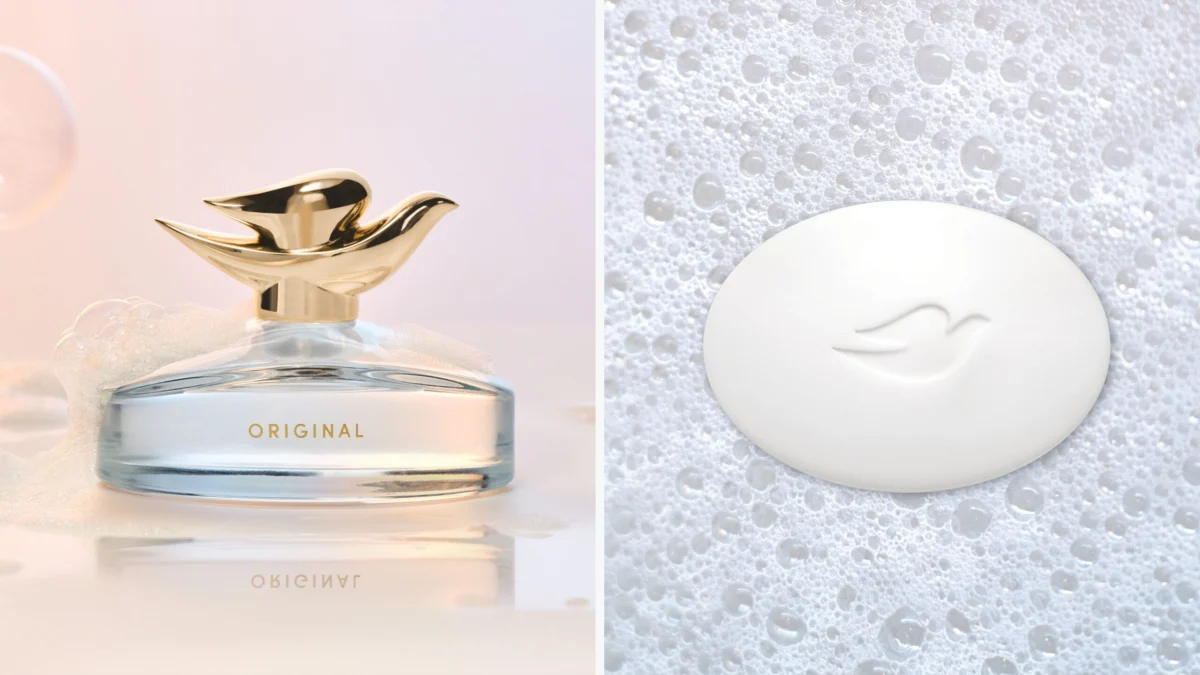
In a strategic pivot that bridges the gap between mass-market personal care and the prestige fragrance sector, Dove has officially announced the launch of its first-ever fine fragrance. This development marks a significant milestone for the Unilever-owned brand, which, as of 2024, moves an estimated 60 bars of its signature Beauty Bar every second within the United States. With an annual volume reaching nearly 1.9 billion units, the product has secured its status as a foundational element of the domestic bathroom aesthetic. By bottling the proprietary, cloud-like scent that has defined the brand for seven decades, Dove is moving to capitalize on the deep-seated consumer nostalgia that has surrounded the product since its 1957 debut.
A Seven-Decade Legacy of Scent
The Dove Beauty Bar was introduced to the American market in 1957, positioning itself not merely as a cleanser, but as a "beauty bar" formulated with one-quarter moisturizing cream. This departure from traditional, harsh soap formulations—which often utilized heavy surfactants—allowed the brand to establish a unique olfactory identity. Throughout the latter half of the 20th century and into the early 21st, that specific powdery, clean, and subtly floral fragrance became a sensory shorthand for hygiene and domestic comfort.
For many consumers, the scent is inextricable from childhood memories or daily routines. It is this psychological association that the brand is now testing in the form of a wearable fragrance. The decision to enter the perfume market comes as a direct response to consistent consumer feedback, with loyalists frequently inquiring about the availability of a dedicated fragrance product.
The Technical Execution and Formulation
Creating a fragrance that translates a functional product—soap—into a sophisticated fine fragrance requires a delicate balance. To ensure the scent maintained its authenticity while meeting the technical requirements of a perfume, Dove collaborated with renowned fragrance developer Ann Gottlieb. Gottlieb, whose career includes high-profile work for brands such as Calvin Klein, Marc Jacobs, and Victoria’s Secret, was tasked with replicating the precise, familiar profile of the bar soap.
The resulting fragrance is designed to capture the creamy, fresh, and slightly floral notes of the original formula. Technical experts involved in the project emphasize that the fragrance avoids the "sharp" chemical notes often associated with surfactants or industrial detergents. Instead, the juice is balanced to mimic the "lathered" scent profile that consumers have come to associate with the brand’s moisturizing bars. Initial testing indicates that while the fragrance is immediately recognizable as the Dove scent, it possesses enough complexity to exist as a distinct, albeit minimalist, perfume.
Strategic Pricing and Accessibility
The launch of the Dove fragrance is accompanied by a deliberate pricing strategy: $19.57 per bottle. This figure serves as a symbolic tribute to the year of the brand’s inception. By setting the price at a sub-twenty-dollar point, Dove maintains its commitment to accessibility, positioning the fragrance as an affordable luxury rather than an exclusionary prestige product.
The launch will be limited, distributed primarily through social media-integrated commerce channels. This "one-time-only" purchase event is designed to create a sense of urgency, a common tactic in modern beauty marketing used to gauge initial consumer interest and build brand heat without the long-term overhead of a permanent retail rollout. Analysts suggest that if the initial launch performs well, it could lead to a broader distribution strategy or a permanent inclusion in the brand’s portfolio.
The Evolution of the "Clean" Fragrance Trend
The entry of a legacy personal care giant into the fragrance space is symptomatic of a larger shift in the perfume industry. The "clean" fragrance category has experienced explosive growth over the past five years. Consumers are increasingly gravitating toward scents that prioritize simplicity, freshness, and non-offensive, "skin-scent" profiles.
In a professional analysis of current fragrance market trends, it is evident that younger generations, including Gen Z and Millennials, are showing a renewed interest in "functional" beauty—products that do more than just smell good, but rather evoke a feeling of cleanliness or well-being. By positioning itself as the original architect of the "clean" scent, Dove is effectively reclaiming a market share that was previously dominated by niche perfume houses selling expensive, laboratory-distilled versions of what Dove has been providing at a mass scale for 70 years.
Industry and Expert Perspectives
The reaction from beauty industry insiders has been one of curiosity. While traditional fragrance purists may initially dismiss the concept of a "soap-scented" perfume, the success of similar products—such as those that replicate the scent of fresh laundry or linens—suggests there is a robust market for the familiar.
For beauty editors and industry analysts, the appeal lies in the intersection of nostalgia and quality. The challenge for Dove will be to convince consumers that a scent they apply to their bodies in the shower is one they want to wear throughout the day. Some argue that the scent’s simplicity is its greatest strength, as it offers a "reset" from the heavy, moody, or complex fragrances that currently dominate the high-end market. Others suggest that the scent may serve as a perfect base layer, allowing users to build more complex olfactory profiles over the familiar, clean Dove foundation.
Implications for the Beauty Market
The expansion into fragrance represents a broader effort by Unilever to diversify the Dove brand’s reach. By leveraging the immense trust and high frequency of use associated with the Beauty Bar, the company is attempting to transition the brand from a utilitarian commodity to a lifestyle identity.
This move also highlights a trend of "brand extension" in the personal care space. We are seeing more mass-market entities utilizing their existing brand equity to test new categories. If Dove successfully establishes itself as a legitimate player in the fragrance sector, it could set a precedent for other legacy beauty brands to follow suit.
Data and Market Context
The following metrics underscore the scale of the brand’s influence:
- Production Velocity: 60 bars per second globally.
- Annual Volume: ~1.9 billion units.
- Market Position: One of the most recognized and high-frequency-use personal care products in North America.
- Launch Philosophy: A hybrid approach, combining nostalgic emotional marketing with limited-run digital commerce.
Conclusion: A Wistful Experiment
As the launch date approaches, the industry remains focused on the efficacy of the strategy. Whether the Dove fragrance becomes a long-term staple or remains a nostalgic novelty, its impact on the conversation surrounding "clean" scents is undeniable. By elevating a bathroom staple to the status of an eau de parfum, Dove is forcing a reassessment of what defines a luxury fragrance. In a world that often demands complex, rare, and difficult-to-find ingredients, the Dove fragrance offers a return to the simple, the familiar, and the undeniably clean. For those who grew up with the product, the perfume serves as a bottled memory, a technical feat of scent-matching that brings the shower experience to the vanity. As the brand prepares for the limited drop, the question is not whether the product is "good" in a traditional sense, but whether the market is ready to embrace the familiar as the new standard for modern perfumery.