





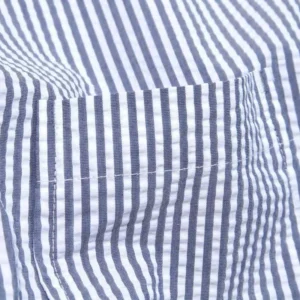




LEONBERG, Germany — In a move that underscores the ongoing industrial evolution of the Latin American textile sector, Cedro Têxtil, the region’s preeminent manufacturer of workwear fabrics, has announced a major operational upgrade. After more than 150 years of continuous operation, the Brazilian industrial giant has successfully integrated a state-of-the-art Brückner stenter frame into its production facility, a development that marks a pivotal shift in the company’s approach to energy efficiency, production speed, and quality control. This investment is not merely a hardware acquisition; it serves as a strategic cornerstone for the company’s long-term environmental, social, and governance (ESG) goals, aimed at maintaining its competitive edge in a rapidly changing global market.
The decision to partner with the German engineering firm Brückner followed an exhaustive, multi-year evaluation process. For a firm with the operational scale of Cedro Têxtil—which produces upwards of 60 million linear meters of fabric annually—the stakes of such a procurement were exceptionally high. The company’s management team conducted a global assessment, visiting production sites across Europe and Asia to benchmark technological capabilities against their specific requirements for heavy-duty workwear and high-performance super-stretch fabrics.
A Rigorous Selection Process: Evaluating Global Standards
The selection criteria established by Cedro Têxtil were rigorous. The company sought a technological solution that could reconcile the conflicting demands of high-volume output and precision manufacturing. Key performance indicators (KPIs) for the new machinery included energy efficiency, maintenance lifecycle costs, the availability of specialized spare parts, and, crucially, the strength of local technical support within Brazil.
Brückner, known for its expertise in dry finishing, emerged as the successful bidder due to its integrated systems approach. The resulting installation of the SFP-4 stenter frame has yielded immediate operational dividends. According to post-commissioning data, Cedro Têxtil has achieved a reduction in natural gas consumption of over 20 percent. This reduction is particularly significant given the energy-intensive nature of textile drying and heat-setting processes. Furthermore, the uniform thermal distribution within the dryer has allowed for enhanced dimensional stability in technical fabrics, a critical factor for manufacturers providing textiles to the military, healthcare, and PPE sectors.

The Efficiency Dividend: Decommissioning and Capacity Optimization
One of the most profound impacts of the modernization program is the internal rationalization of production. By upgrading to the high-efficiency Brückner line, Cedro Têxtil was able to retire three legacy stenter frames. This consolidation serves as a prime example of "brownfield" modernization, where operational efficiency is improved not just by adding capacity, but by replacing aging, energy-inefficient infrastructure with high-performance units that offer superior throughput.
The decommissioning of the three older machines has resulted in a smaller physical footprint for the same, if not higher, volume of production, thereby reducing overhead costs and simplifying the logistics of the factory floor. The ability to handle "super-stretch" fabrics with consistent quality has also opened new avenues for the company in the premium workwear market, where demand for durability and comfort is at an all-time high.
Sustainability as a Corporate Mandate
Cedro Têxtil’s commitment to modernization is inseparable from its broader sustainability strategy. As a participant in the Brazilian GHG Protocol Program, the company has documented an 85 percent reduction in greenhouse gas emissions over recent years. This trajectory is not merely a corporate image initiative but a calculated business move to ensure compliance with increasingly stringent international environmental regulations.
Global supply chains, particularly those serving multinational corporations, are increasingly mandating that suppliers demonstrate low-carbon production methods. By investing in machinery that lowers the energy-per-meter footprint, Cedro Têxtil is future-proofing its export potential. This alignment with sustainable practices is essential for a company that derives approximately 65 percent of its revenue from workwear fabrics, where end-users often require certification of ethical and environmentally sound manufacturing processes.
Historical Context: 150 Years of Resilience
To understand the significance of this technological leap, one must look at the historical trajectory of Cedro Têxtil. Founded in 1872 under the charter of Emperor Dom Pedro II, the company has survived the transition from the Imperial era to the modern Republic, navigating periods of extreme currency volatility, global conflict, and the economic pressures of the 21st century.

Throughout its 150-year history, the firm has evolved from a traditional textile mill into a fully vertically integrated manufacturer. Today, with a workforce of more than 2,600 employees and an annual revenue reaching approximately BRL 1.2 billion, the company operates as a pillar of the Brazilian industrial economy. The current modernization phase, which includes the Brückner partnership, represents the latest iteration of this adaptive strategy. The company’s ability to pivot toward high-tech, energy-efficient production is a testament to an organizational culture that prioritizes long-term viability over short-term austerity.
Official Perspectives on the Partnership
The industrial leadership at Cedro Têxtil views this partnership as a blueprint for future growth. Patrick Melo Pinheiro, the Industrial Director, emphasized that the company’s history of "reinvention" is the primary driver behind the capital expenditure.
"We have always viewed every challenge as an opportunity to become stronger," Pinheiro noted. "Whether we are dealing with global market fluctuations or the necessity of decarbonization, our response is to upgrade our capabilities. By integrating Brückner technology, we are not just buying a machine; we are securing a partner that allows us to maintain the highest quality standards in a fiercely competitive global landscape."
From the perspective of the machine manufacturer, the project represents a successful application of German engineering in a high-demand South American environment. The role of local agents, such as Frank Bernhard, has been cited as a critical component in the success of the installation, ensuring that the transition from old to new was seamless and that the operational team at Cedro Têxtil was fully trained on the complexities of the new equipment.
Future Implications for the Latin American Textile Industry
The success of this installation carries implications for the wider Latin American textile industry. As the region seeks to compete with manufacturing hubs in Southeast Asia, the primary levers of competition are no longer just labor costs, but the integration of "Industry 4.0" technologies—automation, real-time energy monitoring, and advanced materials processing.

Cedro Têxtil has indicated that the current installation is merely the first phase of a broader modernization program. Plans are already in development to evaluate the replacement of additional production lines with advanced Brückner technology. This phased approach allows for manageable capital expenditure while ensuring that the company’s production standards remain at the technological frontier.
Conclusion: A Strategic Pivot
The partnership between Cedro Têxtil and Brückner Textile Technologies exemplifies the necessity of technological investment in the mature textile industry. By prioritizing energy efficiency, dimensional quality, and operational reliability, Cedro Têxtil has reinforced its position as a market leader.
For industry observers, the case of Cedro Têxtil serves as a benchmark for how long-established industrial firms can navigate the dual pressures of environmental sustainability and economic competitiveness. As the company looks toward its next 150 years, the emphasis on high-performance infrastructure—supported by global technological partnerships—suggests a stable and forward-looking trajectory that will likely define the future of workwear manufacturing in the region.