









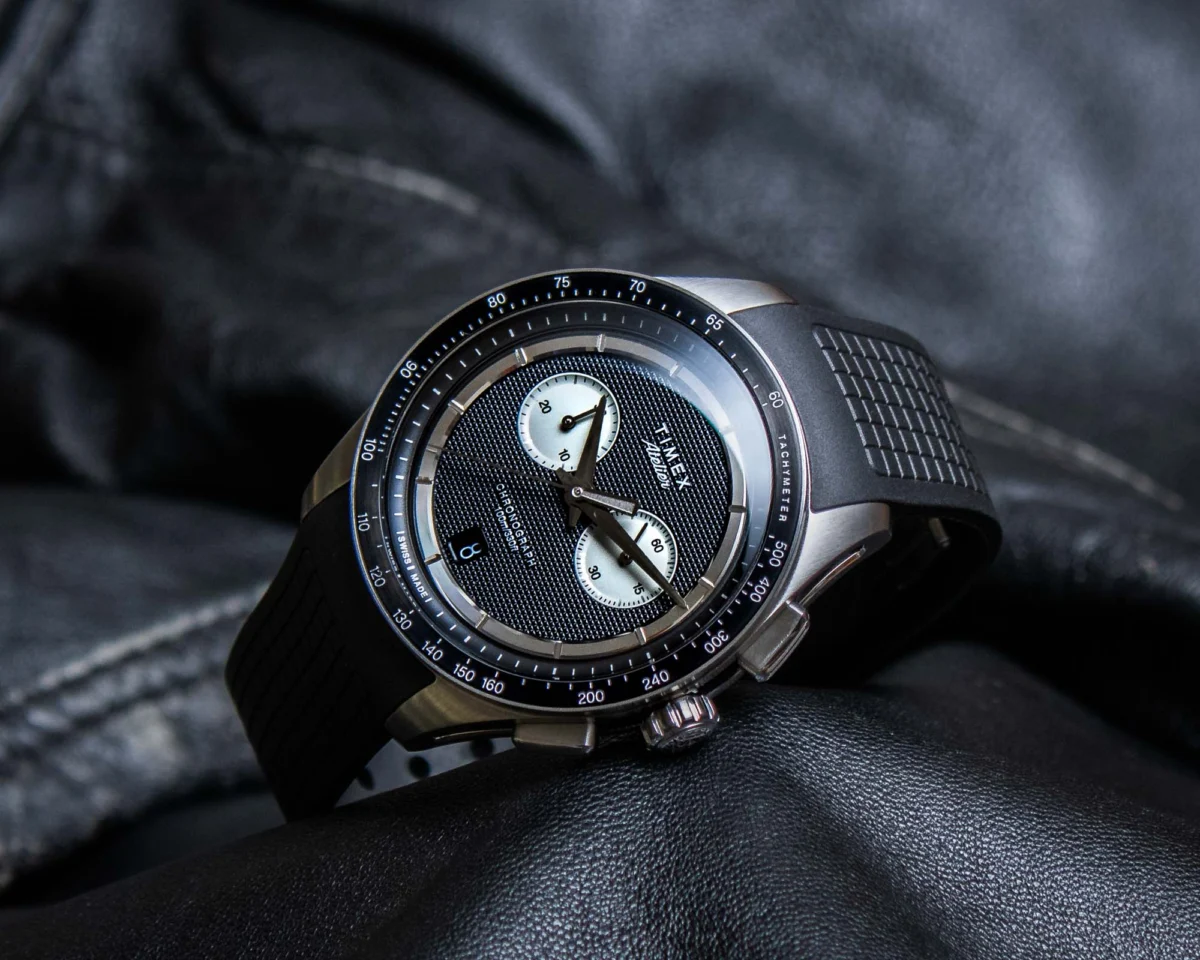
The watchmaking landscape underwent a significant shift in 2025 when the venerable American heritage brand, Timex, introduced its premium sub-brand, Timex Atelier. This initiative marked a strategic departure from the brand’s traditional focus on accessible, mass-market quartz timepieces, moving toward the high-end, Swiss-made segment. Following the success of the initial Atelier automatic collections, the brand has expanded its 2026 portfolio with the introduction of the Timex Atelier Chronograph Quartz M1q. This new model represents a deliberate effort to synthesize the sophisticated design language of Chief Creative Director Giorgio Galli with a more accessible, high-precision Swiss quartz movement, effectively creating a new entry point for collectors interested in the Atelier line.

The Evolution of the Timex Atelier Sub-Brand
The establishment of Timex Atelier was a calculated move to leverage the brand’s storied history while competing in the entry-level luxury watch market. Since the appointment of Giorgio Galli, Timex has seen a renaissance in its design philosophy, characterized by the intricate, architectural aesthetics seen in the S2 and S2 Ti series. The Atelier sub-brand was designed to serve as the physical manifestation of this elevated design language.
Historically, the Atelier lineup was exclusively reserved for automatic mechanical movements, with price points consistently positioned above the $1,000 threshold. By introducing the M1q, Timex is addressing a specific market demand: consumers who appreciate the superior build quality, finishing, and design ethos of the Atelier series but seek the convenience, accuracy, and price point associated with a Swiss-made quartz caliber.

Chronology of the M1q Development
The development of the M1q did not occur in a vacuum; it is the product of two years of internal refinement following the 2025 launch of the sub-brand.
- 2023–2024: Internal design and testing of the skeletonized lug architecture, derived from the Giorgio Galli S2 series.
- 2025: Official launch of Timex Atelier, debuting with the Marine M1a and the automatic Chronograph M1a. These models established the brand’s identity as a manufacturer of Swiss-made, high-specification timepieces.
- Early 2026: Design phase for the M1q, focusing on resizing the case architecture to 40mm to accommodate a wider variety of wrist sizes, moving away from the more robust dimensions of the automatic siblings.
- September 2026: Official release of the Chronograph Quartz M1q, marking the first time the Atelier brand has incorporated a battery-powered movement.
Technical Specifications and Material Composition
The M1q distinguishes itself from the automatic M1a not only through its internal movement but also through its material choices and ergonomics. While the automatic flagship models frequently utilize lightweight titanium, the M1q is constructed from high-grade stainless steel. This choice contributes to a more substantial weight on the wrist, which many collectors associate with a premium feel.

The watch measures 40mm in diameter with a thickness of 12.7mm, including a heavily domed sapphire crystal that provides superior scratch resistance compared to mineral glass alternatives. The lug-to-lug distance of 48.11mm ensures a comfortable fit for a diverse range of wrist circumferences, particularly those in the 6.5 to 6.75-inch range.
Perhaps the most significant technical improvement over the automatic version is the water-resistance rating. The M1q features a screw-down crown and a solid screw-down caseback, resulting in a 100-meter depth rating. This is double the capacity of the automatic M1a, positioning the M1q as a more versatile tool watch suitable for varied aquatic activities.

The Role of the Ronda 5021.D Movement
At the core of the M1q is the Swiss-made Ronda Caliber 5021.D. Unlike the “Swiss Parts” movements often found in standard commercial watches—which are assembled in overseas facilities—the movement inside the M1q is a true “Swiss Made” iteration. It features a 10-jewel architecture with gold-plated components, ensuring higher durability and lower friction over time.
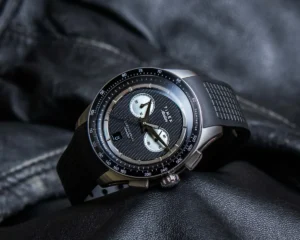
The movement offers a battery life of approximately 54 months, providing significant maintenance relief for the owner. Functionally, the caliber is a two-register chronograph, featuring a central seconds hand and a 30-minute totalizer located at the 9 o’clock position. While this is less complex than some high-end mechanical chronographs, it is highly accurate and adheres to the minimalist design aesthetic favored by the Atelier series.

Design Aesthetics and Dial Architecture
The dial of the M1q is a study in texture. It features a finely engraved guilloché pattern that adds depth and prevents the dial from appearing flat, a common criticism of budget-friendly quartz watches. The inclusion of a date window at the 6 o’clock position provides a balanced, symmetrical look that aligns with the rectangular chronograph pushers and the signed crown.
One of the most notable design decisions is the absence of luminous material (lume) on the indices or hands. By opting for a fully polished, monochromatic handset, Timex has doubled down on the "dress-sport" aesthetic. The lack of lume serves as a stylistic choice that emphasizes the watch’s clean, architectural lines, rather than its utility in low-light environments.

Industry Implications and Market Positioning
The introduction of the M1q at a retail price of $700 USD (on a rubber strap) creates a fascinating case study in brand segmentation. By pricing the M1q at roughly one-third the cost of its flagship automatic counterpart, Timex is effectively creating a "gateway" product.
Industry analysts suggest that this strategy serves two primary functions:

- Lowering the Barrier to Entry: It allows the brand to capture a segment of the market that values the "Swiss Made" designation and Atelier branding but is priced out of the $1,500+ mechanical market.
- Increased Sales Volume: By utilizing a quartz movement, Timex can streamline production and offer a more accessible price point without diluting the brand’s premium perception.
The choice of NBR (nitrile butadiene rubber) for the strap on the featured model also speaks to the brand’s commitment to quality. NBR is a synthetic rubber known for its resistance to oils, chemicals, and degradation, making it a high-performance material that matches the 100-meter water resistance of the case. The use of integrated quick-release spring bars further underscores the focus on user experience and versatility.
The Legacy of Giorgio Galli
The success of the Atelier brand, and by extension the M1q, is inextricably linked to the design influence of Giorgio Galli. The skeletonized lug structure—where the sides of the lugs are cut out to create an airy, architectural appearance—has become a signature of the high-end Timex catalog. This design language, which first appeared in the S2 collection, has successfully transitioned from a niche design experiment into a cohesive identity for the entire Atelier sub-brand.

By applying this complex case architecture to a more affordable quartz model, Timex is validating the idea that high-end design does not necessarily require a mechanical movement. This challenges the industry norm that "luxury" is defined solely by the presence of an oscillating balance wheel. Instead, Timex is positioning "Atelier" as a label for rigorous design, material science, and high-quality manufacturing, regardless of the power source.
Future Outlook for Timex Atelier
As of late 2026, the inclusion of the M1q into the lineup suggests that Timex intends to maintain the Atelier sub-brand as a permanent fixture in its hierarchy. The company’s ability to pivot from its historical roots as a mass-market manufacturer to a producer of curated, enthusiast-focused timepieces is a rare feat in the watch industry.

The M1q will likely serve as a benchmark for how the company balances its need for profitability with the desire to maintain a reputation for horological credibility. If the M1q performs well in the current market, it is plausible that future iterations of the Atelier line will continue to explore the intersection of high-spec quartz movements and premium case finishing.
For consumers, the M1q offers a compelling proposition: the prestige and aesthetic sophistication of a Swiss-made, design-forward brand at a price point that remains grounded in the realities of the modern economy. While it may not replace the mechanical chronograph in the hearts of traditionalists, it successfully carves out a niche as a high-performance, everyday timepiece that does not compromise on its artistic integrity.