










Historical Context and the Monterey Legacy
The origins of the Monterey collection date back to 1988, a pivotal year that saw Louis Vuitton make its inaugural foray into the world of wristwatches. At the time, the brand sought to bridge the gap between its heritage in luxury leather goods and the rigorous technical standards of Swiss watchmaking. The name "Monterey" is widely acknowledged as a colloquialism born from the difficulty some early American consumers had in pronouncing the French term for wristwatch, montre.

The original design was conceived in collaboration with the renowned Italian architect and designer Gae Aulenti. Known for her minimalist and functionalist aesthetic, Aulenti brought a distinct architectural sensibility to the timepiece, characterized by a rounded, geometric profile that defied the conventional trends of the late 1980s. When the collection was re-introduced in October 2025, it was met with renewed interest from collectors who viewed the original models as artifacts of a transitional period in luxury retail—a time when fashion houses were just beginning to recognize the immense potential of the watch industry.
Design Evolution and Material Innovation
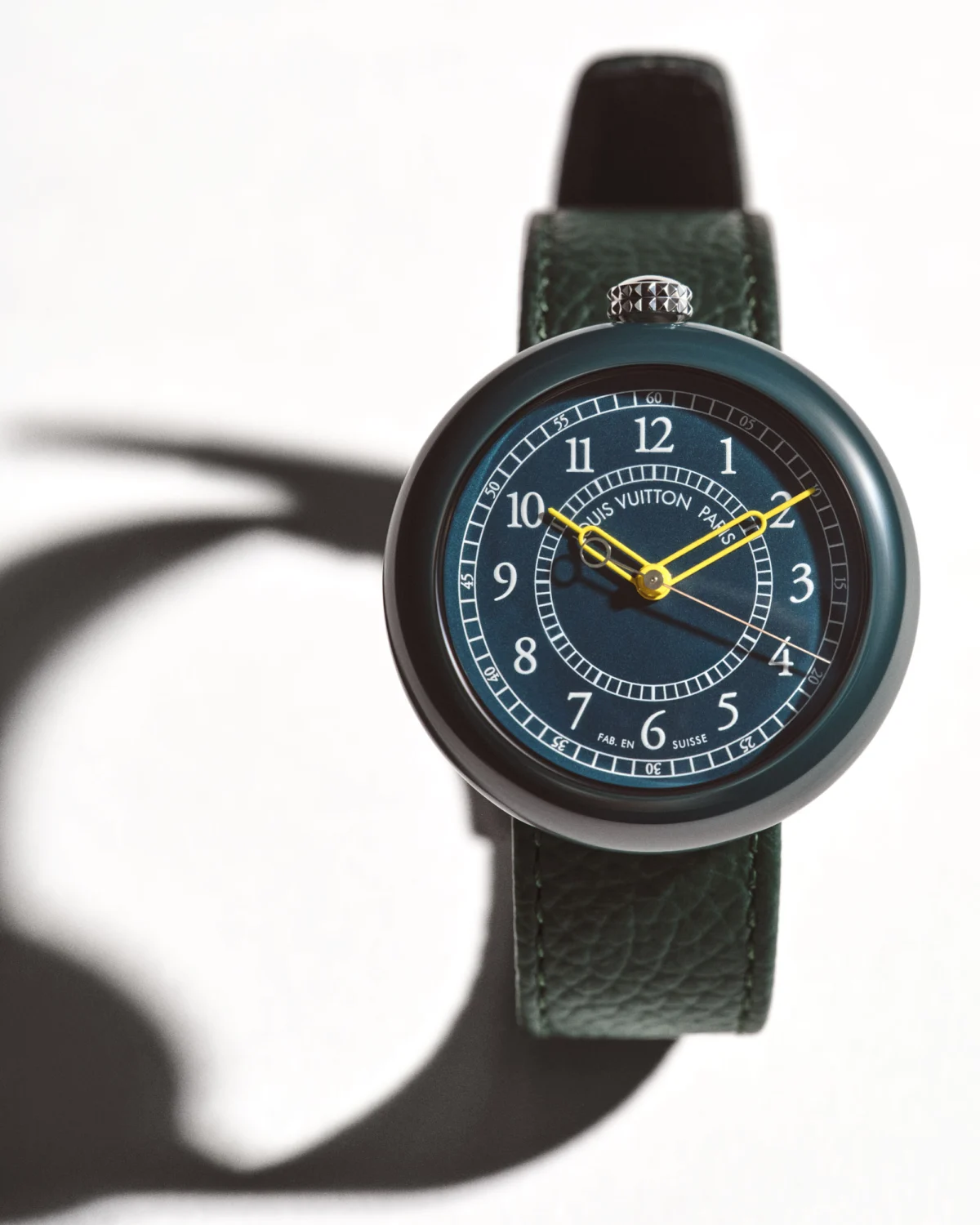
The modern iteration of the Monterey maintains the 37mm case diameter established by the original 1988 models, preserving the proportions that defined the series’ initial appeal. However, the move to ceramic represents a significant technical upgrade. Ceramic, favored in modern watchmaking for its scratch resistance, lightweight properties, and hypoallergenic nature, offers a contemporary durability that far exceeds traditional stainless steel or precious metals.

The watch is available in both black and green ceramic finishes. While the diameter remains consistent with historical models, the case thickness has been increased to 11mm. This 2mm adjustment from the original design is a direct consequence of the internal transition from a quartz movement to a mechanical automatic caliber. Despite this slight increase in volume, the watch retains a low-profile silhouette, ensuring it remains compatible with formal attire—a critical requirement for the luxury demographic.
Technical Specifications: The LFT MA01.02 Caliber
The most profound change in the new Monterey is the integration of the LFT MA01.02 automatic movement. This caliber is manufactured by La Fabrique du Temps, the prestigious Geneva facility acquired by Louis Vuitton, which serves as the brand’s heartbeat for high-end watchmaking.

The movement is composed of 174 individual components and is designed with a high level of aesthetic finish, reflecting the standards of traditional Genevan watchmaking. Notable features include:
- 18k Rose Gold Rotor: Adorned with a V-notched design, polished edges, and an engraved Louis Vuitton monogram.
- Decoration: The mainplate features circular graining (perlage), while bridges are sandblasted with micro-sandblasted edges.
- Component Selection: Colorless sapphires have replaced traditional rubies, a choice that emphasizes the brand’s commitment to a specific, monochromatic aesthetic.
- Poinçon LFT: The movement is stamped with the LFT maker’s mark, ensuring authenticity and traceability of its provenance within the manufacture.
While the movement displays significant decorative prowess, industry analysts have noted its performance metrics. Operating at a standard frequency of 4Hz (28,800 vibrations per hour), the movement offers a 45-hour power reserve. In the context of modern horological advancements, where many contemporary manufacturers are pushing toward 60-to-72-hour power reserves, the 45-hour figure suggests that the focus of this particular caliber remains squarely on aesthetic elegance and brand-specific integration rather than extended autonomy.

Market Positioning and Strategic Implications
Priced at $22,900 USD, the Monterey Ceramic occupies the upper echelon of the luxury market. This price point serves a dual purpose: it acts as a barrier to entry, reinforcing the brand’s exclusivity, and it positions Louis Vuitton in direct competition with established watchmakers such as Cartier, Piaget, and Chopard.
The decision to house this movement in a solid caseback reflects a "stealth wealth" philosophy. Unlike many manufacturers who utilize exhibition casebacks to showcase movement finishing, Louis Vuitton has opted for a discreet presentation. This signals that the primary value proposition for the consumer is the internal engineering and the brand’s commitment to craftsmanship, rather than the external display of mechanical complexity.

The Broader Impact on the Watch Industry
Louis Vuitton’s aggressive expansion into watchmaking carries broader implications for the luxury sector. By investing in its own manufacturing facilities and reissuing archival designs, the company is successfully converting its brand loyalists into watch enthusiasts.
The strategy effectively bridges two worlds: the high-fashion consumer who prioritizes brand identity and the watch aficionado who values technical provenance. Industry experts observe that while many purists may remain skeptical of "fashion watches," the consistent investment from Louis Vuitton into La Fabrique du Temps is gradually changing this narrative. The Monterey acts as a gateway; it invites a demographic that may have started with leather goods or accessories to engage with the intricacies of mechanical timekeeping.

Chronology of the Monterey Re-release
- 1988: Original Louis Vuitton Monterey (LV I and LV II) is launched in collaboration with Gae Aulenti.
- October 2025: Louis Vuitton officially announces the revival of the Monterey collection, emphasizing the historical significance of the original design.
- September 2026: The brand unveils the Monterey Ceramic collection, introducing high-performance ceramic materials and the in-house LFT MA01.02 automatic movement.
- Current Status: The collection is now available through select Louis Vuitton flagship boutiques and authorized distribution channels, accompanied by a dedicated digital presence on the brand’s official website.
Future Outlook
The success of the Monterey Ceramic will likely be measured by its longevity in the brand’s lineup and the reception of the LFT movement in subsequent models. By balancing a "naive" or minimalist design—a nod to the 1980s original—with the heavy-duty engineering of modern ceramics and Swiss-made automatic movements, Louis Vuitton is creating a distinct identity.
For the wider watch industry, the Monterey represents a shift toward consolidation. As luxury groups continue to acquire independent movement manufacturers, the "in-house" designation is becoming a baseline requirement for high-end price points. Louis Vuitton’s ability to leverage its Geneva-based facility ensures that, regardless of market fluctuations, it maintains the infrastructure necessary to compete at the highest levels of the industry.

Ultimately, the Monterey Ceramic is an indicator of the brand’s long-term trajectory. It is a calculated move to establish that Louis Vuitton is not merely a label that puts its name on products, but a manufacturer that participates in the heritage and technical evolution of timekeeping. As the brand continues to refine its mechanical offerings, the focus will likely remain on this intersection of iconic design and proprietary innovation, further cementing its role as a significant player in the global luxury watch market.