











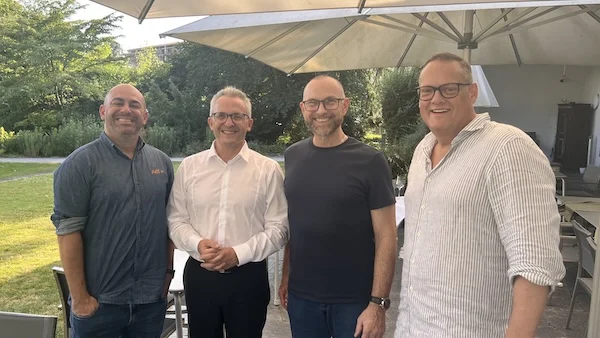
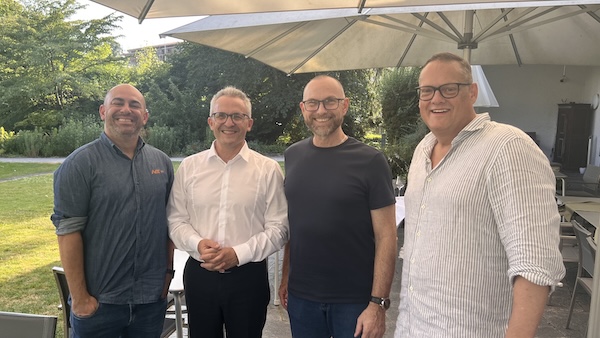
In a significant move aimed at fortifying the South American textile manufacturing landscape, Swiss-based Benninger AG and Brazil’s Grupo NS have officially announced a strategic partnership to provide comprehensive wet processing solutions to the Brazilian market. This collaboration, finalized on July 20, 2026, unites the high-end engineering capabilities of Benninger with the localized expertise and service infrastructure of Grupo NS. The alliance is designed to address the evolving needs of Brazilian textile producers who are increasingly seeking to balance high-volume production with stringent sustainability standards and operational efficiency.
The partnership arrives at a critical juncture for the Brazilian textile industry, which remains one of the largest and most complex in the Americas. By combining Benninger’s 160-year legacy in textile machinery with Grupo NS’s deep-rooted presence in the regional market, the two entities aim to deliver a "total solution" approach. This includes not only the delivery of state-of-the-art machinery but also specialized process knowledge, automation support, and a robust local supply chain for spare parts and technical maintenance.
Strategic Objectives and Market Synergy
The primary objective of this cooperation is to bring Benninger’s complete technological portfolio closer to Brazilian manufacturers, reducing the barriers to entry for advanced European engineering. For decades, Benninger has been recognized as a global leader in continuous and discontinuous wet processing. However, the geographical distance and the specific regulatory and logistical environment of Brazil have often necessitated a more localized touch.
Grupo NS, headquartered in Blumenau—a vital hub for the Brazilian textile sector—provides the necessary proximity. Through its various divisions, including NS Química, the group has established a reputation for technical excellence in chemical applications and industrial service. By integrating Benninger’s hardware with Grupo NS’s service capabilities, the partnership offers a seamless transition for mills looking to upgrade their facilities.
Rolf Erik Schoeler, Global Head of Sales and Marketing at Benninger AG, emphasized that the goal is to empower customers to improve quality and productivity. He noted that the right technology, when paired with strong local support, allows manufacturers to achieve a competitive edge in a globalized market where speed-to-market and fabric quality are paramount.
Technological Integration and Product Portfolio
The collaboration introduces a wide array of specialized technologies to the Brazilian market, covering every stage of wet processing. Benninger’s philosophy focuses on the "integrated plant" rather than isolated machinery, ensuring that every component—from fabric handling to chemical dosing—works in harmony.
Singeing and Surface Preparation
One of the cornerstone technologies being promoted is the SingeRay singeing system. In the production of high-quality woven and knitted fabrics, singeing is the essential first step to ensure a clean, uniform surface. The SingeRay system is designed for reproducible results and high gas efficiency, which provides a stable foundation for subsequent dyeing and finishing. By achieving a uniform singe, manufacturers can significantly reduce the risk of pilling and uneven dye uptake.
Bleaching, Washing, and Mercerizing
For continuous processing, the partnership highlights Benninger’s expertise in washing and mercerizing. Mercerization, a process that increases the luster and dye affinity of cotton, requires precise control over tension and caustic concentration. Benninger’s solutions are engineered to handle various fiber blends while minimizing the consumption of water and chemicals. The washing units are designed with high-turbulence technology, ensuring that impurities are removed efficiently with the lowest possible water footprint.
Dyeing Excellence: CPB, Jet, and Jigger
In the realm of dyeing, the focus is on achieving a high "first-time-right" (FTR) rate. The Cold Pad Batch (CPB) dyeing method is particularly relevant for the Brazilian market due to its low energy requirements and high color consistency. For discontinuous dyeing, Benninger’s jet and jigger machines offer flexibility for smaller batches and delicate fabrics. These machines are equipped with advanced automation and process control systems that allow for precise color matching across different production batches.
The Economic Context of the Brazilian Textile Industry
Brazil’s textile and apparel sector is a cornerstone of the national economy. According to data from the Brazilian Textile and Apparel Industry Association (ABIT), the country is among the world’s top five producers of textiles and the fourth-largest producer of denim. The industry employs millions and encompasses a complete production chain, from fiber cultivation to retail.
However, the industry faces significant challenges, including rising energy costs, fluctuating chemical prices, and intense competition from Asian imports. To remain competitive, Brazilian mills must transition toward Industry 4.0 standards—incorporating automation, data-driven decision-making, and resource-efficient machinery.
The Benninger-Grupo NS partnership is positioned to facilitate this transition. By providing local access to automation support and technical training, the partnership helps mills reduce downtime and optimize their resource consumption. In an era where "green" certifications are becoming a prerequisite for international trade, the ability to monitor and reduce water and energy usage is a significant financial and reputational advantage.
Chronology of Innovation and Development
The partnership is the result of a multi-year dialogue between the two organizations, aimed at identifying the specific gaps in the Brazilian service market.
- 1859: Benninger AG is founded in Switzerland, beginning a century and a half of innovation in textile machinery.
- Late 20th Century: Benninger establishes itself as a global leader in mercerizing and continuous dyeing.
- Early 2000s: Grupo NS expands its footprint in Brazil, focusing on chemical solutions and technical services for the textile finishing sector.
- 2020–2025: Increased demand in Brazil for sustainable manufacturing technologies leads to a surge in interest for European high-efficiency machinery.
- July 20, 2026: Official signing of the cooperation agreement in Uzwil and Blumenau, marking the start of a new era for local customer support.
Environmental Sustainability and Resource Management
A major pillar of the Benninger and Grupo NS value proposition is the reduction of the environmental footprint of textile production. Wet processing is traditionally the most resource-intensive stage of textile manufacturing, requiring vast amounts of water and thermal energy.
Benninger has developed several closed-loop systems that the partnership will now actively promote in Brazil:
- Caustic Recovery Plants (ERP): These systems allow manufacturers to recover and reuse up to 95% of the caustic soda used in mercerizing, drastically reducing chemical costs and wastewater neutralization requirements.
- Heat Recovery Systems: By capturing waste heat from effluent water, these systems pre-heat fresh process water, leading to substantial savings in natural gas or steam consumption.
- Water Recycling: Advanced filtration and treatment modules allow for the reuse of wash water, a critical feature for mills located in water-stressed regions of Brazil.
Rogério Esau, Director of NS Química, noted that the chemical division’s expertise complements these mechanical solutions. "Our understanding of the chemical interactions during the dyeing and finishing process allows us to help customers optimize their recipes. When you combine the right chemicals with Benninger’s precision machinery, the savings in water and energy are measurable and immediate," Esau stated.
Official Responses and Industrial Implications
Industry analysts view this partnership as a proactive response to the shifting global supply chain. As retailers in Europe and North America demand greater transparency and lower carbon footprints from their suppliers, Brazilian manufacturers must prove their sustainability credentials.
The reaction from major Brazilian textile producers has been largely positive. Inferred statements from industry leaders suggest that the availability of local, high-level technical support for Swiss machinery will encourage more firms to invest in capital expenditures (CAPEX) for modernization. Previously, the "service gap"—the time and cost associated with bringing European technicians to South America—was a deterrent for some mid-sized mills.
The partnership also has implications for the Mercosur trade bloc. As Brazil modernizes its textile infrastructure, it strengthens its position as the premier textile hub in South America, potentially increasing its export volume to neighboring countries like Argentina, Paraguay, and Uruguay.
Conclusion: A Long-Term Technical Partnership
The alliance between Benninger AG and Grupo NS is more than a distribution agreement; it is a long-term commitment to the technical advancement of the Brazilian textile industry. By bridging the gap between European engineering and South American market dynamics, the two companies are providing a roadmap for sustainable, high-quality production.
As the partnership rolls out, the focus will remain on delivering "measurable value." This includes conducting thorough project evaluations to select the right technology for specific mill needs, providing hands-on training for local operators, and ensuring that spare parts are available on-demand to minimize production halts. In a market as dynamic as Brazil’s, this combination of global innovation and local reliability is set to redefine the standards of textile wet processing for years to come.