











The digital commerce landscape is witnessing a significant shift as Phia, a fashion-focused search engine and shopping platform, secures $8 million in seed funding to scale its operations. Founded by Phoebe Gates, daughter of Microsoft co-founder Bill Gates, and her Stanford University roommate Sophia Kianni, the startup has rapidly positioned itself as a central player in the burgeoning "fashion tech" sector. Describing itself as the "Google Flights for fashion," Phia offers a mobile application and browser extension designed to aggregate pricing data across hundreds of millions of items, allowing consumers to compare costs and availability in real-time.
The $8 million seed round, which was completed in a remarkably brief window of three and a half weeks, was led by the venture capital titan Kleiner Perkins. The investment roster reflects a strategic blend of traditional Silicon Valley capital and high-profile industry influence, featuring participation from Fanatics CEO Michael Rubin, Spanx founder Sara Blakely, former Meta COO Sheryl Sandberg, and cultural icons Kris Jenner and Hailey Bieber. This convergence of venture expertise and retail authority underscores a growing institutional belief in the power of AI-driven personalization to reshape the $1.7 trillion global apparel market.
The Evolution of Phia: From Stanford Dorms to Market Disruption
The genesis of Phia traces back to the friendship between Gates and Kianni, who met at Stanford University two years ago. Their partnership was forged through a shared interest in the intersection of technology and consumer behavior. Within a year of meeting, the duo began developing their first product: a desktop Chrome extension aimed at promoting sustainability by helping users find secondhand alternatives while browsing primary retail sites.
However, early iterations of the software were met with technical challenges. Kianni noted that the initial product was "pretty buggy," and more importantly, user feedback indicated a misalignment with the shopping habits of their primary demographic. Data revealed that their peers were largely eschewing desktop computers for mobile devices and were more concerned with immediate price transparency than with secondhand comparisons.
Recognizing this shift, the founders executed a strategic pivot. They moved away from a desktop-centric model to a mobile-first application, refocusing the core value proposition on comprehensive price comparison and seamless discovery. This agility—characteristic of modern tech startups—allowed Phia to launch its current iteration in April 2025. In the months since its debut, the platform has seen explosive growth, amassing approximately 500,000 users.
Technological Infrastructure and the "Google Flights" Model
At its core, Phia functions as a massive data aggregator. The app’s newly improved search engine indexes more than 300 million fashion items from a diverse array of retailers. By providing a centralized dashboard, the app eliminates the "fragmentation friction" that currently plagues online shopping, where consumers often navigate dozens of tabs to find the best deal on a specific garment.
The "Google Flights" comparison is apt because Phia does for apparel what travel aggregators did for the airline industry: it brings transparency to a market characterized by volatile pricing and disparate inventory. The platform uses advanced algorithms to track price drops, monitor stock levels across different sizes, and provide a unified view of a user’s purchase history and search preferences.

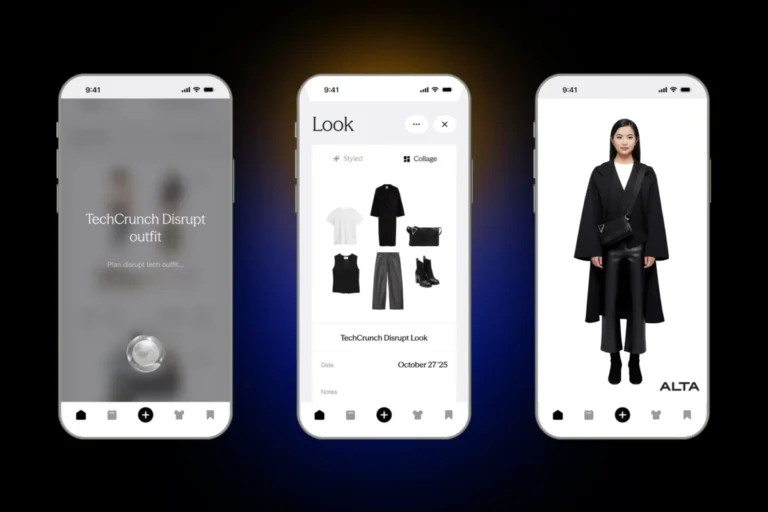
The integration of artificial intelligence is central to this mission. As AI continues to permeate the e-commerce sector, Phia is leveraging these tools to enhance personalization. The goal is to move beyond simple keyword searches toward a proactive "personalized agent" model. Gates envisions a future where the app can sync with a user’s digital calendar to suggest purchases for upcoming events, advise on which items to keep or resell based on market trends, and automate the more tedious aspects of wardrobe management.
Strategic Investment and the Power of Networks
The speed and composition of Phia’s seed round are indicative of the founders’ significant social and professional capital. While Phoebe Gates brings a background steeped in the traditions of tech innovation, Sophia Kianni arrived at the venture with an established reputation as a global activist. Kianni is the founder of Climate Cardinals, a nonprofit dedicated to translating climate information into over 100 languages, and has served as the youngest advisor to the United Nations.
This dual-threat leadership attracted early interest from Soma Capital, which reached out to Kianni via LinkedIn after noticing the product’s initial traction. Soma Capital provided one of the first institutional checks and facilitated introductions to the broader venture community, eventually leading to the partnership with Kleiner Perkins.
The inclusion of investors like Michael Rubin and Sara Blakely provides Phia with more than just capital; it offers a direct line to the heights of the retail and manufacturing worlds. Michael Rubin, whose company Fanatics has revolutionized sports merchandising through vertical integration and tech-first logistics, expressed confidence in the founders’ vision. In a statement, Rubin emphasized that the power of technology to transform online shopping is still in its early stages and that Phia represents a "real innovation" in making the experience smarter and more accessible.
Gen Z Marketing and the "Open Source" Startup Philosophy
Phia’s growth strategy is deeply rooted in the cultural nuances of Generation Z. Unlike traditional tech companies that rely on polished, corporate-facing PR campaigns, Gates and Kianni have adopted a "digital-first" and highly transparent approach to brand building.
A cornerstone of this strategy is their podcast, "The Burnouts," which launched alongside the app in April. The podcast has garnered nearly half a million followers on Instagram and has generated over 10 million views across various social media platforms. By discussing the hurdles, failures, and technical "stumbles" they encounter while building Phia, the founders have created an "open source" narrative of entrepreneurship. This transparency fosters a sense of community and loyalty among their audience, particularly young women looking to enter the tech and business sectors.
Furthermore, the company utilizes modern AI tools, such as ChatGPT, to streamline its marketing efforts and create viral content. This lean approach extends to their hiring practices; the current team of 12 was largely recruited through social media channels, bypassing traditional headhunters in favor of direct engagement with their user base.
Market Context and Competitive Landscape
Phia enters a market that is increasingly crowded with AI-powered shopping assistants and fashion discovery platforms. Competitors such as Lyst, Pinterest, and even Google’s own shopping tab offer similar functionalities. However, Phia’s advantage lies in its specific focus on the "price comparison" niche combined with a social-led discovery model.

The fashion industry is currently grappling with a shift in consumer sentiment. While "fast fashion" continues to dominate in terms of volume, there is a growing demand for value and efficiency. Consumers are increasingly price-sensitive, and the ability to find the lowest price for a specific designer item across multiple platforms—including luxury boutiques and mass-market retailers—is a powerful draw.
The success of Phia also reflects a broader trend in venture capital where "creator-led" or "founder-led" brands are outperforming traditional models. By positioning themselves as the primary faces of the brand, Gates and Kianni are able to bypass traditional customer acquisition costs, leveraging their existing platforms to drive organic growth.
Future Implications and Scalability
With $8 million in fresh capital, Phia plans to focus on talent acquisition and technical refinement. The founders are looking to expand their engineering team to further develop the "personalized agent" capabilities of the app. This next phase of development will likely involve deeper integrations with retailer APIs and the implementation of more sophisticated machine learning models to predict consumer trends.
The long-term implication of Phia’s success could be a fundamental change in how retailers interact with customers. If a significant portion of the shopping journey begins on an aggregator like Phia, retailers may lose some control over the customer relationship, forcing them to compete more aggressively on price and transparency.
For Gates and Kianni, the journey is as much about the process as it is about the product. "There’s so much more that we still need to do, so much more we want to learn and grow," Kianni stated. By building their company in the public eye, they are not only creating a tool for modern shoppers but also providing a blueprint for the next generation of digital entrepreneurs.
As Phia continues to scale, it will face the perennial challenges of the tech industry: maintaining user privacy in an age of data-driven personalization, managing the high costs of customer retention, and staying ahead of the rapid pace of technological change. However, with a robust capital cushion, a high-profile board of advisors, and a rapidly growing user base, Phia is well-positioned to lead the next wave of innovation in the global fashion e-commerce market.