







The Spanish singer-songwriter Rosalía has captured the attention of the fashion industry this week in New York City, debuting a series of "balletcore" ensembles that bridge the gap between her theatrical stage presence and contemporary street style. These public appearances follow the launch of her 2026 Lux World Tour, a production that has been noted for its heavy reliance on classical dance motifs and avant-garde costuming. By integrating elements such as tutus, fitted bodices, and performance-grade materials into her daily wardrobe, the artist is signaling a deliberate shift in her visual identity, one that translates the high-concept themes of her music into the public sphere.
The Lux World Tour: A Catalyst for Visual Change
The current aesthetic evolution can be traced directly to the creative direction of the Lux World Tour. In preparation for the 2026 global circuit, Rosalía and her creative team developed a visual narrative centered on the juxtaposition of traditional femininity and modern industrialism. This is most prominently displayed during the performance of her song Porcelana, where the stage design and choreography evoke a surrealist ballet.
To achieve this, the artist collaborated with Jonathan Anderson for Dior, creating a series of custom stage looks that utilize technical fabrics to mimic the movement of traditional dance wear. These costumes were designed to withstand the rigors of a high-energy world tour while maintaining the delicate silhouette of a ballerina. Industry analysts suggest that this partnership with Dior has been instrumental in refining Rosalía’s image, moving her away from the "Motomami" era’s leather-heavy, biker-inspired look toward a more ethereal yet structured aesthetic.
The tour’s wardrobe, which includes architectural tutus and precision-cut leotards, has set a precedent for her 2026 appearances. Observers note that it is rare for a performer to maintain such a strict adherence to a tour’s visual theme in their private life, but Rosalía’s recent outings in Manhattan indicate a commitment to this new "ballet-punk" hybrid.

Technical Breakdown: The Yasmina Atta Custom Look
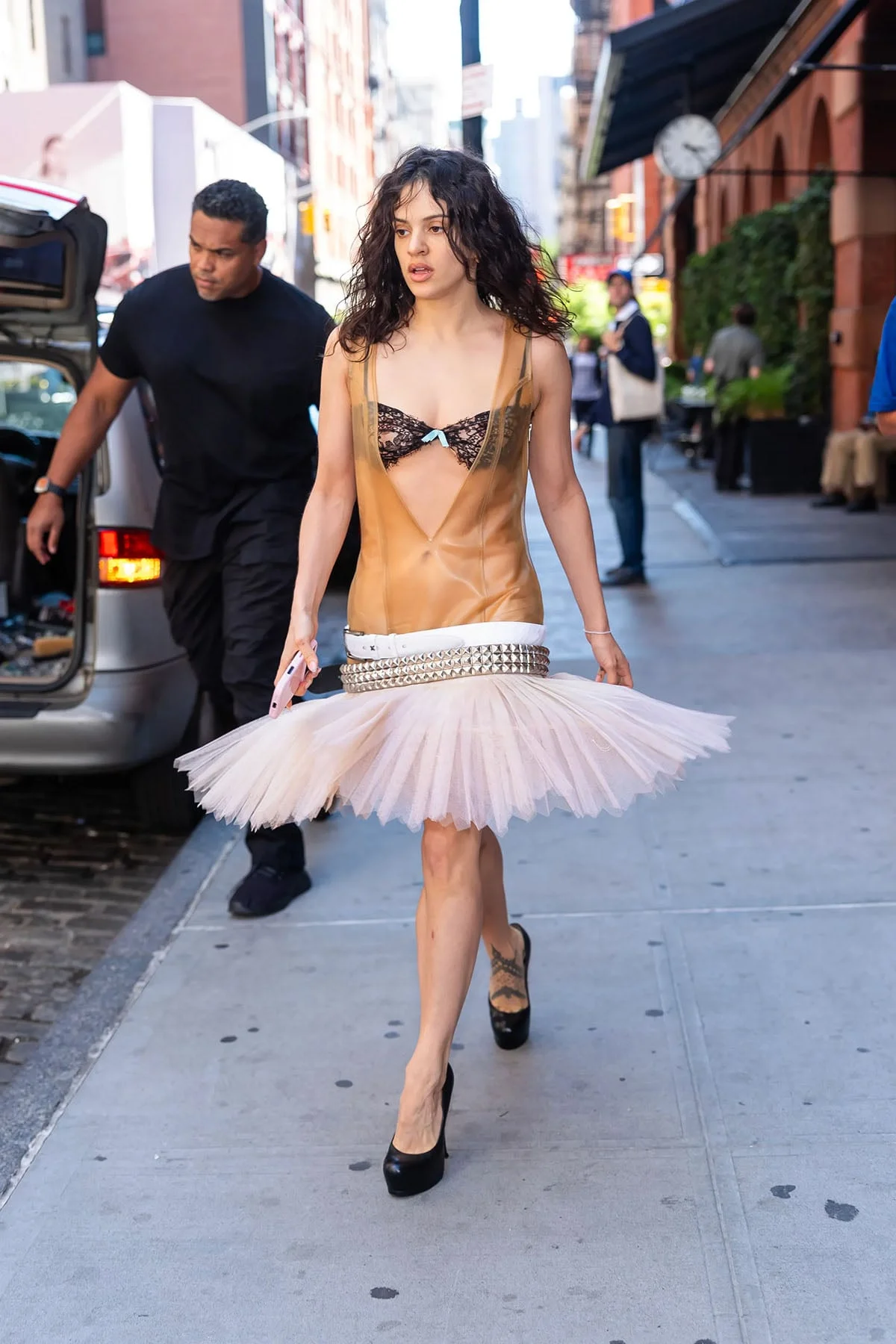
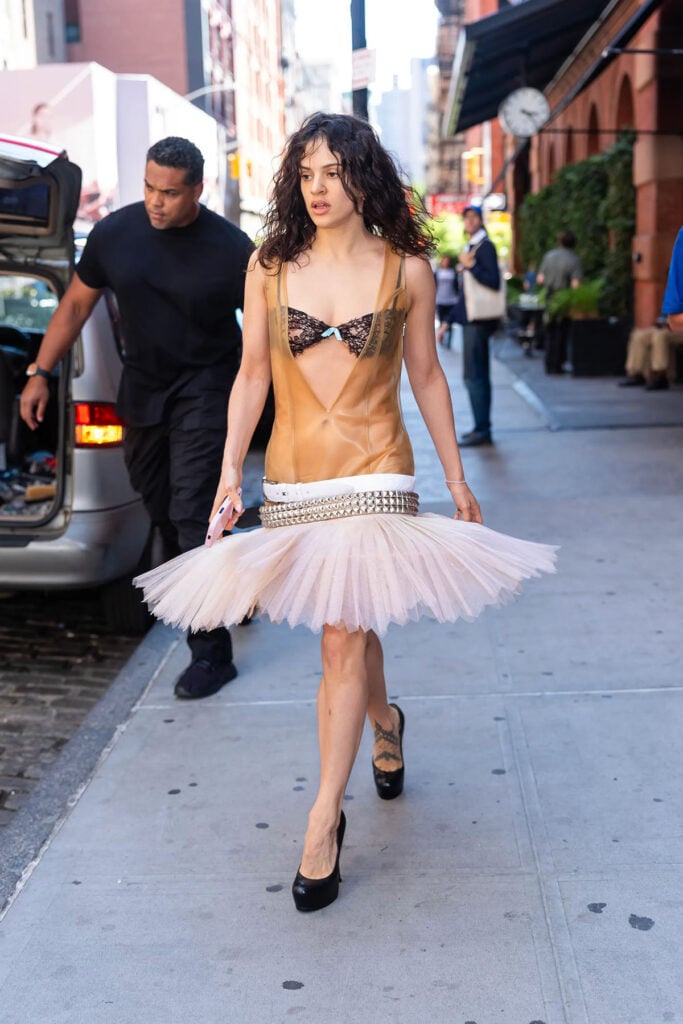
The first significant manifestation of this trend in her street style occurred earlier this week when Rosalía was photographed wearing a custom dress by Nigerian designer Yasmina Atta. The garment serves as a masterclass in textural contrast, combining several disparate elements into a cohesive statement piece.
The upper portion of the dress features a transparent latex bodice, a material often associated with subculture fashion rather than classical dance. This choice provides a modern, "hard" edge to the look, which is further emphasized by a visible bra and a pair of double white leather belts adorned with silver studs. The lower half of the dress, however, pivots sharply toward the balletic. A drop-waist tutu skirt in voluminous white tulle creates the classic "bell" shape associated with the Romantic era of ballet.
Yasmina Atta, a designer known for her experimental silhouettes and cross-cultural influences, appears to have tailored the piece to reflect Rosalía’s penchant for subverting expectations. The inclusion of platform footwear—a staple of the singer’s wardrobe—adds a verticality that complicates the traditional lines of the tutu. While the shoes deviate from the "balletcore" requirement of flat slippers or pointe-inspired ribbons, they align with the singer’s established "attitude-heavy" persona.
The Stella McCartney Influence: A Softer Approach to Balletcore
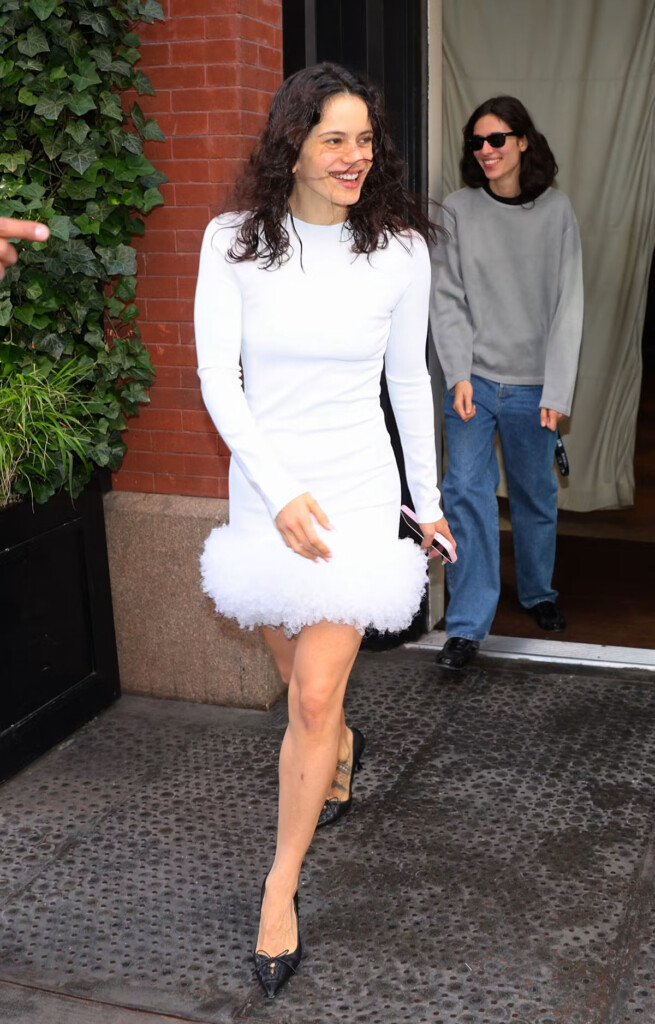
Following the avant-garde Yasmina Atta appearance, Rosalía opted for a more refined, though no less thematic, look the following day. She was seen in a mini dress from Stella McCartney’s Spring 2026 collection, a piece that further solidified the tutu as her current signature item.
The McCartney dress represents a "softer" interpretation of the trend. It features a fitted, minimalist bodice that flares into a cloud-like tutu hem. Unlike the Atta dress, which relied on the tension between latex and tulle, the McCartney piece focuses on volume and silhouette. The exaggerated hemline serves as a direct reference to the "tutu degas," a shorter skirt style that became popular in the late 19th century.
This choice of designer is also significant from a corporate standpoint. Stella McCartney’s Spring 2026 collection has been praised for its focus on sustainable materials and "whimsical luxury." By choosing this piece, Rosalía aligns herself with high-fashion sustainability while maintaining her current thematic consistency. Stylist Jose Carayol, who has been credited with orchestrating these looks, appears to be focusing on "elevated repetition"—using the tutu as a recurring motif to build a recognizable brand image for the Lux Tour era.
The Evolution of Balletcore: From Stage to Street
"Balletcore" as a fashion movement has seen various iterations over the last decade, but its 2026 revival is characterized by a more aggressive, structural approach. Traditionally, the trend involved soft pinks, silk ribbons, and wrap sweaters—elements that romanticized the "off-duty ballerina" look. However, Rosalía’s version is notably different.
Data from fashion analytics firms suggest that search interest in "structural tutus" and "ballet-inspired street wear" has risen by 42% since the start of the Lux World Tour. This indicates that Rosalía is not just following a trend but is actively shaping its current trajectory. By mixing the tutu with elements like studs, latex, and heavy platforms, she is moving the aesthetic away from its "coquette" origins and toward something more aligned with avant-garde editorial fashion.
Historically, the tutu has been used by pop icons to signal a break from convention. From Madonna’s "Like a Virgin" era to Björk’s infamous 2001 Academy Awards swan dress, the garment has often been employed to challenge notions of "appropriate" evening or street wear. Rosalía’s 2026 interpretation follows this lineage, using the garment as a tool for theatrical self-expression in a non-theatrical environment.
The Role of Stylist Jose Carayol
The consistency of Rosalía’s recent wardrobe is largely attributed to her collaboration with stylist Jose Carayol. Carayol has been praised by industry insiders for his ability to curate wardrobes that feel like a natural extension of an artist’s musical output. In the case of the New York appearances, the styling choices reflect a meticulously planned narrative.
Carayol’s strategy appears to involve a "deconstruction" of the ballet uniform. Instead of presenting a literal interpretation of a dancer, he selects pieces that isolate specific elements—such as the volume of the skirt or the compression of the bodice—and pairs them with "street" staples. This approach ensures that while the references are clear, the outfits do not feel like costumes. The decision to maintain the ballet theme across multiple days in New York suggests a "residency" approach to fashion, where the artist’s public life becomes a continuous performance.
Broader Implications for the Fashion Market
The impact of Rosalía’s fashion choices extends beyond the red carpet and paparazzi photos. Luxury retailers and fast-fashion brands often look to the singer as a bellwether for upcoming consumer trends. The "Rosalía effect" has previously boosted the sales of oversized leather jackets and motorcycling gear; it is expected that the "Lux Tour" aesthetic will have a similar impact on the tulle and corset markets.
Market analysts predict that the Spring/Summer 2027 seasons will likely see an influx of "utility tutus" and "performance-latex" hybrids as brands attempt to capitalize on the visibility of the Lux Tour. Furthermore, the prominence of Nigerian designer Yasmina Atta in these high-profile outings highlights a growing trend of major celebrities using their platform to elevate independent, global designers, thereby diversifying the luxury landscape.
Conclusion: A Fixed Point in a Fluid Career
As Rosalía continues her New York residency and moves forward with the Lux World Tour, her commitment to the balletic aesthetic appears unwavering. Whether this is a permanent shift or a temporary fixation tied to the Porcelana performance, it demonstrates her unique ability to command the fashion narrative.
By refusing to wear these unconventional pieces timidly, she validates the "tutu with attitude" as a viable mode of modern dress. The fusion of Jonathan Anderson’s high-fashion architecture, Yasmina Atta’s experimentalism, and Stella McCartney’s sustainable luxury creates a multi-faceted portrait of an artist at the height of her creative influence. In the landscape of 2026 pop culture, Rosalía is not merely wearing clothes; she is constructing a visual world that is as complex and choreographed as her music.