







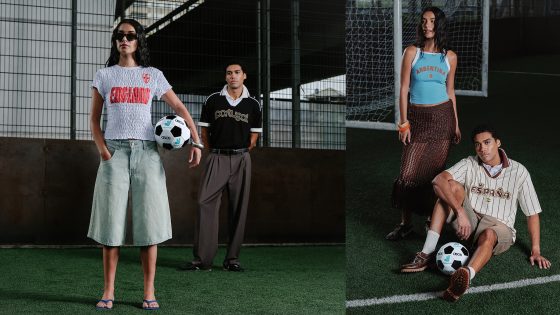
In a significant move poised to redefine consumer expectations for fashion e-commerce, online retail giant Asos has announced a strategic partnership with rapid delivery platform Deliveroo. Commencing on 17 June 2026, precisely as the global spectacle of the World Cup kicks off, this collaboration aims to provide customers in Greater London and Manchester with an unprecedented service: the delivery of selected Asos Design football shirts in as little as 25 minutes. This initiative not only capitalises on the immediate demand generated by major sporting events but also marks a pivotal moment in the ongoing evolution of quick commerce, extending its reach beyond groceries and prepared meals into the fast-paced world of fashion.
The World Cup Catalyst: Tapping into Immediate Demand
The timing of this partnership is no coincidence. The FIFA World Cup, a quadrennial global football tournament, represents one of the largest sporting events worldwide, drawing billions of viewers and generating immense enthusiasm for merchandise, particularly national team jerseys and related apparel. The 2026 tournament, hosted across North America, is anticipated to break previous viewership and retail sales records, with analysts projecting global merchandise sales to exceed $10 billion during the tournament period alone. For fashion retailers, the challenge often lies in converting this fleeting enthusiasm into immediate purchases, especially for items worn during live matches or celebratory events.
Traditional e-commerce delivery timelines, typically ranging from 24 hours to several days, often fail to capture the spontaneity inherent in major cultural moments like the World Cup. Fans seeking to don their team’s colours for a pivotal match, a viewing party, or an impromptu celebration have historically been limited to physical retail stores for instant gratification. The Asos-Deliveroo alliance directly addresses this gap, offering a seamless digital pathway to immediate product acquisition, transforming impulse into instant ownership. This model not only enhances customer convenience but also positions Asos to capture a larger share of the event-driven retail market by eliminating the waiting period that can often lead to abandoned carts or delayed purchases.
The Rise of Quick Commerce: A New Paradigm for Retail Logistics
The partnership between Asos and Deliveroo is a testament to the accelerating trend of "quick commerce" (q-commerce), a sector that has rapidly matured from its origins in food delivery to encompass a broader array of consumer goods. Pioneered by companies like Deliveroo, Uber Eats, and Just Eat Takeaway, the q-commerce model leverages hyper-local fulfilment centres, sophisticated logistics algorithms, and a vast network of gig-economy riders to deliver products within minutes, typically under an hour.
Initially, q-commerce focused heavily on groceries, convenience items, and pharmaceuticals, driven by consumer demand for speed and convenience, particularly during and after the global health crisis of the early 2020s. Market research firm Statista projected the global quick commerce market to reach an estimated value of over $200 billion by 2027, demonstrating its explosive growth and increasing penetration into diverse retail categories. This expansion has been fuelled by technological advancements in inventory management, route optimisation, and real-time tracking, all contributing to a highly efficient last-mile delivery ecosystem.
The move by Asos represents a significant leap for q-commerce into the fashion sector, a segment traditionally reliant on more complex sizing, fit, and returns processes. While the initial offering is focused on a specific, less size-sensitive product category (football shirts), it sets a precedent for how rapid delivery could be integrated into broader fashion retail strategies, potentially transforming consumer expectations for apparel purchases. This strategic pivot highlights the increasing pressure on traditional e-commerce players to innovate their fulfilment capabilities to remain competitive in an increasingly instant-gratification-driven market.
Strategic Imperatives: Why Asos and Deliveroo are Partnering
For Asos, a global leader in online fashion retail, this partnership is multi-faceted. Firstly, it enhances their competitive edge. In a crowded e-commerce landscape where speed and convenience are paramount, offering 25-minute delivery for a highly sought-after product category during a peak demand period positions Asos at the forefront of retail innovation. It allows them to differentiate their service beyond product selection and price, focusing on the customer experience itself. Secondly, it serves as a powerful brand visibility and acquisition tool. The novelty of rapid fashion delivery, particularly for World Cup merchandise, is likely to generate significant media attention and attract new customers who value immediacy.
Furthermore, the collaboration allows Asos to experiment with new fulfilment models without significant upfront investment in building out its own rapid delivery infrastructure. By leveraging Deliveroo’s existing network of riders, dark stores (or micro-fulfilment hubs), and logistical expertise in Greater London and Manchester, Asos can test the viability and scalability of q-commerce for fashion in key urban centres. This agile approach enables them to gather valuable data on consumer behaviour, operational efficiencies, and potential for expansion into other product lines or geographies. It aligns with a broader trend among e-commerce giants to diversify delivery options, including same-day, next-day, and now, ultra-rapid delivery, to cater to varied customer needs and expectations.
For Deliveroo, the partnership signifies a crucial diversification strategy beyond its core food delivery business. As competition in the food delivery sector intensifies and market saturation concerns grow in some regions, platforms like Deliveroo are actively seeking new revenue streams and opportunities to maximise the utilisation of their extensive logistics network. Expanding into non-food retail, particularly high-value, high-demand categories like fashion, offers a significant growth avenue. The collaboration with a prominent brand like Asos not only validates Deliveroo’s capabilities as a versatile logistics partner but also opens doors to future partnerships with other retailers looking to enter the rapid delivery space. This move also helps Deliveroo compete more effectively with rivals who are also exploring similar expansions into general merchandise, solidifying its position as a leading q-commerce enabler.
Operational Blueprint: How 25-Minute Delivery is Achieved
Achieving 25-minute delivery for physical goods, even for specific items, requires a highly sophisticated operational setup. While specific details of the Asos-Deliveroo model have not been fully disclosed, industry experts infer several key components. Central to the operation will likely be a network of strategically located micro-fulfilment centres or "dark stores" within Greater London and Manchester. These facilities, dedicated solely to online order fulfilment, would stock the specific Asos Design football shirts available for rapid delivery. By positioning inventory closer to the end consumer, the "first mile" of delivery is drastically reduced.
Upon a customer placing an order through the Deliveroo app (or potentially a dedicated section within the Asos app integrated with Deliveroo’s system), the order would be instantly routed to the nearest dark store. There, a dedicated team would quickly pick and pack the item. Simultaneously, Deliveroo’s algorithm would dispatch the closest available rider, optimising for the shortest route and minimal wait times. The rider, often on an electric bicycle or scooter, would then complete the "last mile" delivery to the customer’s doorstep. This entire process relies on seamless technological integration between Asos’s inventory management systems and Deliveroo’s order processing and logistics platform, ensuring real-time stock availability and efficient dispatch.
Challenges inherent in this model include maintaining precise inventory accuracy at each micro-fulfilment hub, managing rider availability and demand fluctuations (especially during peak World Cup match times), and ensuring the delicate handling of fashion items. However, both Asos and Deliveroo have extensive experience in large-scale operations and are well-positioned to address these complexities through advanced data analytics and operational expertise.
Statements and Industry Reactions
Speaking on the partnership, a spokesperson for Asos stated, "This collaboration with Deliveroo marks a thrilling new chapter for Asos, particularly as we embrace the excitement of the World Cup. Our customers consistently seek speed and convenience, and this partnership allows us to deliver iconic Asos Design football shirts directly to their doors in record time. It’s about meeting our customers where they are, when they need us most, and enhancing the overall shopping experience with unparalleled immediacy."
Similarly, a Deliveroo representative commented, "We are incredibly excited to partner with Asos, bringing our rapid delivery expertise to the world of fashion. This initiative demonstrates the versatility of Deliveroo’s platform and our commitment to expanding our offering beyond food. The World Cup provides the perfect backdrop to showcase how quickly and efficiently we can connect customers with the products they love, reinforcing our position as a leading player in the evolving quick commerce landscape."
Retail analysts have largely welcomed the move. Dr. Eleanor Vance, a senior retail analyst at Global Insights Group, observed, "This partnership is a smart strategic play for both Asos and Deliveroo. For Asos, it’s about pushing the boundaries of e-commerce delivery and tapping into the impulse purchase economy, especially around major cultural events. For Deliveroo, it’s a significant diversification that leverages their existing infrastructure and expertise, proving their model is adaptable to non-food items. We anticipate this could be a blueprint for future collaborations between fashion retailers and q-commerce platforms, especially in high-density urban areas where delivery speed is a major competitive differentiator."
Broader Implications and Future Outlook
The Asos-Deliveroo partnership carries significant implications for the broader retail and logistics industries. It underscores the irreversible shift in consumer expectations towards instant gratification, a trend accelerated by the convenience economy. This move could pressure other fashion e-commerce players to explore similar rapid delivery solutions, potentially leading to a widespread adoption of q-commerce models for select fashion categories. Traditional brick-and-mortar stores, which have long held the advantage of immediate product availability, may find their unique selling proposition further eroded by such innovations, necessitating their own strategic responses, such as enhanced click-and-collect services or in-store delivery options.
Furthermore, the expansion of q-commerce into fashion raises questions about sustainability. The environmental impact of frequent, small-batch deliveries, often involving numerous vehicles, is a growing concern. As these models scale, companies will face increasing scrutiny to implement sustainable practices, such as optimising delivery routes, utilising electric vehicle fleets, and consolidating orders where possible. Both Asos and Deliveroo have publicly stated commitments to sustainability, and how these are balanced with the demands of rapid delivery will be a critical area of focus.
Looking ahead, this collaboration could be a testing ground for a wider range of Asos products beyond football shirts. If successful, it might pave the way for rapid delivery of accessories, specific clothing items, or even emergency fashion needs. The data gathered from this World Cup initiative will be invaluable in shaping future strategies for both companies, potentially leading to permanent rapid delivery services for a curated selection of fashion items. The fashion industry, historically slower to adopt radical logistical changes compared to other retail sectors, appears poised for a significant transformation, with speed and immediacy becoming as crucial as style and price. This partnership represents not just a temporary World Cup stunt, but a potential harbinger of the next generation of fashion retail.