










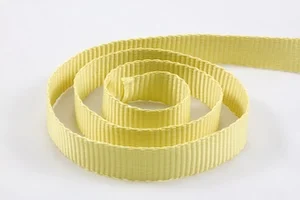
BALLY, Pa. — June 15, 2026 — Bally Ribbon Mills (BRM), a preeminent designer, developer, and manufacturer of highly specialized engineered woven fabrics, has announced a comprehensive showcase of its high-performance Kevlar® webbing and tapes. These products are specifically engineered to meet and exceed the stringent Mil-T-87130 military specification, a standard that dictates the performance requirements for para-aramid intermediate modulus webbing and tape used by the United States Armed Forces. As global defense requirements shift toward lighter, stronger, and more heat-resistant materials, BRM’s latest offerings represent a critical advancement in the textile technology utilized for personnel protection and equipment durability.
For over a century, Bally Ribbon Mills has remained at the forefront of the narrow fabrics industry. By highlighting its Kevlar®-based solutions, the company reaffirms its commitment to providing the defense sector with materials that offer unmatched tensile strength, thermal stability, and environmental resilience. The Mil-T-87130 specification is a benchmark of reliability, ensuring that every inch of webbing can withstand the rigors of combat, high-altitude deployments, and extreme industrial environments.
Engineering Excellence and the Mil-T-87130 Standard
The Mil-T-87130 specification is not merely a guideline but a rigorous set of requirements that ensure consistency and safety across military supply chains. This specification covers various types and classes of webbing made from para-aramid fibers, most notably Kevlar®. To meet this standard, fabrics must undergo exhaustive testing for break strength, elongation, and resistance to environmental degradation.
Bally Ribbon Mills’ adherence to these standards ensures that their webbing provides the necessary structural integrity for critical applications such as parachute harnesses, cargo restraint systems, and personal protective equipment (PPE). The "intermediate modulus" aspect of the specification refers to the fiber’s ability to maintain a high level of stiffness and strength without becoming brittle, a balance that is essential for materials that must absorb sudden kinetic energy, such as those used in fall protection or aircraft arrestor systems.
The reliability of these materials is foundational to military operations. When a paratrooper deploys or a heavy load is air-dropped into a conflict zone, the failure of a single strap or tape can have catastrophic consequences. By manufacturing to Mil-T-87130, BRM provides a level of quality assurance that is vital for mission-critical hardware.
The Scientific Foundation of Aramid Fiber Technology
At the heart of BRM’s high-performance webbing is Kevlar®, a para-aramid synthetic fiber developed by DuPont. Kevlar® is renowned in the materials science community for its unique molecular structure, which consists of many inter-chain bonds that make the material incredibly strong. On a pound-for-pound basis, Kevlar® is five times stronger than steel while remaining significantly lighter.
The manufacturing process at Bally Ribbon Mills involves intricate weaving techniques designed to maximize these inherent properties. By aligning the fibers in specific orientations, BRM engineers can create webbing that resists stretching under load—a property known as low creep—and maintains its shape even after repeated use. This dimensional stability is a primary reason why Kevlar® has replaced traditional materials like nylon or polyester in high-stakes military applications.
Furthermore, Kevlar® possesses a high glass transition temperature, meaning it does not soften or lose its structural integrity until it reaches extreme heat levels. This molecular stability ensures that the webbing remains functional in both the sub-zero temperatures of high-altitude aviation and the blistering heat of desert combat environments.
Thermal Resilience and Fire Safety Protocols
One of the most significant advantages of BRM’s Kevlar® webbing is its inherent resistance to heat and flame. Unlike many synthetic fibers that melt or drip when exposed to fire, Kevlar® is flame-resistant and self-extinguishing. It does not begin to decompose until it reaches temperatures between 800°F and 900°F (427°C to 482°C).
This thermal performance is a critical safety feature for military personnel. In the event of an improvised explosive device (IED) blast or a vehicle fire, equipment that melts can cause severe secondary burns to the skin. Because BRM’s webbing does not melt or drip, it provides an essential layer of protection for soldiers wearing load-bearing vests or using fall-protection harnesses in high-temperature zones.
This characteristic also makes the webbing an ideal component for firefighting gear and emergency rescue equipment. Whether used as a reinforced edge for a fire curtain or as a structural component in a rescue litter, the heat resistance of Mil-T-87130 compliant webbing ensures that the gear will hold together when lives are on the line.
Lightweight Versatility in Modern Tactical Gear
As the modern soldier’s "load-out" becomes increasingly heavy with electronics, batteries, and advanced armor, the need to reduce the weight of peripheral equipment has never been greater. BRM’s Kevlar® webbing offers a solution to this "weight-burden" challenge. By utilizing the high strength-to-weight ratio of para-aramid fibers, designers can use thinner or narrower webbing to achieve the same break strength as bulkier nylon alternatives.
The flexibility of the webbing allows for seamless integration into diverse applications:
- Parachute Reinforcement: Providing the high-tensile "skeleton" for high-speed chutes.
- Load-Bearing Equipment (MOLLE): Ensuring that pouches and gear stay attached to vests under extreme physical stress.
- Personal Protective Gear: Reinforcing helmets, gloves, and boots without adding unnecessary bulk.
- Aerospace Components: Used in the interior of aircraft for securing cargo and as part of safety restraint systems.
The weight savings achieved through the use of advanced textiles directly translate to improved mobility and reduced fatigue for military personnel, which are key factors in operational success.
Historical Context and the Evolution of Military Textiles
The evolution of military webbing has been a journey from natural fibers to advanced synthetics. In the early 20th century, military belts and straps were primarily made of heavy cotton canvas. While durable, cotton was heavy, prone to rot in humid environments, and lacked the strength required for modern aviation.
The introduction of nylon during World War II revolutionized the industry, offering a rot-proof and stronger alternative. However, as the 20th century progressed and combat environments became more complex, the limitations of nylon—specifically its tendency to stretch and melt—became apparent. The development of Kevlar® in the late 1960s and its subsequent adoption into military specifications like Mil-T-87130 marked a turning point.
Bally Ribbon Mills has been a participant in this evolution for over 100 years. Founded in 1923, the company has transitioned from a manufacturer of silk ribbons to a high-tech engineering firm. This deep historical expertise allows BRM to combine traditional weaving craftsmanship with cutting-edge material science, ensuring that they remain a preferred vendor for the Department of Defense (DoD).
The Strategic Role of Domestic Manufacturing and the Berry Amendment
In an era of global supply chain volatility, the importance of domestic manufacturing cannot be overstated. Bally Ribbon Mills’ products are manufactured in the United States, ensuring compliance with the Berry Amendment. This federal regulation requires the Department of Defense to give preference in procurement to apparel, fabrics, and other textile products that are entirely grown, reprocessed, reused, or produced in the United States.
By maintaining its manufacturing base in Bally, Pennsylvania, BRM provides the U.S. military with a secure and reliable supply chain. This domestic focus mitigates the risks associated with international trade disruptions and ensures that the quality of the materials is strictly monitored according to U.S. industrial standards.
Industry analysts suggest that the demand for domestically produced, high-spec textiles will continue to grow as the U.S. military prioritizes "near-peer" readiness. The ability to rapidly prototype and manufacture specialized webbing in the U.S. allows BRM to respond quickly to the changing needs of the warfighter.
Supporting Data and Performance Metrics
The performance of BRM’s Kevlar® webbing is backed by empirical data that underscores its superiority over standard industrial materials. Standard tests conducted on Mil-T-87130 compliant webbing often include:
- Tensile Strength: Depending on the width and thickness, certain Kevlar® tapes can withstand thousands of pounds of force before failure.
- Elongation at Break: Kevlar® typically exhibits less than 4% elongation, compared to 15-30% for nylon, providing much higher precision in load-bearing applications.
- Chemical Resistance: Kevlar® shows high resistance to fuels, lubricants, and many organic solvents common in military environments.
- Abrasion Resistance: Advanced weaving patterns utilized by BRM enhance the "surface toughness" of the webbing, preventing fraying when the material rubs against metal hardware or rugged terrain.
These metrics are essential for engineers who are designing the next generation of tactical equipment. Having access to predictable, high-performance material data allows for more efficient design cycles and safer end products.
Broader Impact and Industry Implications
The implications of BRM’s work extend beyond the battlefield. The technology developed for Mil-Spec applications often finds its way into the commercial and industrial sectors. Industries such as commercial aviation, deep-sea exploration, and automotive safety all benefit from the advancements made in para-aramid weaving.
For example, the fall protection industry, which protects construction workers and window washers, utilizes Kevlar® webbing to create harnesses that are both lightweight and heat-resistant—essential for workers who may be welding at heights. Similarly, the aerospace industry uses these tapes for securing sensitive cargo in satellite launch vehicles, where every gram of weight saved reduces fuel costs.
As Bally Ribbon Mills continues to innovate, the focus on Mil-T-87130 serves as a foundation for broader research into "smart textiles"—fabrics that can monitor their own structural integrity or integrate conductive fibers for data transmission.
Conclusion: The Future of Advanced Engineered Fabrics
The June 15, 2026, announcement by Bally Ribbon Mills highlights more than just a product line; it highlights a commitment to the safety and efficacy of those who serve in the most demanding roles. As threats evolve and technology advances, the "narrow fabrics" that hold gear together must also evolve.
By mastering the complexities of Kevlar® and adhering to the rigorous demands of military specifications, Bally Ribbon Mills remains a cornerstone of the American textile industry. Their ability to deliver materials that are simultaneously stronger, lighter, and more heat-resistant ensures that they will continue to play a vital role in defense, aerospace, and safety applications for the next century.
For procurement officers, engineers, and tactical designers, the availability of Mil-T-87130 compliant webbing from a trusted domestic source like BRM provides the peace of mind that the equipment they build will perform when it is needed most. As the company looks toward the future, its dedication to quality and precision remains the thread that binds its diverse range of high-performance solutions together.