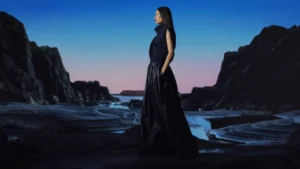



The intersection of high fashion and global music performance has reached a new pinnacle with the launch of Rosalía’s LUX World Tour. As the live companion to her fourth studio album, Lux, this tour represents a significant evolution from the gritty, urban-industrial aesthetic of her previous Motomami era. The LUX World Tour is currently traversing major international arenas, presenting a production that is as much a piece of performance art as it is a musical showcase. Central to this immersive experience is a bespoke wardrobe designed by Jonathan Anderson for the House of Dior, marking a unique creative trifecta between the Spanish singer-songwriter, the avant-garde designer, and the historic French fashion house.
Under the creative direction of Rosalía and her long-time stylist Jose Carayol, the tour’s visual language moves away from the standard pop-star tropes of sequins and spandex. Instead, the production utilizes theatrical staging, orchestral arrangements, and high-concept couture to tell a story of light, shadow, and cultural heritage. The decision to enlist Jonathan Anderson—known for his intellectual and often surrealist approach to fashion—to design for Dior specifically for this tour highlights the high-stakes nature of Rosalía’s current artistic trajectory.
The Artistic Vision Behind the LUX World Tour
The LUX World Tour follows the massive success of the 2022 Motomami World Tour, which solidified Rosalía’s status as a global phenomenon. While Motomami was characterized by its minimalist, high-energy, and digital-forward presentation, Lux pivots toward the operatic. The album itself explores themes of enlightenment, fame, and classical beauty, necessitating a stage production that reflects a more refined, yet no less experimental, sensibility.
The arena production is structured into distinct chapters, each defined by a specific lighting palette and musical arrangement. To complement this, the wardrobe does not function as a singular uniform but as a modular narrative tool. Jonathan Anderson’s designs for Dior bridge the gap between Spanish traditionalism and futuristic fantasy, ensuring that each garment enhances the movement and emotional resonance of the performance.
A Detailed Analysis of the Dior Custom Wardrobe
The tour wardrobe is anchored by four primary looks that have already garnered significant attention from fashion critics and fans alike. Each piece is engineered for the rigors of a two-hour arena performance while maintaining the intricate craftsmanship associated with Dior’s ateliers.
The Opening Act: Ivory Ballet-Inspired Tutu
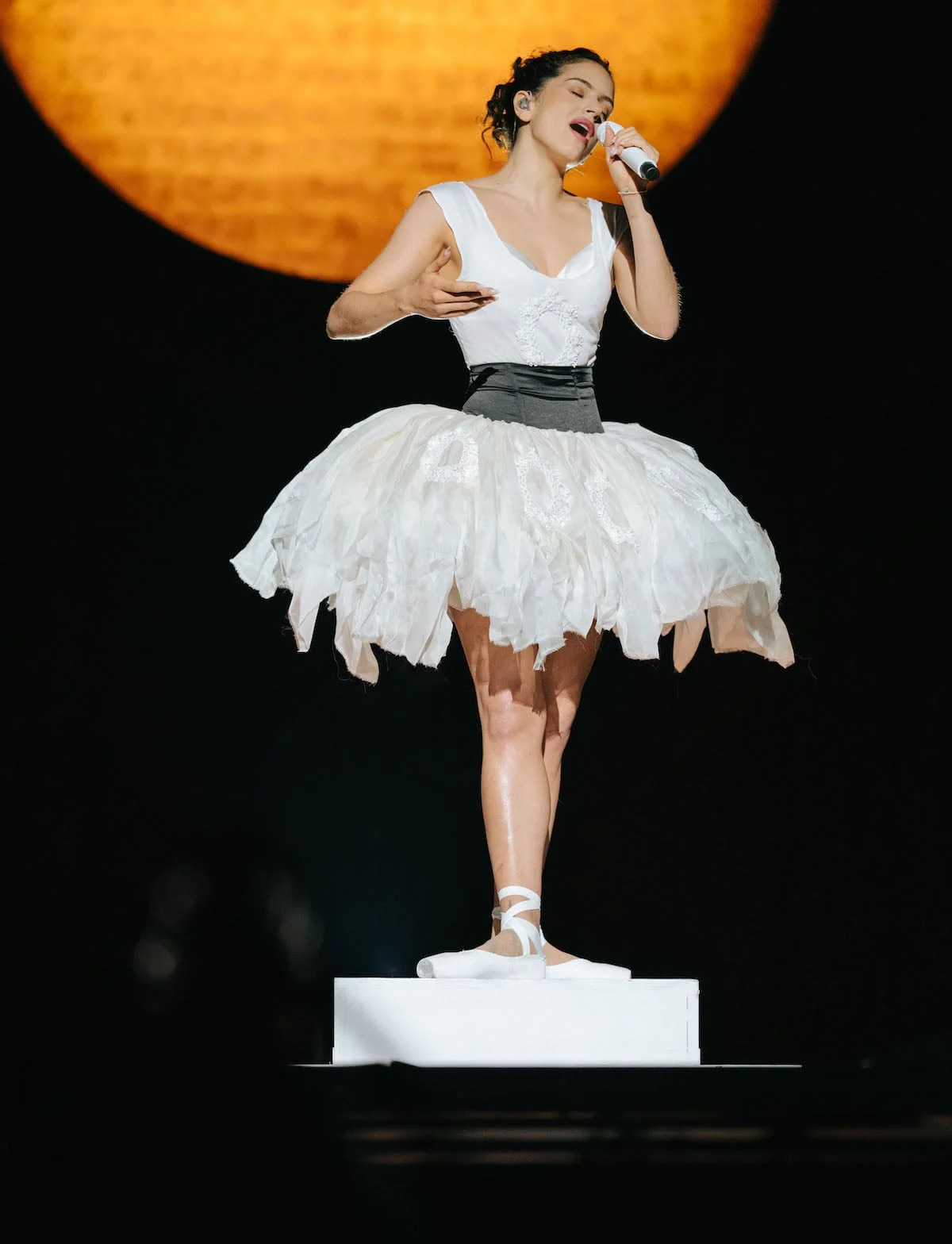
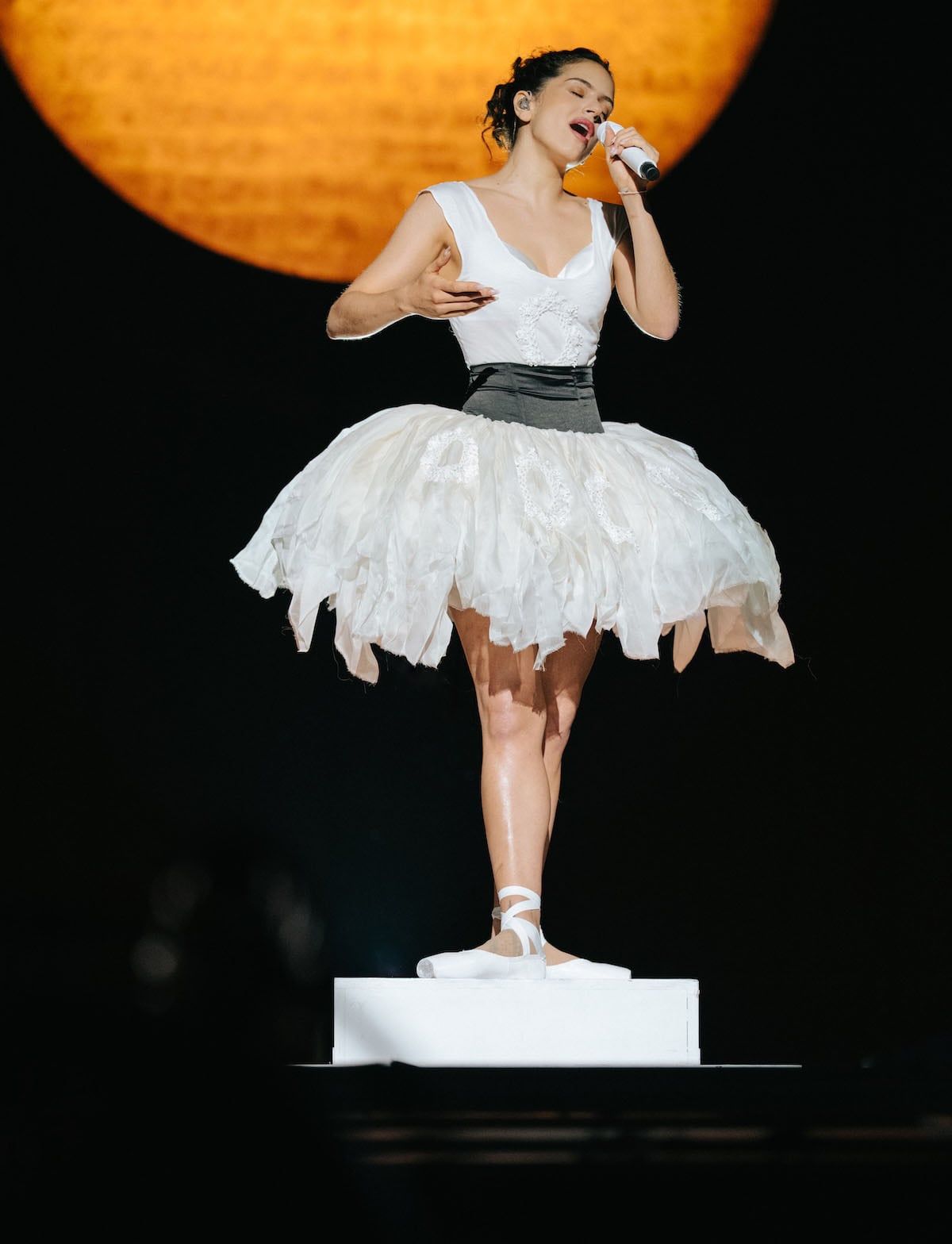
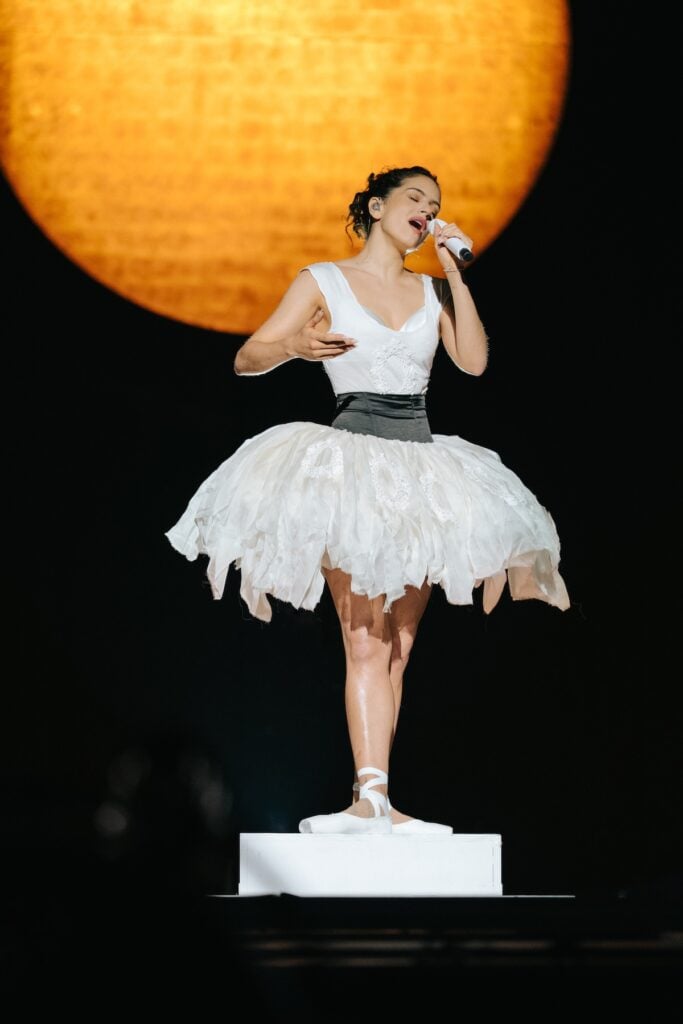
The show begins with Rosalía appearing in an ivory ensemble that reinterprets classical ballet silhouettes. The look features a precision-fitted bodice paired with an exaggerated, architectural tutu. While the references to the "Balletcore" trend are evident, the execution is decidedly more structural. The choice of ivory serves as a blank canvas for the tour’s complex projection mapping, allowing the singer to literally become part of the visual environment. This look establishes the theme of "Lux" (light) and provides a stark, ethereal contrast to the darker segments of the show that follow.
The Spanish Tradition: Black Ruched Dress and Tricorne Hat
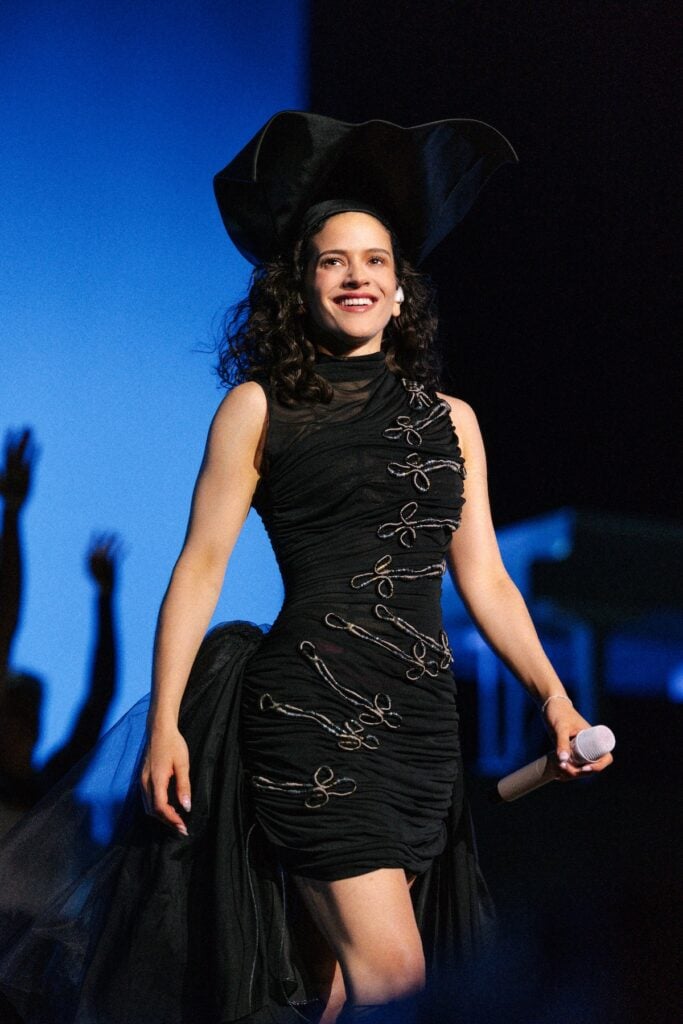
In a nod to her Spanish roots and the history of the tricorne hat—a three-cornered headpiece famously associated with 18th-century Spanish culture and the ballet El sombrero de tres picos—the second major look is a black ruched Dior dress. The garment is adorned with embroidered brandebourgs (decorative military-style lacework) that trace the contours of the body.
This ensemble has sparked comparison to recent red-carpet appearances, specifically when Priyanka Chopra wore a similar Dior tricorne hat to the Los Angeles screening of The Bluff. However, critics have noted that the piece finds its true purpose on Rosalía’s stage. Under the dramatic shadows of the arena lighting, the hat provides a sharp, authoritative silhouette that underscores the more rhythmic and aggressive flamenco-fusion tracks in the setlist.
The Structural Marvel: The Blue Pannier Dress
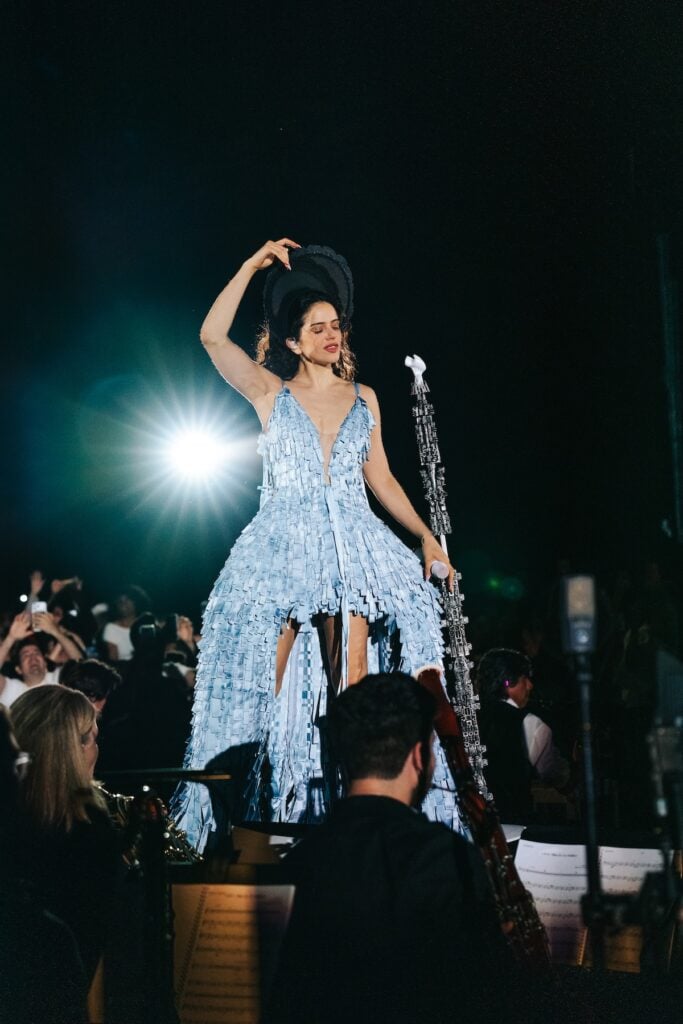
Perhaps the most visually complex piece in the collection is the blue pannier dress, inspired by Dior’s Pre-Fall 2026 collection. Utilizing a layered ribbon construction, the dress creates a wide, lateral silhouette reminiscent of 18th-century court dress. The use of modern materials and a vibrant, electric blue hue brings the historical reference into a contemporary context. The pannier structure moves fluidly with Rosalía’s choreography, creating a sense of "commanded space" that is essential for an arena setting where the performer must remain visible to tens of thousands of spectators.
The Finale: The Angel-Wing Cape
The tour concludes with a look that leans fully into the realm of fantasy. The final ensemble features a massive angel-wing cape that serves as the visual climax of the evening. The scale of the wings is designed to interact with the stage’s wind machines and lighting rigs, creating a sense of transcendence. In this final chapter, the fashion transcends its role as clothing and becomes a piece of the set design itself, symbolizing the "Lux" or enlightenment that the album title promises.
Chronology and Production Context
The development of the LUX World Tour began shortly after the final recording sessions for the Lux album in late 2025. Rosalía and Jose Carayol reportedly spent six months in consultations with Jonathan Anderson to ensure the wardrobe would be functional for the high-intensity movement required for her performances.
- Late 2025: Conceptualization of the Lux visual identity and initial outreach to Dior.
- January – March 2026: Design phase and atelier fittings in Paris.
- April 2026: Intensive rehearsals in Spain, integrating the custom garments with the orchestral elements of the show.
- June 2026: Official launch of the LUX World Tour.
The tour is scheduled to visit over 40 cities across Europe, North America, and Latin America, with many dates selling out within minutes of the general on-sale. This high demand underscores the commercial power of Rosalía’s brand, which successfully merges avant-garde artistry with mainstream appeal.
Supporting Data: The Business of Tour Fashion
The collaboration between Rosalía and Dior is part of a growing trend where luxury fashion houses view global tours as high-visibility marketing platforms. In the current "experience economy," a major concert tour can generate as much brand engagement as a traditional advertising campaign or a runway show.
- Social Media Impact: Within the first 48 hours of the tour’s opening night, mentions of "Dior" and "Rosalía" saw a 300% spike on platforms like Instagram and TikTok.
- Brand Positioning: By aligning with Rosalía, Dior taps into a younger, diverse, and highly engaged demographic that values cultural authenticity and artistic experimentation.
- The "Anderson" Factor: Jonathan Anderson’s involvement brings a specific "cool factor" that bridges the gap between heritage luxury (Dior) and contemporary edge (Anderson’s own work at Loewe and JW Anderson).
Official Responses and Critical Reception
While the House of Dior has remained characteristically discreet regarding the specifics of the contract, the brand’s social media channels have highlighted the craftsmanship behind the tour looks, emphasizing the "savoir-faire" of the ateliers. Stylist Jose Carayol has noted in interviews that the goal was to create a "visual journey" that felt authentic to Rosalía’s dual identity as a traditionalist and a futurist.
Fashion critics have largely praised the tour wardrobe for its variety. Unlike many contemporary tours that rely on a "formula" of leotards and rhinestone-encrusted catsuits, the LUX wardrobe offers a genuine diversity of shapes and textures. The use of panniers, tricornes, and tutus provides a refreshing alternative to the standard stagewear tropes, positioning Rosalía as a leader in the "fashion-as-performance" movement.
Broader Impact and Implications
The LUX World Tour sets a new standard for how musical artists can utilize fashion to enhance storytelling. By moving away from "merch-style" clothing and toward genuine couture, Rosalía is following in the footsteps of icons like David Bowie and Grace Jones, for whom the wardrobe was inseparable from the music.
Furthermore, the collaboration signals a shift in the luxury market. As traditional runway shows become increasingly crowded, the "stadium runway" offers a more direct and emotional way for brands to connect with consumers. The success of the Dior and Rosalía partnership suggests that we will see more high-profile creative directors designing specifically for the stage, treating the world’s arenas as the ultimate catwalk.
As the LUX World Tour continues its global run, the image of Rosalía in her blue pannier dress or her angel-wing cape will likely become the defining visual of this era of her career. In an industry often criticized for its lack of originality, Rosalía’s commitment to a fashion-led, theatrical approach ensures that her live performances remain a vital and unique cultural event.