










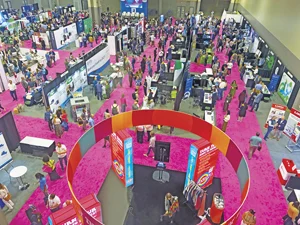
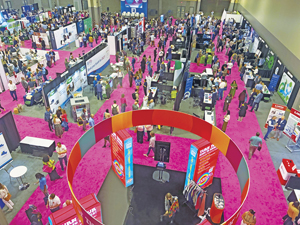
The American textile industry reached a significant milestone recently as the Charlotte Convention Center hosted the inaugural U.S. edition of the Textiles Recycling Expo, an event designed to bridge the gap between industrial waste challenges and sustainable manufacturing solutions. Organized by Applied Market Information Ltd. (AMI), the expo arrived in North Carolina following a successful debut in Brussels, Belgium, in 2025. The transition to the United States marks a strategic recognition of the North American market’s urgent need for localized recycling infrastructure and circular supply chains. With an impressive turnout of 1,858 visitors, 95 specialized exhibitors, and a roster of 52 expert speakers, the event served as a high-stakes forum for an industry grappling with environmental regulations, shifting consumer demands, and the technical complexities of fiber recovery.
The choice of Charlotte as the host city was no coincidence. As a historic and contemporary hub for the U.S. textile industry, the region provided a fitting backdrop for discussions on how to modernize legacy manufacturing through the lens of sustainability. The event’s primary objective was to facilitate connections between raw material suppliers, chemical recyclers, mechanical processors, and global apparel brands. By providing a dedicated space for these stakeholders to interact, AMI sought to catalyze the "textile-to-textile" movement, moving away from the "bottle-to-textile" model that has dominated the recycled polyester market for decades.
A Chronology of Strategic Expansion in Recycling Expertise
The Textiles Recycling Expo is the result of a deliberate evolution by AMI, an organization with decades of experience in the plastics recycling sector. Recognizing that the technical hurdles facing textile waste—such as fiber blends, dyes, and finishing chemicals—mirror many of the challenges found in plastics, AMI launched its first textile-focused event in Brussels in 2025. The success of the European edition highlighted a global appetite for specialized knowledge in textile circularity, particularly as the European Union began implementing stricter waste directives.
Building on that momentum, the organizers identified the United States as the next frontier. Unlike Europe, the U.S. lacks a federal mandate for textile recycling, but a patchwork of state-level initiatives and a growing corporate commitment to Environmental, Social, and Governance (ESG) goals have created a vacuum that the industry is eager to fill. The Charlotte event represented the first large-scale attempt to consolidate the fragmented U.S. recycling value chain into a single, cohesive exhibition. From the opening keynote to the final floor demonstrations, the chronology of the two-day event focused on moving from theoretical circularity to scalable, commercial application.
The Magnitude of the U.S. Textile Waste Challenge
One of the driving forces behind the expo’s high attendance was the sobering reality of American textile waste. According to data highlighted during the event, the United States generates more than 17 million tons of textile waste annually. Currently, a vast majority of this material—estimated at over 80%—is sent to landfills or incinerated. This represents not only an environmental catastrophe but a significant loss of economic value.
Industry experts at the expo pointed out that if even a fraction of this "waste" could be recovered and reprocessed into high-quality fiber, it would drastically reduce the industry’s reliance on virgin petroleum-based synthetics and resource-intensive natural fibers. The supporting data suggests that the demand for recycled content in apparel is expected to grow by over 20% annually through 2030, yet the supply of high-quality, post-consumer recycled textile fiber remains remarkably low. The expo aimed to address this discrepancy by showcasing the machinery and chemical processes capable of handling complex waste streams.
Technical Innovations and the Polymer Spectrum
While recycled polyester (rPET) from plastic bottles has long been the industry standard for "sustainable" clothing, the Charlotte expo signaled a shift toward more sophisticated recovery. Exhibitors and speakers emphasized the need to move beyond PET to address the full spectrum of polymers used in modern textiles, including Polyamide (PA/Nylon), Polypropylene (PP), and Polyethylene (PE).
Ludovic Pitrois, the North America Sales Director for FIMIC, noted that the technical depth of the discussions surpassed expectations. Pitrois, who transitioned from the textile sector to the plastics industry before returning to textiles, observed that the curiosity of attendees extended across the entire polymer spectrum. This diversification is critical because modern garments are rarely made of a single material. The ability to separate and recycle blends—such as cotton-polyester or nylon-elastane—is the "holy grail" of textile circularity. The expo featured several companies presenting mechanical filtration and chemical solvent technologies designed to isolate these fibers without degrading their molecular integrity, ensuring that the resulting recycled yarn maintains the strength and dyeability required by high-end brands.
Leading Voices: Corporate Commitment and Scalable Solutions
The presence of industry heavyweights underscored the commercial viability of the recycling movement. Greensboro-based UNIFI, Inc., a global leader in branded recycled performance fibers, utilized the platform to showcase its latest circular innovations. Meredith Boyd, EVP and Chief Product Officer at UNIFI, highlighted the REPREVE Takeback program and ThermaLoop insulation. These products represent a transition toward true textile-to-textile recycling, where old garments are broken down to create the building blocks for new ones.
Boyd emphasized that the industry—comprising brands, designers, and mills—is no longer looking for pilot projects; they are looking for solutions that are available globally and at scale. The turnout in Charlotte validated this demand. By moving away from the "take-make-waste" linear model, companies like UNIFI are proving that domestic manufacturing can be bolstered by utilizing waste as a raw material.
Similarly, the machinery sector played a vital role in the exhibition. Hardy Sullivan, Managing Director of Thies US, LLC, argued that textile recycling, when executed correctly, equates to a strengthening of domestic manufacturing. Sullivan advocated for an "All of the Above" strategy, suggesting that a combination of mechanical shredding, chemical recycling, and automated sorting is necessary to handle the volume of waste generated in the U.S. By processing waste regionally rather than shipping it offshore, the U.S. can secure a steady supply of raw materials for domestic mills, reducing logistics costs and carbon footprints.
The Regulatory Horizon and Policy Implications
A significant portion of the expo’s programming was dedicated to the changing legislative landscape. Jessica Franken, Vice President of Government and External Affairs for the Secondary Materials and Recycled Textiles Association (SMART), delivered the opening presentation, setting the tone for the event. The industry is currently facing a wave of Extended Producer Responsibility (EPR) legislation. States like California have already passed landmark bills that will eventually require producers to take responsibility for the entire lifecycle of their products, including end-of-life disposal and recycling.
These regulatory shifts are transforming recycling from a voluntary "green" initiative into a mandatory cost of doing business. Analysis provided during the sessions suggested that companies that invest in circularity now will have a significant competitive advantage as these laws take effect. The expo provided a neutral ground for traditional textile manufacturers and newer recycling startups to discuss how to navigate these regulations while maintaining profitability. The "palpable energy" described by Franken reflected a sector that is finally aligning its environmental goals with its economic survival.
Economic Impact and the Future of U.S. Textiles
The broader implications of the Textiles Recycling Expo extend beyond environmental metrics. There is a profound economic argument for the revitalization of the U.S. textile corridor through recycling. By establishing regional "circularity hubs," the industry can create high-tech jobs in sorting, processing, and advanced manufacturing. This shift could potentially reverse decades of outsourcing by making the U.S. a leader in the next generation of sustainable materials.
The success of the inaugural Charlotte event has already led to the announcement of a second edition. Based on the positive feedback from exhibitors and the high caliber of the 1,858 visitors, the Textiles Recycling Expo USA is scheduled to return to the Charlotte Convention Center on April 7–8, 2027. This biennial schedule will allow the industry time to implement the technologies discussed this year and return with updated data and more mature circular models.
In conclusion, the inaugural Textiles Recycling Expo USA has successfully established itself as a cornerstone event for the North American textile industry. It provided a much-needed platform for technical exchange, policy discussion, and commercial networking. As the industry moves toward 2027, the focus will likely shift from "why" we should recycle to "how" we can optimize these processes to handle the 17 million tons of waste that continue to flow into American landfills. The momentum generated in Charlotte suggests that the U.S. textile industry is not just ready for change—it is actively engineering it.