









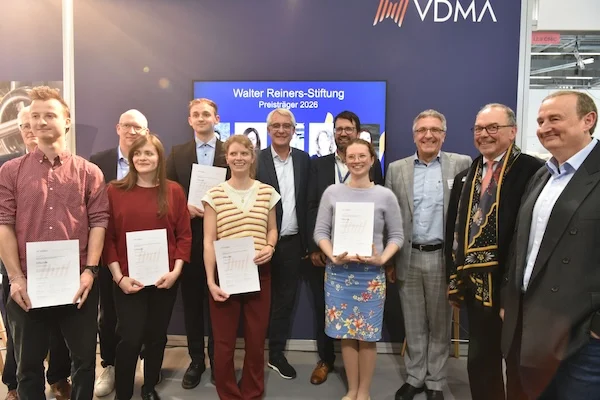
The prestigious Techtextil trade fair, held in Frankfurt, Germany, served as the backdrop for a significant milestone in the textile machinery industry as the VDMA’s Walter Reiners Foundation honored five exceptional young engineers for their pioneering research. On May 7, 2026, Peter D. Dornier, Chairman of the Foundation, presided over an awards ceremony that not only recognized academic brilliance but also marked the 60th anniversary of the foundation’s commitment to fostering the next generation of industrial innovators. The 2026 awards highlighted a shift in the sector toward high-performance materials and circular economy solutions, with recipients focusing on topics ranging from carbon fiber recycling to advanced computational fluid dynamics in yarn processing.
As the global textile industry faces increasing pressure to decarbonize and optimize resource use, the Walter Reiners Foundation’s mission has evolved to prioritize sustainability alongside technical efficiency. The awards presented this year were divided into two primary streams: Promotion Awards, which recognize outstanding academic achievement in mechanical engineering, and Sustainability Awards, which are reserved for theses that provide tangible solutions for resource conservation, energy efficiency, and the development of eco-friendly technologies.
Highlighting the 2026 Award Winners and Their Research
The selection process for the Walter Reiners Foundation awards is notoriously rigorous, requiring candidates to demonstrate not only theoretical excellence but also the practical applicability of their research within the textile machinery value chain. The five winners of the 2026 cycle represent the elite of Germany’s technical universities, specifically TU Dresden and RWTH Aachen, as well as the German Institutes of Textile and Fiber Research (DITF).
Sustainability in Fiber Composites and Recycling
Mattis Körner, a student at TU Dresden, was presented with a sustainability award for his internship project, which delved into the complex mechanics of fiber-reinforced composites. Körner’s research analyzed how varying fiber lengths influence the structural properties and durability of composite materials. By optimizing fiber length distribution, manufacturers can reduce material waste and improve the longevity of components used in the automotive and aerospace sectors, directly contributing to more sustainable manufacturing cycles.
In a similar vein of resource efficiency, Sabina Dann of RWTH Aachen received a sustainability prize for her master’s thesis regarding the recycling of carbon fibers. As the demand for lightweight, high-strength materials grows, the industry faces a looming crisis regarding the disposal of carbon fiber waste. Dann’s work provides a framework for reintegrating reclaimed fibers into the production loop without compromising the mechanical integrity of the resulting products. This research is seen as a critical building block for the "Green Deal" objectives within the European manufacturing sector.
Innovation in Texturing and Filament Processing
The Promotion Awards, which focus on technical advancement and engineering precision, were granted to three individuals whose work addresses specific bottlenecks in textile production.
Annegret Storm, a graduate of RWTH Aachen, was recognized for her bachelor’s thesis evaluating the implementation of microwave heating technology in the false-twist texturing process. Traditional texturing processes are highly energy-intensive, relying on conventional heaters to set the crimp in synthetic yarns. Storm’s evaluation suggests that microwave technology could significantly reduce energy consumption and improve heating uniformity, potentially revolutionizing the cost-structure of yarn finishing.
Lukas Robert Balon, also from RWTH Aachen, received a promotion prize in the master’s category for his development of a Computational Fluid Dynamics (CFD) model. Balon’s research describes the intricate flow conditions during Bulk Continuous Filament (BCF) texturing. By creating a digital twin of the airflow within the texturing nozzle, machinery manufacturers can optimize hardware designs to reduce air consumption and improve yarn quality, marking a significant step toward "Textile 4.0" integration.
Finally, Katrin Platte was honored for her master’s thesis completed at the DITF in Denkendorf. Her project involved the design and construction of a specialized drafting machine for precursor filament yarns. Precursors are the essential raw materials for carbon fiber production; Platte’s engineering solution allows for more precise control over the molecular orientation of the filaments during the drawing phase, which is vital for producing high-modulus carbon fibers used in extreme-performance applications.
Six Decades of the Walter Reiners Foundation
The 2026 ceremony was imbued with historical significance as the Walter Reiners Foundation celebrated its 60th anniversary. Established in 1966 by Dr. Walter Reiners, a former head of the Schlafhorst company and a visionary in textile machinery, the foundation was created to bridge the gap between academic research and industrial application.
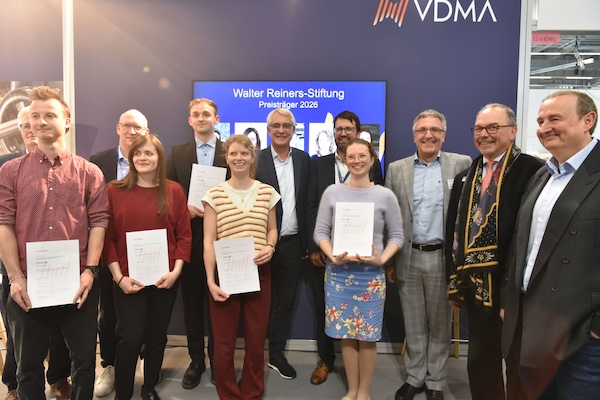
To commemorate the diamond jubilee, Peter D. Dornier hosted a panel discussion featuring prominent former award winners: Professor Stefan Schlichter, who received the award in 1989, and Dr. Heiko Schenuit, a 2013 laureate. The discussion traced the evolution of the German textile machinery industry from the purely mechanical innovations of the late 1960s to the digital and sustainable transformations of the mid-2020s.
"The work of the Walter Reiners Foundation is a cornerstone of our industry’s competitive edge," stated Dornier during the event. "For sixty years, we have identified and supported the minds that have kept German engineering at the forefront of the global market. Today’s winners are not just students; they are the architects of a more efficient and sustainable industrial future."
The Economic and Strategic Context of Techtextil 2026
The presentation of these awards at Techtextil is a strategic choice. Techtextil is the world’s leading trade fair for technical textiles and nonwovens, an industry segment that has seen a Compound Annual Growth Rate (CAGR) of approximately 4.5% over the last decade. Unlike traditional apparel textiles, technical textiles are utilized in medical technology, civil engineering, environmental protection, and smart wearables.
Data from the VDMA (Verband Deutscher Maschinen- und Anlagenbau) indicates that Germany remains a global leader in the export of textile machinery, with technical textile equipment accounting for an increasing share of total sales. In 2025, German textile machinery exports reached significant volumes, driven by the demand for automation and high-precision manufacturing in emerging markets. The research conducted by the 2026 award winners directly supports this export strength by providing the intellectual property needed to maintain technological leadership over international competitors.
Addressing the Skills Gap and the Role of Academia
The VDMA’s continued investment in the Walter Reiners Foundation highlights a broader concern within the European engineering sector: the "skills gap." As the current workforce of experienced engineers approaches retirement, the industry requires a steady influx of highly qualified graduates who are proficient in both classical mechanical engineering and modern digital disciplines like AI-driven process control and sustainable materials science.
The collaboration between the VDMA and institutions like RWTH Aachen and TU Dresden creates a symbiotic relationship. Universities receive guidance on industrially relevant research topics, while the industry gains access to cutting-edge innovations and a pipeline of talent. The 2026 awards underscore the success of this model, as each of the winning theses addressed a real-world problem currently facing machinery manufacturers.
Broader Impact: Towards a Circular Textile Economy
The focus on sustainability among the 2026 winners reflects a mandatory shift in the industrial landscape. The European Union’s Strategy for Sustainable and Circular Textiles requires that by 2030, all textile products placed on the EU market are long-lived, recyclable, and largely made of recycled fibers. This regulatory environment has turned "sustainability" from a corporate social responsibility (CSR) buzzword into a fundamental engineering requirement.
The research by Sabina Dann and Mattis Körner is particularly relevant in this context. By finding ways to reuse carbon fibers and optimize composite materials, the industry can move away from the "take-make-dispose" model. Furthermore, the energy-saving potential of microwave heating, as explored by Annegret Storm, aligns with global efforts to reduce the carbon footprint of industrial manufacturing.
Conclusion and Future Outlook
As the Techtextil 2026 event concluded, the consensus among industry leaders was that the integration of young talent into the research and development process remains the most effective way to navigate the challenges of the 21st century. The Walter Reiners Foundation has spent 60 years acting as a catalyst for this integration, ensuring that the legacy of German engineering is not just preserved but continuously reinvented.
The five award winners of 2026—Körner, Storm, Balon, Platte, and Dann—represent a new generation of engineers who view technical efficiency and environmental stewardship as inseparable goals. Their contributions to fiber science, fluid dynamics, and thermal processing will likely inform the design of the next generation of textile machinery, which will be showcased at future trade fairs.
The VDMA Textile Machinery Association continues to advocate for increased funding for vocational and academic training, noting that the intellectual capital produced by these young engineers is the most valuable asset in an increasingly automated world. With the 60th anniversary celebrations complete, the Walter Reiners Foundation looks toward the next decade, with plans to further expand its sustainability categories and increase international collaboration among textile research institutes.