





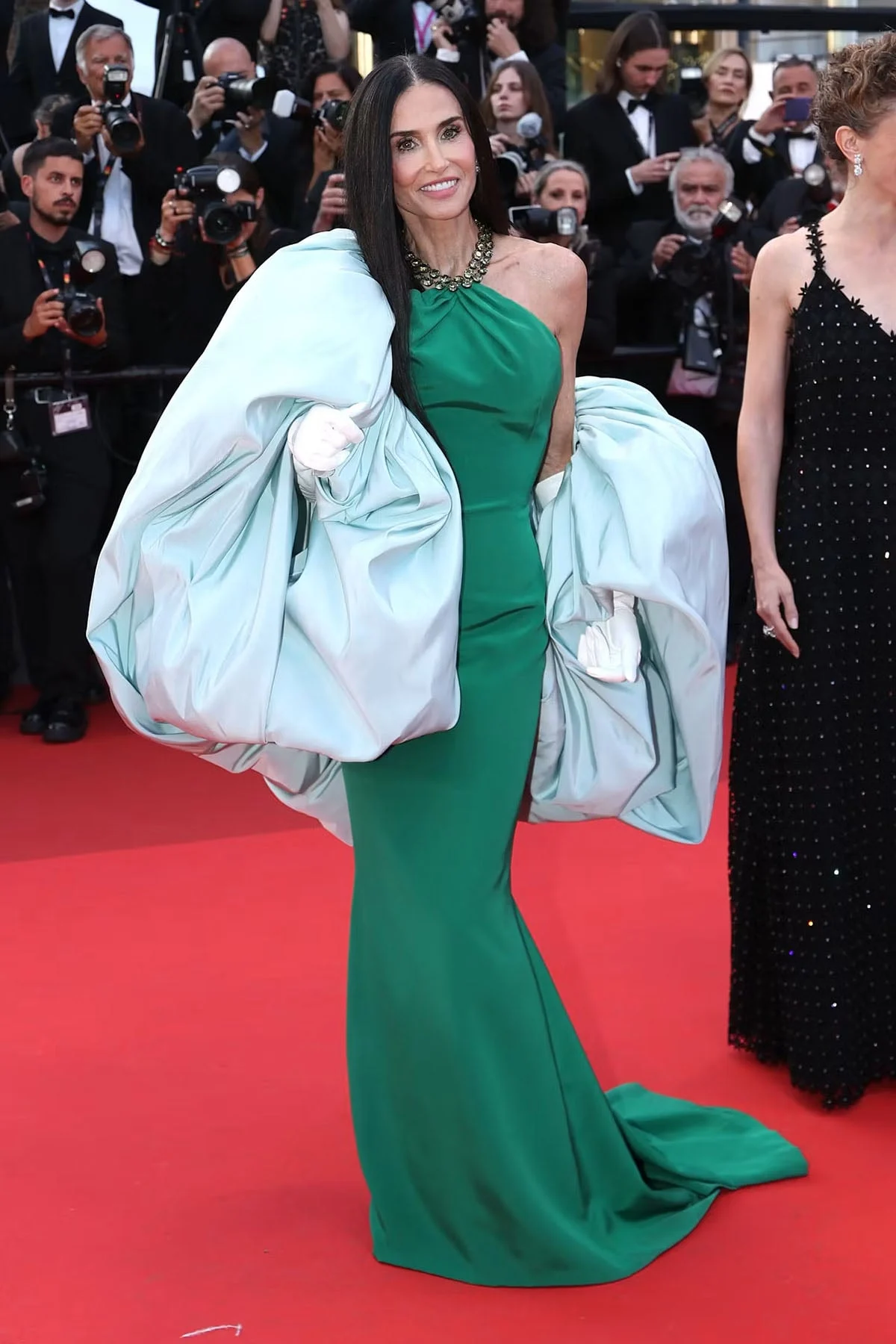
The closing ceremony of the 79th annual Cannes Film Festival reached its aesthetic peak as Demi Moore, a prominent member of this year’s international jury, arrived on the red carpet for the final screening and awards presentation. Marking the culmination of a twelve-day cinematic marathon, Moore’s appearance in a custom Balenciaga ensemble designed by Pierpaolo Piccioli served as a definitive statement on the current intersection of high fashion and global cinema. The attire, characterized by a sophisticated interplay of color and structural innovation, represented a significant chapter in the evolving creative direction of the house of Balenciaga under Piccioli’s leadership.
Architectural Design and Color Palette Analysis
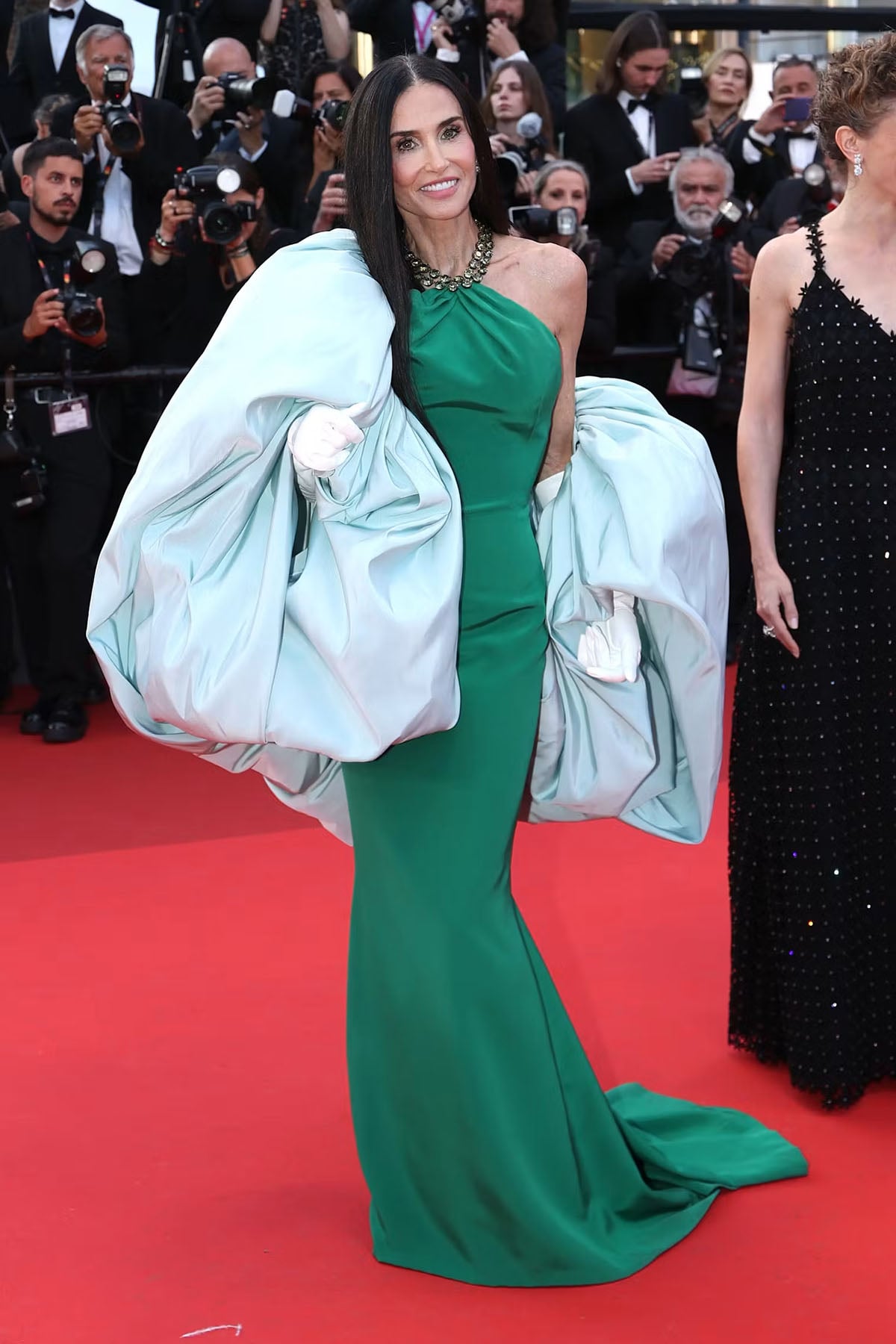
The centerpiece of Moore’s closing night wardrobe was a custom-engineered halter gown in a vibrant shade of forest green. The garment featured a fluid silhouette that balanced traditional eveningwear elegance with modern minimalism. A defining technical element of the gown was the embellished neckline, which acted as an anchor for the draped fabric, providing a structural focal point that eliminated the need for a traditional necklace.
Complementing the primary garment was a pale blue bolero, a stylistic choice that introduced a cooling contrast to the warmth of the green silk. This specific color pairing—mint and forest tones juxtaposed with icy cerulean—reflects the color theory frequently explored by Piccioli throughout his career. The bolero’s construction offered a soft, rounded shoulder line, diverging from the more aggressive, angular silhouettes often associated with Balenciaga’s historical archives.
A notable inclusion in the ensemble was the use of white opera gloves. Industry analysts have observed that the inclusion of elongated gloves has become a recurring motif in Piccioli’s tenure at Balenciaga, signaling a return to mid-century couture sensibilities. While the gloves provided a stark visual break from the gown’s fluidity, they served as a hallmark of the designer’s "new visual language" for the house, aiming to bridge the gap between avant-garde experimentation and red-carpet classicism.
The Chronology of Demi Moore’s Cannes Tenure
Moore’s appearance at the closing ceremony was the final act in what fashion critics have described as a masterclass in festival dressing. As a member of the jury, Moore was required to attend multiple premieres, photocalls, and official functions, each necessitating a distinct yet cohesive sartorial approach.
- Opening Night: Moore set a high bar during the festival’s inauguration, opting for structured silhouettes that emphasized her long-standing relationship with heritage fashion houses.
- Mid-Festival Premieres: Throughout the second week, the actress transitioned through a series of looks that ranged from monochromatic minimalism to high-octane glamour, often utilizing her platform to showcase both established designers and emerging talent.
- The Closing Ceremony: The choice of Balenciaga for the finale was strategic, aligning Moore with one of the most discussed creative transitions in the luxury sector.
Stylist Brad Goreski, who managed Moore’s wardrobe throughout the 2026 festival, focused on a narrative of "consistent delivery." By selecting pieces that emphasized Moore’s stature as a Hollywood veteran while embracing contemporary design trends, Goreski ensured that Moore remained a central figure in the festival’s daily fashion discourse.
Technical Execution and Jewelry Integration
To complete the ensemble, Moore wore high-jewelry pieces from Chopard, the official partner of the Cannes Film Festival. The selection of jewelry was intentionally restrained to avoid competing with the gown’s embellished neckline. Statement earrings and rings provided the necessary luster for the high-intensity lighting of the Palais des Festivals.
The integration of Chopard jewels is a standard procedure for jury members, yet the specific curation for Moore focused on white diamonds and platinum settings to mirror the crispness of her white opera gloves. This coordination highlights the meticulous planning involved in festival styling, where every accessory is vetted for its ability to photograph effectively under the "Cannes flash," a phenomenon known for its unforgiving brightness.
The Strategic Shift at Balenciaga
The 2026 Cannes Film Festival has served as a critical proving ground for Pierpaolo Piccioli’s vision at Balenciaga. Following his transition to the house, Piccioli has been tasked with maintaining the brand’s reputation for subversion while reintroducing a level of "elegant fluidity" that had been less prominent in previous seasons.
Moore’s gown is emblematic of this shift. By moving away from heavy, oversized streetwear influences and toward draped, feminine eveningwear, the brand is successfully expanding its market reach to include traditional red-carpet demographics. Data from luxury retail trackers suggests that "red carpet visibility" during major festivals like Cannes directly correlates with a 15% to 20% increase in brand search volume in the subsequent quarter, making Moore’s endorsement a high-value asset for the Kering-owned label.
Broader Implications for the Fashion and Film Industries
The partnership between Demi Moore and Balenciaga at the closing ceremony underscores the symbiotic relationship between the film industry and luxury conglomerates. In an era where digital presence is as vital as the films themselves, the "fashion to feast on" provided by jury members like Moore serves as a secondary attraction that draws global attention to the festival.
The Influence of the Jury Member
Historically, the Cannes jury has been a position of prestige, but in recent years, it has also become a position of significant fashion influence. Unlike stars who attend for a single premiere, jury members are visible for the duration of the event. This sustained visibility allows for a more comprehensive brand story to be told. Moore’s consistent delivery throughout the 2026 circuit has solidified her status as a "fashion diplomat," capable of navigating the complex requirements of high-profile international appearances.
Market Reactions and Stylistic Trends
The reaction to Moore’s closing look has sparked a broader conversation regarding the "opera glove trend." While some critics remain divided on the continuity of white gloves with a green and blue palette, the aesthetic choice reflects a broader industry move toward "Neo-Classic" styling. This trend prioritizes historical references—such as the 1950s glamour of Balenciaga’s founder—reimagined through modern textiles and color combinations.
Official Responses and Stylist Insights
While official statements from the house of Balenciaga are typically reserved, sources close to the design team indicate that the gown was the result of multiple fittings designed to ensure the "fluidity" mentioned by observers. Brad Goreski’s involvement was instrumental in bridging the gap between the designer’s runway vision and the practical requirements of a jury member who must remain comfortable through long awards ceremonies.
In a brief communication regarding the festival’s conclusion, representatives for the styling team noted that the goal for the closing ceremony was to achieve a "lighter, softer mood." This was a deliberate departure from the more somber or aggressive tones often seen at the festival’s end, aiming instead for a celebratory and refreshed aesthetic as the prizes were announced.
Conclusion: A Landmark Moment for the 2026 Festival
As the 79th Cannes Film Festival concludes, the image of Demi Moore in custom Balenciaga remains one of the defining visual legacies of the event. The ensemble successfully synthesized the technical prowess of Pierpaolo Piccioli with the enduring star power of Moore, creating a moment that was both contemporary and timeless.
For the fashion industry, the look confirms Balenciaga’s successful pivot toward a more lyrical form of couture. For the film industry, it reinforces the Palais des Festivals as the premier global stage for the union of artistic disciplines. Moore’s tenure as a jury member will likely be remembered not only for the cinematic decisions made behind closed doors but for the sartorial excellence displayed on the world stage, proving that in the realm of high fashion, consistency is the ultimate form of impact.