









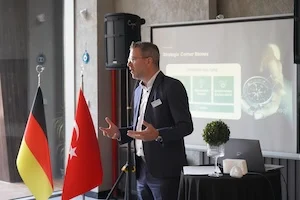
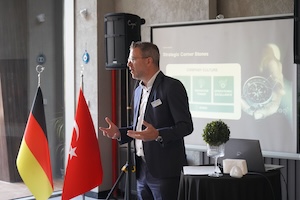
The long-standing relationship between KARL MAYER and the Turkish textile sector reached a significant milestone in May 2026, as the German industry leader hosted a series of intensive engagement events designed to fortify its presence in one of the world’s most dynamic textile markets. This initiative, titled "Get-together Week," served as a precursor to the upcoming International Textile Machinery Exhibition (ITM) 2026 in Istanbul, allowing the company to engage in direct dialogue with its partners and customers. The centerpiece of this strategic outreach was held in Bursa, a city that holds deep historical significance for KARL MAYER, marking three-quarters of a century of industrial cooperation and technological exchange.
The connection between the Obertshausen-based manufacturer and the Turkish textile landscape is rooted in a history that dates back to 1951. In that year, the first KARL MAYER warp knitting machine was delivered to Bursa, a transaction of such importance that the company’s founder, Karl Mayer himself, traveled to Türkiye to oversee the installation personally. Since that foundational moment, Türkiye has evolved from a burgeoning regional producer into a global powerhouse, and KARL MAYER has remained a constant technological partner throughout this transformation. Today, the Turkish market is not merely a destination for machinery exports but a critical hub for innovation, where real-world production challenges drive the development of next-generation textile solutions.
A Legacy of Partnership and Regional Growth
The historical context of KARL MAYER’s involvement in Türkiye is a testament to the country’s enduring industrial resilience. Since the initial installation in 1951, the Turkish textile industry has undergone several waves of modernization. Bursa, in particular, has emerged as the heart of the nation’s warp knitting and weaving sectors. The city’s strategic location and its deep-rooted artisanal heritage provided the perfect fertile ground for KARL MAYER’s advanced German engineering.
Over the decades, this partnership has been facilitated by a robust local network, most notably through the long-term collaboration with regional partner Erko. This partnership has ensured that Turkish manufacturers have access not only to high-performance hardware but also to localized technical support, spare parts, and specialized training. The "Get-together Week" in early May 2026 was a celebration of this synergy, bringing together top management representatives and technical experts from both Germany and Türkiye to discuss the roadmap for the next decade of production.
Lutz Wolf, CEO of KARL MAYER, emphasized during the event that the success of the company is inextricably linked to the success of its Turkish clientele. "For us, Türkiye is much more than just a market—it is a central part of our future, which we would like to build together with you," Wolf stated. This sentiment reflects a shift in the industry from a transactional model to a collaborative one, where machine manufacturers and textile producers co-create solutions tailored to specific market demands, such as sustainable fashion and high-performance technical textiles.
The "Get-together Week" and Technical Empowerment
The "Get-together Week" was structured to provide more than just networking opportunities; it was a comprehensive educational and strategic platform. A primary highlight was the in-house event titled "Let’s talk Warp Knit," which drew approximately 40 key customers from across the region. The event was designed to cater to various levels of technical expertise, ensuring that both executive decision-makers and shop-floor engineers could gain actionable insights.
The curriculum of the week included:
- Technical Presentations: Detailed overviews of the latest advancements in tricot and raschel machinery.
- In-depth Workshops: Hands-on sessions focusing on machine optimization, maintenance, and the integration of digital tools.
- Micro-training Sessions: Concise, high-impact modules designed to update operators on new software features and efficiency-enhancing techniques.
By hosting these events at the KARL MAYER location in Bursa, the company demonstrated its commitment to "thinking from the textile to the machine." This philosophy prioritizes the end product—the fabric—and works backward to determine what mechanical and digital innovations are required to produce it more efficiently, sustainably, and creatively.
Market Trends: Fashion, Apparel, and Textured Surfaces
The intensive dialogue during the Bursa meetings highlighted several critical trends currently shaping the Turkish textile market. Türkiye remains a dominant force in the European apparel supply chain, known for its ability to combine high-quality production with rapid turnaround times. To maintain this competitive edge, Turkish manufacturers are increasingly looking toward high-end design fabrics.
One of the most prominent trends identified is the growing demand for flexibly configurable jacquard patterns and intricate lace. As global fashion cycles shorten, the ability to quickly switch between complex patterns without significant downtime is essential. KARL MAYER’s latest developments in electronic guide bar control and digital pattern drive systems address this need, allowing for unprecedented versatility in warp knitting.
Furthermore, there is a sustained and robust demand for apparel featuring crepe-like textured surfaces. These fabrics, which offer a unique tactile experience and visual depth, are becoming staples in both high-street and luxury fashion. The technical challenge lies in producing these textures consistently at high speeds. During the workshops, KARL MAYER experts showcased how their latest machine configurations can achieve these aesthetic effects while maintaining the structural integrity and elasticity required for modern garments.
Technological Spotlight: The HKS 4-M EL ECO
As a direct response to the market’s need for both efficiency and versatility, KARL MAYER announced that it will showcase the HKS 4-M EL ECO at the upcoming ITM 2026 exhibition. This machine represents the pinnacle of high-speed tricot production, optimized for a new era of manufacturing where energy efficiency and environmental impact are as important as output volume.
The "EL" designation refers to the machine’s electronic guide bar control, which allows for the rapid change of patterns via a computer interface rather than manual mechanical adjustments. This feature is particularly valuable for the Turkish market, where manufacturers often handle diverse orders ranging from simple staples to complex, patterned textiles. The "ECO" component signifies KARL MAYER’s commitment to sustainability, featuring optimized drive systems that reduce power consumption and a design that minimizes material waste during the production process.
The HKS 4-M EL ECO is positioned as a "highly efficient production machine" that does not sacrifice flexibility for speed. By bringing this technology to the Tüyap Fair Convention and Congress Center in Istanbul from June 9 to 13, KARL MAYER aims to provide Turkish producers with the tools necessary to compete in a global market that is increasingly focused on "Green Growth" and digital transparency.
Supporting Infrastructure: The Textile Innovation Center
Beyond machinery, the "Get-together Week" focused on the expanded service offerings available through KARL MAYER’s new Textile Innovation Center at its headquarters in Obertshausen, Germany. This facility serves as a global R&D hub where customers can test new yarn types, develop innovative fabric structures, and pilot-test production runs before committing to full-scale manufacturing.
The inclusion of the Textile Innovation Center in the discussions reflects the growing complexity of modern textiles. With the rise of recycled fibers and bio-based synthetics, Turkish manufacturers are facing new challenges in how materials behave during the knitting process. The center provides a risk-free environment for Turkish partners to experiment with these new materials, ensuring that when they return to their factories in Bursa or Istanbul, they have a proven roadmap for production.
Strategic Implications and the Road to ITM 2026
The feedback gathered during the Bursa events is already being integrated into KARL MAYER’s strategic planning. The interactive format of the "Get-together Week" allowed for a two-way flow of information, where the manufacturer gained valuable insights into the specific economic and technical hurdles faced by Turkish businesses. This deep understanding of the market serves as the foundation for future innovations that are not just technologically advanced but commercially relevant.
The upcoming ITM 2026 exhibition is expected to be a watershed moment for the regional industry. As the first major textile machinery show in the region following significant global economic shifts, it will serve as a barometer for the health of the sector. KARL MAYER’s prominent presence at Booth 3/303 A will be a focal point for attendees looking to invest in digitalization and sustainable production technologies.
Industry analysts suggest that the Turkish textile sector is currently at a crossroads. While it remains a top-three supplier to the European Union, it faces increasing competition from Asian markets and rising domestic energy costs. The solution, as discussed during the Bursa meetings, lies in "innovation power" and "speed." By adopting machines like the HKS 4-M EL ECO and leveraging digital service platforms, Turkish companies can move further up the value chain, focusing on high-margin, specialized textiles that cannot be easily replicated by low-cost competitors.
Conclusion
The "Get-together Week" has reaffirmed that the bond between KARL MAYER and Türkiye is as strong today as it was when the first machine arrived in 1951. By combining a rich history with a forward-looking focus on jacquard, lace, and sustainable production, both parties are positioning themselves for continued growth. As the industry prepares to gather in Istanbul this June, the groundwork laid in Bursa ensures that the partnership between German engineering and Turkish industrial prowess will remain a driving force in the global textile landscape for years to come. The emphasis on listening, learning, and innovating together remains the cornerstone of a relationship that has transformed a single machine delivery into a multi-generational legacy of success.