








In an era where technological advancements for time travel remain elusive, humanity’s most potent and accessible vehicle for temporal transportation endures: scent. A fleeting whiff of golden syrup can instantly evoke the warmth of childhood Sunday morning pancakes; the subtle trace of cigarette smoke might transport one back to a memorable Parisian sojourn; and the soft, musky aroma of aged library books can paradoxically teleport an individual to a time never personally experienced, a liminal space between past and present, imbued with the collective histories of countless hands that have touched, read, and felt emotions upon their pages. This profound connection between olfaction and memory forms the foundational philosophy for Änti Parfum, a nascent fragrance brand founded by Brieuc Larsonneur and Larissa Sugaipova, which has innovatively conceptualized its approach as "olfactory archaeology."
Unearthing History Through Scent: The Genesis of Olfactory Archaeology
Änti Parfum distinguishes itself by taking the inherent time-traveling capacity of scent a radical step further. Rather than simply creating pleasant aromas, Larsonneur and Sugaipova function as metaphorical time travelers, meticulously designing fragrances that delve into the annals of history. Their method involves an intricate process of excavating places, moments, rituals, material culture, and even historical figures to reconstruct experimental scent narratives infused with a contemporary sensibility. "Very early on, we became obsessed with the idea that perfume is humanity’s first time machine," Brieuc Larsonneur, co-founder, shared in an interview with Dazed, articulating the core ethos that underpins Änti Parfum’s innovative brand identity.
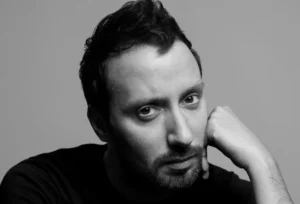
Larsonneur’s professional trajectory provided a unique foundation for this venture. As a seasoned retail architect and set designer, his impressive resume includes collaborations with esteemed fashion houses such as Atlein, Altuzarra, and Balenciaga, where he worked closely with Demna Gvasalia. His academic background is particularly relevant, having pursued a diploma titled "The Smells of Structures," a manifesto advocating for architects to integrate olfaction into design considerations. This multidisciplinary perspective informs how he approaches fragrance composition, viewing a scent’s architecture akin to a building: "You have the base notes – the foundations – then you have the heart, which is like the main part of your building. Then you have your top notes that are protecting this structure." This architectural metaphor illustrates a systematic and holistic approach to fragrance development, emphasizing the structural integrity and protective layers of a scent profile.
Following his tenure at Kenzo, Larsonneur transitioned to Vilhelm Parfumerie, where he encountered Larissa Sugaipova, whose expertise lay in marketing and e-commerce. This serendipitous meeting blossomed into a synergistic partnership, fueled by a shared ambition to transcend conventional perfumery and create something of greater conceptual depth. Together, they channeled their diverse backgrounds into the ambitious project of Änti Parfum, officially launching the brand in October of the previous year.
A Timeline in Bottles: Decoding Änti Parfum’s Historical Collection
The inaugural collection of Änti Parfum featured seven distinct fragrances, meticulously mapped across a vast historical timeline commencing in 2000 BC. This chronological organization is not merely a marketing gimmick but a fundamental aspect of their "olfactory archaeology," allowing wearers to traverse millennia with each spritz.
-
Bast (2000 BC): Representing the earliest documented perfume in ancient Egypt, Bast shares its name with the brand itself, Änti. This opulent fragrance is an incense-imbued formula, featuring sparkling amber, frankincense, and myrrh. Ancient Egyptian perfumery was deeply intertwined with religious rites, funerary practices, and personal adornment. Resins like frankincense and myrrh were highly prized, imported from the Arabian Peninsula and East Africa, and used in formulations like Kyphi, a complex incense often rolled into balls and burned for its aromatic and medicinal properties. Bast aims to capture this ancient reverence and luxury, evoking the dry, sacred air of pharaonic Egypt.
-
Rosa Antiqua (79 AC): Journeying forward 2,078 years, Rosa Antiqua draws inspiration from a preserved perfume extraction discovered in the ruins of Pompeii. The eruption of Mount Vesuvius in 79 AC famously encased the Roman city, inadvertently preserving artifacts, including remnants of ancient Roman perfumery. Roman society placed significant emphasis on personal grooming and the use of scents, from elaborate bath rituals to scented oils applied to the body, clothing, and even household items. This fragrance aims to resurrect the essence of a Roman rose, perhaps blended with other botanical elements commonly found in Roman perfumeries.
-
Nashi Toro (86 AC): Borrowing from Japan’s Yayoi period (c. 300 BC – 300 AD), Nashi Toro presents a surprisingly contemporary profile. Characterized by soft, creamy notes with the fresh essence of pear, it feels remarkably au courant amidst today’s fragrance heavy hitters. The Yayoi period marked significant cultural shifts in Japan, including the introduction of wet-rice farming, metalworking, and a more structured societal organization. While direct evidence of Yayoi-era perfumery is scarce, the emphasis on natural aesthetics and subtle beauty in later Japanese culture suggests an appreciation for delicate and harmonious scents. Nashi Toro’s refined elegance hints at this early Japanese sensibility, translated into a modern, chic composition.
-
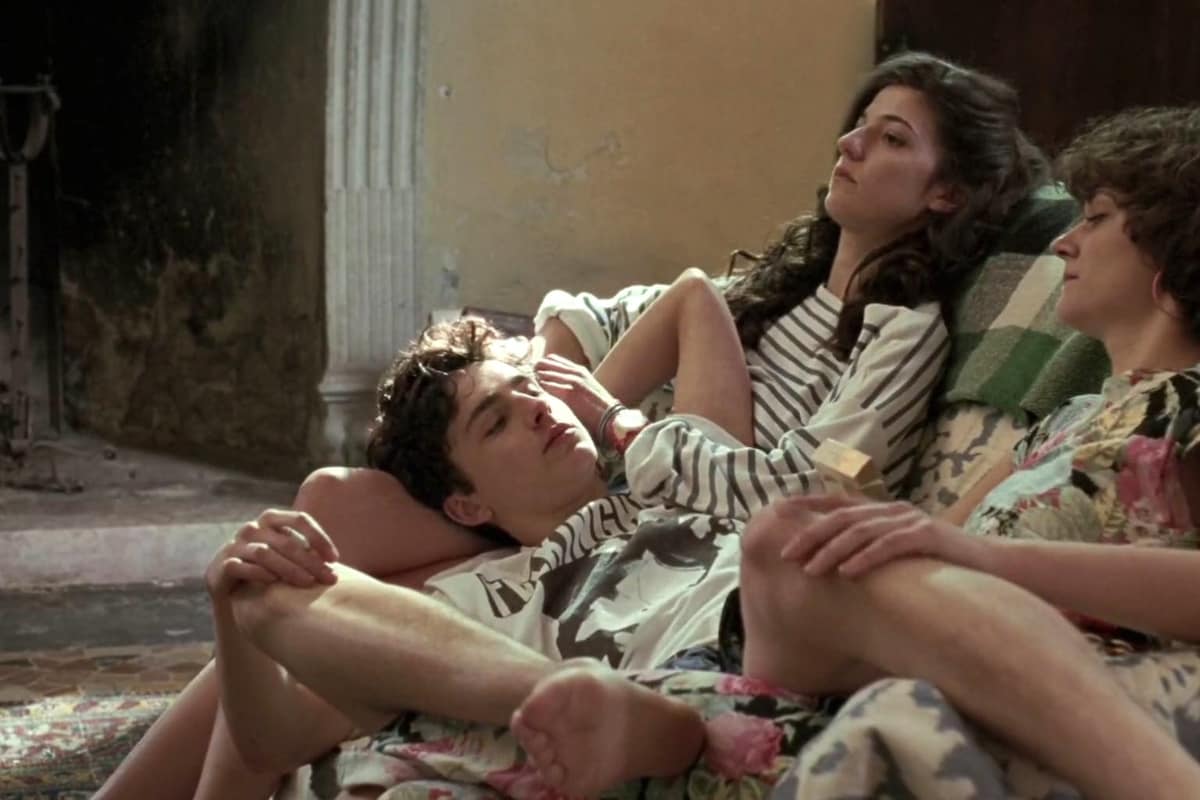
Antinoüs (130 AC): Perhaps the most evocative and certainly the most talked-about fragrance in the collection, Antinoüs is named after the young lover of Roman Emperor Hadrian, whose mysterious drowning in the Nile River in 130 AC led to his deification and a widespread cult. Unofficially, Brieuc Larsonneur playfully admits that this scent also draws inspiration from the distinctive smell of actor Timothée Chalamet’s armpit in the film Call Me By Your Name. This provocative muse manifests in a divisive blend where the "funkiness" of cumin meets aromatic sage. Cumin is a notoriously polarizing note in perfumery, often associated with body odor or animalic qualities, akin to coriander in its love-it-or-hate-it reception. However, on the skin, Antinoüs reportedly dries down to a soft, peppery aroma, reminiscent of the salty, sun-kissed warmth of a hot summer day, transforming its initial challenge into a surprisingly wearable, intimate scent.
Kleopatra: A Gourmand Dive into Royal History
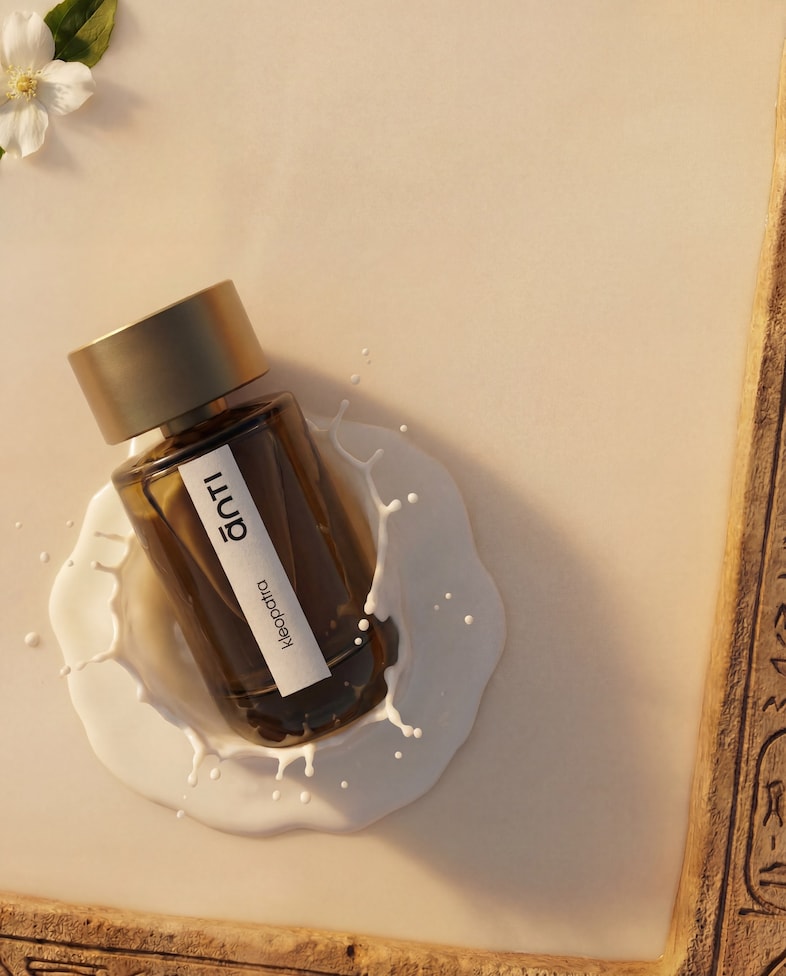
In early April, Änti Parfum expanded its intriguing lineup with Kleopatra, a fragrance that reinterprets the legendary royal milk baths of the eponymous Egyptian queen. This addition marks the brand’s first foray into the gourmand category, offering an intoxicating concoction of vanilla bourbon, sandalwood, musk, and almond milk. Cleopatra, a figure synonymous with allure, power, and lavish beauty rituals, is said to have bathed in donkey milk to maintain her youthful complexion. This historical detail provided a starting point for Änti Parfum, though practical considerations led to a modern interpretation.
"Donkey milk! That was Cleopatra’s secret, to bathe in it. But it was too animalic. Even classic dairy milk, Larissa and I were grossed out by," Larsonneur recounted, highlighting the challenges of literal historical recreation. The goal was not a museum piece but a wearable essence. "When we first launched, so many people came to us and asked where is the gourmand? We realised some people didn’t find their entry point into the collection because we were missing this," Larsonneur explained. The team sought to create an original gourmand, opting for almond milk for its non-sugary creaminess, complemented by vanilla and jasmine. The result is an addictive, soft yet powerful fragrance, a fitting olfactory tribute to the queen herself.
The Philosophy of Adaptation: History Breathes Again
While deeply rooted in historical research, Änti Parfum’s creations are not mere historical reconstructions. This distinction is crucial to their "olfactory archaeology." Larissa Sugaipova clarifies, "We allow our perfumers to use one ingredient which is more common today because you can’t wear the exact fragrances from ancient Egypt. It won’t be wearable. We don’t want to just redo the past, we want to bring its essence into today for a contemporary nose."
Larsonneur elaborates on this "modern twist" using Bast as an example. While incorporating ancient Egyptian ingredients like cardamom, saffron, papyrus, myrrh, and incense, a modern amber accord, crafted with vanilla, is introduced. Vanilla, a New World ingredient, arrived in the Middle East centuries after 2000 BC. However, its inclusion imbues Bast with a "certain warmth, evoking the desert, the climate," despite its anachronistic presence. This strategic adaptation ensures the fragrances are not only historically resonant but also palatable and sophisticated for a modern audience. Larsonneur acknowledges the work of institutions like The Osmothèque in France, which meticulously recreates historical perfumes for study, differentiating Änti Parfum’s artistic interpretation from purely academic preservation. "We are not trying to make a museum artifact. We are trying to make history breathe again on skin," he asserts.
Challenges and Unconventional Explorations
The journey of olfactory archaeology is not without its intriguing challenges and unexpected turns. Despite their shared passion for history, the founders have differing preferences for historical periods. Larsonneur, for instance, is drawn to the medieval era, but attempts to translate its scents proved difficult. "The few we tried, Larissa was like, ‘Uh-uh. This won’t pass, this is too weird’," he admitted, suggesting the olfactory realities of medieval Europe might be less appealing to a contemporary palate.
Even more illustrative of their experimental spirit, and the inherent risks, was their attempt to create a "future" fragrance. "It was horrible [laughs]," Sugaipova recalled. Larsonneur elaborated on this aborted project: "We made the most abstract perfume only using aldehydes. None of that reminds you of any actual existing ingredients, and your brain hates not knowing what it’s smelling. So we basically just created this monster." The results were unsettlingly varied and often negative, with some perceiving "freshly baked bread" or "white flowers," while Larsonneur himself experienced "chlorine and blood… pure fear… a whirring sound in my ear and shivers down my spine." A friend’s chilling description of "someone waiting for you behind the door with a knife" ultimately led to the project’s abandonment.
The reception of existing fragrances also highlights the subjective nature of scent. While Nashi Toro is Änti Parfum’s bestseller, one investor reportedly perceived it as smelling like "wet socks." Similarly, Antinoüs, with its challenging cumin note, often elicits polarized reactions. "Most of the time people smell it they’re either like, ‘ugh, vile’ or they go more into like, ‘ooh, mm, yum!’" Larsonneur observes. The candid inspiration from Timothée Chalamet’s armpit, while initially "offputting" to some, surprisingly transforms into a "super wearable" scent on the skin, showcasing the transformative power of a fragrance’s dry down and the personal connection it can forge.
Market Impact and Future Implications
In a remarkably short span of seven months since its launch, Änti Parfum has achieved significant milestones, underscoring the resonance of its unique concept within the competitive niche fragrance market. Larissa Sugaipova recalled their early aspirations: "I remember when we started to just think about Änti, we’d imagine that one day maybe we’d be sold in Liberty in London. That also turned out to be our first point of sale ever." This rapid success, moving from conceptualization to securing a prestigious retail presence, speaks volumes about the brand’s innovative appeal and strong market positioning. Larsonneur playfully summarized their journey: "We start from the bottom and now we here – and then we did the opposite."
Änti Parfum’s "olfactory archaeology" presents a compelling model for future fragrance development. By meticulously researching and creatively reinterpreting historical scents, the brand offers consumers more than just a perfume; it provides a narrative, an experience, and a tangible link to the past. This approach taps into a growing consumer desire for authenticity, storytelling, and unique, artisanal products that stand apart from mass-market offerings. The brand’s ability to blend academic rigor with artistic license, creating wearable scents that are both historically informed and aesthetically modern, positions them as innovators in the fragrance industry. As they continue to expand their collection, including the global launch of Kleopatra in September, Änti Parfum is not just creating new perfumes; they are redefining how we perceive and interact with olfactory history, proving that the most exciting frontiers in fragrance might indeed lie in the echoes of the past.