









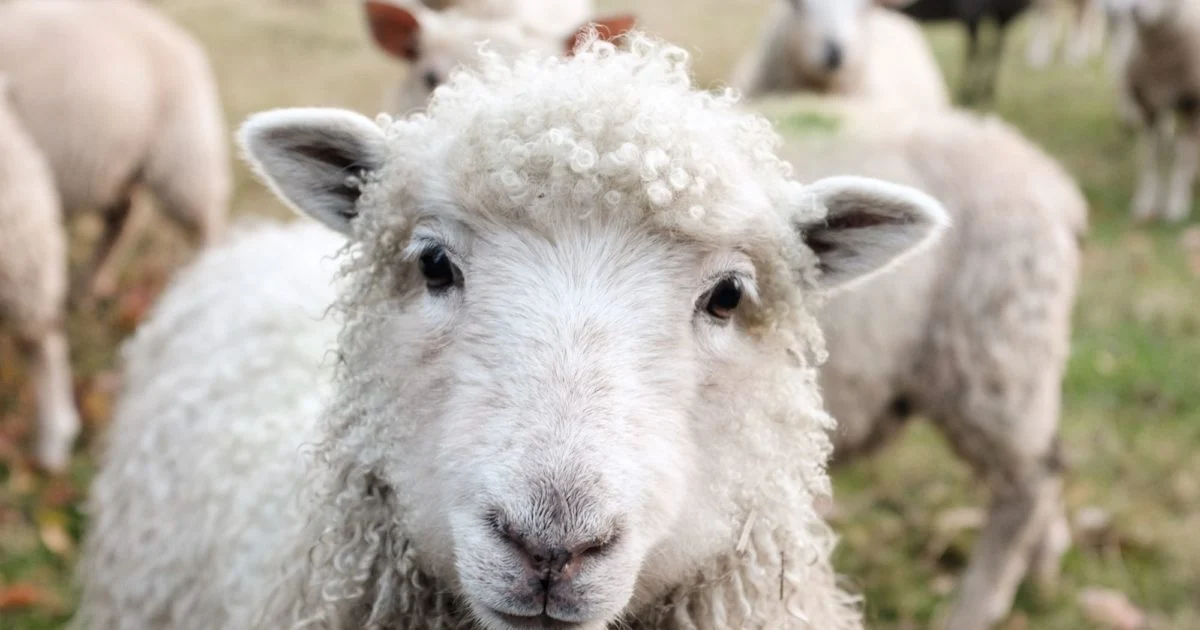
Wool, a textile synonymous with warmth, comfort, and natural luxury, holds a cherished place in global apparel and home furnishings. Its image is often one of bucolic tranquility: happy sheep grazing on verdant hillsides, periodically shorn for a natural fiber that benefits both animal and human. This pastoral ideal, however, conce masks a complex and often troubling reality within its vast global supply chain. Far from being a simple, mutually beneficial exchange, modern wool production is entangled with significant animal welfare concerns and substantial environmental impacts, prompting a critical re-evaluation of its ethical and sustainable credentials.
The Wholesome Image vs. Industrial Reality
For centuries, wool has been a staple, valued for its insulating properties, durability, and breathability. The traditional narrative paints a picture of sheep receiving an essential "haircut," a necessary welfare practice given their selectively bred, dense fleeces. This perception has fostered a sense of comfort among consumers, believing they are supporting an industry that respects animal well-being and operates in harmony with nature. Yet, this idealized view increasingly diverges from the findings of numerous investigations and expert analyses, which reveal a sector grappling with the consequences of large-scale industrialization and profit-driven practices.
The journey from a sheep’s back to a finished garment involves a global network of farms, processors, manufacturers, and retailers. Key producing nations include Australia, China, New Zealand, and South Africa, with Australia alone accounting for a significant portion of the world’s merino wool. This global scale, while economically powerful, also magnifies the challenges inherent in ensuring consistent ethical and environmental standards across diverse regulatory landscapes and farming practices.
Deepening Animal Welfare Concerns
The primary ethical criticisms leveled against the wool industry revolve around the treatment of sheep, particularly those bred for maximum fleece production. Selective breeding over generations has transformed sheep from their wild ancestors, like the mouflon (which naturally shed its winter coat), into animals entirely dependent on human intervention for shearing. Failure to shear domesticated sheep can lead to severe health issues, including heat stress, mobility problems, and susceptibility to parasitic infestations. This dependency underscores a fundamental shift in the human-animal relationship, where sheep’s very existence is largely dictated by their utility as a resource.
The industry’s expansion has led to practices designed to maximize output and minimize costs, often at the expense of animal welfare. Undercover investigations have repeatedly exposed instances of cruelty, challenging the industry’s "wholesome" image. A notable example occurred in 2015 when ethical outdoor clothing company Patagonia ceased purchasing wool from Ovis 21, a supplier in Argentina, after discovering severe animal cruelty practices that contradicted their ethical sourcing standards. This incident served as a stark reminder that even seemingly "ethical" farms can harbor unacceptable practices.
Beyond isolated incidents, several common industry procedures raise significant ethical questions:
- Mulesing and Tail Docking: These "surgical" procedures are performed primarily to prevent flystrike, a painful and potentially fatal condition where blowflies lay eggs in the sheep’s skin, and the hatched larvae feed on living tissue. Mulesing involves cutting strips of skin from a lamb’s buttock region, creating a bare area less attractive to flies. Tail docking, as the name suggests, involves severing a portion of the tail. While the intention is to prevent suffering from flystrike, these procedures themselves cause acute pain and distress, especially when performed without adequate pain relief, which is frequently the case in large-scale operations. While mulesing has been banned in regions like Europe, the UK, and New Zealand, it remains a prevalent practice in Australia, a major global wool producer.
- Castration: Male lambs are often castrated to manage flock behavior and prevent unwanted breeding. Like mulesing and tail docking, this procedure is routinely performed without pain relief in many parts of the world, leading to significant short-term pain and stress.
- Winter Lambing: A "strategic" decision for profitability, lambs in the wool and meat industries are often bred to be born in the winter. This timing allows them to graze on abundant green grass in spring, reducing the need for expensive supplementary feed. However, this practice leads to devastatingly high mortality rates. Reports indicate that millions of lambs die within the first 48 hours of life each year due to exposure to cold, starvation, and neglect. This issue is exacerbated by the selective breeding of ewes for higher rates of twins and triplets, which often result in smaller, weaker lambs more vulnerable to harsh conditions and mother ewes struggling to adequately care for multiple offspring.
- Sentience and Intelligence: Scientific evidence increasingly highlights the intelligence and sentience of sheep. Studies have shown sheep can recognize and remember up to 50 individual sheep faces, as well as human faces. They exhibit complex social behaviors, form strong bonds, and demonstrate individual personalities. This understanding challenges the notion that sheep are mere commodities, reinforcing arguments that they deserve protection from painful and stressful procedures.
The Inseparable Link: Wool and Meat Industries
A critical aspect often overlooked by consumers is the intrinsic link between the wool and meat industries. Unlike the perception that wool is a byproduct of a living animal, and therefore "kinder" than leather, which comes from a dead one, the reality is more complex. Animals bred for wool are typically considered "dual-purpose" by the industry and are ultimately slaughtered for their meat or skins once their wool production declines or becomes unprofitable. For instance, merino sheep, primarily known for their fine wool, are also a significant source of meat.
Sheep generally reach an age where their wool quality degrades around 5 to 6 years old, though they could naturally live up to 12 years. At this point, they are deemed "cast for age" and sent to slaughter. A significant portion of these animals, particularly in Australia, enters the live export industry. The conditions on live export ships are notoriously grim, with animals enduring prolonged journeys, extreme temperatures, overcrowding, and inadequate food and water, leading to high rates of stress, injury, and mortality before reaching their destination. While Australia has committed to phasing out live sheep exports by 2028, this practice has been a major source of animal welfare concern for decades, highlighting the severe conditions animals face at the end of their productive lives within the industry.
Even alternatives like alpaca wool, sometimes marketed as a kinder option, have faced scrutiny. A PETA investigation into Peru, the leading producer of alpaca wool, revealed distressing footage of alpacas being tied down and roughly shorn, leading major brands like UNIQLO to ban the fiber. This demonstrates that species diversification does not inherently guarantee ethical treatment; industrial-scale production often prioritizes efficiency over welfare, regardless of the animal involved.
The Environmental Cost of Wool
Beyond animal welfare, the environmental footprint of wool production is substantial and increasingly scrutinized. While wool is a natural fiber and biodegradable, its "natural" label can be misleading regarding its overall sustainability profile.
- Greenhouse Gas Emissions: Animal agriculture, including sheep farming, is a significant contributor to greenhouse gas (GHG) emissions. Sheep, as ruminants, produce methane, a potent greenhouse gas, through their digestive processes. Studies, such as those by Collective Fashion Justice’s CIRCUMFAUNA initiative, indicate that producing a wool knit jumper can emit significantly more greenhouse gases—up to 27 times more—than a comparable cotton one. This positions wool as a high-impact fiber in terms of its carbon footprint.
- Land Use and Degradation: Animal farming is the world’s largest user of land resources. Pasture and arable land used to grow feed for farmed animals account for nearly 80% of total agricultural land, with 26% of the Earth’s ice-free surface dedicated to grazing. This extensive land use leads to widespread deforestation, habitat destruction, and a dramatic loss of biodiversity. Clearing land releases stored carbon, exacerbates climate change, and displaces wild species, increasing their risk of endangerment and extinction. Intensive sheep farming can also lead to severe land degradation, soil erosion, and even desertification in vulnerable regions.
- Water Footprint: While the original article does not detail water usage, intensive livestock farming, including sheep, generally requires substantial amounts of water for drinking, feed production, and processing. This contributes to water scarcity and pollution in many agricultural regions.
- Chemical Use: Sheep dipping to control parasites, and the processing of wool itself, can involve various chemicals that, if not properly managed, can pollute waterways and soil, impacting local ecosystems.
Despite these significant environmental challenges, there is a powerful potential for positive change. Environmental scientists propose that a global transition away from animal agriculture towards plant-based, recycled, and lab-grown alternatives could free up vast tracts of land. This rewilding potential could sequester a significant portion—estimated at 99-163%—of our remaining carbon emissions budget, offering a powerful nature-based solution to climate change.
Navigating Ethical Sourcing: Standards and Certifications
In response to growing consumer awareness and pressure, various standards and certifications have emerged, aiming to ensure more ethical and sustainable wool production. Prominent examples include the Responsible Wool Standard (RWS) and ZQ Merino Standard. These initiatives typically address aspects like land management, worker welfare, and certain animal welfare practices.
However, a critical analysis reveals limitations within these standards:
- Fundamental Practices: Neither RWS nor ZQ Merino explicitly prohibits the slaughter of sheep for meat or the practice of winter lambing, which are central to the industry’s economic model and contribute to significant animal suffering.
- Pain Relief: While these standards acknowledge painful procedures like tail docking and castration, their requirements for pain relief can be ambiguous. ZQ Merino, for instance, has not finalized an official process for pain relief for these procedures, and RWS notes that pain relief should be supplied "if it is available." This leaves significant loopholes, as these practices would be unnecessary if intensive breeding were curtailed, and they are considered illegal without pain relief for companion animals like dogs and cats in many jurisdictions.
- Mulesing: While some brands pledge "mulesing-free" wool, both RWS and ZQ Merino still permit mulesing under certain conditions, albeit with recommendations for pain relief where possible. This highlights that these standards, while offering improvements, do not fundamentally challenge the underlying practices driven by intensive farming.
The existence of these standards, however imperfect, does signal a growing recognition of the issues. Consumer pressure and campaigns, such as Four Paws’ #woolwithabutt campaign advocating for mulesing-free wool, have prompted numerous brands to commit to sourcing mulesing-free wool or exploring wool-free alternatives. This indicates a positive shift in corporate responsibility and consumer influence.
The Path Forward: Alternatives and Systemic Change
For consumers seeking truly ethical and sustainable options, the most impactful choices often lie in embracing alternatives or supporting circular economy models.
- Recycled and Vintage Wool: Opting for pre-loved, vintage, or recycled wool goods prevents new production, reduces demand for virgin wool, and keeps textiles out of landfills. Innovations in recycled wool technology also allow for the creation of new fabrics from existing wool waste, offering a more sustainable pathway.
- Animal-Free Alternatives: A diverse and growing range of plant-based and innovative synthetic materials now offers excellent performance characteristics comparable to wool, often with a significantly lower environmental and ethical footprint:
- TENCEL Lyocell: Derived from sustainably sourced wood pulp, TENCEL is known for its softness, breathability, and excellent thermo-regulating properties, making it a viable alternative to wool.
- Organic Cotton: While cotton has its own environmental considerations (e.g., water use, pesticide use in conventional farming), organically grown cotton can be a more sustainable option than wool, especially when comparing greenhouse gas emissions and land use.
- Hemp and Linen: These natural fibers are highly durable, require less water and pesticides than conventional cotton, and offer good thermal properties.
- Innovative Plant-Based Fibers: Materials like "wool" made from coconut fiber, seaweed, or soy protein are emerging, pushing the boundaries of sustainable textile innovation.
- Recycled Synthetics: Fabrics made from recycled polyester or nylon can offer warmth and durability, mitigating the environmental impact of virgin plastic production and preventing plastic waste from entering landfills. However, concerns about microplastic shedding during washing remain.
- Fleece from Recycled PET: Polartec and other brands produce high-performance fleece from recycled plastic bottles, offering warmth without animal products.
Beyond individual consumer choices, addressing the ethical and environmental challenges of wool requires systemic change within the industry. This includes stronger regulatory frameworks, increased transparency throughout the supply chain, greater investment in alternative materials, and a fundamental shift away from intensive animal agriculture towards more regenerative and compassionate models of food and fiber production.
The comfortable narrative surrounding wool is unraveling, revealing a complex tapestry woven with threads of ethical dilemma and environmental impact. As awareness grows, the fashion industry and consumers alike are challenged to look beyond surface perceptions and critically assess the true cost of their clothing choices, paving the way for a more responsible and sustainable future for textiles.