





In 1566, the skies above Basel, Switzerland, became the stage for a bewildering spectacle: widespread reports detailed a "fight" between mysterious red and black spheres. Eyewitnesses, steeped in the prevailing religious paradigms of the era, interpreted this aerial ballet as a profound religious miracle, an omen from the divine. Centuries later, modern ufologists have recontextualized such historical accounts, recasting the celestial phenomenon as an extraterrestrial battle, an early "close encounter" in human history. While both explanations might strike some as farfetched, the human experience of encountering inexplicable objects or beings from the sky—be they bright lights, humanoid figures, or disembodied voices—has been a remarkably consistent thread throughout recorded history. These encounters have deeply shaped myths, folklore, and even canonical religious texts, from ancient Egyptian scrolls to fourth-century Chinese chronicles, and numerous passages within Christianity. Today, these enigmatic observations are collectively known as Unidentified Flying Objects (UFOs) or Unidentified Aerial Phenomena (UAPs). The critical question, as posed by Canadian artist Chloe Wise in her latest exhibition, Extrasensory, is whether humanity is merely employing different terminology to describe the same enduring, unfathomable experiences.
Wise, contemplating this very question over coffee near the Kulturstiftung Basel H. Geiger (KBH.G), where Extrasensory is currently on display, offers a compelling hypothesis: "It’s not the experience that changes," she suggests. "It’s the words we use to describe it, and to make sense of it, that change over time." This central thesis forms the intellectual and artistic backbone of her multi-faceted exhibition, which invites audiences to explore the shifting narratives surrounding the unknown.
The Basel Phenomenon of 1566: A Historical Precedent
The 1566 Basel celestial event serves as a potent historical anchor for Wise’s exploration. Detailed accounts, most famously documented in a contemporary broadsheet by Samuel Koch, described a dramatic aerial display witnessed by numerous citizens. The broadsheet, published by Samuel Apiarius, recounted how "many large black spheres" engaged in a "terrible fight and combat" with "red spheres" in the sky, occasionally turning fiery and then vanishing. Some reports also mentioned a "great black thing" that appeared. The general populace and religious authorities of the time largely interpreted these occurrences through a providential lens, seeing them as divine signs, warnings, or manifestations of celestial warfare. This incident is often cited alongside other notable historical aerial phenomena, such as the 1561 Nuremberg celestial event, where citizens reported a vast array of cylindrical and spherical objects engaged in what appeared to be combat, culminating in a large, dark, triangular object.
These historical accounts, far from being isolated curiosities, underscore a long-standing human predisposition to grapple with the unexplained. Across diverse cultures and epochs, narratives of flying chariots, sky gods, luminous beings, and aerial battles pepper historical records and mythologies. From the Vimanas described in ancient Indian Sanskrit texts to Ezekiel’s "wheel within a wheel" vision in the Old Testament, the human imagination has consistently sought to interpret high-strangeness phenomena through the dominant worldview of the time. What was once attributed to angels, demons, or divine chariots in a religiously governed society, Wise argues, is now framed within a "technological, post-nuclear" context. "We sent Katy Perry to space," she notes, highlighting how humanity’s scientific advancements and spacefaring capabilities have recalibrated our understanding and expectations of what might exist beyond Earth. Consequently, "the way that we make sense of something unfathomable would be through a more technological lens," leading to the modern concept of UFOs and alien encounters.
"Extrasensory": An Immersive Journey into the Liminal
Wise’s exhibition Extrasensory is meticulously designed to immerse visitors in this inquiry. The journey begins unconventionally, through a "gift shop" that occupies the lobby of the KBH.G. Far from being an actual commercial outlet, this space is an art installation itself, overflowing with meticulously crafted, quasi-spiritual and pseudoscientific merchandise. Imagine the roadside stalls near Area 51 or other famed UFO hotspots: Himalayan sea salt lamps, kitschy keychains, discount CDs featuring ambient alien soundscapes, prayer candles depicting Jesus surrounded by Zeta Reticulans, and packets of glowing green alien toys.
The creation of this hyperreal environment was an arduous process, with Wise and her team working until 2 AM every night for twelve days, even fabricating details like dust on DVD covers and black mould behind the reception desk to achieve a convincing verisimilitude. This "gift shop" is more than a superficial rendering of ufology’s commercialized fringes; it serves as a critical entry point into Wise’s exploration of human belief. "There’s an impulse, as humans, to create memorabilia," Wise acknowledges. These "tacky, kitsch, cheap objects" are presented as an initial "layer" of esoteric, religious, or revelatory experiences – a commodified gateway. As Wise elaborates, "At first, you interact with the commodified version of the experience, like tarot cards, rosary beads, or a prayer candle. And then something happens. You have an experience, and words don’t quite cut it." It is at this juncture that the mundane becomes imbued with deeper meaning, prompting a search for symbols and synchronicities, whether it’s noticing recurring numbers, a specific phrase, or finding an image of Jesus’s face on a piece of toast.
Beyond the initial kitsch, visitors are led through an "eerie, Lynchian ‘backstage’" area. This liminal space, characterized by a disorienting aesthetic and an experimental soundtrack composed by Loke Rahbek, acts as a transitional zone, preparing the mind for the central experience of the exhibition: the 30-minute film, *PsyFi***.
*"PsyFi": A Multilayered Cinematic Exploration**
*PsyFi*** plunges viewers into a kaleidoscopic world of interwoven realities, cults, and philosophical musings. The film opens with a scene depicting a group of young people encountering an extraterrestrial light in the sky. Faced with this inexplicable phenomenon, they begin to recite a series of poetic phrases and mantras that resonate throughout the film, acting as thematic anchors. Lines such as "An ideal pebble in a perfect pond," "The planet is a mess, it deserves a rest," "Science confesses her ignorance," and "The body is a situation" invite viewers to ponder existence, environmental decay, the limits of human knowledge, and the nature of self.
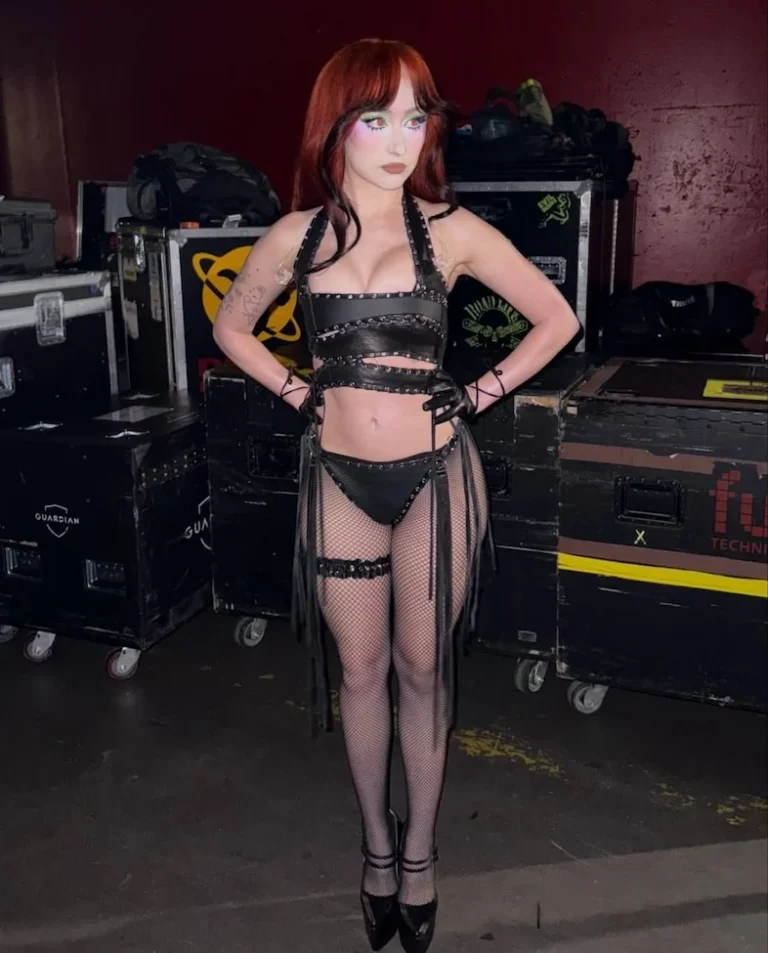
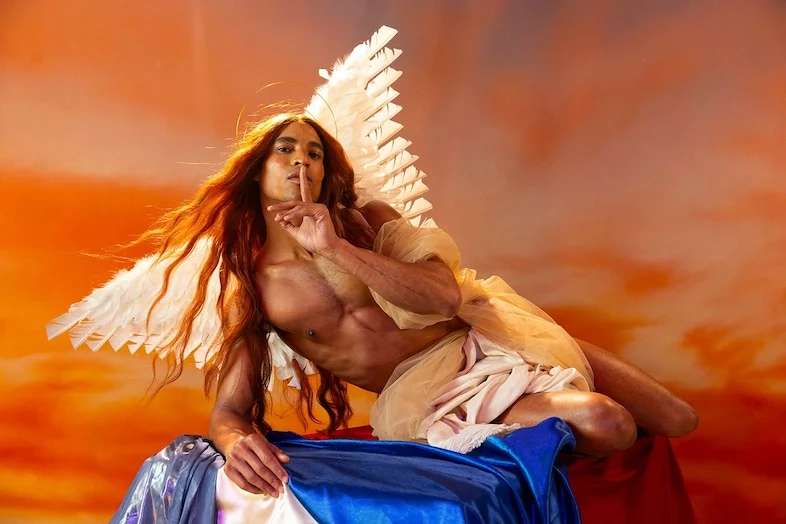
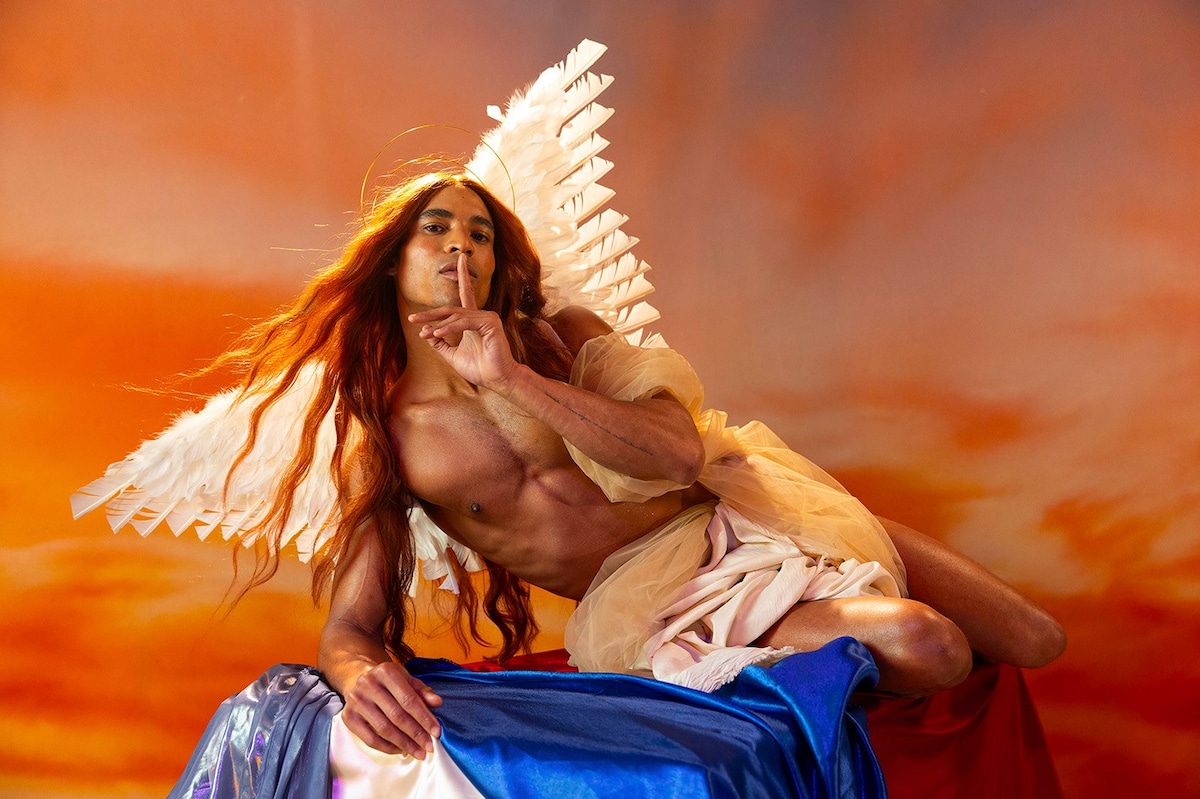
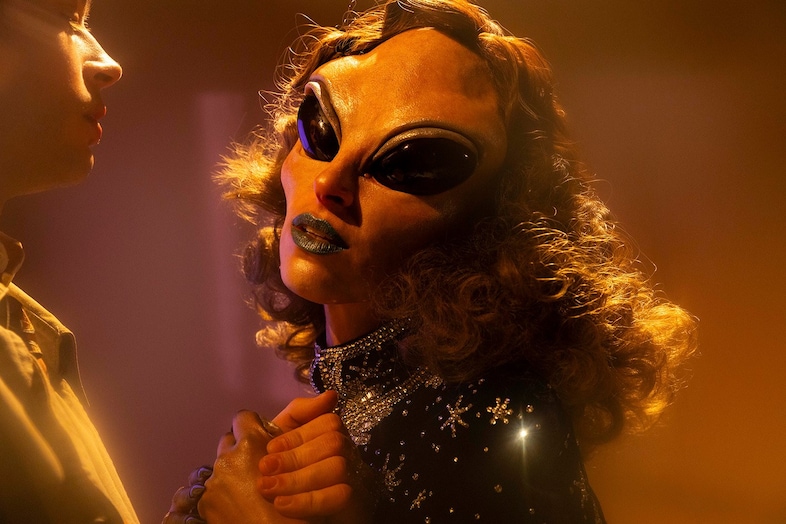
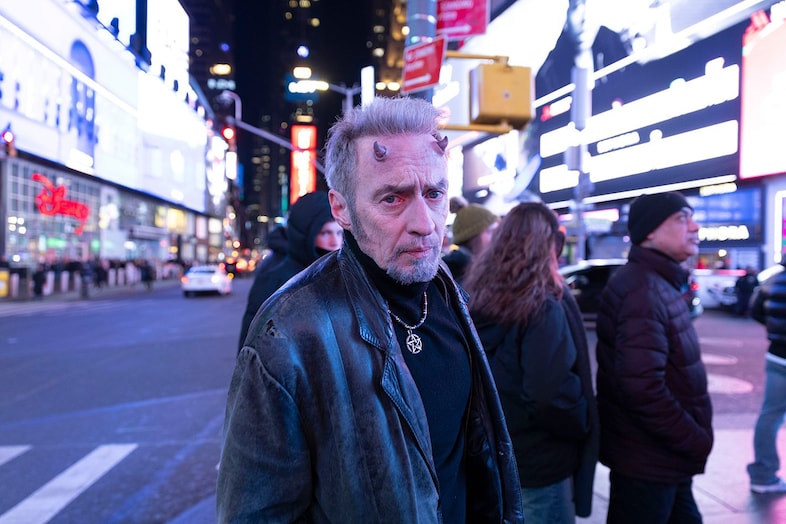
From this contemplative opening, *PsyFi*** unfurls into a rich tapestry of narratives. It features cults seeking transcendence, archetypal angels and demons grappling with their roles, a satirical Victoria’s Secret-style fashion show, and even a down-on-his-luck devil drowning his sorrows in the urban sprawl of New York. A particularly poignant segment takes the form of a melodramatic TV show within the film, starring Wise herself as an alien longing to return to her home system, and Ben Ahlers as her jilted human lover. Their dialogue, often fragmented and laden with existential yearning—"There’s a better universe next door. Let’s go"—evokes a sense of longing for escape and alternate realities.
The film’s aesthetic and thematic echoes of David Lynch are unmistakable. Like Lynch, Wise, a painter who transitioned into filmmaking, consistently gravitates towards the mysterious and the ineffable. Her previous exhibition of paintings, Myth Information (2025), similarly explored the construction and dissemination of narratives. *PsyFi***’s disconnected words, liminal backdrops, and dreamlike sequences create an atmosphere where logic gives way to intuition, mirroring Lynch’s signature style and his fascination with the subconscious and the uncanny.
Faith, Fiction, and the Absence of Absolute Truth
Wise posits that the sci-fi tropes and religious theatrics interwoven throughout *PsyFi** are far from mere aesthetic choices; they are integral to understanding human belief systems. She argues that one cannot discuss faith without acknowledging the "fictions, films, and images" through which stories are disseminated and consumed. In the 21st century, this tapestry includes not only ancient holy texts like the Bible but also modern narratives from sci-fi films, television shows like The X-Files, and even internet lore surrounding cryptids and conspiracies. "You have to include all of those elements in order to weave the whole tapestry, which includes all of these different threads that, alone, don’t speak to the true nature of the thing. The truth being, of course, that there is* no absolute truth," Wise asserts. This perspective challenges conventional notions of truth, suggesting that our understanding of reality is always mediated by cultural and historical frameworks.
To further expand this multifaceted exploration, Extrasensory is accompanied by a book of the same name. This publication brings together a diverse array of voices—writers, artists, scientists, and mystics—who reflect on the unknowable phenomena that reside at the edges of "consensus reality." The book is not a definitive textbook on UFOs; rather, it’s a blend of speculative research, philosophical essays, religious studies, psychoanalytical insights, fiction, and even firsthand UFO accounts. Its purpose is to "expand – rather than seek to explain – the realities that proliferate in the film," offering a non-linear, experiential journey. Wise describes it as "like a dream object that you just feel your way through. Everybody could find something different from it, but that’s what the phenomenon is. That was why I thought art is the place for this, the way that poetry is a good place to talk about love… We’re weighing, and playfully, poetically dancing around all these different possibilities." This approach underscores art’s unique capacity to engage with ambiguity and to foster multiple interpretations, rather than impose a singular truth.
The Bracelet Structure: A Cycle of Perception
Wise conceptualizes the exhibition’s structure as a "bracelet," a cyclical journey of altered perception. After *PsyFi*** concludes, featuring actual declassified footage of orbs and UFOs from US government files—a significant acknowledgment of contemporary official engagement with UAPs—viewers navigate back through the mirrored backstage area and find themselves once again in the gift shop. This return is transformative. The seemingly trivial trinkets now resonate with new meaning. Images, characters, and fragments of language from the film are recognizable on candlesticks, CD covers, and bumper stickers. "Suddenly, things are starting to make sense," Wise observes, highlighting how the experience of the film imbues the mundane with profound, if subjective, significance.
Of course, these souvenirs cannot fully encapsulate the vastness of the *PsyFi*** universe, much less the totality of a genuine extraterrestrial encounter. The cliché "I saw a UFO and all I got was this lousy t-shirt" perfectly captures the inherent disconnect between a transcendent experience and its tangible, often commodified, representation. Like all souvenirs, these objects represent a human attempt to concretize memory or emotion, but they can only ever gesture towards the broader scope of the realities we inhabit.
Yet, perhaps this very disconnect is the crux of the matter, the space where faith takes root. Whether one speaks of religious miracles or physics-defying flying saucers, the unexplainable demands a leap of belief. "Belief persists," Wise concludes. "Maybe it’s a biological need that we don’t understand. Maybe the mystery is inherently necessary. We want to be reenchanted."
Broader Implications and Contemporary Relevance
Chloe Wise’s Extrasensory arrives at a particularly pertinent moment. In recent years, the discussion surrounding UAPs has shifted dramatically from the fringes of conspiracy theories to the forefront of mainstream governmental and scientific inquiry. Reports from the Pentagon, declassified military footage, and official acknowledgment of phenomena that defy conventional explanation have propelled UAPs into serious consideration. This institutional shift mirrors Wise’s central premise: as our technological capabilities and understanding evolve, so too does our framework for interpreting the unexplained. The same aerial phenomena that once evoked religious awe now prompt scientific investigation and national security concerns.
Wise’s work implicitly questions the authority of any single framework—be it religious, scientific, or ufological—to fully comprehend phenomena that consistently elude categorization. Instead, she champions an inclusive approach, where art serves as a crucial medium for exploring the rich, often contradictory, tapestry of human experience and belief. By weaving together historical accounts, contemporary anxieties, popular culture, and philosophical inquiry, Extrasensory offers a compelling meditation on humanity’s enduring fascination with the unknown and our persistent need to find meaning in a world where absolute truths remain elusive. It reminds us that whether we call them angels or aliens, the human quest for enchantment and understanding in the face of the ineffable is a constant, evolving force.
Extrasensory is on show at Kulturstiftung Basel H. Geiger until September 6.