





The 2026 Excellence in Sports Performance Yearly (ESPY) Awards convened on Wednesday night in New York City, marking a significant milestone in the intersection of professional athletics, global fashion, and entertainment. Held at a premier venue in the heart of Manhattan, the event served as a dual-purpose platform: honoring the pinnacle of sporting achievement over the past year while solidifying the status of elite athletes as major influencers in the luxury fashion industry. The evening featured a curated assembly of Olympic champions, professional league MVPs, and cultural icons, many of whom utilized the red carpet to debut custom couture and high-fashion collaborations.
Historical Context and the Evolution of the ESPY Awards
Since its inception in 1993, the ESPY Awards have evolved from a cable-network sports ceremony into a globally recognized media event. Historically, the awards were designed to mirror the Academy Awards but for the sporting world, utilizing a fan-voting system to determine winners across various categories. However, the last decade has seen a dramatic shift in the event’s cultural footprint. As athletes have increasingly secured lucrative "Name, Image, and Likeness" (NIL) deals and global brand ambassadorships, the ESPY red carpet has become a competitive arena for designers ranging from traditional Parisian houses to avant-garde couturiers.
The 2026 ceremony arrived at a time when the "athlete-as-icon" movement is at its peak. Following the massive global engagement of recent Olympic cycles, the 2026 ESPYs highlighted how sports figures are no longer just representatives of their respective disciplines but are now central figures in the $3 trillion global fashion and lifestyle economy.
Architectural Couture and Avant-Garde Statements
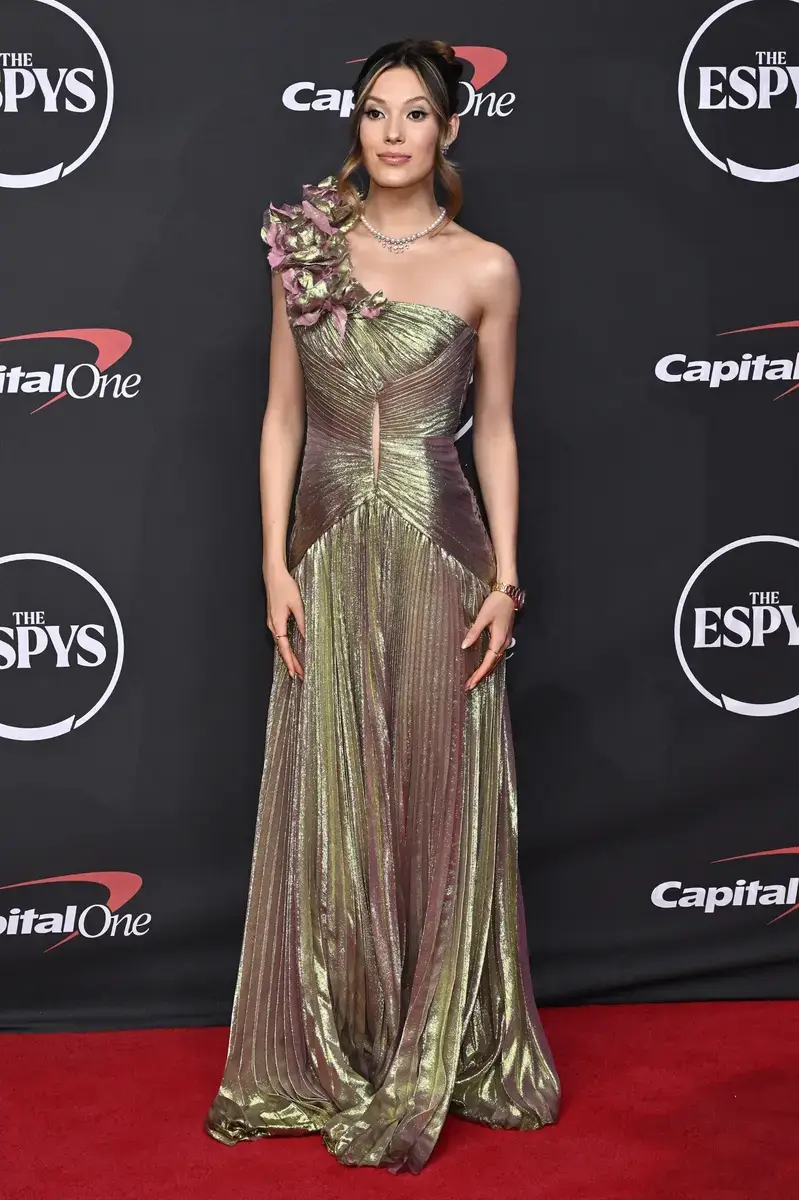
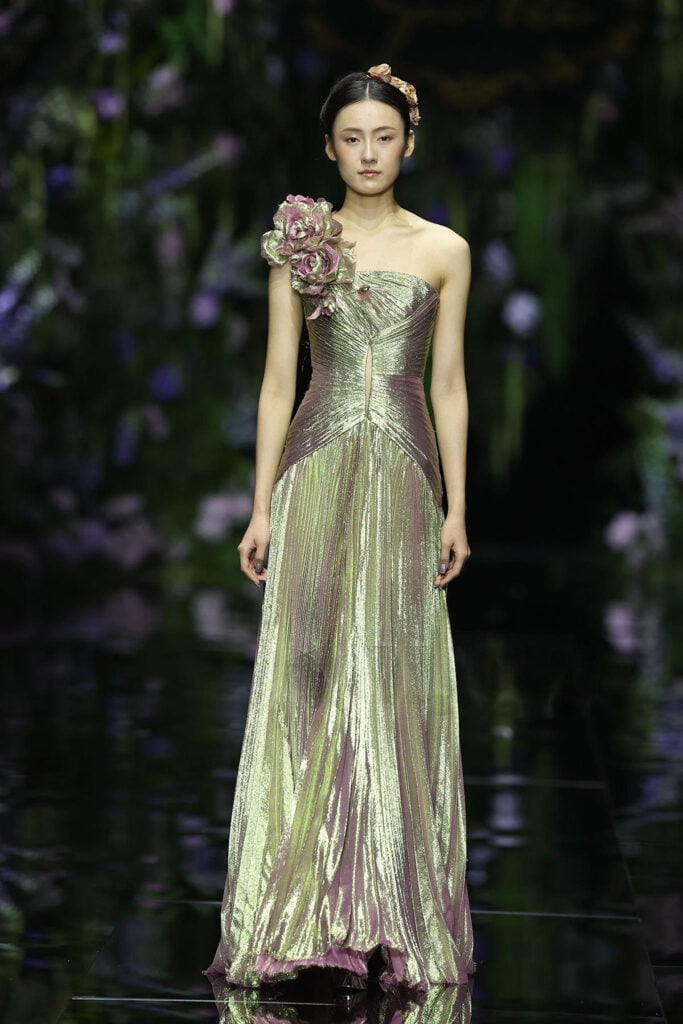
The red carpet was headlined by Eileen Gu, the Olympic freestyle skiing champion and a prolific figure in the fashion world. Gu appeared in a creation from the Guo Pei Spring 2026 Couture collection. The ensemble featured a metallic finish complemented by intricate floral shoulder detailing and sculptural pleating. Fashion analysts noted that the choice of Guo Pei—a designer renowned for her "China: Through the Looking Glass" influence—underscores Gu’s unique position as a bridge between Western athletic achievement and Eastern luxury markets. The dress, characterized by its architectural rigidity and shimmering texture, was cited as one of the most technically complex garments of the evening.
In a similar vein of structural innovation, Olympic gymnastics legend Simone Biles and her husband, NFL player Jonathan Owens, presented a unified aesthetic that balanced contemporary tailoring with classical glamour. Biles wore a champagne-toned satin gown featuring dramatic sculptural draping, a trend that has dominated 2026 runways. Owens complemented this look with a rich chocolate-brown suit, notable for its cropped tuxedo jacket—a silhouette that suggests a shift away from traditional menswear proportions toward more experimental, gender-fluid tailoring.
The Rise of Minimalist Luxury and Tonal Consistency
While several attendees opted for avant-garde structures, a significant portion of the 2026 cohort leaned into "quiet luxury," focusing on silhouette and textile quality over overt ornamentation. Alysa Liu, the Olympic figure skating champion, exemplified this trend in a chocolate-brown Louis Vuitton gown. The garment’s softly draped neckline and clean, minimalist lines allowed the richness of the earth-toned fabric to serve as the focal point. Industry data suggests that chocolate brown has surpassed traditional black as the preferred formal hue for the 2026 season, a trend reflected in multiple ensembles throughout the night.
Kate Upton, attending in support of her husband, MLB pitcher Justin Verlander, provided a counterpoint to the neutral palette in a cobalt-blue Schiaparelli Fall 2025 dress. The garment utilized textured fabric to add depth to a minimalist column silhouette, maintaining the house’s reputation for surrealist-adjacent textures while remaining accessible for a high-profile sports event.
In contrast, Sunisa Lee, the decorated Olympic gymnast, chose a shimmering red column gown. Though the gown followed the evening’s trend of sleek silhouettes, some observers noted that the straight strapless neckline and uniform fit represented a more conservative approach compared to the high-concept designs seen on her peers.

Intricate Detailing and the Influence of High-Jewelry Partnerships
The 2026 ESPYs also highlighted the growing importance of high-jewelry partnerships. Ayesha Curry, television personality and entrepreneur, arrived with NBA star Stephen Curry wearing a Christian Siriano Pre-Fall 2026 gown. The dress featured a sheer corseted bodice overlaid with a crystal "spider web" detail. The look was elevated by Tiffany & Co. jewels, illustrating the strategic placement of legacy jewelry houses on sports-adjacent figures to capture a broader demographic.
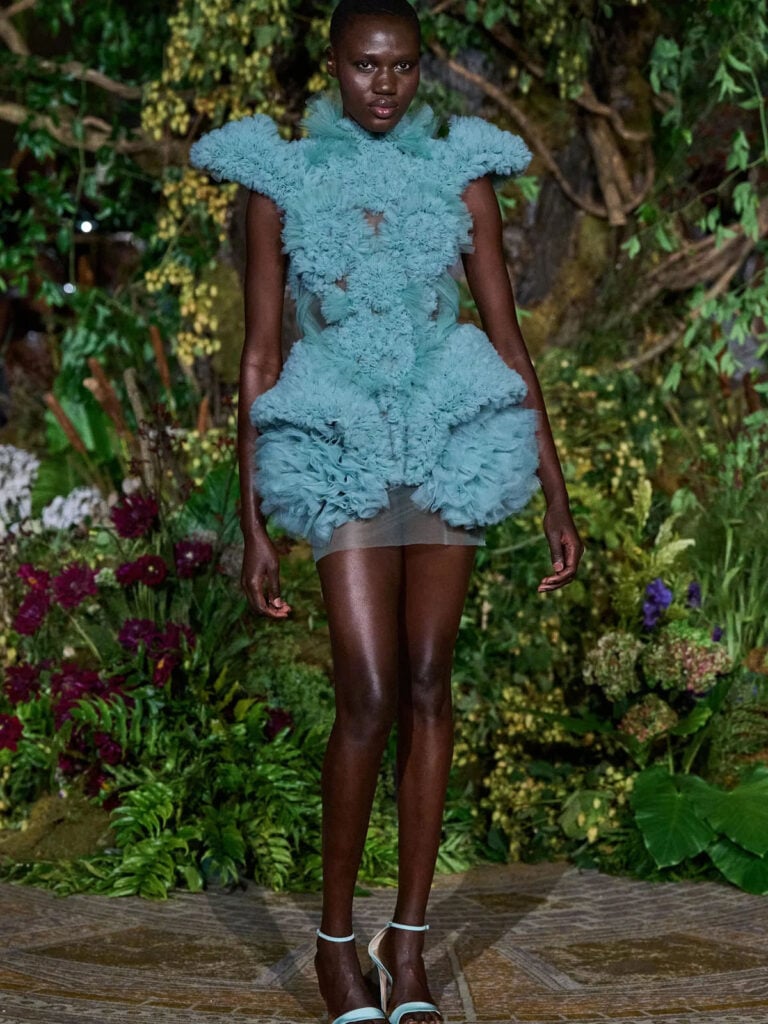
Olympic ice dancer Madison Chock also selected Christian Siriano, though her choice moved toward the maximalist end of the spectrum. Chock wore an aqua tulle mini-dress characterized by oversized floral textures and significant volume. While the garment was a standout for its vibrant color and sheer mass, it sparked discussion among fashion critics regarding the balance of volume in red carpet photography, where three-dimensional textures can often overwhelm the wearer’s frame.
Honoring the Next Generation: The Billie Jean King Youth Leadership Award
Beyond the aesthetics, the ESPY Awards maintained their focus on social impact through the Billie Jean King Youth Leadership Award. This year’s recipient, Team USA triathlete Julia Howe, attended in an off-the-shoulder blue brocade gown. The choice of a timeless, structured fabric was viewed as a symbolic nod to the gravity of the honor she received. The award, established to recognize young people using the power of sport to improve their communities, continues to be a cornerstone of the ESPY mission, highlighting the "Excellence" part of the event’s acronym.

Menswear Trends and the "Fringe" Movement
Menswear at the 2026 ESPYs showed a clear divide between classicism and modern embellishment. NBA All-Star Karl-Anthony Towns opted for traditional black tailoring, providing a sober backdrop for his partner, Jordyn Woods. Woods made a significant visual impact in an Oscar de la Renta Pre-Fall 2026 embellished fringe gown, paired with Bucherer Fine Jewellery. The movement-heavy fringe, a recurring motif in 2026 collections, provided a kinetic element to the red carpet, contrasting with the static, sculptural gowns worn by others.
Other notable appearances included:
- Chloe Kim: The Olympic snowboarder wore an Alex Perry strapless gown featuring unique waist detailing, balancing the designer’s signature sharp lines with a feminine silhouette.
- Lindsey Vonn: The retired ski racing icon continued her long-standing relationship with the ESPY red carpet in a silver Gucci ensemble, styled with archival pieces from Fred Leighton and Kwiat. Vonn’s look was a testament to the "Silver Statement" trend, which utilizes metallic fabrics to convey a sense of futuristic glamour.
- Morgan Riddle: The content creator, known for her influence in the tennis world, wore a Thom Browne gown previously seen on actress Chase Sui Wonders at the 2025 Emmy Awards. The repetition of the look was noted by fashion archivists as a positive step toward sustainable red-carpet practices and the "re-wearing" movement currently gaining traction in Hollywood.
Broader Impact and Industry Implications
The 2026 ESPY Awards underscore a broader shift in how athletic talent is marketed. Major fashion houses such as Louis Vuitton, Gucci, and Schiaparelli are no longer just dressing actors for the Oscars; they are aggressively pursuing athletes who command massive, loyal social media followings. According to market analysis, the engagement rates for athletes on social media during the ESPYs often outperform traditional entertainment ceremonies, as sports fans exhibit higher levels of brand loyalty.
Furthermore, the presence of designers like Guo Pei and Christian Siriano indicates that the ESPYs have become a legitimate stop on the global couture circuit. The event provides a unique venue where the physical prowess of the attendees—often possessing different body types than traditional runway models—allows designers to showcase the versatility and fit of their garments.
Conclusion
The 2026 ESPY Awards successfully navigated the delicate balance between a high-stakes sports ceremony and a premier fashion event. By bringing together icons like Simone Biles and Eileen Gu with legendary design houses, the event reinforced the narrative that sports and style are inextricably linked. As the industry moves forward, the "red carpet athlete" is likely to remain a permanent fixture in the luxury landscape, with the ESPYs serving as the primary annual showcase for this lucrative fusion.
The evening concluded with a final appearance by television host Rocsi Diaz in a black Mac Duggal halter gown with a feathered hem, a classic choice that bookended a night defined by both innovation and tradition. As the sports world looks toward the upcoming seasons, the 2026 ESPYs will be remembered as the year the red carpet finally matched the intensity of the playing field.