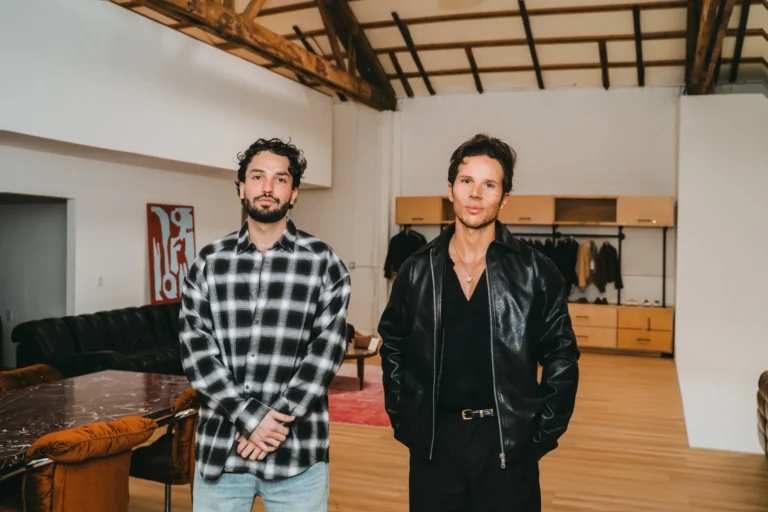












The fashion industry has long been scrutinized for its profound environmental footprint, a reality that has driven Emily Gittins to seek systemic change since her adolescence. As one of the most resource-intensive sectors globally, fashion is estimated to be responsible for approximately 10% of global carbon dioxide emissions and more than 20% of global wastewater. Despite these alarming statistics, consumer demand for rapid production and frequent novelty remains high, creating a tension between commercial growth and ecological preservation. Recognizing that the prevailing "take-make-waste" model is increasingly untenable, Gittins co-founded Archive in 2021 alongside Ryan Rowe. The company provides a comprehensive software-as-a-service (SaaS) solution designed to empower fashion brands and retailers to launch and manage their own branded resale marketplaces, effectively transitioning toward a circular economy.
In a significant milestone for the San Francisco-based startup, Archive recently announced the closing of a $30 million Series B funding round. The investment was led by Energize Capital, with participation from notable venture firms including Lightspeed Venture Partners, G9 Ventures, and Bain Capital Ventures. This latest infusion brings Archive’s total capital raised to $54 million. The company intends to utilize the new funding to accelerate product innovation, enhance its technological infrastructure, and expand its footprint across global markets, catering to an industry that is rapidly being reshaped by consumer preferences and regulatory mandates.
The Operational Mechanics of Archive’s Resale Ecosystem
Archive distinguishes itself in a competitive landscape—occupied by players such as Trove and Treet—by offering a highly customizable and scalable technological suite. Rather than a one-size-fits-all marketplace, Archive provides the backend architecture that allows brands to maintain their aesthetic identity while facilitating secondhand transactions. The platform’s capabilities extend far beyond a simple listing site; it integrates deeply into a brand’s existing operations to handle the complexities of the secondary market.
Key features of the Archive platform include automated product feeds that utilize a brand’s historical data to generate accurate listings for used items. This "smart pricing" technology analyzes market trends and original retail values to suggest optimal price points for sellers. Furthermore, Archive provides comprehensive warehouse management systems (WMS) that facilitate the intake, cleaning, processing, repair, and fulfillment of pre-owned goods. By streamlining these logistics, Archive enables brands to manage the "reverse logistics" challenge that often prevents traditional retailers from entering the resale space.
The software also includes robust data analytics tools, allowing brands to monitor the performance of their resale programs in real-time. Brands can track customer acquisition costs, lifetime value, and the overall environmental impact of their circular initiatives. Currently, Archive’s roster includes over 50 prominent global brands, ranging from athletic giants like New Balance and outdoor specialists like The North Face to high-end luxury labels such as Oscar de la Renta. This diversity suggests that the demand for managed resale spans the entire spectrum of the fashion industry, from mass-market performance gear to artisanal luxury.
A Chronology of Growth and Market Evolution
The trajectory of Archive reflects a broader shift in the venture capital landscape toward "Climate Tech" and "Circular Tech." When Gittins and Rowe launched the company in 2021, the concept of branded resale was still in its nascent stages, with many retailers fearing that selling used goods would cannibalize the sales of new collections. However, the initial proof of concept demonstrated that resale could actually serve as a powerful customer acquisition tool, attracting younger, price-sensitive, or eco-conscious shoppers who might otherwise be priced out of a brand’s primary offerings.
Following a successful seed round and a $15 million Series A in late 2022, Archive focused on refining its global capabilities. Unlike many competitors that were restricted to domestic operations, Archive built its platform to support cross-border transactions and multi-continental logistics. This focus on global scalability proved crucial as international conglomerates began seeking unified solutions for their worldwide operations.
By 2024, the narrative around resale had shifted from an experimental marketing tactic to a core business requirement. The closing of the $30 million Series B in late 2024 signals a move into "scaling mode." Archive plans to use 2025 as a pivotal year for expansion, with several high-profile brand launches slated for the first and second quarters. The company’s evolution mirrors the maturation of the secondhand market itself, which has moved from fragmented peer-to-peer apps to integrated, brand-led ecosystems.
Market Dynamics: The $73 Billion Opportunity
The economic case for Archive’s expansion is supported by robust market data. According to the 2024 Resale Report by ThredUp, the secondhand apparel market in the United States alone is projected to reach $73 billion by 2028. Globally, the sector is on track to constitute 10% of all fashion sales within the next few years. This growth is being propelled by several converging factors: inflationary pressures that make secondhand prices more attractive, a growing cultural emphasis on sustainability among Gen Z and Millennial cohorts, and the increasing "vintage" appeal of archival pieces.
The strategic importance of this market is underscored by the fact that the resale sector is growing significantly faster than the traditional retail sector. For brands, capturing a portion of this secondary market is no longer just about sustainability; it is about recapturing revenue that was previously lost to third-party marketplaces like eBay, Poshmark, or Depop. By hosting their own resale platforms via Archive, brands can ensure that their products are authenticated, maintain control over their brand image, and foster deeper loyalty with their customer base.
Regulatory Drivers and the Shift Toward Responsibility
Beyond consumer demand, a wave of new legislation is forcing the fashion industry to take responsibility for the entire lifecycle of its products. In the United States, California has led the way with the Responsible Textile Recovery Act (SB 707), which requires producers to implement and fund repair and recycling programs for clothing and textiles. This "Extended Producer Responsibility" (EPR) framework effectively makes the disposal of unsold or used goods a financial liability for brands, incentivizing them to find ways to keep products in circulation for longer.
Similarly, the European Union is moving forward with the EU Strategy for Sustainable and Circular Textiles. This initiative includes mandates for digital product passports, stricter rules against greenwashing, and requirements for brands to manage textile waste. For global brands, Archive’s software provides a turnkey solution to comply with these emerging regulations. By facilitating resale and repair, brands can demonstrate a measurable reduction in their waste output, aligning their operations with the legal requirements of the markets in which they operate.
Industry Implications and the Myth of Cannibalization
One of the most persistent hurdles for the resale industry has been the concern among retail executives that secondhand options would detract from full-price sales. However, Archive’s data and leadership suggest that this concern is largely unfounded. Gittins has noted that the company has effectively "debunked" the cannibalization myth through its work with over 50 brands.
Analysis of consumer behavior on Archive-powered platforms suggests that resale acts as an entry point for new customers. A consumer who buys a secondhand item from a brand often eventually upgrades to a full-price purchase as their affinity for the brand grows. Furthermore, the existence of a robust resale market increases the "residual value" of a brand’s products, making customers more willing to pay a premium for new items because they know the product can be resold later.
The success of Archive also highlights a shift in the logistics sector. The "reverse logistics" required for resale—inspecting individual used items, cleaning them, and photographing them for unique listings—is vastly different from the high-volume, uniform logistics of traditional retail. Archive’s ability to bridge this gap through software and warehouse management partnerships is a critical component of its value proposition.
Future Outlook: Toward a Circular Economy
As Archive enters its next phase of growth, the company is positioned at the intersection of retail technology and environmental stewardship. The $30 million Series B funding provides the necessary runway to innovate further, potentially incorporating artificial intelligence to further automate the authentication and pricing processes. As more brands join the platform, the network effects could lead to a standardized infrastructure for circular fashion, making "buying used" as seamless and reliable as buying new.
The fashion industry stands at a crossroads. The traditional model of overproduction and rapid disposal is facing unprecedented pressure from investors, regulators, and consumers alike. Archive’s success demonstrates that technology can provide a profitable pathway forward, transforming a waste problem into a multi-billion-dollar market opportunity. While the environmental challenges facing the planet remain vast, the scaling of circular business models represents a tangible step toward a more sustainable and responsible global economy. With 2025 poised to be a year of rapid scaling, Archive is not just building a software company; it is architecting the future of how the world consumes fashion.