










The horological landscape has seen a distinct shift toward vibrant, high-contrast, and often experimental dial designs in recent years. However, the enduring appeal of the monochromatic palette remains a cornerstone of traditional watchmaking. Geneva-based manufacturer Raymond Weil has leaned into this aesthetic heritage with the expansion of its Millesime collection, specifically through the introduction of the Small Seconds "Tuxedo Dial" reference 2930-STC-05642. This timepiece, which debuted earlier in 2026, serves as a focal point for the brand’s ongoing effort to bridge the gap between mid-tier accessibility and high-end design refinement, marking a significant entry point for collectors seeking an entry-level Swiss-made mechanical timepiece with historical design cues.
Historical Context and Collection Development
Raymond Weil, a brand that celebrated its 50th anniversary in 2026, has historically positioned itself as a manufacturer that balances family-owned independence with the technical standards of the Swiss watchmaking industry. The Millesime collection was conceived as a tribute to this half-century milestone, drawing heavily on the design language of the 1930s and 1940s.

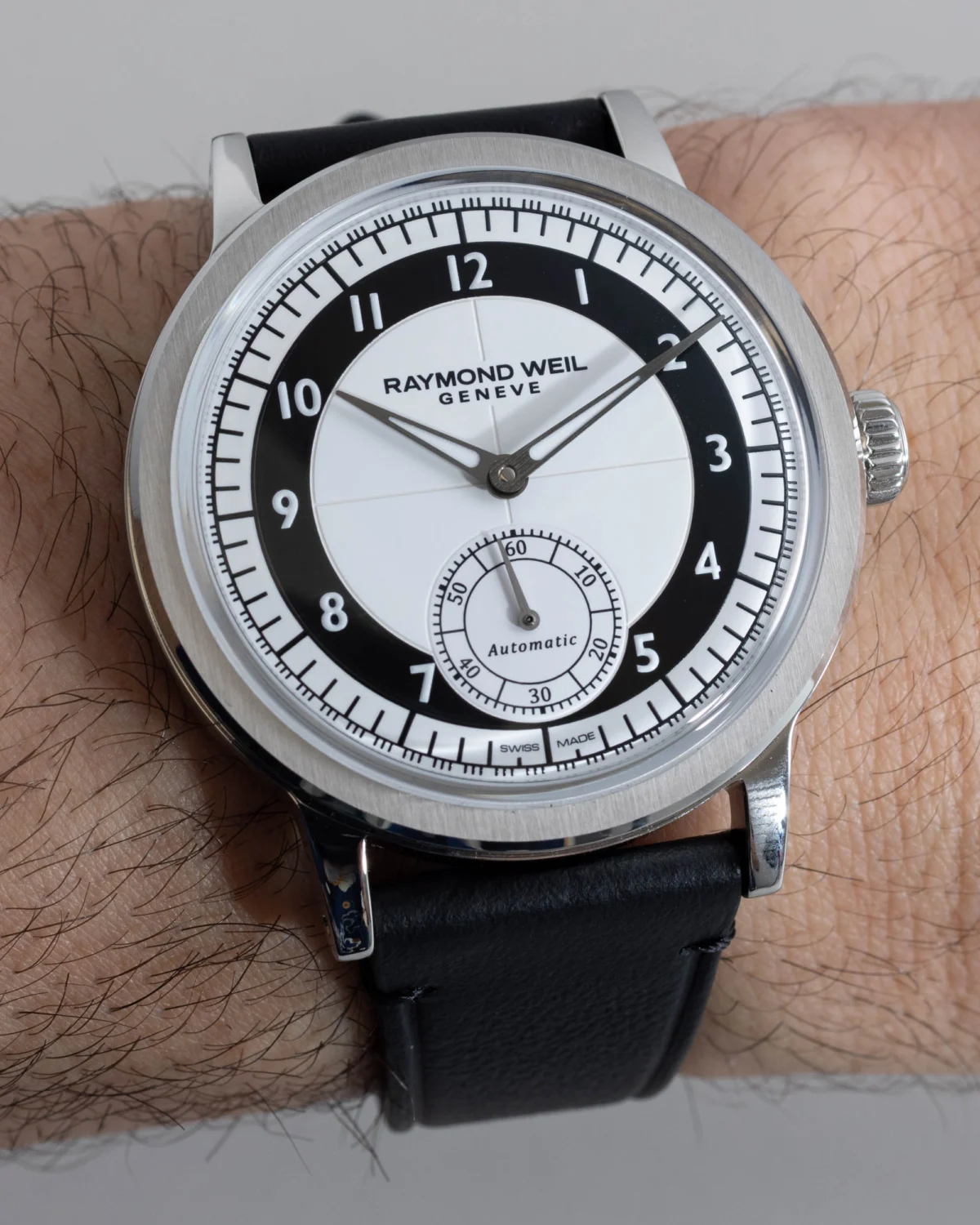
The "Tuxedo" designation in horology refers to a specific style of dial architecture characterized by a high-contrast black-and-white color scheme, usually involving a central dark sector surrounded by a lighter chapter ring, or vice versa. By incorporating this into the Millesime line, Raymond Weil is effectively tapping into the Art Deco revival movement that has gained momentum in the luxury watch sector. Unlike the standard Millesime Small Seconds models, which utilize minimalist stick-style indices, the Tuxedo variant employs an intricate arrangement of Arabic numerals and geometric sector lines, creating a visual depth that deviates from the collection’s otherwise stark, utilitarian roots.
Chronology of the 2026 Release
The rollout of the Millesime Small Seconds variants occurred in stages throughout the first half of 2026. Following the initial announcement of the collection’s expansion, three primary dial variations were presented to the market. While the "grape" dial variant was designed to capture a modern, fashion-forward demographic, the reference 2930-STC-05642 was specifically engineered to serve as the flagship for the series’ formal aspirations.
The watch was unveiled alongside an updated retail strategy that allows consumers to choose between a supple black leather strap or a multi-link stainless steel bracelet. This choice, offered at a nominal price difference of $130, reflects a growing consumer demand for modularity and immediate customization at the point of sale. The integration of quick-release spring bars indicates that the manufacturer has listened to current market feedback regarding the ease of strap swapping, a feature that was less common in previous generations of Raymond Weil timepieces.

Technical Specifications and Engineering Standards
The Millesime Small Seconds Tuxedo Dial is housed in a 39mm stainless steel case with a height of 10.25mm. This dimension is significant as it places the watch firmly in the "dress-sport" category, suitable for both professional environments and formal occasions. The case features a combination of polished and brushed surfaces, a hallmark of mid-to-high-range Swiss construction designed to hide minor wear while maintaining a refined luster.
Internally, the timepiece is driven by the caliber RW4251, a movement based on the industry-standard Sellita architecture. This choice of movement provides a reliable, easy-to-service engine that operates at a frequency of 4Hz (28,800 vibrations per hour). With a power reserve of approximately 41 hours, the movement is consistent with contemporary standards for watches in this price bracket. The inclusion of a sapphire crystal exhibition case back allows users to view the custom Raymond Weil-branded rotor, reinforcing the brand’s commitment to the "Swiss Made" labeling requirements, which mandate significant internal value and quality control standards.
Market Analysis and Positioning
In the current economic climate, the watch industry has seen a bifurcation between ultra-high-end luxury items and budget-conscious micro-brands. Raymond Weil occupies a critical middle ground. While micro-brands may offer lower prices, they often lack the established service infrastructure and the provenance of a brand with five decades of continuous operation.

Financial analysts observing the sector note that consumers are increasingly prioritizing "value-retention" and "serviceability." By pricing the reference 2930-STC-05642 at $2,295 USD on a leather strap and $2,425 USD on a steel bracelet, Raymond Weil is positioning the Millesime line as a "bridge" product. It is intended for the consumer who has outgrown entry-level fashion watches but is not yet ready to commit to the five-figure price tags associated with legacy heritage brands.
The "contrast ring" design on the dial serves as a prime example of high-utility aesthetics. By utilizing the black ring to frame the hour markers, the watch achieves a level of legibility that is superior to many flat-printed dials. This is not merely a stylistic choice; it is a design solution that enhances the functionality of the watch while simultaneously adhering to the visual language of the Art Deco period.
Broader Implications and Industry Impact
The release of the Tuxedo Dial is indicative of a broader trend within the Swiss watch industry: the "democratization of classicism." Manufacturers are realizing that the younger generation of watch enthusiasts, who have historically been drawn to digital or connected devices, are increasingly turning toward analog timepieces that offer a sense of permanence and tangible craftsmanship.

By focusing on a 39mm case size, Raymond Weil is explicitly rejecting the "oversized" trend that dominated the early 2000s, favoring a more balanced, universal proportion. This sizing strategy is likely to ensure the longevity of the Millesime collection, as smaller, more conservative case diameters have historically demonstrated better long-term aesthetic resilience.
Furthermore, the brand’s ability to successfully integrate an Art Deco-inspired crosshair motif and a sub-seconds complication into a mass-produced model demonstrates an improved manufacturing capability. The subdial, which is slightly recessed into the main dial plate, provides a level of texture that is rarely found at this price point. Such details contribute to the overall perceived value of the product, moving it away from the perception of a commodity and toward the category of a deliberate design object.
Future Outlook for the Millesime Collection
As Raymond Weil looks beyond its 50th-anniversary celebrations, the Millesime Small Seconds collection appears set to become the backbone of its catalog. The consistency of the case design, coupled with the brand’s willingness to experiment with dial colors and motifs, provides a platform for future iterations.

Industry observers suggest that the success of the 2930-STC-05642 will be determined by its adoption among younger professionals. Should the watch prove successful, it is likely that the brand will continue to expand the "Tuxedo" concept, potentially introducing precious metal variants or complications such as a power reserve indicator or a date display. However, for the current cycle, the focus remains on the purity of the black-and-white aesthetic.
In conclusion, the Raymond Weil Millesime Small Seconds Tuxedo Dial is more than a seasonal update. It is a tactical move by a storied Swiss manufacturer to reclaim its position in the hearts of traditional watch enthusiasts. By marrying the mechanical reliability of a proven movement with a timeless design philosophy, the brand has created a product that balances the demands of modern performance with the aesthetic grace of a bygone era. For those seeking a timepiece that adheres to the fundamental tenets of horological elegance, the 2930-STC-05642 represents a compelling and well-engineered choice within the current market.