










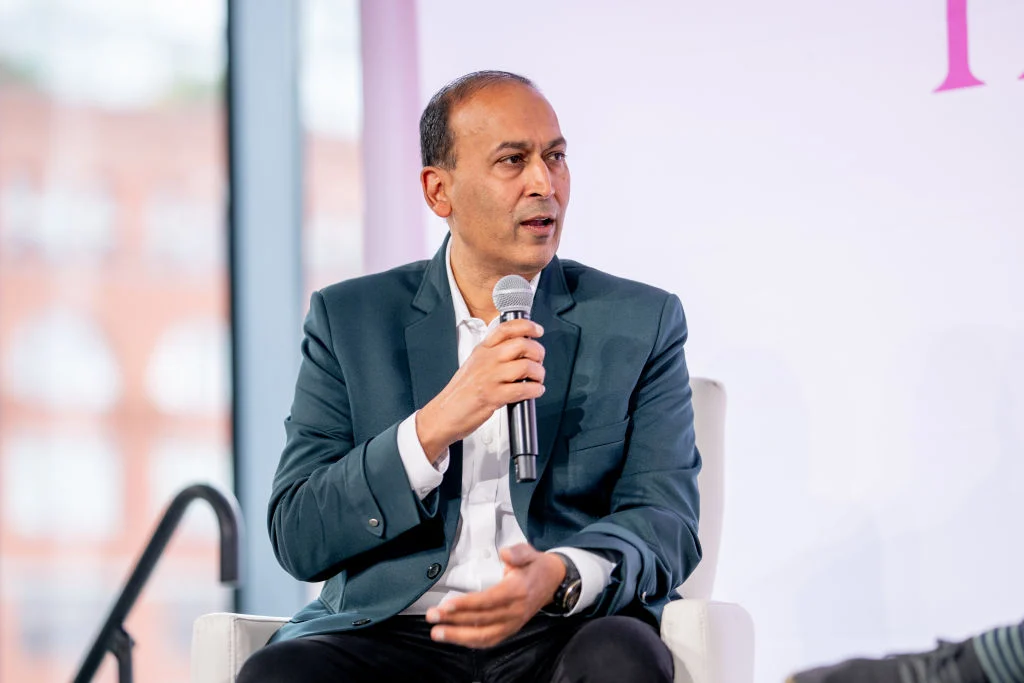
Fashion resale marketplace Poshmark has officially announced a monumental leadership transition, with founder Manish Chandra stepping down from his role as Chief Executive Officer after nearly a decade and a half at the helm. Namsun Kim, who has been serving as the company’s executive chairman since April and holds a prominent position as president of investments at South Korean tech giant Naver, has been appointed as Chandra’s successor, effective immediately.
The announcement marks the end of an era for the Silicon Valley-born platform, which evolved from a modest garage startup into a global social commerce powerhouse boasting over 150 million registered users. While Chandra is relinquishing his day-to-day executive responsibilities, he will remain connected to the enterprise by transitioning to a seat on the board of directors. The leadership handoff follows months of behind-the-scenes preparation and strategic alignment, signaling a new chapter for the secondhand fashion marketplace under the direct stewardship of its parent company, Naver.
The Genesis and Evolution of Poshmark
To understand the magnitude of Chandra’s departure, one must look back at the humble origins of the company. In 2011, Chandra, alongside his co-founders, established Poshmark out of a Silicon Valley garage. During a period when mobile commerce was still in its infancy and peer-to-peer marketplaces were largely transactional and devoid of social elements, Chandra envisioned a different approach. He recognized the immense potential of combining mobile technology with social networking, creating a digital shopping environment where users could buy, sell, share, and interact within a vibrant community.
Under Chandra’s visionary leadership, Poshmark grew from a niche application for closet clear-outs into a cultural phenomenon. The platform pioneered the concept of "Posh Parties"—virtual shopping events where users could curate and share listings within specific themes—which fostered fierce brand loyalty and high user engagement.
As the platform scaled, it achieved several critical milestones. Most notably, in March 2021, Poshmark took the monumental step of going public, trading on the Nasdaq under the ticker symbol POSH. This initial public offering validated the business model of social resale and provided the company with substantial capital to expand its operations, scale its engineering teams, and enhance its marketing efforts in an increasingly crowded competitive landscape.
The Naver Acquisition and Global Expansion
The trajectory of Poshmark shifted significantly in late 2022 when South Korean internet conglomerate Naver Corporation announced its intention to acquire the fashion marketplace for approximately $1.2 billion. The strategic acquisition, which closed in early 2023, was designed to leverage Naver’s advanced search technologies, artificial intelligence capabilities, and e-commerce expertise to accelerate Poshmark’s growth on a global scale.
For Naver, the acquisition represented a strategic foothold in the lucrative North American e-commerce market, complementing its existing portfolio of digital platforms and content communities. Despite the change in corporate ownership, Chandra remained at the helm to guide Poshmark through the complex integration process, ensuring that the platform’s distinct community-centric culture remained intact while benefiting from Naver’s technological infrastructure.
Over the subsequent two years, Poshmark continued to navigate shifting consumer behaviors, inflationary pressures, and heightened competition within the secondhand apparel market. Platforms such as Depop, Vinted, Mercari, and traditional retail giants entering the resale space have intensified the battle for conscious consumers looking for sustainable and budget-friendly fashion alternatives. Throughout these macroeconomic headwinds, Chandra maintained a steady focus on user experience, seller empowerment, and sustainability.
The Transition to Namsun Kim
The appointment of Namsun Kim as the new CEO is a natural evolution of the leadership structure established following the Naver acquisition. Kim, who serves as president of investments at Naver, brings a robust background in finance, corporate strategy, and global operations. His tenure as executive chairman of Poshmark since April provided him with deep operational insights into the day-to-day workings of the marketplace, working closely alongside Chandra to prepare for this exact moment.
In communications regarding the transition, Chandra emphasized that he and Kim have collaborated since the beginning of the year to ensure a seamless handover of responsibilities. This deliberate runway was engineered to prevent any disruption to the millions of buyers and sellers who rely on the platform for supplemental income or sustainable shopping.
Kim steps into the CEO role at a critical juncture for the company. As the secondhand economy continues to mature, digital marketplaces are under increasing pressure to innovate. Analysts suggest that under Kim’s leadership, Poshmark may place an even greater emphasis on leveraging Naver’s cutting-edge artificial intelligence, machine learning for visual search, and enhanced personalization algorithms to improve discovery and conversion rates on the app. Furthermore, Naver’s global footprint could open new avenues for international expansion, allowing Poshmark to bridge markets across North America and Asia more effectively.
Farewell and Community Reaction
Marking the end of his active executive tenure, Chandra penned a heartfelt farewell message to the Poshmark community, expressing deep gratitude for the journey.
"Leading this company has been the greatest honor of my professional life," Chandra wrote in an email to users. "Every success we’ve achieved, every challenge we’ve overcome, has been because of you. It’s been the privilege of a lifetime witnessing each of you grow, and it has truly inspired me every single day. From the bottom of my heart, thank you. For being the extraordinary community that you are, for your trust, your creativity, and for all the possibilities you continue to create together."
The response from the Poshmark community—comprising millions of independent sellers, boutique owners, and casual shoppers—has been overwhelmingly appreciative. Many users took to social media and community forums to express their gratitude to Chandra for building a platform that transformed their side hustles into full-fledged businesses and created a supportive, inclusive digital economy.
Implications for the Future of Social Resale
As Poshmark embarks on this new chapter under Namsun Kim, industry observers will be watching closely to see how the platform adapts to evolving consumer trends. The fashion resale market has experienced explosive growth over the past several years, driven by a cultural shift toward sustainability, circular fashion, and thrift culture among Gen Z and millennial shoppers. However, the sector has also faced profitability challenges and regulatory scrutiny regarding online marketplaces and consumer protection.
With Kim at the helm, backed by the deep pockets and technological prowess of Naver, Poshmark is well-positioned to navigate these challenges. The integration of advanced AI tools could streamline the listing process for sellers—such as automated categorization and pricing recommendations—while creating a more intuitive, tailored shopping experience for buyers.
Moreover, the continuity provided by Chandra remaining on the board of directors ensures that the company will not lose sight of the foundational values that fueled its rise from a Silicon Valley garage to a household name. As the baton passes from founder to corporate strategist, Poshmark remains a titan in the global circular economy, poised for its next phase of innovation and scale.